In Home Radon Test: What Homeowners Need to Know
“In home radon test” is sometimes interpreted as the act of testing inside a home — but the more useful distinction is between in-situ continuous monitoring and integrated short- or long-term passive tests. Colorado’s EPA Zone 1 status and CDPHE data showing roughly half of tested homes above 4 pCi/L make the testing decision real for almost every Front Range homeowner. This guide compares live in-home monitoring with traditional integrated tests, explains the cases each fits, and shows when to deploy which. The summary reflects EPA and CDPHE guidance current as of 2026 — consult a licensed mitigation contractor for elevated results and your physician for any health concerns.
Part of our Radon Levels guide — start there for the full picture →
In Home Radon Test: Live Monitoring vs Integrated Testing
Live monitoring uses a continuous radon monitor (CRM) that reads hourly and displays a rolling pCi/L value on-device or via app. Integrated testing uses a passive medium — charcoal, alpha-track polymer, electret — exposed for a fixed window, then mailed to a lab for back-calculation of an average. Live monitoring is best for ongoing visibility, mitigation-system verification, and households worried about variation. Integrated testing is best for one-shot screening, real-estate transactions (using pro CRMs deployed for a fixed window), and long-term annual-exposure characterization.
Live In-Home Monitoring
What the Device Does
A consumer CRM like the AirThings Wave Plus, Ecosense RadonEye, or Corentium Home pulls room air into an ionization chamber or scintillation cell and reads radon hourly. The first 24 to 72 hours produce noisy data while the device’s running average stabilizes. After about a week the rolling values become meaningful. Most consumer CRMs display a 24-hour rolling average and a seven- or 30-day rolling average.
What Live Data Reveals
Hourly readings reveal patterns that single integrated tests cannot. Radon spikes overnight as the home cools and the stack effect strengthens. Radon dips during midday when the home is warmer and air pressure differentials are smaller. Severe weather, HVAC cycling, and basement-door usage all show up in the trend chart. A homeowner with a 30-day rolling average of 3.8 pCi/L knows considerably more about exposure than the same homeowner with a single 2.5 pCi/L canister result from one Tuesday afternoon.
When Live Monitoring Pays Off
Three cases dominate. Households with a recently installed mitigation system benefit from continuous fan-failure warning. Households in known-elevated Front Range neighborhoods benefit from baseline visibility. Households with basement bedrooms benefit from real-time exposure data in the sleeping space. The in-batch do I need a radon detector decision framework covers these cases.
Integrated Short-Term Testing
How It Works
A passive charcoal canister or electret is exposed to indoor air for 48 to 96 hours under closed-house conditions. The medium absorbs radon decay products. After the test window the canister is sealed and mailed overnight to a lab, which back-calculates the time-averaged pCi/L value via gamma spectrometry. Result arrives by email in 5 to 10 business days.
Strengths
Cheap — $15 to $30 per kit. Widely available at Front Range hardware retailers. Fast enough for real-estate-transaction timelines when a pro CRM is deployed for the same window. Simple to deploy.
Weaknesses
Sensitive to brief weather and house-condition swings. Cannot detect tampering. Charcoal degrades on the shelf. The 3.8-day radon-222 half-life means shipping delays bias the result low. The in-batch how do you test for radon gas guide explains the underlying chemistry.
Integrated Long-Term Testing
How It Works
An alpha-track detector — a small polymer film inside a plastic housing — is exposed for 90 days to one year. Alpha particles from radon decay create microscopic tracks in the polymer. After the exposure window the kit is mailed to a lab, which etches and counts the tracks. The result is a time-averaged pCi/L value across the full deployment period.
Why It Is the Most Representative Single Measurement
Three to twelve months of integration smooths out daily, weekly, and seasonal variation. A 90-day alpha-track produces a more representative reading of true annual exposure than any 48-hour charcoal test. Long-term integrated testing is the EPA’s preferred single-measurement method when transaction speed is not a constraint. Cost is $25 to $50.
Pro CRM Integrated Testing for Transactions
Real-estate radon tests in Colorado typically use a pro-grade CRM deployed for 48 to 96 hours under EPA Protocols. Although the device reads hourly, the deliverable to the buyer is an integrated average over the fixed test window — effectively a short-term integrated measurement with the added benefit of hourly tamper-evidence logging. Cost on the Front Range: $135 to $200 bundled with a home inspection. The in-batch home radon inspection guide details this service.
Choosing Between Live and Integrated
Choose Live If
You have an existing mitigation system. You live in a known-elevated Front Range zip code. You have a basement bedroom and want ongoing visibility. You recently finished a basement and want to monitor the new air-dynamics. You are willing to spend $150 to $300 once for a consumer CRM.
Choose Integrated If
You are screening for the first time. You are buying or selling a home. You want a single representative annual reading. You prefer not to add another connected device to the home. You are budget-constrained ($15 to $50 per measurement).
Combining Both Methods
The best practice for a known-elevated home or a high-exposure household is a hybrid approach: an initial short-term integrated test for screening, a long-term integrated test for representative annual exposure, and an ongoing consumer CRM for live visibility. Total cost across two years of measurement: roughly $250 to $400 — comparable to a single pro test plus a consumer CRM. The pillar guide on radon testing in Colorado covers hybrid-testing strategies.
Common Errors With Live Monitoring
Misreading the early data. The first 24 to 72 hours of a fresh CRM are typically noisy as the device equilibrates and the running average stabilizes. Treating a single hour’s reading of 6 pCi/L as a mitigation trigger is wrong; the 30-day rolling average is what matters.
Placing the unit in the wrong room. Placement rules apply to CRMs the same way they apply to canisters: lowest livable level used regularly, 20 inches above the floor, 12 inches from exterior walls, away from drafts and direct sun. A CRM on the upstairs office desk reports the upstairs office, not the basement bedroom.
Assuming consumer-grade accuracy equals pro-grade. Consumer CRMs do not carry NRPP/NRSB calibration. A consumer CRM showing 3.8 pCi/L is reason to commission a pro test, not to act as if the value is contractually authoritative. The in-batch accurate radon testing guide covers confirmation logic.
What to Do With Either Result
The action thresholds are the same regardless of method. At or above 4 pCi/L: the EPA recommends mitigation. Between 2 and 4 pCi/L: consideration range, with many Front Range homeowners choosing to mitigate given elevated regional baselines. Below 2 pCi/L: lower-risk band. A single elevated short-term reading should be confirmed with a second short-term or a long-term test before mitigation; a 30-day rolling CRM average is also acceptable confirmation.
Mitigation in Colorado typically means active sub-slab depressurization: a 4-inch PVC pipe through the slab, an inline fan, and a vent terminating above the roofline. Front Range install cost: $1,200 to $2,500. Post-install testing within 30 days confirms the system brought levels below 4 pCi/L.
How Continuous Data Changes Mitigation Decisions
A consumer CRM running for three months produces roughly 2,160 hourly readings. Even after accounting for the noise floor of a consumer-grade sensor, the dataset is far richer than any single integrated test. A homeowner who sees readings consistently in the 3.0 to 4.5 pCi/L range with regular overnight spikes to 6 to 8 pCi/L has a clearer picture of risk than the same homeowner with a single 3.6 pCi/L canister result.
The continuous data often pushes the mitigation decision earlier than integrated testing alone would suggest. Spikes to 8 pCi/L every night the basement bedroom is occupied represent real exposure even if the overall average stays under 4 pCi/L.
Mitigation System Verification With Live Monitoring
After mitigation, a consumer CRM provides ongoing system-health data. A fan failure shows up as climbing readings within days. A vent stack blockage shows up similarly. A degraded slab seal shows up as a slow upward drift over months. None of these are catastrophic if caught early; the early warning is the value of the CRM.
Many Colorado mitigators now recommend pairing a new install with a $150 to $200 consumer CRM precisely for this monitoring function. The homeowner gets ongoing visibility into system performance without booking annual pro re-tests. Pro re-tests every two to three years are still appropriate for documented confirmation, but the CRM handles the in-between months.
Hybrid Testing Strategy in Practice
A Colorado homeowner buying a Front Range home for the first time might follow this sequence. During the inspection contingency: pro CRM test for transaction compliance ($150). Post-closing month one: install a consumer CRM in the basement bedroom ($200). Year one summer: short-term DIY kit for seasonal cross-check ($20). Year one winter: short-term DIY kit for stack-effect cross-check ($20). Year two: 90-day alpha-track for representative annual exposure ($35). Total cost across two years: about $425, producing a multi-method radon picture far more complete than any single test.
For households in known-elevated Front Range neighborhoods this kind of strategy is reasonable. For households outside known-elevated zones with consistently sub-2 pCi/L readings, the EPA’s every-two-years DIY testing schedule is sufficient.
References
- A Citizen’s Guide to Radon — U.S. Environmental Protection Agency
- Colorado Radon Program — Colorado Department of Public Health and Environment
- Radon Testing — Centers for Disease Control and Prevention
- Radon and Lung Cancer Risk — American Lung Association
Frequently asked questions
What is the difference between live monitoring and integrated testing?
Live monitoring uses a continuous radon monitor that reads hourly and displays a rolling average. Integrated testing uses a passive medium exposed for a fixed window, then lab-analyzed for an average. Live is best for ongoing visibility; integrated is best for one-shot decisions and transactions.
How long should I wait before trusting a continuous monitor's readings?
The first 24 to 72 hours are typically noisy as the device stabilizes. The seven-day rolling average is useful for trend awareness. The 30-day rolling average becomes meaningful for action decisions. Initial single-hour spikes should not drive mitigation choices.
Can I use a consumer continuous monitor instead of a real-estate test?
No. Real-estate transactions require EPA Protocols testing with a pro-grade calibrated CRM and a licensed measurement specialist. Consumer CRMs are useful for personal visibility but are not EPA-accepted for transactions.
Where should an in-home test be placed?
Lowest livable level used at least eight hours per week. Position 20 inches above the floor, 12 inches from exterior walls, four inches from objects. Avoid bathrooms, kitchens, laundry rooms, closets, fireplaces, HVAC vents, and direct sunlight. Bedroom placement is appropriate for households worried about overnight exposure.
Front Range homeowners exploring continuous monitoring or pro testing can reach out through our contact page.
Test your home for radon
Radon is invisible and odorless, so a test is the only way to know your level. A short-term kit gives a first reading in days; a digital monitor tracks it over time.
| Product | Why | Buy |
|---|---|---|
 AirChek Charcoal Radon Test Kit | Lab fee usually included; EPA short-term protocol. | Amazon |
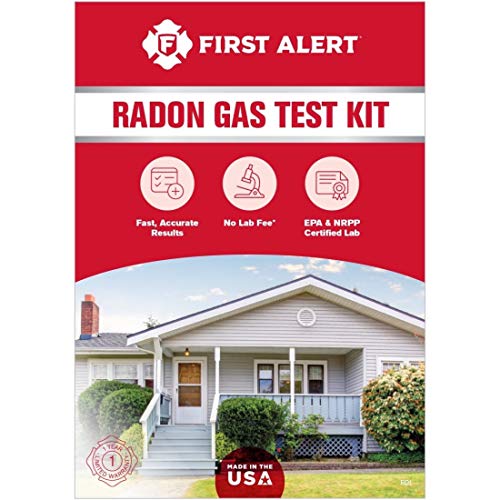 First Alert RD1 Radon Test Kit | Widely stocked; 48-hour charcoal test. | Amazon — $17.95 |
 Airthings Corentium Home | Digital monitor with a long-term average. | Amazon — $142.99 |