What Is Radon Testing in Homes: A Plain-Language Overview

Radon testing in homes is the measurement of radon gas concentration in indoor air, expressed in picocuries per liter (pCi/L) in the United States. The goal is to determine whether radon levels exceed EPA’s 4 pCi/L action level, which would warrant mitigation. This guide summarizes EPA and CDPHE guidance current as of 2026 and is not a substitute for direct consultation with a certified measurement professional when transaction or post-mitigation documentation is needed. Roughly half of Colorado homes test above the action level per CDPHE estimates, which makes radon testing one of the most actionable home-health measurements Front Range residents can perform.
Part of our Radon Levels guide — start there for the full picture →
Why homes are tested for radon
Radon is the second leading cause of lung cancer in the United States after tobacco smoking, and the leading cause among never-smokers. EPA estimates 21,000 lung cancer deaths per year are attributable to radon exposure. The gas is colorless, odorless, and tasteless, so testing is the only way to know whether a home has elevated levels. Visual inspection cannot detect radon. Symptoms in occupants don’t appear until lung cancer has developed, often 20 to 50 years after exposure.
Indoor radon enters from soil through foundation cracks, sump pits, plumbing penetrations, and the slab itself. Concentration depends on three factors: how much radon the soil produces, how easily it enters the home, and how well the home contains and circulates it. Soil concentration varies geologically — uranium-rich soils common across the Front Range produce more radon than uranium-poor soils. Building condition determines pathway. Building pressurization drives flow direction.
The companion what is radon testing for piece covers the broader purpose of testing as it interacts with health risk and home maintenance.
What testing measures
Radon-222 has a half-life of 3.8 days. The gas decays through a chain of short-lived products — polonium-218, lead-214, bismuth-214, polonium-214 — that attach to airborne particles and can be inhaled. Once in the lungs, continued decay deposits alpha radiation directly onto bronchial tissue, damaging DNA and creating cumulative cancer risk. Testing devices capture either the parent radon-222 or its decay products and convert the count into a pCi/L reading.
One pCi equals 0.037 disintegrations per second. One pCi/L therefore means 0.037 alpha-particle events per second per liter of air. At 4 pCi/L action level, that’s roughly 0.15 alpha events per second per liter — emissions the lungs cannot filter. Over decades of accumulated exposure, the rate translates into measurable lung-cancer risk.
EPA thresholds explained
Two reference levels matter most.
4 pCi/L: EPA action level. Above this, mitigation is strongly recommended. Lifetime never-smoker lung-cancer risk at 4 pCi/L runs roughly 7 in 1,000. Smoker risk at the same level is roughly 62 in 1,000 due to synergistic damage between radon alpha particles and tobacco smoke promoters.
2 pCi/L: EPA consideration level. Between 2 and 4 pCi/L, EPA suggests considering mitigation, especially in homes with at-risk occupants like basement-dwellers, smokers, pregnant residents, young children, or immunocompromised adults. WHO uses a more conservative 2.7 pCi/L (100 Bq/m³) reference level. The who should test for radon guide covers risk-group prioritization.
Test types available to homeowners
Three categories cover almost every situation.
Short-term passive tests
Charcoal canisters and electret ion chambers. $20 to $50 retail including lab analysis. 48 to 96 hours of deployment. Best for first-pass screening and real-estate transactions. Available at most hardware stores and through state radon programs.
Long-term passive tests
Alpha-track detectors. $30 to $80 including lab analysis. 90 days to 1 year of deployment. Best for understanding seasonal variability and confirming whether a short-term result was a fluke.
Continuous radon monitors (CRMs)
Consumer-grade $200 to $300. Professional CRM testing visits $200 to $400. Log hourly readings, distinguish valid tests from interference events, and produce immediate results without lab shipping. Used by certified measurement professionals for transactions and by homeowners wanting ongoing visibility.
The companion DIY radon test guide compares specific brand options.
Where the test goes in the home
The detector goes on the lowest occupied level — the level where someone regularly lives. For homes with finished basements used for bedrooms, family rooms, or home offices, the basement is the test location. For homes with unfinished basements used only for storage, the first floor is the test location. Test placement should be in a room used by the family, not in a closet, storage area, or utility room.
Within the chosen room, the detector sits 20 to 70 inches above the floor, at least 12 inches from exterior walls, at least 3 feet from doors and windows, away from drafts and heat sources, and away from high-humidity areas like a bathroom door. The radon test basement placement guide walks through location selection in detail.
Closed-house conditions
Test protocol requires closed-house conditions: windows and exterior doors closed for 12 hours before the test starts and throughout the test, except for normal short entry and exit. HVAC operates normally. Whole-house fans and attic fans off. Window air conditioners and ceiling fans can run normally.
Closed-house conditions approximate winter occupancy patterns when stack effect drives the most radon into the home from soil. A test under non-closed-house conditions reads lower than the home’s true risk and produces a misleading reassurance. Winter testing is preferred because closed-house conditions are easier to maintain naturally.
Real-estate testing protocol
Home sales and purchases warrant fresh radon tests as part of the inspection contingency. EPA real-estate protocol requires certified measurement professionals, NRPP-certified devices (usually CRMs), closed-house conditions throughout, minimum 48-hour duration, chain-of-custody documentation, and reporting that includes interference flags from the device. Buyers and sellers both benefit from professional-grade documentation in negotiations.
The companion what is a radon test for home inspection piece covers transaction-specific protocol in depth, including how testing fits within a typical 7-to-14-day inspection contingency window.
What happens after the test
Three possible outcomes drive next steps.
Under 2 pCi/L: low. Retest every 2 years per EPA recommendation. No immediate action.
2 to 4 pCi/L: borderline. Consider mitigation if at-risk occupants live in the home. Retest in heating season if the current test was summer. Long-term alpha-track or CRM testing clarifies whether winter readings push above 4.
Above 4 pCi/L: elevated. Mitigation recommended. Standard solution is sub-slab depressurization (SSD): a sealed suction pit under the slab, PVC vent stack to roof, and a continuously running fan. Front Range installation runs $1,200 to $2,500 in 2026. The Colorado radon mitigation guide covers installation in detail.
Ongoing testing strategy
One test at one point in time is not the end of radon awareness. Levels drift over the years as foundations settle, sealants age, occupancy patterns change, and HVAC behavior shifts. EPA recommends retesting every 2 years for homes that previously tested low, annually for borderline homes, and annually for mitigated homes to confirm fan operation.
Three patterns cover ongoing strategy. Pattern one: short-term test every 2 years in heating season. Pattern two: long-term alpha-track detector annually, ideally rotating through different rooms. Pattern three: permanent continuous monitor logging readings indefinitely. The right pattern depends on the home’s first-test result and the family’s tolerance for variability in the data.
What testing does not tell you
Three limits to know.
A single short-term test does not tell you the home’s true annual average. It tells you the average over the 48-to-96-hour test period. Seasonal variation can shift the same home’s readings by a factor of 2 to 4 between summer and winter.
A test in one room does not necessarily represent another room. A basement test reads higher than a first-floor test in the same home. Test where the family actually lives most of the time.
A passing test does not mean the home will pass forever. Foundation cracks develop. Sealants age. HVAC systems get replaced. Retesting on a regular schedule catches drift before it becomes a long-term exposure problem.
Front Range context
The entire Front Range — Denver, Douglas, Elbert, Arapahoe, Jefferson, El Paso, Adams, Boulder, and Broomfield counties — sits in EPA Zone 1. CDPHE estimates roughly half of Colorado homes test above 4 pCi/L. Foothill subdivisions show the highest medians. Eastern plains homes read lower on average but still produce elevated basement readings. No Front Range neighborhood is safely “off the map” for radon. The main radon testing pillar covers Colorado specifics including CDPHE outreach programs that occasionally subsidize test kits.
More Questions About Home Radon Testing
Should every home be tested for radon?
Yes, the EPA and the Surgeon General recommend testing every home for radon, regardless of age, foundation type, or region. Radon levels vary widely even between neighboring houses, so a low reading next door says little about another home. Homes with basements, slabs, and crawlspaces can all have elevated levels. Condos and apartments on the lower three floors are worth testing too. Since a basic kit costs only a few dollars to tens of dollars, testing is the only reliable way to know a home’s actual level.
Can a home radon test be done in a crawlspace house?
Yes, a home with a crawlspace can and should be tested for radon, but the test goes in the lowest lived-in room, not in the crawlspace itself. Crawlspace air is not where people breathe, and the conditions there do not match test protocols. A vented crawlspace may lower indoor levels somewhat, but radon still enters through gaps in the subfloor, ductwork, and plumbing penetrations. If results are high, mitigation usually involves sealing a plastic membrane over the crawlspace soil and pulling suction from beneath it.
Do two radon tests in the same home give the same number?
Two radon tests in the same home rarely give identical numbers, and differences of 10 to 25 percent are common. Radon levels shift hour to hour with weather, heating, and ventilation, and each device type has its own measurement uncertainty. Running two short-term tests side by side, or one after the other, and averaging them is the EPA-endorsed way to make a decision. A large gap between two simultaneous tests suggests a placement or handling problem and warrants a retest.
How do apartments and condos handle radon testing?
Radon testing in apartments and condos focuses on units on the ground floor, basement level, and generally the lowest three floors, where soil gas is most likely to reach living space. Residents can test their own unit with a standard kit. If a result is high, the fix usually involves the building owner or homeowners association, because mitigation affects the shared foundation. Some states require landlords to disclose known radon results or to test certain multi-family buildings, so local rules are worth checking.
References
- EPA Citizen’s Guide to Radon — U.S. Environmental Protection Agency
- CDPHE Radon Program — Colorado Department of Public Health and Environment
- EPA Health Risk of Radon — U.S. Environmental Protection Agency
- CDC Radon Health Information — Centers for Disease Control and Prevention
Frequently asked questions
What does radon testing in homes actually measure?
It measures the average concentration of radon-222 gas in indoor air over the test period, reported in picocuries per liter (pCi/L). Some devices measure the gas directly; others measure decay products and infer parent concentration. EPA's action level is 4 pCi/L, above which mitigation is strongly recommended.
Is radon testing necessary if my home is new?
Yes. New construction can reduce radon entry through vapor barriers and passive piping, but soil concentration drives the underlying risk. New homes on uranium-rich soil can still read above action level. CDPHE estimates 50 percent of Colorado homes test above 4 pCi/L regardless of age. Always test.
How accurate is home radon testing?
Properly deployed charcoal canisters achieve plus-or-minus 25 percent accuracy at action level. NRPP-certified continuous monitors achieve plus-or-minus 10 percent. Accuracy depends on protocol — closed-house conditions, correct location, adequate duration, prompt lab shipping. Wrong-room placement or open windows during a test invalidate the result regardless of device quality.
How long after testing do I get results?
Passive kits take 3 to 7 business days for laboratory analysis after the lab receives the sample. The full process from kit purchase to result is typically 7 to 10 days including deployment time. CRM tests produce immediate results after the deployment ends, with no lab step required.
Can pets or plants affect a home radon test?
No, pets and houseplants do not meaningfully affect a home radon test, as long as the device is not knocked over or moved. Keep the kit out of reach of curious animals and away from plant watering, since splashed moisture can affect charcoal canisters. Normal household activity is fine during the test.
Does a home radon test need electricity?
Passive radon tests such as charcoal canisters and alpha-track detectors need no electricity at all. Continuous radon monitors used by professionals and consumer digital monitors plug in or run on batteries. Professional monitors also log power loss, so an interrupted test can be flagged in the report.
Can a home radon test be done during renovation?
A home radon test is best done after major renovation work, not during it. Open walls, running fans, dust control equipment, and contractors propping doors open break closed-house conditions. Test once the work is finished, especially after basement finishing or foundation repairs, which can change radon entry paths.
Front Range residents wanting professional testing instead of DIY can reach our vetted measurement professional network across the nine-county service area.
Test your home for radon
Radon is invisible and odorless, so a test is the only way to know your level. A short-term kit gives a first reading in days; a digital monitor tracks it over time.
| Product | Why | Buy |
|---|---|---|
 AirChek Charcoal Radon Test Kit | Lab fee usually included; EPA short-term protocol. | Amazon — $21.95 |
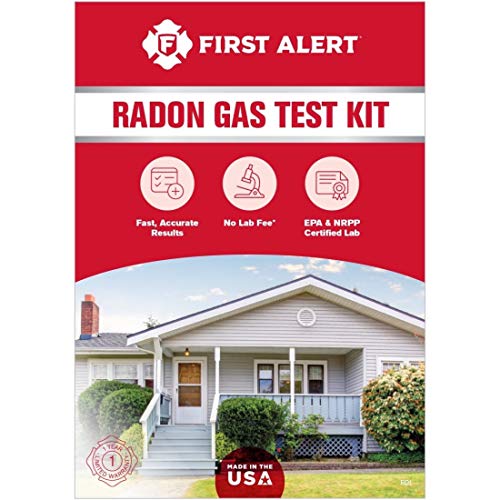 First Alert RD1 Radon Test Kit | Widely stocked; 48-hour charcoal test. | Amazon — $17.95 |
 Airthings Corentium Home | Digital monitor with a long-term average. | Amazon — $99.99 |