Radon Test Basement: Choosing the Right Test Location in 2026
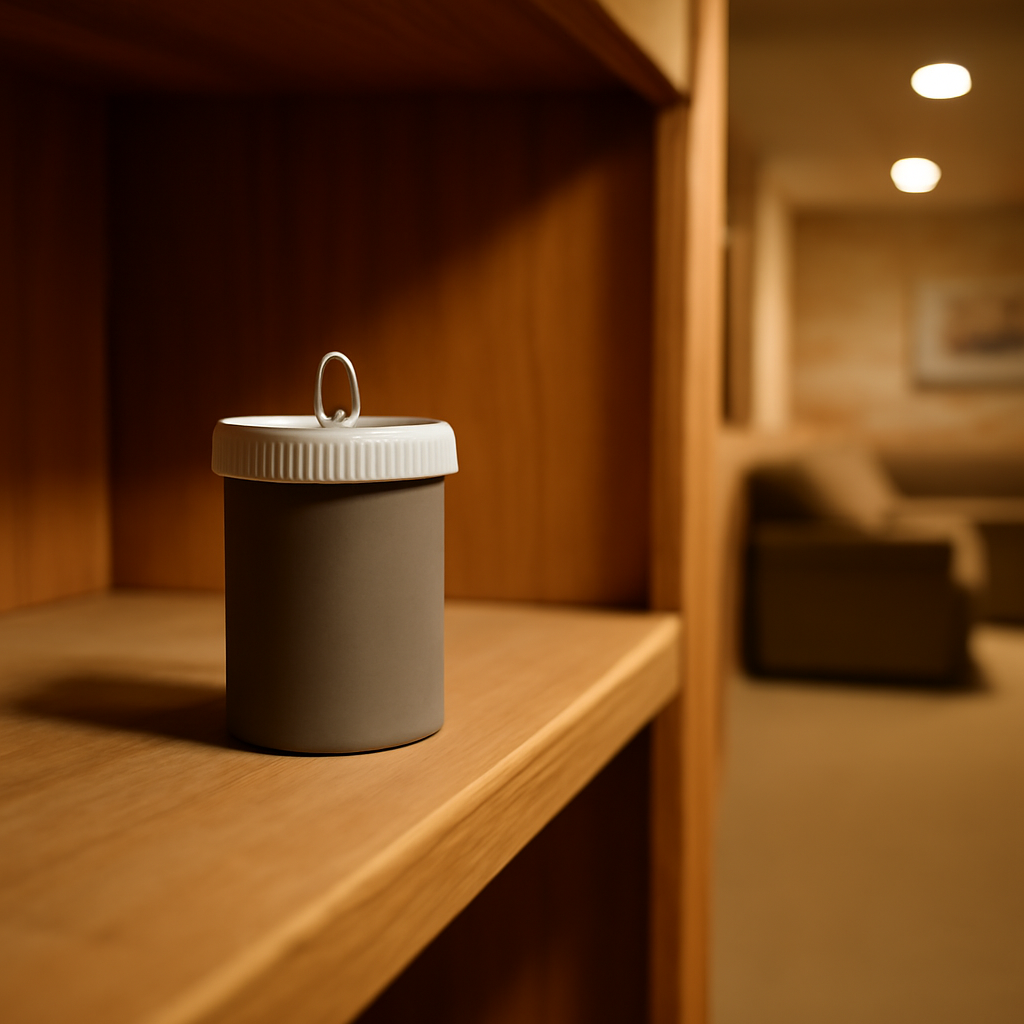
A radon test basement decision sits at the start of every homeowner’s testing process. The basement is the standard test location for most Colorado homes — and the reasons run from soil-side physics to building science to EPA recommended protocol — but the answer is not the same for every house. This guide summarizes EPA Citizen’s Guide and AARST consumer protocol current as of 2026 to explain why the basement is typically the right location, when to test other levels instead, and how the choice affects interpretation. It is a placement and decision guide rather than a step-by-step procedure — for procedure see our sibling article on how to test for radon in a basement.
Part of our Radon Levels guide — start there for the full picture →
Why the basement is the default test location
Radon is a soil-gas. The dominant entry route into a typical home is through cracks, joints, and penetrations in the foundation slab and walls. Pressure differentials driven by HVAC operation, weather, and the stack effect pull soil gas into the lowest level of the structure. That level — the basement in most Colorado homes — sees the highest radon concentration before the gas mixes upward through the rest of the house.
EPA’s recommended testing protocol calls for testing the “lowest livable level” of the home. For most Front Range homes that is the basement, whether finished or unfinished. The rationale:
- Concentration falls with distance from the source — testing higher levels underreports the source-side reading
- Future use changes — an unfinished basement today is often a finished living space within five years
- Children’s exposure scales with time at low levels — playrooms in basements are common
- Mitigation systems eventually draw from the basement — knowing the source-side concentration informs design
Pair this with our radon testing pillar guide for Colorado homeowners for the broader frame on Zone 1 county risk.
Basement versus above-grade decision logic
Several scenarios change the default. Use the table below as a starting point:
- Home with finished basement used as living space — test in the basement
- Home with unfinished basement used for storage only — test in the basement; the result represents future use
- Home with crawl space rather than basement — test the main floor; the crawl is not occupied
- Slab-on-grade home — test the lowest occupied level, typically the main floor
- Home with walk-out basement — test the lower level rather than the upper level
- Multi-level home with both basement and main-floor occupancy — basement first, main floor second if concerned about specific room exposure
- Apartment or condo above the first floor — test the unit’s lowest level; ground-floor units test more frequently than upper floors
Our basement radon guide covers the Zone 1 county basement-specific case in more detail, and our radon in basements guide covers why lower levels read higher.
Why crawl spaces are not test locations
Crawl spaces are typically vented to outdoor air or sealed but not occupied. Testing in a crawl reads either the outdoor-diluted concentration (if vented) or an unrepresentative source-side reading (if sealed). Neither informs the occupied-level decision. Test the main floor instead, which gives the most relevant reading for occupant exposure in a crawl-space home.
How basement readings compare to upper levels
Concentration generally decreases with elevation in a typical home, but the ratio varies. EPA and AARST data suggest:
- A finished basement often reads 2 to 3 times the main-floor concentration
- The ratio depends on HVAC operation, basement seal quality, and whether forced air mixes levels
- Open stairwells and high-flow HVAC produce more uniform readings across levels
- Closed basements with low air exchange show the largest basement-versus-upper-floor difference
A basement reading of 6 pCi/L does not necessarily mean the bedrooms read 6 pCi/L — but if the basement is used as living space or future-renovated as living space, the higher source-side number applies. Even when the basement is rarely occupied, EPA recommends mitigation when the basement result exceeds the action level because the soil-gas pathway is the same and the concentration in occupied levels can shift over time with HVAC or seasonal changes.
When to test multiple levels
Most homeowners only need a single test in the lowest livable level. Several scenarios warrant additional tests:
- Confirming bedroom exposure when the basement reads above 4 pCi/L
- Diagnosing a mitigation system that is not reducing levels as expected
- Home with multiple basement zones — separate furnace rooms, walk-out areas, and finished spaces
- Mixed-occupancy properties — main-floor short-term rental with basement owner unit
- Family with a member spending the majority of time on a specific level — bedroom-focused testing for an at-home parent or remote worker
Multi-level testing typically uses simultaneous deployments rather than sequential tests, since seasonal variation otherwise complicates comparison.
What basement conditions affect the result
Several basement conditions push the test result in predictable directions:
- Sump pit open to soil — higher reading; sump cover and seal reduce entry
- Floor drains without traps — higher reading
- Cracks in the slab and wall joints — higher reading
- French drain or perimeter drain to outdoor daylight — higher reading via direct soil connection
- Crawl access to a vented crawl — variable, depends on connection
- Recent basement excavation or grading work — variable, may temporarily disturb established patterns
- Bathroom or laundry exhaust fan running constantly — lower reading via depressurization but not in a useful direction
None of these are reasons not to test. They are reasons to interpret the test in context and address entry points if mitigation becomes necessary.
Sump pit handling
If a sump pit is open and drains to the exterior, sealing the pit lid with a gasket and clear cover is one of the first low-cost steps to reduce radon entry. A properly sealed pit also reduces basement humidity, which has other building-science benefits. Pre-mitigation sealing of the sump is part of most professional installation packages.
Test timing and seasonal factors
Radon concentration varies with season. In Front Range climates, winter typically reads higher than summer because:
- Closed-house conditions are more common — windows closed, doors closed
- Stack effect is stronger — warm indoor air rises, pulling soil gas upward through the foundation
- Snow cover on soil reduces direct outdoor venting
- Furnace operation creates pressure differentials that draw soil gas
A summer short-term result that comes in below 4 pCi/L may correspond to a winter reading above the action level. EPA recommends testing year-round; if a summer test reads borderline, follow with a winter or long-term confirmation. Our radon Colorado guide covers the seasonal pattern in more detail.
Common basement-testing mistakes
- Testing in a basement with windows or doors open during the deployment
- Testing during construction or renovation with disturbed conditions
- Testing immediately after rainfall when soil saturation temporarily changes radon flux
- Testing with the device on the floor rather than at the required 20-inch minimum height
- Testing near a basement window where infiltrating air dilutes the reading
- Testing with HVAC turned off in a vacant property
- Testing for less than the 48-hour minimum for short-term protocols
How basement type affects testing approach
Not every basement is the same. Several basement types warrant slightly different testing decisions.
Fully finished basement
A basement with carpet, drywall, full HVAC supply and return, and regular occupancy is essentially another floor of the home. Test it like any occupied level. The reading represents real exposure for family members who spend time there. If the home has a basement family room or basement bedroom, this level often becomes the most-occupied level during certain hours of the day.
Partially finished basement
A common Front Range pattern: half the basement is finished living space, the other half is unfinished mechanical and storage. Test in the finished portion if it is regularly occupied, or in the unfinished portion if the homeowner plans to finish it in the next few years. Either reading is informative; the unfinished-side reading is typically higher and represents the source-side concentration.
Unfinished basement
Even an unfinished basement used only for storage warrants testing. The reading represents what future occupants will experience if the basement is later finished, and it informs mitigation system design if mitigation becomes necessary. EPA recommends testing the basement regardless of current finish status.
Walk-out basement
Walk-out basements have a door to grade on the downhill side. The exposure to outdoor air through the walk-out door is a wildcard — frequent door use can dilute readings, while a closed walk-out functions like a standard basement. Test under closed-house conditions and treat the result as representative of the closed-house state.
Daylight basement
A daylight basement has full-height windows in one or more walls, partly above grade. The above-grade exposure reduces concentration compared to a fully below-grade basement. Test the daylight basement under normal closed-house conditions; the reading reflects actual exposure given the building geometry.
Interpreting the basement result
Once the result is in hand, the typical decision framework follows EPA’s action-level guidance:
- Below 2 pCi/L — basement result is low; retest every two to five years
- 2 to 4 pCi/L — consider mitigation; long-term confirmation test before deciding
- 4 to 10 pCi/L — confirm with a second short-term or long-term test, then mitigate
- 10 to 20 pCi/L — confirm and mitigate promptly
- Above 20 pCi/L — mitigate as soon as feasible
For occupied basements, the action level applies directly. For unoccupied basements where the homeowner does not plan to use the space, EPA still recommends mitigation when the basement reading exceeds 4 pCi/L because occupied-level concentrations track with source-side concentrations and use patterns change over time.
References
- EPA Citizen’s Guide to Radon — U.S. Environmental Protection Agency
- CDPHE Colorado radon program — Colorado Department of Public Health and Environment
- CDC radon health information — Centers for Disease Control and Prevention
- American Lung Association radon overview — American Lung Association
Frequently asked questions
Should I always test the basement first?
Yes, for most homes. EPA recommends testing the lowest livable level, which is the basement for most Colorado properties. Unfinished basements still warrant testing because future occupancy plans change and the source-side concentration is the most informative reading.
What if my home has only a crawl space?
Test the main floor — the lowest occupied level. Crawl spaces are either vented to outdoor air or sealed but unoccupied, and a crawl reading does not represent occupant exposure. The main floor reading is what matters for a crawl-space home.
Does the basement reading apply to the upstairs bedrooms?
Indirectly. Upper levels typically read lower than the basement, with the ratio depending on HVAC operation and air exchange. EPA recommends mitigation based on the basement reading when it exceeds the action level even if the bedrooms read lower, because future use and HVAC changes can shift the upper-level concentration.
Why does winter testing read higher than summer?
Closed-house conditions are more common in winter, the stack effect is stronger, snow cover reduces direct soil venting, and furnace operation creates pressure differentials that draw soil gas. Borderline summer results often correspond to above-action-level winter readings, which is why EPA recommends testing year-round.
Can I test a sump pit directly?
Direct sump pit testing reads the soil-side concentration rather than the indoor air concentration. It is useful for diagnostic purposes during mitigation design but does not replace standard basement testing for the homeowner exposure decision.
Front Range homeowners ready to schedule radon testing or mitigation planning can get in touch through our contact page.
Test your home for radon
Radon is invisible and odorless, so a test is the only way to know your level. A short-term kit gives a first reading in days; a digital monitor tracks it over time.
| Product | Why | Buy |
|---|---|---|
 AirChek Charcoal Radon Test Kit AirChek Charcoal Radon Test Kit | Lab fee usually included; EPA short-term protocol. | Amazon — $21.95 |
 First Alert RD1 Radon Test Kit First Alert RD1 Radon Test Kit | Widely stocked; 48-hour charcoal test. | Amazon — $16.98 |
 Airthings Corentium Home Airthings Corentium Home | Digital monitor with a long-term average. | Amazon — $142.99 |