Basement Radon: 2026 Front Range Homeowner Guide
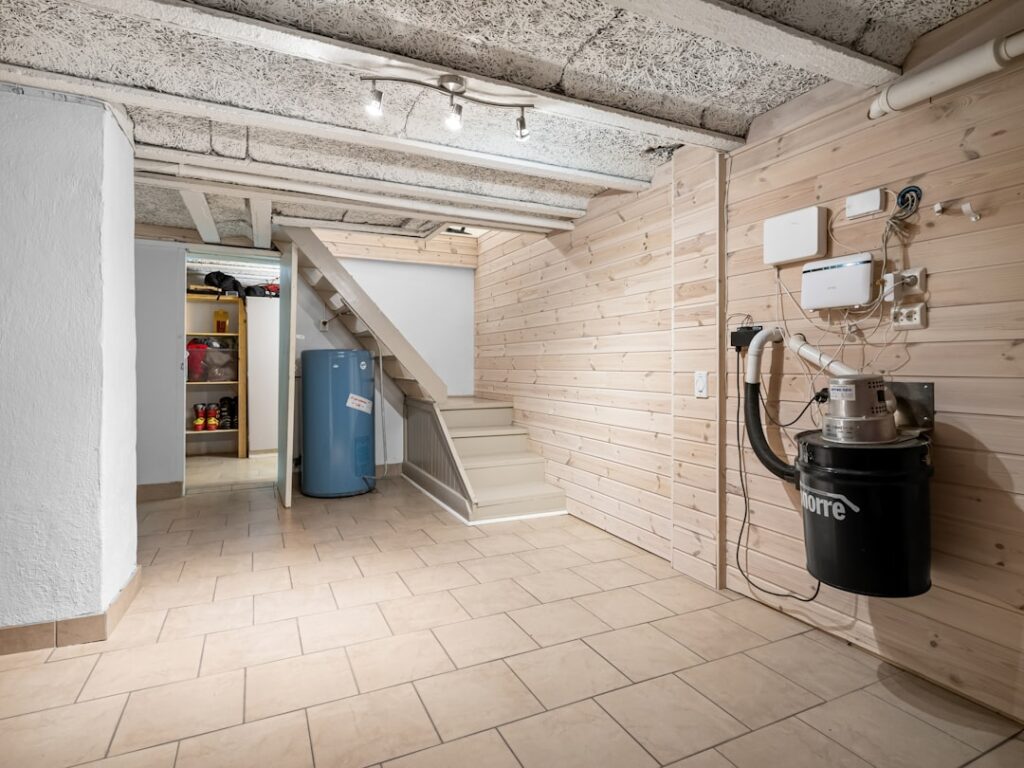
Basement radon levels are almost always higher than upper-floor levels in the same house, often by a factor of two to four. The reason is straightforward physics: radon enters a building through the foundation, and concentrations dilute as the gas migrates upward. For Front Range homeowners, the basement is also where finished living space is most often added — bedrooms, family rooms, home offices — which means basement radon is not an abstract problem. People sleep and work in basements at radon concentrations that would not exist on upper floors of the same home. This guide summarizes EPA and CDPHE guidance current as of 2026 and is not a substitute for testing your specific basement and consulting a certified radon professional. The Front Range sits squarely in EPA Radon Zone 1, the highest-risk classification, and Colorado’s geology produces above-average radon source strength under many homes.
Why basement radon is higher than upstairs
Two physical mechanisms drive the basement-versus-upstairs concentration gradient:
Sub-slab pressure differential. Soil gas — which carries radon from decaying uranium in the underlying rock — is at higher pressure than indoor air during much of the year. The basement floor and walls are the primary entry surfaces. Cracks, slab penetrations for plumbing and electrical, sump pit covers, and the slab-to-wall joint all admit soil gas. Once inside, radon enters the basement air before any other living space.
Stack effect. In Colorado winters, warmer interior air rises through the building. As that air leaves through upper-floor windows, ceiling fixtures, and roof penetrations, replacement air is drawn in from lower levels — including through the foundation. The stack effect amplifies sub-slab pressure differential and increases radon entry rates during heating season.
The combined effect is that a Front Range home reading 6 pCi/L in the basement might read 2 to 3 pCi/L on the main floor and 1 to 2 pCi/L upstairs. The basement reading is the most useful single number because it represents the highest exposure for people who use the basement as living space.
EPA action levels and what they mean
EPA’s action level for residential radon is 4 picocuries per liter (pCi/L). Homes testing at or above 4 pCi/L should be mitigated. The World Health Organization sets its action level lower at 2.7 pCi/L (100 Bq/m³). EPA emphasizes that there is no truly safe level of radon — the dose-response relationship for lung cancer is generally treated as linear with no threshold — but 4 pCi/L is the practical action threshold above which mitigation is consistently cost-effective.
EPA estimates radon exposure causes approximately 21,000 lung cancer deaths per year in the United States, making it the second leading cause of lung cancer after smoking and the leading cause among non-smokers. The risk multiplies substantially when radon exposure combines with active smoking.
Front Range homeowners should treat any basement reading above 4 pCi/L as a clear mitigation case. Readings between 2 and 4 pCi/L are a judgment call; many homeowners mitigate in that range as well, particularly if young children sleep in the basement.
How to test basement radon
Three testing methods cover most use cases:
Short-term passive test (charcoal canister or alpha track): 48 hours to 7 days of exposure in the basement, then mailed to a lab for analysis. Cost $15 to $35 plus lab fee. Best for screening and pre-purchase decisions when time is constrained.
Long-term passive test (alpha track or electret): 90 days to 12 months of exposure. Cost $25 to $60. Best for annual-average estimates because radon levels vary seasonally; winter readings tend to be higher than summer.
Continuous radon monitor (CRM): hour-by-hour electronic measurement. Cost $150 to $300 to purchase a home unit; $175 to $275 for a professional placement during a home inspection. CRMs reveal diurnal variation and ventilation effects that passive tests miss.
Test placement matters. Basement tests should sit at least 20 inches above the floor, away from drafts, exterior walls, and HVAC supply registers, with closed-house conditions maintained for the 12 hours before and during the test (windows and exterior doors closed except for normal entry and exit; HVAC running normally; whole-house fans off).
Sub-slab depressurization: the standard Front Range mitigation
The standard mitigation technique for basement radon in Front Range homes is active sub-slab depressurization (ASD). The system works by reversing the pressure differential that draws soil gas into the basement: a small fan creates suction under the slab, pulling soil gas through a piping network and venting it above the roofline before it can enter the living space.
A typical ASD installation includes:
A 4- to 6-inch diameter PVC suction pipe penetrating the basement slab at a strategically chosen location (usually near the highest-concentration area or near the largest slab penetration).
A radon fan rated for residential continuous operation, typically installed in the attic or on an exterior wall above the eave per ANSI/AARST mitigation standards.
A vertical exhaust pipe terminating at least 10 feet above ground and 10 feet from any window or air intake.
A manometer (U-tube pressure gauge) installed on the suction pipe to provide ongoing visual confirmation that the system is operating.
Sealing of major slab penetrations including the sump pit cover, slab-to-wall joint, and any unsealed pipe entries.
Pricing for Front Range ASD installations in 2026 typically runs $1,500 to $3,500. Homes with finished basements, complex floor plans, or multiple suction points push toward the high end. Post-installation testing should confirm basement radon levels below 4 pCi/L; well-designed systems often achieve 1 to 2 pCi/L.
Mitigation in finished basements
Mitigating a finished basement requires more planning than mitigating an unfinished one. Suction-pipe routing must work around finished walls and ceilings. Slab penetrations may need to be made under cabinets, behind built-ins, or through accessible mechanical chases. Some homeowners accept a small ceiling penetration in a closet rather than tear into finished drywall. Experienced Front Range mitigators handle these constraints routinely; the cost premium for finished-basement installations is typically $300 to $800 over an unfinished-basement install.
Homeowners weighing radon mitigation alongside related testing decisions can review our broader radon testing pillar and the deeper-dive sibling article radon in basements: why lower levels read so much higher, which covers the underlying physics in more detail.
What to look for in a mitigation contractor
Two national credentials cover most working radon professionals:
NRPP (National Radon Proficiency Program) certifies radon measurement professionals and mitigation professionals.
NRSB (National Radon Safety Board) offers parallel certifications.
Colorado does not require state licensing of radon professionals as of 2026, but CDPHE publishes guidance on selecting certified mitigators. Ask any candidate for:
1. Active NRPP or NRSB certification number.
2. Liability insurance and workers’ compensation coverage.
3. Written installation specifying suction-point location, fan model, exhaust routing, and post-installation guarantee.
4. Post-installation testing protocol — is the contractor providing a follow-up test, or are you expected to retest with a separate kit?
5. Warranty on the fan and system performance.
6. Two or three recent Front Range references.
Ongoing maintenance after mitigation
Active radon systems are low-maintenance but not zero-maintenance:
Check the manometer monthly to confirm the fan is operating (the U-tube fluid should be offset, not level).
Retest the home every two years per EPA recommendation, or annually for the first two years post-installation.
Radon fans typically last 7 to 12 years; failure usually shows as the manometer returning to level. Replacement fans typically cost $400 to $700 installed.
Avoid sealing the exhaust pipe or covering the fan during exterior maintenance.
After any significant foundation work, sump-pump replacement, or basement remodel, retest to confirm the system still meets target levels.
Passive radon-resistant new construction (RRNC) on the Front Range
Many new homes built on the Front Range since the mid-2000s incorporate passive radon-resistant new construction (RRNC) features under local building codes. RRNC includes a gas-permeable layer of clean aggregate beneath the slab, a continuous polyethylene vapor barrier above the aggregate, sealed slab penetrations and joints, and a passive vent stack extending from beneath the slab through the roof. The passive vent stack relies on stack effect to draw soil gas upward without an active fan.
RRNC alone does not eliminate radon risk. Passive systems reduce average radon entry by perhaps 50 percent, but Front Range source strength is high enough that many RRNC homes still test above the EPA action level. The advantage of RRNC is that converting a passive system to an active sub-slab depressurization system after testing is cheaper and faster than retrofitting a non-RRNC home — the vent stack and aggregate layer are already in place, and the conversion involves only adding a fan and a manometer to the existing stack. RRNC-to-active conversion typically costs $700 to $1,500 versus $1,500 to $3,500 for a full retrofit.
Why winter testing produces higher numbers
Front Range homeowners testing in different seasons should expect different readings. Winter testing produces higher results because three physical effects compound during the heating season:
Stack effect intensifies as warm interior air rises through the building, drawing replacement air through the foundation. Cold outside air at ground level creates a stronger pressure differential between sub-slab soil gas and basement air.
Closed-house conditions are the norm. Windows and doors stay shut, ventilation rates drop, and radon that enters the basement has less air exchange to dilute it.
Soil-gas pressure increases relative to atmospheric pressure when the ground surface freezes, sealing more of the soil-gas escape pathways at the surface and forcing more gas through any available opening — including the basement floor.
Summer readings tend to run 30 to 70 percent of winter readings in the same home. Testing in the most-occupied season (winter for most Front Range homes) produces the most defensible exposure estimate. The EPA action level of 4 pCi/L is generally interpreted against an annual-average exposure; a winter short-term test that reads above 4 pCi/L is a strong indicator that the annual average is also above 4 pCi/L.
Radon and water
Most Front Range radon enters homes through soil gas, but radon can also enter through household water in homes served by private wells drawing from radon-bearing aquifers. Public water utilities almost never have meaningful radon contributions because radon dissipates during water treatment and storage. Well-water radon testing runs $25 to $75 per sample and is worth considering for homes with private wells in radon-prone geology, particularly when air radon readings are already elevated and water remains a possible additional source.
Water-borne radon contributes to indoor air radon when household water is agitated — showering, dishwashing, laundry — and releases dissolved radon into the indoor air. The EPA proposed (but did not finalize) a 4,000 pCi/L action level for water-borne radon in public water supplies, recognizing that the air-exposure pathway is the primary driver of radon health risk.
References
- EPA Radon homeowner program — U.S. Environmental Protection Agency
- CDC Radon and Lung Cancer — Centers for Disease Control and Prevention
- CDPHE Colorado Radon Program — Colorado Department of Public Health and Environment
- American Lung Association radon guidance — American Lung Association
This guide summarizes EPA and CDPHE guidance current as of 2026 and is not a substitute for testing your specific home or consulting a certified radon professional. Front Range homeowners with elevated basement radon readings can connect with a vetted certified mitigator through our contact page.