What Is Radon Testing? Complete 2026 Guide for Homeowners
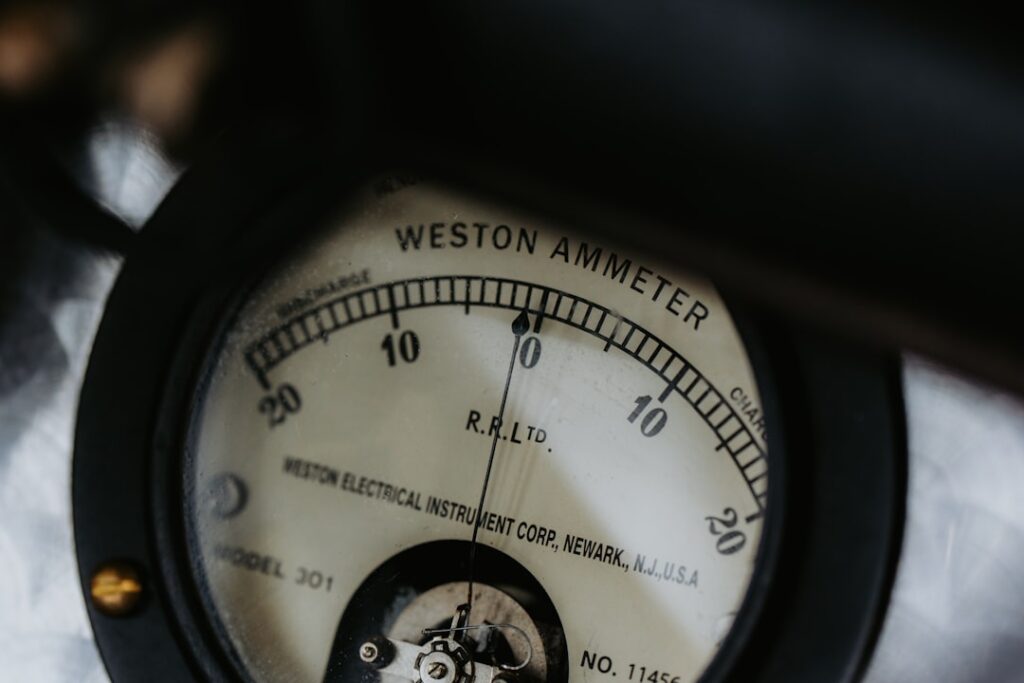
Radon testing is the measurement of indoor radon gas concentration to determine whether a building presents a long-term health risk to its occupants. The question what is radon testing breaks down into several connected questions — what radon is, why it matters, how the testing actually works, what the result means, and what action it triggers. For Colorado Front Range homeowners, the question carries additional weight because the entire state sits in EPA Radon Zone 1, the highest-risk classification, with average indoor concentrations roughly twice the national mean. This guide is a comprehensive plain-language overview of radon testing in 2026, drawing on EPA, CDC, and CDPHE guidance. It is informational only — consult an NRPP-certified professional for any decisions about your specific home.
Part of our Radon Levels guide — start there for the full picture →
What Radon Is
Radon is a naturally occurring radioactive noble gas, chemical symbol Rn-222, produced by the radioactive decay of radium-226 in soil and rock. Radium is itself a decay product of uranium-238, which is present in trace concentrations in nearly all soils and bedrock worldwide. The decay sequence is uranium → radium → radon → series of short-lived daughter products → stable lead-206.
Radon gas is chemically inert. It does not bond with other elements at room temperature and does not react with building materials. It is heavier than air (about 7.5 times the density of air), which is why it tends to concentrate in basements and lower floors. Radon is invisible, odorless, and tasteless.
The health hazard from radon is its radioactivity. When a radon atom decays, it emits an alpha particle and becomes polonium-218 — a chemically reactive isotope that attaches to dust particles in the air. Those particles are inhaled and lodge in lung tissue, where successive decays of polonium-218, lead-214, bismuth-214, and polonium-214 deliver radiation doses directly to lung cells. Over years of exposure, this radiation damage increases the risk of lung cancer.
EPA estimates radon causes approximately 21,000 lung cancer deaths per year in the United States, making it the second-leading cause of lung cancer overall and the leading cause among non-smokers. The risk scales with concentration and exposure duration — a person living for 30 years in a home at 8 pCi/L has roughly four times the lifetime lung cancer risk from radon as someone in a 2 pCi/L home.
Why Colorado Homes Test High
Colorado averages 6-9 pCi/L across many Front Range counties, with individual homes routinely measuring 15-30 pCi/L or higher. The reasons are geological and climatic:
Uranium-bearing geology. The Front Range Foothills, the Rampart Range, the Pikes Peak Granite, and several sedimentary formations across the metro area contain elevated background uranium and radium concentrations. As those elements decay, they produce radon in the soil pore spaces.
Permeable soils. Sandy, fractured, and gravel-rich soils common across the Front Range allow soil gas to migrate easily from depth to the surface. This contrasts with heavy clay soils that retain soil gas longer.
Heating-driven stack effect. Colorado’s cold winters create strong indoor-outdoor temperature differentials. Warm indoor air rises and exits at upper levels, pulling cold soil gas (including radon) into the lower levels through any foundation opening — slab cracks, sump pits, plumbing penetrations, control joints.
Basement-heavy construction. Front Range single-family homes are disproportionately built with full basements, which place living space directly against the soil-gas entry pathway.
EPA’s Zone 1 designation reflects this convergence of factors. CDPHE estimates that approximately 50% of Colorado homes test above the 4 pCi/L action level, compared to about 6% nationally. For the broader Colorado context, see the Colorado radon testing guide for Front Range homeowners.
How Radon Testing Works
All radon tests measure the alpha-particle emissions or decay products of radon-222 in the air. Three test methodologies are recognized by the EPA Indoor Air Quality Program:
Short-Term Passive (Charcoal Canister)
A small canister of activated carbon is opened in the home, left for 2-7 days, then closed and shipped to a lab. Radon decay products adsorb onto the charcoal. The lab measures the gamma emissions to back-calculate the average concentration during the exposure window. Cost is $15-$35 including lab analysis.
Long-Term Passive (Alpha-Track)
A small detector chip is exposed in the home for 90 days to one year. Alpha particles etch microscopic tracks in the chip. The lab counts the tracks under a microscope to determine average concentration. Cost is $25-$50.
Continuous Radon Monitor
An electronic device with an ionization chamber or solid-state detector records hourly radon concentration in real time. Professional CRMs are used by NRPP-certified testers for 48-96 hour tests, especially in real-estate transactions. Consumer CRMs (Airthings, RadonEye, EcoQube) cost $150-$300 for ongoing home monitoring.
Each method has trade-offs. Short-term passive is cheapest and fastest but most sensitive to test-window variation. Long-term passive is most representative of annual average exposure. Continuous monitors document the test conditions and provide real-time data but cost more. The radon test methodology glossary walks through each in detail.
The EPA Action Level and What It Means
EPA’s recommended action level is 4.0 picocuries per liter (pCi/L). This is the threshold at which mitigation is recommended:
4.0 pCi/L and above: Mitigate. Install a radon reduction system to lower the level below 4 pCi/L.
2.0 to 3.9 pCi/L: Consider mitigation. The risk is elevated but below the action level. Many homeowners choose to mitigate proactively in this range.
Below 2.0 pCi/L: No action recommended. Retest every 5-10 years or after major foundation work.
The 4.0 pCi/L threshold is a policy compromise rather than a safe-exposure threshold. WHO recommends action at 2.7 pCi/L (100 Bq/m³), and EPA acknowledges that no level of radon is technically safe — risk decreases as concentration decreases, but the curve doesn’t reach zero. EPA’s 4.0 number reflects a balance between health risk reduction and practical mitigation feasibility.
For comparison, ambient outdoor air typically contains 0.4 pCi/L. Indoor levels at or near outdoor concentration represent a “best practical” target rather than zero risk.
When to Test
EPA’s testing recommendation:
Every home should be tested at least once. Period. Regardless of geography, foundation type, or building age.
During a real-estate transaction. Radon testing is a standard inspection contingency in Colorado and most Zone 1 states. The test is performed under closed-house conditions during the inspection period.
After moving into a previously untested home. Within the first 6 months of occupancy.
After major foundation work. Any work that breaches the slab, basement floor, or foundation can change radon entry. Retest after the work.
Every 2-5 years if previous results were elevated. Radon concentrations vary over time due to soil moisture, freeze-thaw cycles, foundation aging, and ventilation changes. CDPHE recommends retesting on the lower end of that range in Colorado.
After mitigation system installation. A post-mitigation test verifies the system reduced radon below 4 pCi/L. Typically performed 24-48 hours after the system is operating.
What a Test Result Triggers
The result of the test determines the next step:
For results below 2.0 pCi/L, no action is recommended. Retest in 5-10 years.
For results in the 2.0-3.9 pCi/L range, consider mitigation. Many Colorado homeowners in this range install a sub-slab depressurization (SSD) system proactively, especially if children, smokers, or immunocompromised residents are in the home.
For results at or above 4.0 pCi/L, mitigation is recommended. The standard approach in Colorado is SSD — a pipe is installed through the basement floor or crawlspace, an in-line fan above the roofline creates a vacuum under the slab, and soil gas is exhausted above the eaves. Typical cost in the Front Range is $1,000-$2,500. The Colorado mitigation system cost guide covers the pricing breakdown.
Test Tampering and How Tests Are Validated
For real-estate transactions, the financial stakes around radon results have led to a small but documented history of test tampering by sellers — opening windows during the test, running fans, or moving the device. The protective measures:
Sealed deployment. The tester verifies closed-house conditions at deployment and may tamper-seal windows.
Continuous monitors with motion and tamper sensors. Modern professional CRMs log movement, temperature, humidity, and barometric pressure alongside the radon reading. Any anomaly is visible in the report.
Duplicate testing. Two devices placed in the same room — if the results differ substantially, one or both is suspect.
For most real-estate radon tests in 2026, a CRM with continuous logging has become the default precisely because it documents what happened during the test, not just the average number at the end.
References
- EPA radon testing program overview — U.S. Environmental Protection Agency
- CDC radon health risks and prevention — Centers for Disease Control and Prevention
- CDPHE Colorado radon program and certified professionals directory — Colorado Department of Public Health and Environment
- American Lung Association radon resources — American Lung Association
Frequently asked questions
Why is radon dangerous?
Radon is a radioactive gas that decays into short-lived daughter products inhaled with normal breathing. The decay products lodge in lung tissue and emit radiation that damages lung cells over years of exposure. EPA estimates radon causes about 21,000 lung cancer deaths per year in the U.S.
What is a normal radon level?
Outdoor ambient radon is typically 0.4 pCi/L. The national average indoor radon level is around 1.3 pCi/L. EPA recommends action above 4.0 pCi/L. Colorado averages 6-9 pCi/L across many Front Range counties due to geology and climate.
How long does radon testing take?
Short-term passive tests run 2-7 days with lab results in 5-10 business days after return. Long-term passive tests run 90 days to one year. Continuous monitors return real-time results, commonly used for 48-96 hour tests in real-estate transactions.
Do I need to test for radon if my house is new?
Yes. Radon-resistant new construction (RRNC) building codes have spread across Colorado since 2009, but the codes reduce risk on average without eliminating it. Every home should be tested at least once, regardless of age.
Front Range homeowners ready to schedule their first radon test or follow up on an elevated reading can connect through our contact page for a referral to an NRPP-certified Colorado professional.
Test your home for radon
Radon is invisible and odorless, so a test is the only way to know your level. A short-term kit gives a first reading in days; a digital monitor tracks it over time.
| Product | Why | Buy |
|---|---|---|
 AirChek Charcoal Radon Test Kit AirChek Charcoal Radon Test Kit | Lab fee usually included; EPA short-term protocol. | Amazon — $21.95 |
 First Alert RD1 Radon Test Kit First Alert RD1 Radon Test Kit | Widely stocked; 48-hour charcoal test. | Amazon — $16.98 |
 Airthings Corentium Home Airthings Corentium Home | Digital monitor with a long-term average. | Amazon — $147.14 |