Do I Need a Radon Detector: What Homeowners Need to Know
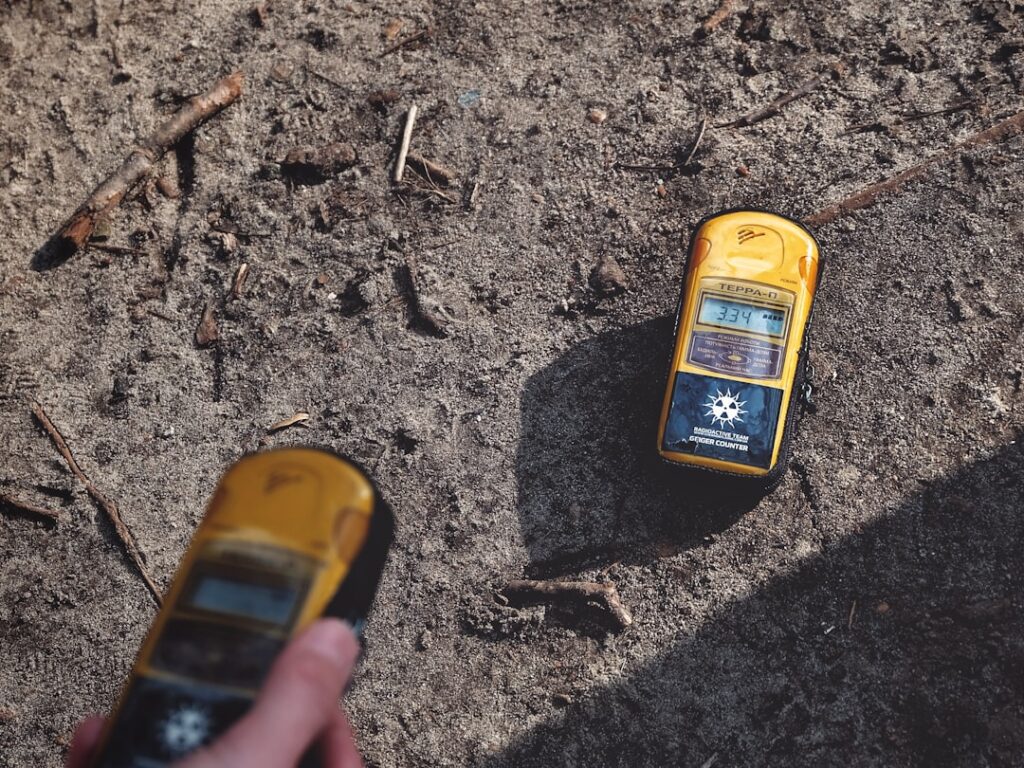
A radon detector is not a smoke alarm; the gas is colorless, odorless, and not perceptible by people. The question of whether a Colorado homeowner needs a continuous monitor — as opposed to a single short-term test — depends on radon history, building characteristics, and how often the household wants visibility into changing levels. This guide builds a decision framework. The summary reflects EPA and CDPHE guidance current as of 2026 — consult a licensed mitigation contractor for elevated readings and your physician for any health concerns.
Part of our Radon Levels guide — start there for the full picture →
Do I Need a Radon Detector: The Direct Answer
Most Colorado homeowners do not need a permanent radon detector. A one-time short-term test plus a confirmatory follow-up is the EPA’s baseline recommendation, and that can be accomplished with $20 to $50 of disposable kits. A continuous radon monitor — a consumer device that reads radon hourly and displays results on a screen or app — adds value for three audiences: households in known-elevated neighborhoods, owners of recently installed mitigation systems who want ongoing system-performance data, and buyers who want a permanent baseline reading in a basement-level bedroom.
What a Radon Detector Actually Does
A consumer continuous radon monitor (CRM) uses a small ionization chamber or electret to register alpha particle hits from the radon decay chain. Hits per hour are translated into a running pCi/L estimate. Most consumer units display a rolling 24-hour and seven-day average. Higher-end models log to an app via Bluetooth or Wi-Fi, allowing trend charts across months. Entry-tier consumer CRMs include the AirThings Wave Plus, Corentium Home (also AirThings), Ecosense RadonEye, and Ecosense EcoQube. Prices run $150 to $300 for the consumer tier.
Pro-grade CRMs — Sun Nuclear, RadonAway PRO, AlphaGuard — operate in the $1,200 to $5,000 range and are used by licensed measurement specialists for real-estate testing. Homeowners do not need pro-grade equipment.
Scenarios Where a Detector Pays Off
You Have a Mitigation System
After a Colorado mitigator installs sub-slab depressurization, the system fan runs continuously. If the fan fails or a duct cracks, indoor radon can rebound to pre-mitigation levels within days. A consumer CRM next to the bedroom door provides early warning. Many Front Range mitigators recommend pairing a new install with a $200 consumer monitor.
You Live in a Known-Elevated Neighborhood
Several Front Range zip codes — north Boulder, parts of Golden, the foothills of Jefferson County — show repeatedly elevated radon in CDPHE mapping. Households in these areas benefit from continuous visibility because radon can change with building modifications, seasonal patterns, and basement remodeling.
You Have a Basement Bedroom
Children or adults who sleep in a basement room receive the highest exposure if radon is present. A continuous monitor by the bed produces actual hourly readings, not a single number from a three-day test taken three years ago. The pillar guide on radon testing in Colorado covers exposure-by-room considerations.
You Recently Finished a Basement
Basement finishing changes the building’s air dynamics — new floor coverings, sealed mechanical rooms, new HVAC ducting. Pre-finish radon levels are not necessarily predictive of post-finish levels. A continuous monitor during the first year captures any change.
Scenarios Where a Detector Is Overkill
A single-story slab-on-grade home outside known-elevated zones with two consecutive short-term tests below 2 pCi/L does not need a permanent detector. The same applies to an upper-floor condo where soil-gas pathways are essentially zero. Seasonal re-testing every two to three years with a $20 kit is appropriate maintenance for these households. Buying a $200 CRM for a building that is unlikely to show radon is a discretionary spend, not a safety necessity.
Consumer CRM Brands and What They Track
AirThings Wave Plus
Reads radon, CO2, VOCs, humidity, temperature, and pressure. App-based. About $230. Wi-Fi optional. Most popular consumer multi-sensor on the Front Range.
Corentium Home
Battery-powered, no app, on-device display only. About $170. Simple radon-only readout. Reliable choice for homeowners who do not want another connected device.
Ecosense RadonEye
Bluetooth app. Hourly accuracy generally good per consumer reviews. About $200. Faster signal acquisition than passive electrets in the same price band.
Ecosense EcoQube
App-connected. About $200. Compact form factor. Comparable performance to RadonEye.
The in-batch in home radon test guide covers continuous monitoring versus integrated testing in more depth.
Consumer-Grade Accuracy Caveats
Consumer CRMs are not EPA-accepted for real-estate transactions. They do not carry NRPP or NRSB calibration certificates. Readings from these devices are useful for trend monitoring and personal awareness, but they do not substitute for a licensed measurement specialist’s certified report. A consumer CRM showing 3.8 pCi/L is reason to commission a chain-of-custody test from a licensed pro, not reason to install mitigation.
Accuracy improves with time. A CRM that has been operating for 30 days produces a more trustworthy average than one that has been operating for 24 hours. Initial readings can fluctuate widely before the device’s running average stabilizes.
Detector vs. Periodic Testing — The Economics
A short-term DIY kit costs $20. A long-term alpha-track kit costs $35. Testing twice a year with short-term kits costs $40 annually. A $200 consumer CRM amortizes against that schedule in about 18 to 24 months. After the breakeven point the CRM is cheaper than continued kit purchases. Add the value of continuous visibility — early warning of mitigation-system failure, real-time data during basement remodels — and the CRM wins on time horizons longer than two years for households that fit the scenarios above.
How to Place a Continuous Detector
Place the CRM in the lowest livable level used regularly. Standard EPA placement rules apply: 20 inches above the floor, 12 inches from exterior walls, four inches from objects, away from drafts and direct sun. Avoid bathrooms, kitchens, and laundry rooms. For households worried about basement-bedroom exposure, position the device in the bedroom itself rather than an adjacent storage area. For mitigation-system monitoring, position the device on the same floor as the slab penetration to capture any rebound.
Most consumer CRMs are designed to run continuously, plugged in or battery-powered. Check the device every few weeks for the rolling average and any spike alerts.
What a Detector Cannot Do
A consumer CRM cannot fix radon. It can only report. If readings rise above the EPA action level, the response is professional mitigation, not buying a more expensive detector. Detectors also do not detect radon decay products separately — they integrate the alpha hit signal into a single pCi/L estimate. For detailed decay-chain dosimetry, only research-grade instruments suffice. The in-batch how do you test for radon gas guide explains the underlying detection science.
Calibration and Drift Over Time
Consumer CRMs are typically calibrated at the factory and shipped with no provision for re-calibration. Manufacturers generally claim accuracy of ±10 to ±20 percent at the action level for the first 12 to 24 months. After that, sensor drift can introduce error. AirThings publishes a recommended replacement interval of about 7 years for the Wave Plus; Ecosense recommends roughly similar for the RadonEye. Owners worried about long-term accuracy can periodically cross-check the CRM against a fresh DIY canister test under the same conditions — if the readings agree within 25 percent the CRM is still trustworthy.
Pro-grade CRMs deployed by licensed measurement specialists require annual calibration documented by a certificate. This is part of why pro testing carries credential weight for real-estate transactions; the device is on a current calibration record, not a six-year-old factory setting.
What the App-Based Models Add
AirThings, Ecosense, and Corentium app-connected models push hourly readings to a phone or cloud account. Useful features include: spike alerts when readings exceed user-defined thresholds, trend charts across days and months, multiple-room aggregation when several units are deployed, and pressure-temperature-humidity context overlays. Some app ecosystems integrate with Apple HomeKit or Google Home for automation — a high radon reading could, for example, trigger a basement-window-mounted fan or a notification to a smart-home hub.
The downside is the typical connected-device tradeoff: another app on the phone, another account password, another firmware update to manage. Homeowners who value simplicity should consider the on-device-display-only Corentium Home or comparable models.
When to Replace a Consumer CRM
Plan for replacement around year seven to nine. Sensor drift, accumulated alpha-particle damage in the chamber, and aging electronics reduce accuracy over time. A homeowner whose original $200 monitor was purchased in 2019 should budget $200 to $300 for a replacement around 2026 to 2028. Most manufacturers recommend replacement rather than repair for consumer units.
The replacement opportunity is also a chance to upgrade. Multi-sensor units now cover radon plus CO2, VOCs, particulates, humidity, and temperature in a single device. For households worried about indoor air quality broadly, the upgrade adds value beyond just radon visibility.
Detectors in Rental Properties
Landlords on the Front Range increasingly install consumer CRMs in basement units to demonstrate good-faith awareness of radon exposure. The device sits in the living area, the tenant can see the readings, and the landlord has documented evidence of ongoing visibility. CDPHE recommends every Colorado rental be radon-tested with results disclosed to tenants. A consumer CRM is a low-cost way to demonstrate compliance and protect against future liability claims.
Tenants worried about radon in a rental unit can purchase their own consumer CRM. The device is portable and the tenant keeps it when moving. For a $200 expense, a tenant who lives in basement units across multiple Front Range apartments builds a personal radon-exposure history that no landlord disclosure can match.
More Questions About Radon Detectors
Is a radon detector the same as a carbon monoxide detector?
No, radon detectors and carbon monoxide detectors are different devices that measure different gases. Carbon monoxide detectors alarm quickly when dangerous levels of CO build up from fuel-burning appliances. Radon detectors measure radon, a radioactive gas from soil, averaged over hours, days, or longer.
Combination smoke and CO alarms do not detect radon. Radon is tested with charcoal kits, alpha-track detectors, or continuous radon monitors. Homes with fuel-burning appliances need CO alarms regardless of radon testing.
Is it safe to keep a radon detector in a bedroom?
Yes, keeping a radon detector in a bedroom is safe. Consumer radon detectors passively measure radon in the air and do not emit radiation, gases, or anything harmful. Charcoal canisters, alpha-track detectors, and electronic continuous monitors all simply sample the air in the room.
A basement or ground-floor bedroom is often a good placement, since occupants spend many hours there. Keep the detector about 20 inches or more above the floor, away from windows, vents, and exterior walls, and out of reach of children and pets.
Can a radon detector be used in multiple rooms?
Yes, a portable continuous radon monitor can be moved between rooms, but each location needs enough time for readings to stabilize, often at least several days for a meaningful average. Moving the monitor frequently gives short snapshots that are less reliable.
The lowest lived-in level of the home is the priority location. Households with bedrooms on different floors may test each level in turn. Some homeowners buy two monitors for simultaneous readings on different floors.
Do radon detectors alarm like smoke detectors?
Some consumer radon detectors include alerts when averages exceed a set threshold, such as 4 pCi/L, but they do not sound emergency alarms like smoke or carbon monoxide detectors. Radon risk is based on long-term exposure, so readings are averaged over time rather than triggering immediate warnings.
App-connected monitors may send notifications when levels rise. Short-term spikes are common and not cause for panic. Decisions about mitigation should be based on longer-term averages or follow-up testing.
References
- A Citizen’s Guide to Radon — U.S. Environmental Protection Agency
- Colorado Radon Program — Colorado Department of Public Health and Environment
- About Radon — Centers for Disease Control and Prevention
- Radon and Your Health — American Lung Association
Frequently asked questions
Is a radon detector required by law in Colorado?
No state law requires a continuous radon detector in a private residence. Some local jurisdictions require radon-resistant new construction with passive vent stubs. CDPHE recommends testing every two years and after major building changes.
How accurate is a $200 consumer radon detector?
Consumer-grade CRMs generally produce trend-quality data accurate enough for personal awareness. They are not EPA-accepted for real-estate transactions, which require a licensed measurement specialist's calibrated equipment.
Where should I place a continuous radon monitor?
Place it in the lowest livable level used regularly, 20 inches above the floor, 12 inches from exterior walls. Avoid bathrooms, kitchens, and laundry rooms. Bedroom placement is appropriate for households worried about overnight exposure.
Do radon detectors replace short-term testing?
A consumer CRM provides better long-term visibility than periodic kits, but it does not satisfy real-estate testing requirements. For an initial baseline, run a short-term DIY test or hire a licensed measurement specialist first, then add a CRM for ongoing monitoring.
Do I need a radon detector if I have a mitigation system?
A radon detector is not required with a mitigation system, but a continuous monitor gives ongoing confirmation that the system is working. At minimum, check the system's manometer regularly and retest every two years with a short-term kit.
Can a radon detector be plugged into any outlet?
Most plug-in radon detectors can use any standard outlet, but placement matters more than outlet location. Position the monitor in the lowest lived-in level, away from drafts, exterior walls, heat sources, and high humidity areas like bathrooms or laundry rooms.
Are radon detectors worth it for apartments?
Radon detectors are less often needed in upper-floor apartments, since radon usually affects levels in contact with the ground. EPA recommends testing units below the third floor. Ground-floor and basement apartments are the most likely to have elevated radon levels.
Does a radon detector work in a garage?
A radon detector will measure radon in a garage, but the result does not represent exposure in the living space and garage doors and drafts make readings unstable. EPA guidance recommends testing in the lowest lived-in level of the home, so place the detector inside the house instead.
Front Range homeowners considering mitigation or wanting a licensed measurement specialist’s input can reach out through our contact page.
Continuous radon detectors
A digital monitor gives you an always-on reading and a long-term average — better than a one-shot kit if you want to track levels over time.
| Product | Why | Buy |
|---|---|---|
 Airthings Corentium Home | Battery, portable; trusted long-term average. | Amazon — $99.99 |
 Ecosense RadonEye RD200 | Fast first reading (~1 hr); app logging. | Amazon — $169.00 |
 Airthings View Plus | Radon + CO2 + PM + VOC in one unit. | Amazon — $329.99 |