Radon Detector: 2026 Complete Buyer and Homeowner Guide
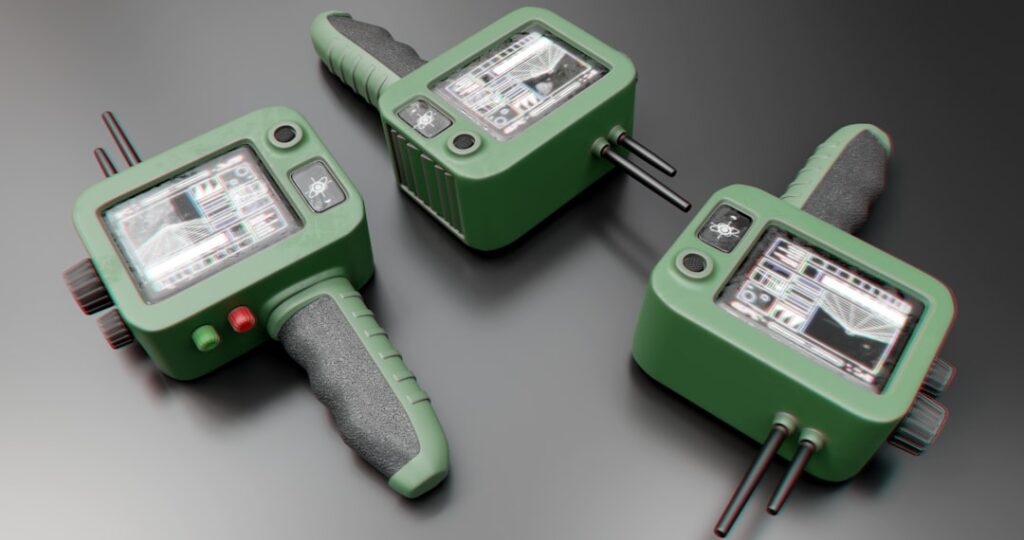
A radon detector is the device a homeowner uses to find out whether their home contains elevated radioactive gas that the Environmental Protection Agency identifies as the second-leading cause of lung cancer in the United States. The detector category in 2026 spans five main equipment types — continuous radon monitors, short-term test kits, long-term alpha-track detectors, electret ion chambers, and professional reference instruments — and each one serves a different use case at a different price point. This guide is the complete reference: how each detector type works, what it costs, when to use it, and how to interpret the result against EPA’s 4 pCi/L action level. This guide summarizes EPA, CDC, and Colorado Department of Public Health and Environment guidance current as of 2026 — consult a certified professional for transaction-related testing and mitigation decisions specific to your property.
Part of our Radon Levels guide — start there for the full picture →
What is a radon detector?
A radon detector is any device or test medium that measures the concentration of radon-222 gas or its radioactive decay products in indoor air and reports the result in picocuries per liter (pCi/L) or becquerels per cubic meter (Bq/m³). The result lets a homeowner compare their indoor air against EPA’s recommended action level of 4 pCi/L. Detectors fall into two operational categories: passive devices that integrate exposure over days to months and require laboratory analysis after retrieval, and active devices (continuous radon monitors) that contain electronics, measure hour-by-hour, and produce a real-time readout.
Radon detectors are necessary because radon gas is colorless, odorless, and chemically inert — there is no human sense that can detect it. The gas enters homes from soil and rock beneath the foundation, accumulates in basements and lower floors, and decays into short-lived radioactive progeny that lodge in lung tissue when inhaled. The Environmental Protection Agency, the Centers for Disease Control and Prevention, and the U.S. Surgeon General all identify radon as a major preventable cause of lung cancer, and detectors are the practical mechanism for finding it.
The five main radon detector categories in 2026
Continuous radon monitors (consumer-grade)
Consumer continuous radon monitors are electronic devices that measure radon hour by hour, display a current reading and rolling averages on a small screen or smartphone app, and live in the home permanently for ongoing visibility. Pricing in 2026 runs $150 to $400 for the popular models. The device sits on a shelf or table in the lowest occupied level of the home — typically the basement or main-floor living area — and provides a daily, weekly, and long-term average pCi/L reading. Most consumer CRMs include an alarm threshold the homeowner can set, smartphone app connectivity, and historical trend visualization.
Consumer CRMs are the practical fit for homeowners who want ongoing monitoring rather than a single-time snapshot. They capture seasonal variation (radon levels typically peak in winter when homes are sealed against cold), respond to mitigation system performance changes, and provide reassurance during long-term occupancy. The accuracy of well-designed consumer CRMs is within ±15 to 20% of a professional reference instrument over a multi-day average, which is sufficient for monitoring purposes.
Short-term test kits
Short-term test kits are passive devices designed for 2 to 7 day deployments. The most common kit is the activated charcoal canister — a sealed metal can containing charcoal that adsorbs radon during exposure. The homeowner opens the can in the test location, leaves it for the specified duration, reseals it, and ships to the lab for gamma spectroscopy analysis. Cost is $15 to $30 per test including lab analysis.
Test kits are the cheapest detector option and the typical starting point for initial screening. Many county health departments and state radon programs offer free or low-cost kits as part of state Indoor Radon Grant programs. The Colorado Department of Public Health and Environment periodically distributes free kits to Front Range residents. For a homeowner with no prior radon history, a single short-term kit costs less than dinner and provides a useful first-pass screening.
Long-term alpha-track detectors
Alpha-track detectors are passive devices that integrate exposure over 90 days to one year. The detector contains a small plastic strip; alpha particles from radon decay leave microscopic tracks on the plastic, which the lab counts under microscopy after the deployment period. Cost is $30 to $80 per detector including lab analysis.
Long-term tests produce the most accurate estimate of annual average exposure because they capture the seasonal variation that short-term tests miss. EPA recommends long-term testing as the gold standard for understanding chronic exposure. The trade-off is the long wait time — a 90-day test does not produce a result useful for a real-estate transaction that closes in 30 days.
Electret ion chambers
Electret ion chambers are passive devices used predominantly by certified Measurement Specialists rather than homeowners. Each electret carries a static electrical charge that diminishes proportionally to ion exposure from radon decay. After deployment (2 to 7 days for short-term electrets, 30+ days for long-term), the electret voltage is read with a specialized meter and the radon concentration calculated. Per-test cost is $25 to $50 when used by a certified professional.
Electrets are not typically a consumer purchase because the voltage reader is specialized equipment and the deployment protocol requires training. Homeowners encounter electrets when hiring a certified Measurement Specialist who chooses electret over CRM for a specific project.
Professional continuous radon monitors
Professional CRMs used by NRPP-certified Measurement Specialists are higher-grade instruments costing $800 to $3,000 to purchase. They require periodic calibration through certified calibration laboratories and produce reports with hour-by-hour data, tamper detection, and chain-of-custody documentation that satisfies real-estate transaction requirements and post-mitigation clearance protocols.
The professional CRM is the device behind most paid transaction-related radon tests in 2026. The homeowner does not buy or operate it — the certified Measurement Specialist deploys it, retrieves it, and produces the report. The 48-hour CRM test is the standard transaction-related test because the result is available immediately at retrieval.
How accurate is a radon detector?
Accuracy varies by detector category and quality assurance program. Professional CRMs operated by certified Measurement Specialists with documented calibration are the reference standard — accuracy within ±10% of true concentration is typical. Consumer CRMs from established manufacturers typically achieve ±15 to 20% accuracy when averaged over 24+ hours. Activated charcoal canisters analyzed by NLLAP-accredited or similar quality labs achieve ±20 to 25% accuracy. Alpha-track detectors achieve ±10 to 15% over their 90-day to one-year integration period.
The accuracy specification matters most when the measurement result is near the EPA action level of 4 pCi/L. A reading of 4.2 pCi/L from a device with ±20% accuracy could represent a true value anywhere from 3.4 to 5.0 pCi/L — clearly in the gray zone where additional testing is warranted. A reading of 8 pCi/L with the same accuracy specification is unambiguously elevated and triggers a mitigation decision.
EPA recommends following any borderline short-term test result (2 to 4 pCi/L) with a confirmatory long-term alpha-track or extended CRM measurement before making a mitigation decision. This protocol balances cost against the value of an accurate annual average estimate.
When to use which detector type
Real-estate transactions
For pre-purchase radon testing, hire a certified Measurement Specialist using a professional CRM for a 48-hour test under closed-house conditions. The certified service produces a chain-of-custody documented report that lenders and contracts expect. Cost is $125 to $300 in the Front Range market. Do not rely on a $20 DIY kit for a transaction-grade decision.
Initial home screening (no prior history)
For a homeowner with no prior radon testing history, start with one or two short-term test kits placed in the lowest occupied level. If the result is above 4 pCi/L, proceed to mitigation. If the result is between 2 and 4 pCi/L, follow up with a long-term alpha-track test for a more accurate annual average. If the result is below 2 pCi/L, retest every two years per EPA recommendation.
Ongoing household monitoring
For a homeowner who wants permanent radon visibility after initial testing or post-mitigation, a consumer continuous radon monitor is the practical choice. The device lives in the home, alerts to elevated readings, and provides multi-year trend data. Pricing of $150 to $400 amortizes well over the device’s typical 10-year service life.
Post-mitigation verification
After a mitigation system is installed, hire a certified Measurement Specialist (different from the mitigation contractor, to avoid conflict of interest) for a 48-hour CRM test confirming the system reduced radon below EPA’s 4 pCi/L threshold. Most properly designed mitigation systems achieve below 2 pCi/L within 24 to 48 hours of activation.
How does a radon detector actually pick up radon?
Detectors measure radioactive decay events occurring in sampled air or on collection media. Continuous radon monitors typically use ion chambers or alpha-particle photodiode detectors. The radon-222 atoms diffuse into the sampling chamber through a filter that excludes pre-existing progeny, and the device counts the alpha decays occurring inside the chamber. The count rate translates directly to a concentration in pCi/L. Alpha-track detectors record alpha particles on a plastic strip; the lab counts the tracks after deployment.
The conversion from raw counts to a pCi/L reading involves calibration factors, sampling-chamber geometry, and quality assurance protocols. Reputable detector manufacturers calibrate against reference standards maintained at certified calibration laboratories. The radon gas monitor overview and radon testing devices category guide cover the technical specifications in depth.
What does the EPA action level mean?
EPA recommends mitigation when measured radon exceeds 4.0 pCi/L as an annual average exposure. The action level represents a balance between health risk and practical mitigation cost. EPA also recommends considering mitigation for levels between 2 and 4 pCi/L, particularly in homes with children, smokers, or long daily occupancy. The World Health Organization references approximately 2.7 pCi/L as a lower threshold.
Colorado is a high-radon state. Most Front Range counties — including Denver, Douglas, Jefferson, Boulder, Arapahoe, El Paso, and Adams — are classified as EPA Zone 1, the highest of three radon-potential categories. CDPHE estimates roughly half of Colorado homes test at or above the EPA action level. Front Range homeowners should treat radon testing as a standard part of homeownership rather than an optional add-on.
How much does it cost to set up radon monitoring in 2026?
An initial short-term test kit costs $15 to $30. Two kits placed in different rooms for redundancy costs $30 to $60. A long-term alpha-track followup costs $30 to $80. Professional measurement by a certified Measurement Specialist for a transaction-related 48-hour CRM test costs $125 to $300. A consumer continuous radon monitor for ongoing household monitoring costs $150 to $400 and replaces the recurring test-kit cost long-term.
For a homeowner setting up comprehensive radon management for the first time, a reasonable budget is $200 to $500: one professional measurement to establish a baseline, one consumer CRM for ongoing monitoring, and budget reserve for mitigation if needed. Mitigation system installation in the Front Range market typically runs $1,000 to $2,500 for standard sub-slab depressurization on a single-family home. The Colorado radon testing pillar guide covers the measurement-to-mitigation workflow.
How do consumer continuous monitors compare with professional CRMs?
Both device categories use similar underlying sensor technology — ion chambers or alpha-particle photodiode detectors — but the quality assurance, calibration, and documentation differ. Professional CRMs from manufacturers like Sun Nuclear, Pylon, and RadElec are designed for transaction-grade measurement. They include tamper-evident seals, NIST-traceable calibration certificates renewed annually, hour-by-hour data export, and chain-of-custody documentation suitable for real-estate transactions and post-mitigation clearance.
Consumer continuous radon monitors prioritize ongoing household visibility over single-point transaction documentation. They are calibrated at manufacture but typically not recalibrated annually. They produce app-based historical trend data rather than chain-of-custody reports. The accuracy specification is generally within ±15 to 20% of true concentration over a multi-day average, which is sufficient for monitoring purposes but not for transaction-grade single-measurement decisions.
The price difference reflects the use case. A consumer monitor at $200 amortizes over a 10-year service life to roughly $20 per year — far cheaper than annual professional testing for ongoing visibility. A professional CRM at $1,500 to $3,000 amortizes over hundreds of paid measurements at $125 to $300 each, which is the working economics for certified Measurement Specialists. The two device categories solve different problems at different price points.
How do you read the result and decide what to do?
The result is a pCi/L number compared to EPA’s 4 pCi/L action level. Above 4 pCi/L, EPA recommends mitigation. Between 2 and 4 pCi/L is the gray zone where EPA recommends considering mitigation, particularly in homes with children or smokers. Below 2 pCi/L typically triggers no immediate action but warrants retesting every two years.
The interpretation should consider the test type. A short-term test (2 to 7 days) captures a snapshot that may not reflect annual average exposure, particularly if collected in winter (likely higher than annual average) or summer (likely lower). A long-term test (90+ days) integrates seasonal variation and produces a more accurate annual-average estimate. Borderline short-term results often warrant long-term confirmation before a mitigation decision.
The interpretation should also consider the test conditions. Closed-house conditions during short-term testing are required for valid results. Tests where windows were opened, where significant occupancy or ventilation events occurred, or where the detector was placed incorrectly may produce biased results. A reputable certified Measurement Specialist documents conditions and flags any concerns; DIY testers should retest if they suspect conditions were not maintained.
Where should you place a radon detector?
EPA’s measurement protocol calls for placing the detector in the lowest occupied level of the home. “Occupied” means a space used routinely — a finished basement counts, an unfinished crawlspace does not. For most homes, the detector goes in a basement family room, a main-floor living area if no basement exists, or the lowest finished bedroom.
The detector should be at least 20 inches above the floor (to avoid floor-level dust effects), at least 3 feet from exterior walls, and away from heating/cooling vents, windows, doors, and direct sunlight. The test should be performed under closed-house conditions — windows and external doors kept closed except for normal entry and exit, HVAC operating normally, no unusual ventilation events like crawlspace ventilation fans.
For transaction-related testing, the certified Measurement Specialist handles placement and condition control. For DIY testing, the kit instructions specify placement details that should be followed carefully — incorrect placement is the leading source of error in DIY screening results.
If you are in the Front Range and want a referral to a certified Measurement Specialist for transaction testing, post-mitigation verification, or annual professional measurement, reach out through our contact page.
References
- EPA Radon Information and Action Level Guidance — U.S. Environmental Protection Agency
- CDPHE Radon Program — Colorado Department of Public Health and Environment
- CDC Protect Your Home From Radon — Centers for Disease Control and Prevention
- American Lung Association Radon Resource — Lung.org
Frequently asked questions
What does a radon detector cost in 2026?
Consumer continuous radon monitors run $150 to $400. Short-term test kits run $15 to $30 per test. Long-term alpha-track detectors run $30 to $80. Professional 48-hour CRM testing by a certified Measurement Specialist runs $125 to $300 in the Front Range market.
Which radon detector is most accurate?
Professional CRMs operated by certified Measurement Specialists with documented calibration achieve ±10% accuracy. Consumer CRMs achieve ±15 to 20%. Alpha-track detectors achieve ±10 to 15% over their 90-day integration. Charcoal canisters achieve ±20 to 25%.
Where should I place a radon detector?
In the lowest occupied level of the home, at least 20 inches above the floor, 3 feet from exterior walls, and away from HVAC vents, windows, doors, and direct sunlight. Maintain closed-house conditions during short-term testing.
How often should I test for radon?
EPA recommends initial testing for every home and retesting every two years, after major home renovation, after HVAC changes, and after mitigation system installation. A consumer continuous monitor provides ongoing visibility without recurring test-kit purchases.
Front Range homeowners can connect with a certified Measurement Specialist for transaction testing, post-mitigation verification, or annual professional measurement through our directory.
Continuous radon detectors
A digital monitor gives you an always-on reading and a long-term average — better than a one-shot kit if you want to track levels over time.
| Product | Why | Buy |
|---|---|---|
 Airthings Corentium Home Airthings Corentium Home | Battery, portable; trusted long-term average. | Amazon — $147.14 |
 Ecosense RadonEye RD200 Ecosense RadonEye RD200 | Fast first reading (~1 hr); app logging. | Amazon — $169.00 |
 Airthings View Plus Airthings View Plus | Radon + CO2 + PM + VOC in one unit. | Amazon — $329.99 |