Best Radon Detector in 2026: A Buyer’s Comparison Guide
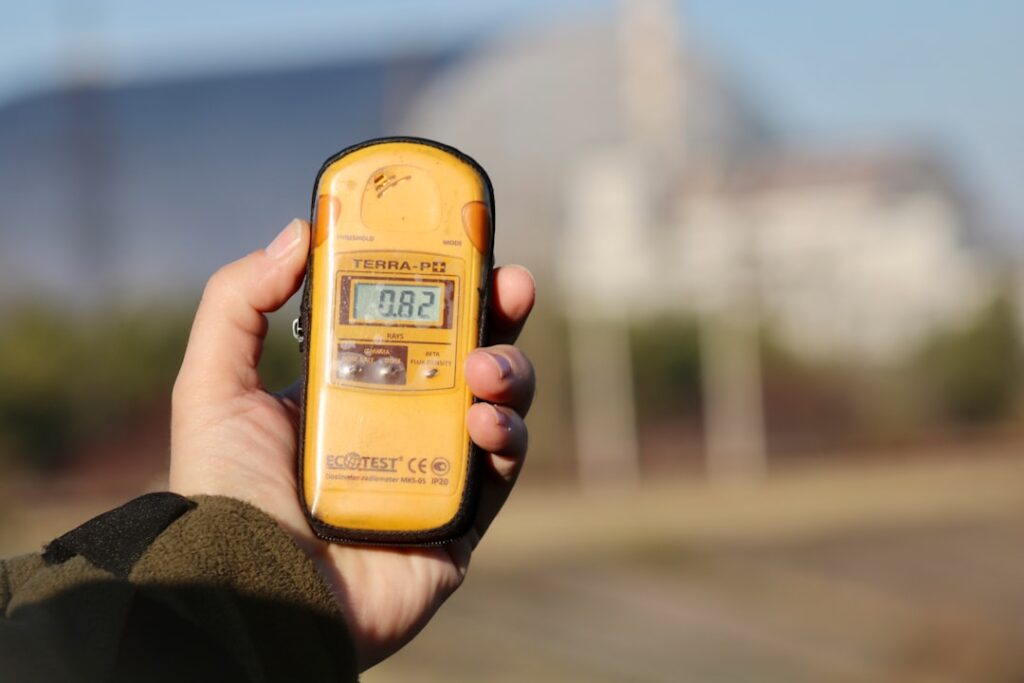
The best radon detector for most households is a continuous digital monitor that runs all year and shows both a recent and a long-term average, because radon levels move with weather and season. A one-time kit answers a single question; a monitor keeps answering it. This guide names one top pick, then five alternatives for buyers who want Wi-Fi alerts, a phone app with a wave-to-check light, a portable unit, or a lab-analyzed kit instead. The U.S. Environmental Protection Agency recommends fixing a home when radon is 4 pCi/L or higher, so the goal is a device whose numbers are easy to read against that line.
Part of our Radon Levels guide — start there for the full picture →
As an Amazon Associate we earn from qualifying purchases.
How we compared: we compared 17 current Amazon radon listings on what each listing states: power, connectivity, displayed averages, data history and export, extra sensors, alarms and warranty. Ten are continuous monitors covering nine distinct models, and seven are mail-in lab kits. We did not lab-test any of these units or use them hands-on. Prices and availability change, so check the current listing before buying.
Quick picks: the best radon detectors
| Pick | Best for | Key spec | Key detail |
|---|---|---|---|
| Airthings Corentium Home 2 (325) | Best overall continuous monitor | Battery, Bluetooth | Short- and long-term averages plus temperature and humidity on screen |
| X-Sense XR0A-iR | Phone alerts over Wi-Fi | 2.4 GHz Wi-Fi, up to 2-year battery | Exports PDF, XLSX or CSV reports |
| Airthings Wave Radon (2950) | App-first households | Bluetooth; hub-ready | Wave a hand for a green, yellow or red light |
| AEGTEST HOUND-1011S | Fast portable readings | First reading in about 12 hours | 0.09 to 1000 pCi/L stated range |
| PRO-LAB RL116 | Lab-analyzed long-term alternative | Alpha track, 3 to 12 months | Lab fee charged separately per detector |
| First Alert RD1 | Lab-analyzed short-term alternative | Lab fees included (outside NJ) | Results emailed within 72 hours of lab receipt |
The six picks, compared listing by listing
1. Airthings Corentium Home 2 (325) — Best Overall Radon Detector
Battery radon monitor with Bluetooth, short- and long-term averages and temperature and humidity on its display.
Check price on Amazon| Specification | Details |
|---|---|
| Power | Battery powered; no installation; battery type and life not stated in listing |
| Display | Short- and long-term radon averages with GOOD, FAIR or POOR indicators, plus current temperature and humidity |
| Connectivity | Bluetooth to the Airthings app with trend graphs and tailored tips |
| Remote monitoring | Possible when paired with an Airthings Hub or View-series monitor |
| Size | About 4.45 x 2.4 x 1.14 in |
| Model | 325; listing dated mid-2025 |
Airthings Corentium Home 2 (325) — battery, Bluetooth app, short + long-term averages, temp/humidity, hub-ready for remote alerts
The Only Monitor Here That Puts Both Radon Averages on Screen and Adds an App
Two kinds of monitors split this shelf. Some show their numbers only on the device; others push them to a phone. The Corentium Home 2 is the one listing that does both well: its redesigned screen shows short- and long-term radon averages next to temperature and humidity, and Bluetooth sends the same data to an app that graphs how radon rises and falls. Of the nine monitor models, three offer any app link (this one, the Airthings Wave and the X-Sense XR0A-iR), and the Corentium Home 2 is the only one of those three whose listing describes short- and long-term radon averages on the device itself.
That matters for everyday use. The EPA frames decisions around a short-term screening result followed by a long-term or second short-term test. A screen that keeps both figures in view lets a homeowner see the screening number and the slower-moving average without opening an app. The GOOD, FAIR and POOR indicators are a plain-language layer on top.
Airthings says its radon sensing technology is used and recommended by radon professionals and home inspectors; that is the brand’s statement, not an independent finding. The listing does not state battery type or life, the time to a first reading or any audible alarm, and remote alerts need an extra Airthings Hub or View-series device.
Pros
- Short- and long-term averages visible on the device
- Bluetooth app with trend graphs
- Temperature and humidity included
- Battery powered, so it can sit anywhere
Cons
- Battery life and type not stated in listing
- No audible alarm described
- Remote alerts require an extra Airthings device
2. X-Sense XR0A-iR — Best for Wi-Fi Phone Alerts
Wi-Fi radon monitor with app notifications, trend arrows, 999 days of monitoring and PDF or spreadsheet export.
Check price on Amazon| Specification | Details |
|---|---|
| Connectivity | 2.4 GHz Wi-Fi; app notifications when radon changes |
| Display | LCD with current level and up, down or steady trend arrows |
| Data | Up to 999 days of monitoring; history kept after battery replacement |
| Export | PDF reports or XLSX/CSV files |
| Power / extras | Battery, up to 2 years; temperature and humidity trends |
| Warranty | 5-year warranty; 60-day money-back guarantee |
X-Sense XR0A-iR — Wi-Fi app alerts, trend arrows, 999-day history, PDF/XLSX/CSV export, 2-yr battery, 5-yr warranty
The Only Monitor Here That Connects Directly Over Wi-Fi
Among the nine monitor models, the XR0A-iR is the only one whose listing describes a direct Wi-Fi connection. The two Airthings units use Bluetooth and need a separate hub for round-the-clock remote data. That makes the XR0A-iR the straightforward pick for a rental, a vacation cabin or a parent’s house where the owner wants a notification without being in Bluetooth range.
It is also the only listing that names spreadsheet-ready export formats (XLSX and CSV) alongside PDF. A file with months of readings is useful to bring to a radon mitigation contractor, or to check a system after installation. Of the nine models, four describe some kind of report or export: this one, the Airthings Wave, the Corentium Home (original) and the X-Sense XR0B-SR.
What it lacks is a stated time to the first reading and any described audible alarm; alerts arrive through the app. The listing also does not name the sensor type, and Wi-Fi is 2.4 GHz only, which some mesh networks need to be set up for.
Pros
- Direct Wi-Fi with phone notifications
- PDF, XLSX and CSV export for records
- History retained through battery changes
- Stated 2-year battery and 5-year warranty
Cons
- 2.4 GHz Wi-Fi only
- Time to first reading not stated
- No audible alarm described
3. Airthings Wave Radon (2950) — Best for App-First Households
Battery smart radon monitor with Bluetooth app, a wave-activated color light and temperature and humidity sensing.
Check price on Amazon| Specification | Details |
|---|---|
| Power | Battery operated; battery life not stated in listing |
| Indicator | Wave a hand in front for a green, yellow or red light |
| Connectivity | Bluetooth to the app; can link to an Airthings Hub for 24/7 online data |
| Data | Long- and short-term radon results in the app; reports through the Airthings Dashboard |
| Extra sensors | Humidity and temperature |
| Size / warranty | About 4.7 x 4.7 x 1.4 in, 0.48 lb; 5-year extended warranty with registration |
Airthings Wave Radon 2950 — battery, Bluetooth, wave-to-check color light, temp/humidity, hub-ready, 5-yr extended warranty
The Only Monitor Here Built Around a Color Light Instead of a Readout
The other monitor listings describe a screen or on-device readings. The Wave describes a light instead: wave a hand in front of it and it glows green, yellow or red, with the actual numbers in the app. That design suits a living room where a small disc on the wall blends in better than a display, and where someone in the household already checks other smart-home apps.
Like the Corentium Home 2, it adds humidity and temperature and can join an Airthings Hub for remote data. Two of the nine models name the Airthings Hub; both are Airthings. The Wave is the larger of the two at roughly 4.7 inches across, and its listing states a 5-year extended warranty with free registration, which the Corentium Home 2 listing does not mention.
Without the phone, the color light is all there is, so a guest or a tenant cannot see a pCi/L number. The listing also does not state battery life, sensor type or time to the first reading.
Pros
- Quick color check with a hand wave
- App shows short- and long-term radon
- Humidity and temperature included
- 5-year extended warranty with registration
Cons
- No numeric display on the device
- Remote access needs an Airthings Hub
- Battery life not stated in listing
4. AEGTEST HOUND-1011S — Best Portable Monitor for Fast Readings
USB-C portable radon monitor with a 12-hour first reading, hourly updates, 0.09–1000 pCi/L range and alarms.
Check price on Amazon| Specification | Details |
|---|---|
| Sensor / range | Semiconductor sensor; 0.09 to 1000 pCi/L, switchable to Bq/m³ |
| First result | Within 12 hours, then hourly |
| Data | Views from the past 12 hours up to 504 days; LCD shows 12 to 96-hour windows |
| Power | Built-in battery, about 45 days in sleep mode; runs on a Type-C cable for continuous use |
| Alerts | Audible and visual alarms |
| Weight / in the box | About 0.64 lb; cable, lanyard, stand, manual |
AEGTEST HOUND-1011S (white) — semiconductor, 0.09–1000 pCi/L, 12-hr first reading, 504-day views, USB-C, alarm
Among the Fastest First Readings on the Shelf
Three of the nine monitor models state a first reading at about 12 hours, all from AEGTEST. Two X-Sense models state 24 hours, and the Airthings and the X-Sense Wi-Fi listings give no figure. For someone who has just moved in and wants a first look before deciding on a full test, half a day is the fastest stated number here. This listing is the white version; the same model appears in grey.
It also states a measurement range, 0.09 to 1000 pCi/L, which only two models on this shelf state (this one and the HOUND-1008). Audible and visual alarms make it the pick in this guide for a user who wants to be warned rather than check an app.
Speed is not the same as a result. The EPA says every radon test should run at least 48 hours, and a short test is less likely to reflect the year-round average than a long one. The listing names no app, no temperature or humidity sensor, and only about 45 days of battery when unplugged.
Pros
- First reading in about 12 hours
- Stated 0.09 to 1000 pCi/L range
- Audible and visual alarms
- Portable, with lanyard and stand
Cons
- About 45 days per charge unplugged
- No app or remote alerts
- No temperature or humidity sensor
5. PRO-LAB RL116 — Best Lab-Analyzed Long-Term Alternative
Alpha-track long-term radon kit for 3 to 12 months of exposure, lab-analyzed, with email or text status updates.
Check price on Amazon| Specification | Details |
|---|---|
| Type | Passive alpha-track detector, analyzed by a lab |
| Exposure | 3 to 12 months |
| In the box | One long-term detector |
| Lab fee | Charged separately per detector (amount on the listing) |
| Updates | Email or text notices from receipt to results |
PRO-LAB RL116 — alpha track, 3–12 month exposure, 1 detector, separate lab fee, email/text status updates
A Long-Term Test Without Buying Electronics
Three of the seven kit listings use alpha-track detectors, the passive type the EPA names as common for long-term tests of more than 90 days. This PRO-LAB RL116 states a 3 to 12-month window; RSSI states one month to a year, and the PRO-LAB RL416 listing gives no window. A long-term result is more likely than a short one to show the year-round average, which is the number the EPA ties to its fix-at-4-pCi/L advice after a long-term follow-up.
The reason to pick a kit over a monitor is simple: no batteries, no app, no device to keep, and a lab-reported number at the end. The trade-off is that there is one number and nothing in between, so a spike during a cold snap or a change after a renovation will not show until the detector goes back to the lab.
The listing states a separate per-detector lab fee rather than an included one; two of the seven kits on this shelf work that way. It does not state whether return postage is prepaid, or how many days results take after the lab receives the detector.
Pros
- Long-term alpha-track test, 3 to 12 months
- No power, app or device to maintain
- Lab-reported result
- Email or text status updates
Cons
- Separate lab fee per detector
- No interim readings
- Return postage and turnaround not stated
6. First Alert RD1 — Best Lab-Analyzed Short-Term Alternative
Mail-in radon test kit with lab fees included outside New Jersey and results emailed within 72 hours of lab receipt.
Check price on Amazon| Specification | Details |
|---|---|
| Type | Mail-in test kit; detector media not stated in listing |
| Program | Listing says it is listed under the EPA radon measurement proficiency program |
| Lab fee | Included, except New Jersey state fees |
| Results | Emailed within 72 hours after the lab receives the kit |
| Exposure time | not stated in listing |
First Alert RD1 — mail-in kit, lab fees included (outside NJ), results emailed within 72 hours of lab receipt
The Fastest Stated Lab Turnaround Among the Kits
Three of the seven kit listings state a turnaround after the lab receives the sample. The RD1’s 72-hour email is the quickest of those; empowerDX states 3 to 5 business days and the two-detector PRO-LAB kit states a standard work week. RSSI describes an emailed or mailed report without a timeframe. The RD1 also includes the lab fee outside New Jersey, one of four kits on the shelf that state an included analysis fee.
A short-term test is the EPA’s suggested first step. If the result is 4 pCi/L or higher, the EPA says to follow up with a long-term test or a second short-term test before deciding to fix the home. A monitor can serve as that follow-up, which is why the RD1 and the Corentium Home 2 pair well.
The listing is thin on details. It does not name the detector type or the exposure time, and the reference to the EPA proficiency program is the brand’s wording; the EPA today points consumers to state radon programs and the NRPP and NRSB proficiency programs.
Pros
- Lab fees included outside New Jersey
- Results emailed within 72 hours of lab receipt
- No device to maintain
Cons
- Detector type not stated
- Exposure time not stated
- One result, no ongoing data
Why a continuous monitor is the top pick
Radon in a house is not a fixed number. The EPA’s citizen’s guide notes that levels vary from day to day and season to season, which is why a short-term test is less likely than a long-term test to reveal the year-round average. A continuous monitor sidesteps the choice: it reads hourly or daily, then builds a long-term average as months pass.
For a homeowner, three uses stand out:
- Screening. After a week or two, the short-term average gives a first look, comparable to a 2 to 90-day short-term test.
- Confirming. After more than 90 days, the long-term average is closer to what the EPA calls a long-term test.
- Verifying a fix. The CDC advises testing again after any radon repair. A monitor placed in the lowest lived-in level shows whether a mitigation system keeps levels down through the year.
A lab kit still has a place. It needs no batteries or app, gives a single lab-reported figure, and costs less up front. The two kits in this guide cover the short-term and long-term versions of that approach; the radon test kit category has more.
How the shelf breaks down
- Connectivity: 3 of the 9 monitor models connect to a phone (two Airthings over Bluetooth, one X-Sense over Wi-Fi). The other 6 are screen-only.
- Alarms: 4 models describe an audible alarm (three AEGTEST models and the X-Sense XR0B-SR). One, the X-Sense XR0A-SR, is silent by design.
- Extra sensors: 5 models add temperature and humidity.
- Battery life: 4 models state 400 days or more; the AEGTEST USB-C models state about 45 days per charge; the Airthings listings do not state a figure.
- Kits: 3 of the 7 are alpha-track long-term kits; 4 state that lab analysis is included; 2 state a separate lab fee; 2 name the NRPP.
How to read your results
The EPA recommends fixing a home when radon is 4 pCi/L (150 Bq/m³) or more and considering a fix between 2 and 4 pCi/L. The average U.S. indoor level is about 1.3 pCi/L and outdoor air averages about 0.4 pCi/L. The EPA attributes about 21,000 lung cancer deaths a year in the U.S. to radon. Our radon levels chart walks through each range.
The EPA’s steps: start with a short-term test; if the result is 4 pCi/L or higher, follow up with either a long-term test or a second short-term test. Fix the home if the long-term result is 4 pCi/L or more, or if the average of two short-term tests is 4 pCi/L or more. If the first short-term result is more than twice the action level, the EPA says to take a second short-term test immediately rather than wait months.
Placement rules that apply to every detector
The EPA’s citizen’s guide says to place a test in the lowest lived-in level of the home, in a room used regularly but not the kitchen or bathroom, at least 20 inches above the floor, and away from drafts, high heat, high humidity and exterior walls. For tests lasting only 2 or 3 days, close windows and outside doors at least 12 hours before the test starts. The same logic applies to a monitor, though a monitor can stay in place indefinitely.
A monitor’s reset button also lets a homeowner compare rooms. Several models here (the AEGTEST HOUND-1011S and HOUND-1008 and the X-Sense XR0B-SR and XR0A-iR) describe a reset to start a new session in a different space.
Colorado Front Range notes
The EPA’s Map of Radon Zones puts 53 of Colorado’s 64 counties in Zone 1, the highest-potential category, where average indoor levels may exceed 4 pCi/L. Every Front Range county from Larimer and Weld south to El Paso and Pueblo is in Zone 1. The EPA cautions that the zone map should not be used to decide whether a specific house needs testing, because elevated homes turn up in every zone. Our Colorado radon levels by zip code page has local detail.
Long, closed-up winters and the popularity of finished basements on the Front Range make year-round monitoring especially useful. Landlords should also read about radon in rental housing, where a Wi-Fi monitor with exportable reports makes record-keeping simpler.
Where a DIY detector stops and a professional starts
A consumer monitor or kit is a screening tool. For a home sale, the CDC notes that the EPA recommends hiring a qualified tester, and the EPA says states receiving radon grants list providers credentialed by a state license or by the NRPP or NRSB. Professional testers use calibrated equipment and can document closed-house conditions and steps to detect test interference.
If results are high, the next steps are a mitigation estimate and a post-repair test. See radon inspection cost and how much to install a radon mitigation system, and the radon testing pillar for the full process. To schedule a professional radon test on the Front Range, contact us.
References
- What Is EPA’s Action Level for Radon and What Does It Mean? — U.S. Environmental Protection Agency
- A Citizen’s Guide to Radon — U.S. Environmental Protection Agency
- Find a Radon Test Kit or Measurement and Mitigation Professional — U.S. Environmental Protection Agency
- Radon Zones Map — U.S. Environmental Protection Agency
- Radon and Your Health — Centers for Disease Control and Prevention
- Testing Your Home for Radon — Centers for Disease Control and Prevention
Frequently asked questions
What is the best radon detector for most homes?
For most homes, a continuous digital monitor that shows both short- and long-term averages is the most useful choice, because radon changes with weather and season. A mail-in lab kit is a lower-cost option for a single screening or long-term test.
Is a radon monitor or a radon test kit better?
They answer different questions. A lab kit gives one lab-reported number for its exposure period. A monitor keeps reading for months or years and can confirm a mitigation system is working. Many homeowners start with a kit and then add a monitor, or use a monitor as the follow-up test.
Do I need a Wi-Fi radon detector?
Wi-Fi is useful for rentals, second homes or anyone who wants a phone notification away from home. Bluetooth monitors sync only within range unless paired with a hub. A screen-only monitor works fine for a homeowner who checks it in person.
What radon reading means I should take action?
The EPA recommends fixing a home when the long-term result, or the average of two short-term tests, is 4 pCi/L or higher, and considering a fix between 2 and 4 pCi/L. A qualified radon mitigation contractor can design a system.
Where should I put a radon detector?
Place it in the lowest lived-in level, in a regularly used room that is not a kitchen or bathroom, at least 20 inches above the floor, and away from drafts, high heat, high humidity and exterior walls, following EPA guidance.
Need a professional radon test before buying or selling on the Front Range? Reach out through our contact page to connect with a vetted local inspector.
Continuous radon detectors
A digital monitor gives you an always-on reading and a long-term average — better than a one-shot kit if you want to track levels over time.
| Product | Why | Buy |
|---|---|---|
 Airthings Corentium Home Airthings Corentium Home | Battery, portable; trusted long-term average. | Amazon — $143.65 |
 Ecosense RadonEye RD200 Ecosense RadonEye RD200 | Fast first reading (~1 hr); app logging. | Amazon — $169.00 |
 Airthings View Plus Airthings View Plus | Radon + CO2 + PM + VOC in one unit. | Amazon — $329.99 |