Amazon Radon Detector: What Homeowners Need to Know
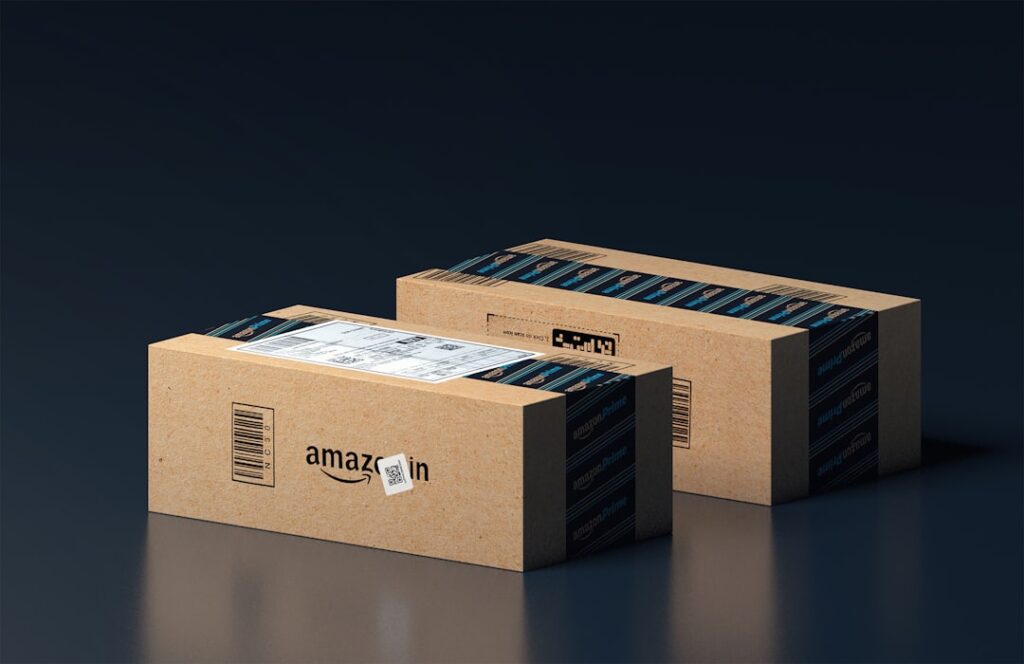
Many homeowners type “amazon radon detector” into a search box, but the device category — not the storefront — is what actually matters. Online retailers like Amazon, hardware stores, and state public-health programs all sell the same family of consumer products: continuous radon monitors (CRMs). What changes between sellers is fulfillment and return policy, not the underlying physics. This guide walks through what the CRM category looks like, what EPA testing methodology says about using one in a home, and how Front Range buyers can evaluate a unit on specs rather than reviews. This guide summarizes EPA and CDC guidance current as of 2026 — consult a certified radon professional for testing and your physician for symptom evaluation.
Part of our Radon Levels guide — start there for the full picture →
What “amazon radon detector” usually means as a product category
The phrase points to consumer-grade continuous radon monitors sold through an online retailer. These devices measure airborne radon concentration in picocuries per liter (pCi/L) and display readings on a screen, in a smartphone app, or both. The same models — AirThings Wave Plus, RadonEye RD200, EcoSense RD200, Corentium Home — appear on Amazon, at hardware stores, and through state radon programs. Pricing typically falls between $150 and $400 for a single-room consumer CRM, with the lower end being passive-sensor units and the upper end including humidity, temperature, VOC, and CO2 sensors in the same enclosure.
The methodology for using one is identical regardless of where the unit was purchased. The EPA radon guidance recommends placing the monitor in the lowest livable level of the home, keeping windows and exterior doors closed during measurement (except for normal entry and exit), and letting the unit run for at least 48 hours before drawing conclusions. Front Range homes in Denver, Douglas, and Jefferson counties sit in EPA Radon Zone 1, where elevated readings are common enough that any monitor — Amazon-sourced or otherwise — usually finds a number worth acting on.
What features matter when comparing CRMs
Three features separate a useful consumer CRM from a decorative gadget: real-time pCi/L display, smartphone-app integration, and an alarm threshold. Real-time display lets a homeowner watch the number trend over a 48-hour test window rather than waiting for a lab to mail back results. App integration adds historical graphs, daily and weekly averages, and the ability to export data — useful when sharing a result with a mitigation contractor or comparing pre- and post-mitigation performance. An adjustable alarm threshold (usually set at 4 pCi/L to match the EPA action level) provides a passive warning when readings spike.
Sensor type also matters. Some units use passive diffusion chambers that take 24 hours to stabilize; others use active pumped sampling that delivers faster updates but consumes more power. For homes that test once and walk away, either approach is fine. For households monitoring continuously, look for the longer-term-average display and the ability to see weekly and monthly trends, since single hourly readings fluctuate substantially with weather, barometric pressure, and HVAC cycling.
What the CRM category does not replace
Consumer CRMs are excellent at giving a homeowner a number to work from, but they are not a substitute for an NRPP- or NRSB-certified professional measurement in a real-estate transaction. For a purchase agreement, a buyer typically wants a chain-of-custody test performed by a credentialed contractor using a calibrated, professional-grade CRM. The consumer device is what you use after closing — to monitor over time, verify mitigation worked, and watch for seasonal swings. Reviewing the parent guide on Colorado radon testing helps frame when a self-test result is sufficient and when a certified report is required.
How to read a CRM result without overreacting
Radon concentration varies hour to hour. A reading of 6.2 pCi/L at 3 a.m. and 1.8 pCi/L at 3 p.m. does not mean the morning value is wrong; it means the home is breathing differently when HVAC equipment cycles and people move around. The CDC radon overview emphasizes that long-term averages — not single-hour spikes — drive lung-cancer risk estimates. Most consumer CRMs surface a “long-term average” or “weekly average” reading; that is the number worth comparing against the EPA’s 4 pCi/L action level, not the noisy hourly readout.
Two specific numbers help anchor decisions. At 4 pCi/L, EPA recommends mitigation. Between 2 and 4 pCi/L, EPA notes that mitigation may still be worthwhile because no exposure level is considered risk-free. Below 2 pCi/L, the device serves mostly as a watchdog. Knowing where a home sits on that scale — averaged across at least 48 to 72 hours — turns a CRM reading into an actionable decision rather than an anxiety trigger.
Where consumer CRMs fit in the Front Range workflow
Colorado homes test high more often than the national average. The Colorado Department of Public Health and Environment notes that roughly half of Colorado homes tested have produced readings at or above 4 pCi/L. Against that backdrop, a $200 CRM is a reasonable household tool — comparable to a smoke detector in operating logic but for a different invisible hazard. It runs continuously, surfaces a long-term average, and provides early warning when seasonal patterns push concentrations higher.
That continuous data also helps homeowners understand whether previous mitigation is still working. Sub-slab depressurization fans degrade over time, sump-lid seals dry out, and storm-driven negative-pressure events can briefly push concentrations up. A consumer CRM provides the visibility to notice these changes without scheduling a follow-up professional test every six months.
Comparing CRMs to short-term test kits
Short-term radon test kits — the $15 to $30 charcoal or alpha-track packets sold at hardware stores and through state programs — provide a single snapshot. The homeowner deploys the kit for 2 to 7 days, mails it to a lab, and waits for a result. Useful as a first screen, but limited: one number, one window, no ability to see the trend or catch seasonal change. A CRM solves the trend problem at higher upfront cost and zero per-test mailing fee.
Both have a place. A budget-conscious household running a single screening test might start with a $25 kit; one that finds an elevated reading typically upgrades to a CRM to monitor mitigation and seasonal variation thereafter. For households already at the budget for a CRM, skipping the mail-in kit altogether and going straight to the continuous device is usually the more useful spend. Pairing this with the overview of radon testing options helps decide which test fits a given household stage.
What returns and warranty terms actually look like
Return policies vary by retailer, not by device. Most online sellers offer 30-day return windows for opened consumer electronics, with the device generally needing to be in resalable condition. That window is shorter than the time required to gather meaningful long-term-average data from a CRM — typically 1 to 2 weeks for a credible reading and longer for seasonal context. Buyers should treat the first month as evaluation time and not expect a “this number is wrong” return to be straightforward after the window closes.
Manufacturer warranties run 1 to 2 years on most consumer CRMs. The warranty typically covers manufacturing defects but not sensor drift, battery degradation, or damage from improper placement. A sensor that drifts beyond stated tolerance at year 6 is end-of-life, not warranty-covered. For households planning long-term ownership, the warranty matters mostly in the first year — beyond that, the device’s track record and the manufacturer’s reputation for ongoing app support become the more relevant factors.
What to verify on a CRM listing before buying
Whether the listing lives on Amazon, a hardware-store site, or a manufacturer’s page, the same checks apply. Verify the unit reports in pCi/L (not only Bq/m3, though most international units offer both). Confirm the device has been third-party tested — many CRM manufacturers publish AARST-NRPP performance evaluations. Look for warranty length (usually 1 to 2 years), expected sensor lifespan (5 to 10 years for most consumer units), and whether firmware updates ship over the smartphone app.
Skip reviews that depend on comparing a single hourly reading against a different device — that comparison is almost always noisy and unfair. Reviews that compare 7-day averages between two units placed in the same room give a far better signal. For households uncertain about which model fits their situation, a conversation with a local radon professional clarifies whether a $180 unit is sufficient or whether a $400 multi-sensor model is worth the upgrade.
Seasonal patterns Colorado CRMs typically reveal
Once a CRM has been running for several months, the Front Range data tends to show a recognizable pattern. Winter readings typically run higher than summer readings. Several factors stack to produce that shift. Frozen ground above the foundation reduces the soil’s ability to vent radon upward and outward into the atmosphere, increasing the pressure differential that draws gas inward through foundation cracks. Closed windows and lower whole-house air exchange concentrate whatever radon enters. Furnace operation creates negative pressure in basements that can pull soil gas through sump pits, cold-air returns, and slab penetrations.
Summer reverses several of these effects. Open windows raise air exchange. Surface soil dries and breathes outward more readily. Air-conditioning equipment in attics or upper levels often produces different pressure dynamics than basement furnaces. The result for many Front Range homes is a 30 to 50 percent swing between January and July averages. A CRM makes that swing visible; a single 48-hour test in either season would mislead.
That visibility changes mitigation conversations. A home reading 3.2 pCi/L in July with no winter data is technically below the action level — but if the winter average is 5.8, the annual exposure has the same risk profile as a steadily-4-pCi/L home. Mitigation contractors looking at CRM history can size the system appropriately and verify post-installation performance across seasons rather than at a single point in time.
How a consumer CRM behaves after mitigation
For households that already have a mitigation system installed, the CRM transitions from screening tool to verification tool. A well-functioning sub-slab depressurization system typically holds readings below 2 pCi/L year-round, often below 1. Any drift upward from that baseline indicates something has changed — fan degradation, sump-lid seal failure, an addition to the home that created a new entry path, or a system valve adjustment that needs tuning. The CRM surfaces these changes within days rather than waiting for an annual recheck.
Fan service intervals vary by manufacturer but typically run 5 to 10 years. A CRM watching post-mitigation readings notices fan failure or degradation long before the homeowner would otherwise. The dashboard graph that has held steady at 0.8 pCi/L for years and starts climbing toward 2 is the early warning that brings the contractor back for fan replacement.
When to call a certified professional
A consumer CRM informs decisions; it does not make them in a real-estate context. For a purchase or post-mitigation verification, an NRPP- or NRSB-certified measurement provider is the right call. The International Association of Certified Home Inspectors maintains directories of credentialed inspectors who carry calibrated professional CRMs and follow strict chain-of-custody protocols. A self-purchased monitor reading above 4 pCi/L is a reasonable trigger to schedule that professional test. A reading between 2 and 4 pCi/L, combined with a finished and frequently-used basement, is also worth a credentialed second opinion before making a long-term decision.
References
- A Citizen’s Guide to Radon — U.S. Environmental Protection Agency
- Radon health information — Centers for Disease Control and Prevention
- Colorado radon program — Colorado Department of Public Health and Environment
- Certified radon measurement professional directory — InterNACHI
Frequently asked questions
Is an Amazon-sourced radon detector different from one at a hardware store?
The retailer does not change the device. The same consumer continuous radon monitors — AirThings, RadonEye, EcoSense, Corentium — appear across Amazon, hardware stores, and state public-health programs. Methodology and EPA action levels apply identically.
How much does a consumer continuous radon monitor cost?
Most consumer CRMs fall between 150 and 400 dollars. Lower-priced models report radon only; higher-priced units add humidity, temperature, VOC, and CO2 sensors plus extended smartphone-app history and graphing.
Can a consumer monitor replace a professional radon test?
For homeowner monitoring, yes. For a real-estate transaction or post-mitigation sign-off, no — that requires an NRPP- or NRSB-certified provider performing a chain-of-custody test with calibrated equipment.
What reading should trigger action?
EPA recommends mitigation at long-term averages of 4 pCi/L or higher. Between 2 and 4 pCi/L mitigation may still reduce risk because no level of radon is considered risk-free. Below 2 pCi/L the device functions as ongoing surveillance.
Front Range homeowners weighing whether their CRM reading warrants a professional follow-up can connect with a vetted local radon inspector through our contact page for a credentialed measurement.
Continuous radon detectors
A digital monitor gives you an always-on reading and a long-term average — better than a one-shot kit if you want to track levels over time.
| Product | Why | Buy |
|---|---|---|
 Airthings Corentium Home Airthings Corentium Home | Battery, portable; trusted long-term average. | Amazon — $147.11 |
 Ecosense RadonEye RD200 Ecosense RadonEye RD200 | Fast first reading (~1 hr); app logging. | Amazon — $169.00 |
 Airthings View Plus Airthings View Plus | Radon + CO2 + PM + VOC in one unit. | Amazon — $329.99 |