Airthings Radon Detector: What to Know
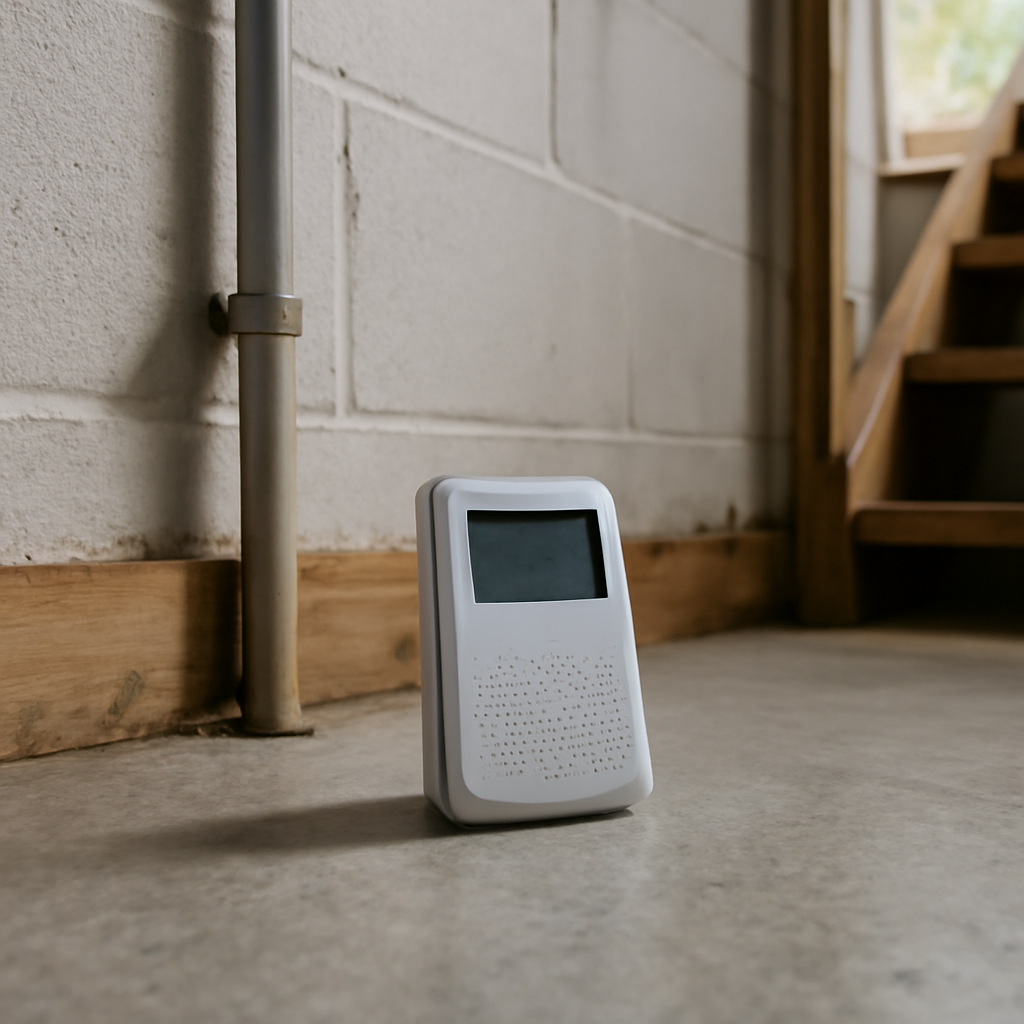
The Airthings radon detector has become a familiar name among homeowners who want continuous, at-a-glance radon readings rather than a one-time mail-in result. Continuous digital monitors fill a real gap, tracking how levels rise and fall over days and seasons. This guide summarizes EPA and CDC guidance current as of 2026 and is informational only — it is not an endorsement of any brand, and homeowners should consult a certified professional for testing decisions and a physician for any health concerns. The aim is to explain where digital monitors fit alongside traditional testing.
What a continuous radon monitor does
A continuous radon monitor measures the gas on an ongoing basis and displays an updating reading, often with daily, weekly, and longer-term averages. Unlike a charcoal canister that captures a single window, a monitor shows how radon fluctuates with weather, season, and household activity.
Digital monitors like those in the Airthings line connect to an app, letting homeowners track trends over time. This ongoing visibility is the category’s main appeal: radon is not static, and a monitor reveals the pattern a single test cannot.
The shift from a one-time number to a continuous picture changes how a homeowner relates to radon. Instead of testing once, filing the result, and forgetting it, a monitor keeps the level present and visible, much like a thermostat keeps temperature in view. That persistent awareness is the real value the category offers over traditional kits.
That pattern is genuinely informative. A homeowner might discover that levels spike in winter when the house is sealed, climb after closing up for a vacation, or shift after finishing a basement. None of that detail is visible from a single short-term snapshot.
How digital monitors work
Most consumer continuous monitors use a passive diffusion chamber and an electronic sensor that counts radon decay events, converting them into a concentration reading in pCi/L. After an initial calibration period, often the first day or so, readings stabilize into a useful average.
Because the device samples continuously, it needs no lab analysis. The trade-off is that consumer monitors are generally less precise than the calibrated professional instruments used in real estate transactions, though they are well suited to long-term homeowner awareness.
The early readings deserve patience. Because radon measurement is statistical, a monitor needs time to accumulate enough decay events for a stable figure. A homeowner who panics at a high first-day reading often sees it settle as the device builds a longer average over the following days.
Where monitors fit alongside testing
A continuous monitor complements, rather than replaces, formal testing in certain situations. For a real estate transaction, a certified short-term test or a professional continuous monitor is typically required, as outlined in the guide to a radon test. A consumer device is better for ongoing personal monitoring.
After mitigation, a homeowner monitor offers reassurance that levels stay low over time, supplementing the formal post-mitigation test. The two roles, official measurement and continuous awareness, are distinct and both valuable.
The clearest way to think about it is task-matching. Use a certified test or professional monitor for decisions that carry legal or financial weight, and a consumer monitor for the day-to-day awareness that no single test can provide. The two are partners, not substitutes.
When a lab test still matters
For decisions that carry legal or financial weight, a sale, a disclosure, or the initial choice to mitigate, a certified test or professional monitor carries the credibility a consumer device may lack. Use the consumer monitor for trends and the certified test for decisions.
A buyer and seller negotiating over radon, for instance, need a measurement both parties trust, which is why transactions rely on certified testing rather than a homeowner’s app reading. The consumer monitor is excellent for the owner’s own peace of mind, but it is not the instrument of record for a deal.
What digital radon monitors cost
Consumer continuous radon monitors generally range from around 150 to 300 dollars or more, depending on features like app connectivity, additional sensors for humidity or air quality, and display options. That is more than a one-time DIY kit but cheaper than years of repeated kits.
For a household that wants ongoing data, the monitor pays for itself in convenience. Homeowners comparing the spend against testing services can review the broader guide to radon testing in Colorado to weigh continuous monitoring against periodic professional measurement.
Feature tiers vary. Basic models report radon alone, while higher tiers add temperature, humidity, and broader air-quality sensors. A homeowner focused purely on radon may not need the extra sensors, so matching the model to actual needs avoids paying for features that go unused.
Reading the numbers against the action level
Whatever device a homeowner uses, the benchmark is the same. The EPA sets an action level of 4 pCi/L and recommends fixing homes at or above it, while noting that risk persists below that figure. A monitor that consistently shows readings near or above 4 calls for a certified confirmation and likely mitigation.
Short-term spikes happen, especially in winter or during storms, so a single high reading on a monitor is a prompt to watch the trend, not an automatic alarm. A sustained elevated average is the meaningful signal.
The monitor’s longer-term average is the figure to watch. Daily readings bounce around with weather and household activity, but the weekly and longer averages smooth out that noise and give a truer sense of whether a home sits above or below the action level.
Features worth understanding
Continuous monitors vary in what they offer. Most report a current reading alongside short-term and long-term averages, which is the core function. Many add app connectivity, letting a homeowner check levels remotely and review historical trends on a phone rather than walking to the device.
Some models bundle additional environmental sensors, measuring temperature, humidity, and broader indoor air quality. These extras can be useful for whole-home awareness, but they are not necessary for radon alone, so buyers focused purely on radon need not pay for them.
Battery versus plug-in power is another consideration. A plug-in monitor runs indefinitely in one spot, while a battery model can move from room to room. Matching the power style to how a homeowner intends to use the device avoids frustration later.
Using a monitor after mitigation
One of the strongest use cases for a continuous monitor is confirming that a mitigation system keeps working. After a professional installs an active soil depressurization system and a post-mitigation test verifies the fix, a monitor provides ongoing assurance that levels stay low through the seasons.
If a fan weakens or a new entry point opens over the years, a monitor catches the gradual rise long before a once-in-a-decade test would. That early warning lets the homeowner schedule a service call before exposure climbs, turning the monitor into a quiet guardian of the mitigation investment.
For a mitigated home, the manometer on the radon pipe and a continuous monitor work together. The manometer confirms the fan is pulling suction, while the monitor confirms the result, the actual radon level, remains where it should. Together they give a complete picture of system health.
Strengths and limitations
The strength of continuous monitors is visibility: they show how mitigation performs, how seasons shift levels, and whether a basement remodel changed the picture. They turn an invisible gas into a number a homeowner checks like a thermostat.
The limitations are precision and acceptance. Consumer devices are not always recognized for official transactions, and their accuracy, while adequate for awareness, may not match calibrated professional equipment. Treating the monitor as a tool for trends, not legal proof, sets the right expectation.
Placement still matters for a monitor. Like any radon measurement, it should sit in a lived-in room on a low level, away from drafts, exterior walls, and direct airflow, at a height representative of the breathing zone. A poorly placed monitor reports its own microclimate rather than the home’s true level.
Front Range relevance
Colorado’s Front Range sits in an EPA high-radon zone, where readings often run elevated and vary seasonally. A continuous monitor suits this environment well, letting Denver-area homeowners watch how winter closed-house conditions push levels up compared with summer.
For homes with a mitigation system, a monitor confirms the fan keeps working year-round. Given the region’s geology, ongoing visibility is more than a novelty; it is a practical way to stay ahead of a known local risk.
A monitor also catches drift over time. If a mitigated home’s levels slowly creep up because a fan is weakening or a new entry point opened, the homeowner sees it on the display long before a once-a-decade test would, allowing a service call before exposure climbs.
Getting accurate readings from a monitor
A monitor is only as good as its placement and the patience the homeowner gives it. Position the device in a lived-in room on the lowest occupied level, away from drafts, exterior walls, heating vents, and direct sunlight, at roughly breathing height. That captures the air the household actually breathes.
Allow the device its calibration period before reading too much into early numbers. The first day or so often shows unstable readings as the sensor accumulates data, and a stable average emerges over the following days. Reacting to a single early spike usually proves unnecessary once the average settles.
Reviewing the long-term average rather than the instantaneous number is the right habit. Daily readings naturally bounce with weather and activity, but the multi-week average reveals whether the home genuinely sits above or below the action level, which is the figure that should drive any decision.
Health context and next steps
A monitor measures the home’s radon level; it does not diagnose or measure a person’s exposure. Homeowners concerned about health effects should consult a physician rather than infer risk from a display. Radon is the second leading cause of lung cancer after smoking, per the EPA, which is why awareness matters.
The sensible approach pairs tools to tasks: use a certified test for transactions and the initial mitigation decision, and a continuous monitor for ongoing awareness and post-mitigation confidence. Together they keep a home’s radon level visible and under control.
For Front Range homeowners living over high-potential geology, a continuous monitor is a reasonable long-term companion to periodic professional testing. It will not replace a certified measurement when one is needed, but it turns an invisible, fluctuating gas into a number a household can watch year-round, which is its real and lasting value.
References
- Health Risk of Radon — EPA
- Radon Testing Methods — EPA
- Colorado Radon Program — CDPHE
- Radon Health Information — CDC
Front Range homeowners who want a certified measurement to confirm what their monitor shows can get in touch through our contact page for a referral to a vetted local tester.
Continuous radon detectors
A digital monitor gives you an always-on reading and a long-term average — better than a one-shot kit if you want to track levels over time.
| Product | Why | Buy |
|---|---|---|
 Airthings Corentium Home Airthings Corentium Home | Battery, portable; trusted long-term average. | Amazon — $149.99 |
 Ecosense RadonEye RD200 Ecosense RadonEye RD200 | Fast first reading (~1 hr); app logging. | Amazon — $160.54 |
 Airthings View Plus Airthings View Plus | Radon + CO2 + PM + VOC in one unit. | Amazon — $279.99 |