Radon Test: What Homeowners Need to Know
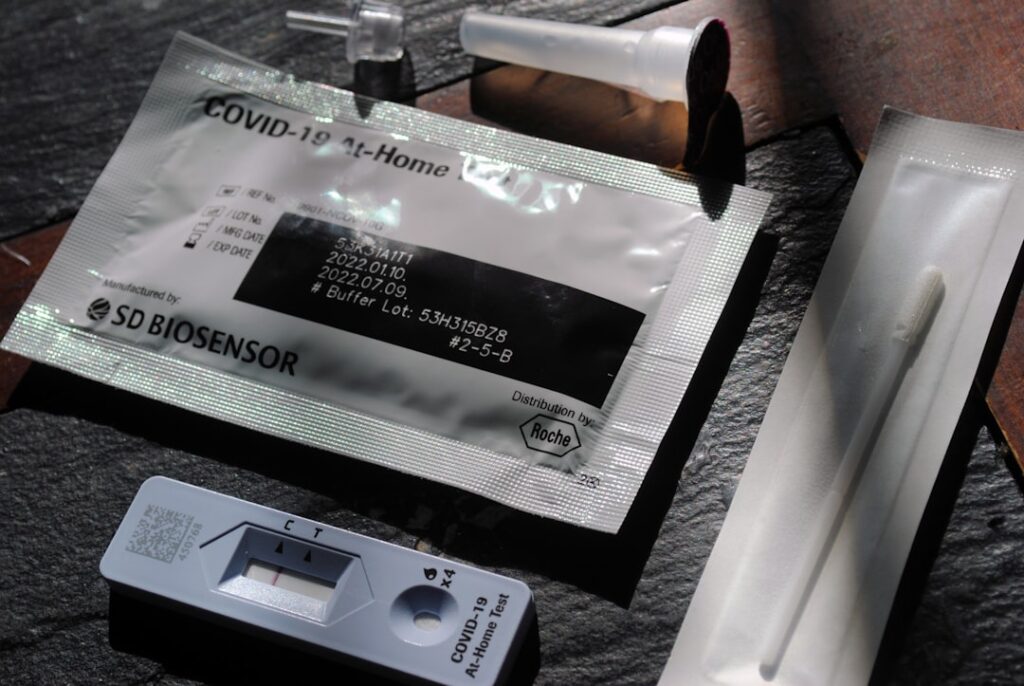
A radon test is the only way to know whether a home harbors elevated levels of this invisible, odorless radioactive gas, which the EPA links to lung cancer. Because radon seeps up from the soil, no two homes behave the same way, and visual inspection cannot detect it. This guide summarizes EPA and CDC guidance current as of 2026 and is informational only — consult a certified professional for testing decisions and a physician for any health concerns. For Front Range homeowners especially, where geology drives high readings, testing is a sensible baseline rather than an afterthought.
Part of our Radon Levels guide — start there for the full picture →
Why every home should be tested
Radon is produced by the natural decay of uranium in soil and rock, and it enters homes through foundation cracks, sump pits, and slab penetrations. The EPA recommends that all homes be tested, because levels vary house to house even on the same street.
The agency sets an action level of 4 picocuries per liter, or 4 pCi/L. At or above that level, the EPA recommends fixing the home. Many homeowners also consider mitigation between 2 and 4 pCi/L, since no level is considered entirely risk-free.
That action level is a practical decision point rather than a sharp boundary between safe and dangerous. Risk rises gradually with both concentration and the years a household is exposed, so the 4 pCi/L figure gives homeowners a clear, EPA-backed threshold at which the case for fixing the home becomes compelling.
The reason testing is non-negotiable is that radon gives no sensory warning. There is no smell, no color, no irritation, nothing a person could notice without a measurement. A home can have comfortable, fresh-feeling air and still carry a radon level well above the action threshold.
Short-term versus long-term tests
Radon tests fall into two broad categories. Short-term tests run from two to ninety days and give a quick snapshot, useful during a real estate transaction when time is tight. Charcoal canisters and electret detectors are common short-term devices.
Long-term tests run more than ninety days and capture seasonal variation, producing a more representative annual average. Because radon levels fluctuate with weather and season, a long-term test gives the truest picture of typical exposure in a home.
The trade-off is speed versus accuracy. A short-term test answers quickly but can be skewed by a stretch of unusual weather, while a long-term test smooths out those fluctuations at the cost of patience. Many homeowners use a short-term test first and confirm a borderline result with a longer measurement.
Which test to choose
For a purchase with a tight deadline, a short-term test is practical, often followed by mitigation if results are high. For a home a family already owns, a long-term test, or a continuous monitor, better reflects real exposure over the year.
Season also influences the choice. Winter, when homes are sealed against the cold, tends to produce higher readings, so a short-term test run in winter gives a conservative snapshot. A long-term test spanning both heating and non-heating seasons captures the full annual range.
DIY kits versus professional testing
Do-it-yourself kits are inexpensive and widely available. A homeowner places the device per instructions, then mails it to a lab for analysis. These kits are reliable when used correctly, with windows and doors kept in closed-house conditions during a short-term test.
Professional testing is often required for real estate transactions and uses calibrated continuous radon monitors that resist tampering. For a transaction, a certified measurement professional adds credibility that a mail-in kit may not, which matters when a result drives negotiation.
The choice often comes down to purpose. For personal awareness, a DIY kit is perfectly adequate and budget-friendly. For a deal where money changes hands based on the number, the tamper-resistance and credibility of a professional continuous monitor are worth the higher cost.
What a radon test costs
DIY short-term kits commonly cost 15 to 40 dollars including lab analysis. Long-term kits cost somewhat more. Professional testing with a continuous monitor typically runs 150 dollars or more, often bundled into a real estate inspection.
Homeowners comparing devices and services can review the broader guide to radon testing in Colorado for context on what fits their situation. The cost of testing is trivial next to the cost of mitigating an undetected problem for years.
Viewed against the stakes, testing is among the cheapest health-protective steps a homeowner can take. A kit costs less than a dinner out, yet it answers a question that, left unanswered, could mean years of unnecessary exposure to a recognized carcinogen.
How to get an accurate result
Placement and conditions drive accuracy. Tests should sit in the lowest livable level, away from drafts, exterior walls, and high humidity, at least 20 inches off the floor. During short-term tests, the home should stay under closed-house conditions, with windows and exterior doors shut except for normal entry.
Avoid testing during severe storms or high winds, which can skew short-term readings. Following the kit’s instructions precisely is the difference between a usable result and one that must be repeated.
Keep the device away from fans, heating vents, and direct sunlight, all of which can distort the measurement. The goal is to capture the radon concentration in the air a household actually breathes, so the test belongs in a room people use, placed where the air is representative rather than disturbed.
Understanding your results
Results come back in pCi/L. A reading below 4 pCi/L falls under the EPA action level, though the agency notes risk still exists and suggests considering mitigation between 2 and 4. A reading at or above 4 pCi/L calls for action.
A single high short-term result is often confirmed with a follow-up test or a long-term measurement before committing to mitigation. Confirming the reading avoids reacting to a temporary spike, while a consistently high result clearly warrants a fix.
Context helps interpret a number. A reading of 4.2 pCi/L sits just over the threshold and may warrant a confirmatory test, while a reading of 15 or 20 pCi/L is unambiguous and calls for prompt mitigation. The higher the reading, the less ambiguity about the right response.
Common testing mistakes to avoid
Several avoidable errors compromise radon tests. Opening windows during a short-term test breaks the closed-house conditions the protocol requires, diluting the reading and understating the true level. Placing the device in a bathroom, near an exterior door, or close to a heat source likewise distorts the result.
Tampering, intentional or not, is another pitfall. Moving the device, covering it, or running whole-house fans during the test period skews the measurement. For transactions, this is exactly why professional continuous monitors that detect tampering are preferred over a kit a party could influence.
Testing in the wrong location understates risk. The lowest livable level is the right place, because that is where soil gas accumulates and where the family may spend time in a basement living space. Testing an upper floor may produce a comfortably low number that misses the real exposure below.
How often to test
An initial test establishes a baseline, but radon levels are not fixed for life. The EPA suggests testing again every few years, and especially after significant changes to a home, because the conditions that govern radon entry can shift over time.
Events that warrant a retest include foundation repairs, a new HVAC system, finishing a basement, or major weatherization that tightens the home’s air exchange. Each can change how soil gas enters and accumulates, turning a previously low reading into an elevated one.
Homes with a mitigation system also benefit from periodic retesting to confirm the system still performs. A quick test every couple of years provides ongoing assurance that the reduction achieved at installation continues to hold.
What to do after a high test
When results confirm elevated radon, the next step is mitigation, typically an active soil depressurization system that vents soil gas above the roofline. A radon mitigation professional designs and installs the system, and a post-mitigation test verifies it worked.
Homeowners can learn what installation involves through the guide to radon mitigation system installation before hiring. Mitigation is well-established and effective, routinely dropping levels well below the action threshold.
Testing methods compared
Charcoal canisters are the most common short-term kit. They adsorb radon over a few days and are then sealed and mailed to a lab. Inexpensive and simple, they are well suited to a quick snapshot, though they are sensitive to humidity and to the exact test duration.
Electret ion detectors offer another short-term option, using a charged disc that loses voltage in proportion to radon exposure. Alpha-track detectors, by contrast, suit long-term testing, recording radon over months for a representative average. Continuous monitors track levels electronically and display ongoing readings without lab analysis.
Each method has a niche. For a fast transaction answer, a charcoal canister or professional continuous monitor works; for a true annual picture, an alpha-track or long-term monitor is better. Matching the method to the purpose, speed versus representativeness, produces the most useful result.
Radon and the Front Range
Colorado’s Front Range sits in an EPA high-radon zone, and many counties report elevated indoor levels. Geology, soil composition, and tight modern construction combine to push readings up, which is why testing is especially important for Denver-area homes.
New buyers often fold a radon test into their inspection contingency. Because the gas cannot be seen or smelled, testing is the only protection, and the regional geology makes it a prudent default rather than an optional extra.
Retesting periodically is wise even after a clear result. Home changes such as a new HVAC system, foundation work, or finishing a basement can alter how soil gas enters and accumulates, so a home that tested low years ago is worth checking again after significant changes.
The bottom line for any homeowner is that testing is simple, cheap, and the only path to certainty. A short-term kit answers the question in days, a long-term test or monitor refines it over time, and a professional measurement settles it for a transaction. Whichever route fits the situation, the alternative, not knowing, is the one option that leaves a recognized risk unaddressed.
For Front Range households in particular, the regional geology turns testing from a precaution into a sensible default. Given how often local homes test above the action level, a homeowner who has never tested is carrying an unknown that a single inexpensive kit could resolve this week. The smallest effort closes the largest blind spot.
References
- Health Risk of Radon — EPA
- Radon and Real Estate — EPA
- Colorado Radon Program — CDPHE
- Radon and Your Health — CDC
Frequently asked questions
What radon level is dangerous?
The EPA sets an action level of 4 pCi/L, and recommends fixing homes at or above it. The agency notes risk still exists below that level and suggests considering mitigation between 2 and 4 pCi/L. No level is considered entirely risk-free.
How long does a radon test take?
Short-term tests run from two to ninety days and give a quick snapshot, useful for real estate deadlines. Long-term tests run more than ninety days and capture seasonal variation for a truer annual average. The choice depends on timing and purpose.
Are DIY radon kits accurate?
Yes, when used correctly with closed-house conditions and proper placement. A homeowner places the device, then mails it to a lab. For real estate transactions, a certified professional using a continuous monitor adds credibility that a mail-in kit may lack.
Where should I place a radon test?
Put it in the lowest livable level, at least 20 inches off the floor, away from drafts, exterior walls, and high humidity. Keep the home under closed-house conditions during short-term tests. Avoid testing during severe storms or high winds.
Front Range homeowners who want a certified radon measurement before buying or mitigating can reach out through our contact page for a referral to a vetted local professional.
Test your home for radon
Radon is invisible and odorless, so a test is the only way to know your level. A short-term kit gives a first reading in days; a digital monitor tracks it over time.
| Product | Why | Buy |
|---|---|---|
 AirChek Charcoal Radon Test Kit AirChek Charcoal Radon Test Kit | Lab fee usually included; EPA short-term protocol. | Amazon — $21.95 |
 First Alert RD1 Radon Test Kit First Alert RD1 Radon Test Kit | Widely stocked; 48-hour charcoal test. | Amazon — $17.95 |
 Airthings Corentium Home Airthings Corentium Home | Digital monitor with a long-term average. | Amazon — $142.49 |