Radon Testing Equipment: What Professionals Use
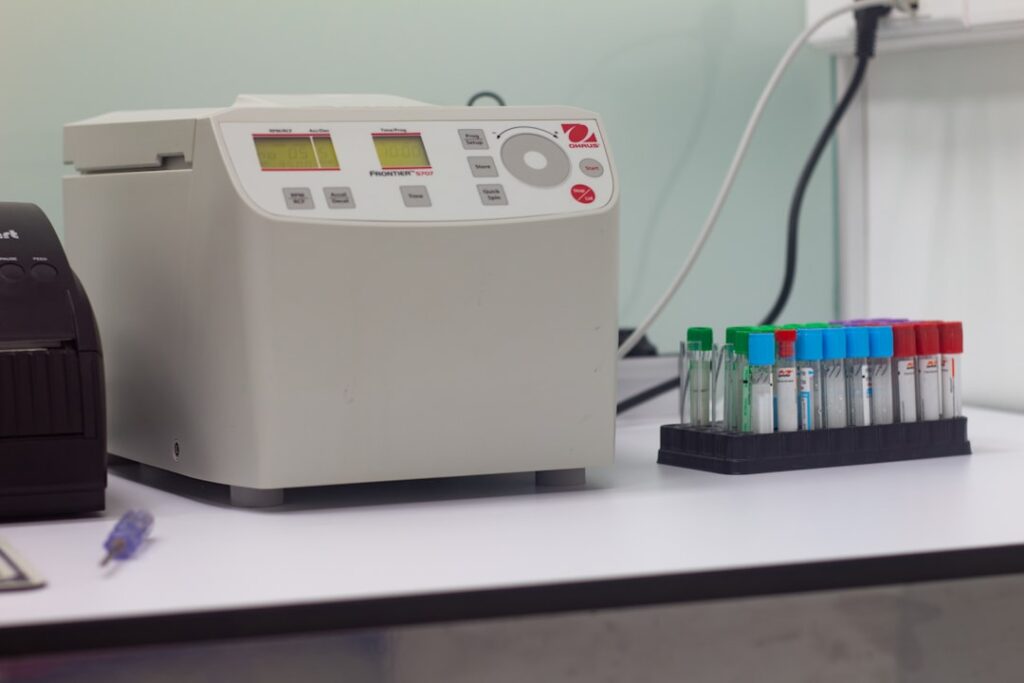
Radon testing equipment spans a wide range, from inexpensive passive kits a homeowner mails to a lab to the calibrated continuous monitors a certified professional carries to a real estate inspection. The right equipment depends on who is using it and why. This guide summarizes EPA and Colorado health-department guidance current as of 2026; it is informational, and any measurement should follow recognized protocols, with health questions directed to a physician. For Front Range homeowners, where elevated radon is widespread, understanding what equipment professionals rely on, and how it differs from a consumer kit, clarifies when a do-it-yourself test is enough and when a professional measurement is worth the cost.
Part of our Radon Levels guide — start there for the full picture →
What Counts as Radon Testing Equipment
Radon testing equipment divides into passive and active categories. Passive equipment, including charcoal canisters and alpha-track detectors, collects radon or its decay products over a fixed period and is analyzed by a laboratory afterward. Active equipment, the continuous radon monitor, draws air in and detects radon electronically, logging readings over time. Professionals use additional gear too: calibration references, sampling pumps for grab samples, and sometimes equipment for diagnostic measurements that guide mitigation design. The category overlaps heavily with the consumer devices covered in this guide to the radon testing device, but professional equipment adds calibration and documentation that consumer gear typically lacks. The full context appears in the Colorado radon testing guide.
Passive Equipment Used in the Field
Passive equipment is the backbone of low-cost testing. Charcoal canisters adsorb radon onto activated carbon over two to seven days and suit short-term screening. Alpha-track detectors record etch marks from alpha particles over months and are the standard for long-term measurement, giving a more representative annual average. Electret ion chambers, less common in consumer hands, use a charged disc whose voltage drops as radon decay products discharge it, and they are read with a special meter. Professionals sometimes deploy passive equipment in bulk for multifamily or large-building surveys, where many low-cost detectors cover many rooms at once. The long-term option and its uses are detailed in this guide to the long-term radon test kit.
Continuous Radon Monitors: The Professional Standard
For real estate testing and any measurement where credibility matters, certified professionals rely on continuous radon monitors. These instruments sample air on a set interval and record radon levels hour by hour, producing a detailed log rather than a single average. That hourly record is valuable: it can reveal whether a window was opened or the device moved during the closed-building test period, helping protect the integrity of a transaction. Professional monitors are calibrated, often include sensors for temperature, humidity, and barometric pressure, and may detect tampering or power interruptions. They cost considerably more than consumer equipment, which is why their use is bundled into a service fee rather than sold to homeowners directly.
Calibration and Quality Control
Calibration separates professional radon testing equipment from a casual gadget. Continuous monitors must be calibrated against a known radon reference, typically in a calibration chamber, on a regular schedule so their readings stay accurate. Certified measurement providers follow quality-assurance programs that include duplicate measurements, blanks, and periodic recalibration. The EPA and national radon programs set protocols that define how equipment must be maintained and how tests must be conducted under closed-building conditions. A homeowner’s consumer monitor, by contrast, is generally not recalibrated and is meant for awareness rather than transaction-grade documentation. This difference in calibration and quality control is the core reason a professional result carries more weight.
Diagnostic Equipment Beyond Measurement
Professionals who mitigate, not just measure, carry equipment that goes beyond detecting radon. A micromanometer measures the tiny pressure differences across a slab during sub-slab communication testing, revealing how readily a suction point can draw across the floor and guiding system design. Smoke pencils and pressure gauges help diagnose airflow and confirm that an installed system maintains negative pressure beneath the slab or membrane. After installation, the same measurement equipment verifies the result with a post-mitigation test. This diagnostic gear separates a designer who engineers a system to a building from one who guesses, and it is a reason professional mitigation outperforms casual do-it-yourself attempts.
Manometers are also part of the finished system rather than just the toolkit. Every installed mitigation system includes a simple U-tube manometer on the vent pipe so the homeowner can confirm at a glance that the fan is maintaining suction. A change in the gauge reading signals a fan or pipe problem, making this inexpensive device the homeowner’s ongoing monitoring tool long after the professional equipment has left the property.
Proper Use: Placement and Conditions
Even the best equipment gives a wrong answer if used incorrectly. Radon testing protocols call for placing the device in the lowest livable level, away from drafts, exterior doors, windows, and high-humidity areas, at a sensible height, and undisturbed for the test duration. Closed-building conditions, keeping windows and exterior doors shut except for normal entry, must hold during short-term tests so the reading reflects typical conditions rather than a ventilated house. Professionals follow these protocols strictly, and homeowners using consumer equipment should follow the same rules. Interpreting whatever the equipment reports is the next step, covered in this guide to radon test results.
Quality Assurance Behind Professional Equipment
What truly separates professional radon testing equipment is the quality-assurance program wrapped around it. Certified measurement providers operate under written procedures that include regular calibration against a known radon source, duplicate measurements to check reproducibility, blank devices to detect contamination, and documented chain-of-custody for samples sent to a lab. These steps are why a professional result is defensible in a transaction or before a regulator. National radon programs and the EPA set the protocols that define how equipment must be maintained and how measurements must be conducted, and accredited providers follow them as a condition of their credentials.
Consumer equipment, by contrast, carries no such program. A homeowner’s monitor is rarely recalibrated, is not subject to duplicate or blank checks, and produces a reading useful for awareness rather than formal proof. This is not a flaw in consumer devices, which are designed for a different purpose, but it explains why the equipment tier should match the stakes. A homeowner curious about their own home is well served by inexpensive equipment, while a transaction or a regulatory requirement calls for the calibrated, quality-controlled instruments only a certified provider maintains.
What Radon Testing Equipment Costs
Passive equipment is inexpensive: charcoal canisters run 15 to 50 dollars and long-term alpha-track kits 25 to 60 dollars, with lab analysis usually included. Consumer continuous monitors cost roughly 130 to 250 dollars as a one-time purchase. Professional continuous monitors are a different tier entirely, often costing hundreds to several thousand dollars per instrument, plus ongoing calibration costs, which is why their use shows up as a service fee of 125 to 300 dollars per test rather than a product a homeowner buys. The cost comparison across all these options is laid out in this guide to how much a radon test costs.
Choosing Equipment on the Front Range
Colorado’s uranium-bearing geology produces high indoor radon, and the Colorado Department of Public Health and Environment reports many homes statewide exceed the EPA action level of 4.0 picocuries per liter, with Front Range counties frequently affected. For a homeowner’s own check, a passive kit or a consumer continuous monitor is appropriate and affordable. For a home purchase or any situation needing a defensible, documented result, professional equipment used by a certified provider is the right call. The equipment only measures; if it reports an elevated level, the response is mitigation by a qualified contractor, a separate and larger undertaking than the test itself.
How Continuous Monitors Compare to Passive Kits
The clearest equipment distinction is between a passive kit and a continuous monitor, and each suits different needs. A passive kit, charcoal canister or alpha-track, is cheap, requires no power, and is ideal for a homeowner screening their own house or for blanketing a large building with many low-cost detectors. Its limitation is that it returns a single time-averaged number after a lab analyzes it, with no record of what happened during the test. A continuous monitor records radon hour by hour, runs on power or batteries, and produces a detailed log that reveals fluctuations and can flag tampering or an open window during a closed-building test.
That hourly record is why continuous monitors dominate professional and transaction work. When the result may trigger a negotiation over a mitigation system, the ability to show that the test ran under proper conditions protects everyone involved. For a homeowner’s personal awareness, the difference matters less, and a passive kit or a consumer continuous monitor is perfectly adequate. The equipment choice ultimately tracks the stakes: higher stakes justify the calibrated, logging instrument, while a simple screen justifies the inexpensive passive device.
Why Equipment Choice Affects Trust in the Result
A radon result is only as trustworthy as the equipment and the protocol behind it. Calibrated professional equipment, operated under closed-building conditions by a credentialed provider, produces a number that a lender, a buyer, or a regulator will accept. A consumer device used casually, without attention to placement or closed-building conditions, produces a number useful for personal awareness but not for a formal decision. This is not a knock on consumer equipment, which serves its purpose well, but a recognition that the equipment tier should match the use. Spending on a professional measurement for a transaction is sensible; insisting on professional equipment for a routine personal check is overkill.
Choosing Equipment for the Front Range
Colorado’s uranium-bearing geology produces high indoor radon, and the Colorado Department of Public Health and Environment reports many homes statewide exceed the EPA action level of 4.0 picocuries per liter, with Front Range counties frequently affected. For a homeowner’s own check, a passive kit or a consumer continuous monitor is appropriate and affordable. For a home purchase or any situation needing a defensible, documented result, professional equipment used by a certified provider is the right call. Whatever the equipment, it only measures; if it reports an elevated level, the response is mitigation by a qualified contractor, a separate undertaking with its own design, installation, and clearance-testing equipment.
With Colorado among the highest-radon states in the country, Front Range homeowners and building owners encounter this equipment decision more often than residents of low-radon regions, which makes understanding the tiers genuinely useful here. The simplest way to think about radon testing equipment is to start from the decision it must support and work backward to the right tier. A private curiosity about one’s own home calls for inexpensive passive or consumer equipment used carefully. A contractual or regulatory decision calls for calibrated professional equipment and a credentialed operator. In both cases, correct placement and closed-building conditions matter as much as the hardware, and an elevated result is a prompt to confirm and then mitigate. Matching equipment to purpose, rather than overspending on a casual check or underspending on a transaction, is how a Front Range homeowner gets a trustworthy answer for a sensible cost.
References
- How to test your home for radon — U.S. EPA
- Radon measurement protocols in Colorado — Colorado Department of Public Health and Environment
- Radon measurement and health risk — American Lung Association
Frequently asked questions
What radon testing equipment do professionals use?
Certified professionals primarily use calibrated continuous radon monitors that log hourly readings and can detect tampering. They also deploy passive detectors for large-building surveys and use calibration references and quality-control procedures that consumer gear lacks.
What is the difference between passive and active radon equipment?
Passive equipment, like charcoal canisters and alpha-track detectors, collects a sample over time for lab analysis. Active equipment, the continuous monitor, reads radon electronically and logs results hour by hour for a detailed record.
Why does professional equipment cost so much more?
Professional continuous monitors are calibrated instruments, often costing hundreds to several thousand dollars, with ongoing recalibration and quality control. That calibration and documentation is why their results carry transaction-grade credibility, reflected in a service fee.
Do I need professional equipment for my Front Range home?
For your own check, a passive kit or consumer monitor is fine and affordable. For a home purchase or any situation needing a defensible, documented result, professional equipment used by a certified provider is the appropriate choice.
Front Range homeowners who want a professionally measured, documented radon result, or guidance on which equipment fits their needs, can reach out through our contact page to connect with a certified provider.
Test your home for radon
Radon is invisible and odorless, so a test is the only way to know your level. A short-term kit gives a first reading in days; a digital monitor tracks it over time.
| Product | Why | Buy |
|---|---|---|
 AirChek Charcoal Radon Test Kit AirChek Charcoal Radon Test Kit | Lab fee usually included; EPA short-term protocol. | Amazon — $21.95 |
 First Alert RD1 Radon Test Kit First Alert RD1 Radon Test Kit | Widely stocked; 48-hour charcoal test. | Amazon — $16.98 |
 Airthings Corentium Home Airthings Corentium Home | Digital monitor with a long-term average. | Amazon — $142.99 |