Professional Radon Test: When to Hire Over DIY
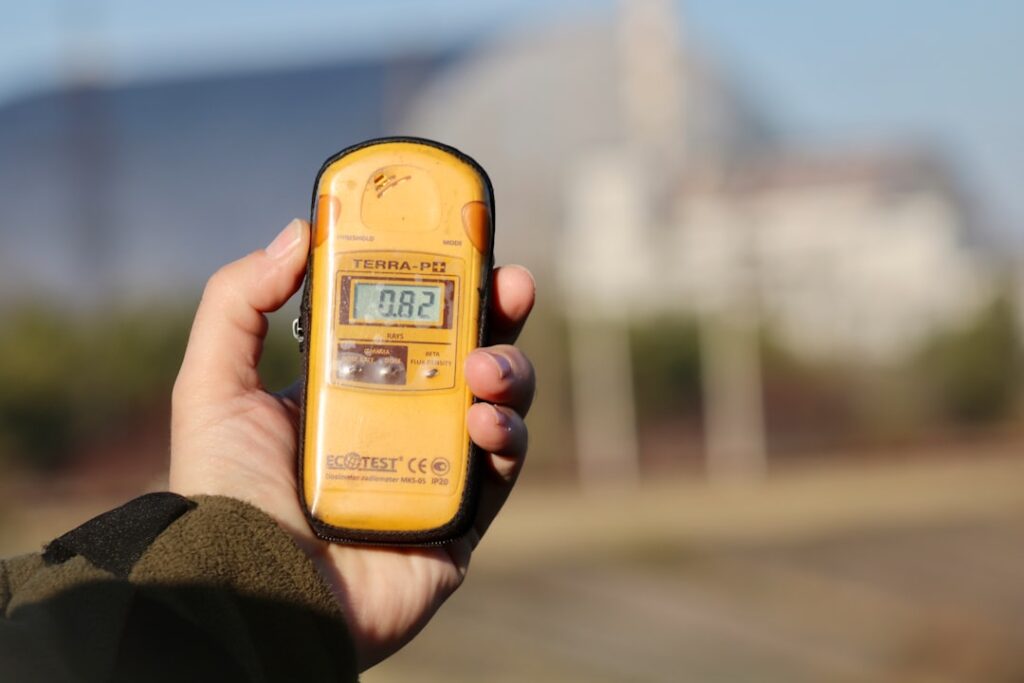
Homeowners testing for radon have two main paths: a $15-30 DIY charcoal canister mailed to a lab, or a $300-500 professional service call by a NRPP-certified Measurement Specialist using a continuous radon monitor. Both methods can produce defensible results, but they answer slightly different questions and serve different transaction contexts. This guide summarizes EPA and AARST guidance current as of 2026 and walks through what a professional radon test is, when it is worth the cost difference, what equipment professionals use, and how to verify the certification before booking. Radon is a serious lung-cancer risk — consult your physician for symptoms and a NRPP-certified pro for testing decisions on a real-estate transaction.
What is a professional radon test?
A professional radon test is a measurement performed by a NRPP-certified Measurement Specialist using a continuous radon monitor (CRM). The technician deploys the monitor in the lowest livable level of the home, the monitor records hourly radon concentrations for 48 to 96 hours under closed-house conditions, and the technician retrieves the device and emails a written report. The report includes hourly trend data, the 48-hour average reading, environmental conditions during the test (temperature, barometric pressure), and a comparison against the EPA action level of 4.0 pCi/L.
The radon testing in Colorado pillar covers the broader testing context. The professional-versus-DIY question fits in at the moment a homeowner needs a measurement and is choosing how to get it.
Professional vs DIY radon testing
The two methods produce comparable accuracy when both are deployed correctly, but they differ in cost, speed, defensibility, and use case.
DIY charcoal canister
A short-term test ($15 to $30) using activated charcoal to adsorb radon over 48 to 96 hours. The homeowner deploys the canister in the lowest livable level, seals it at the end of the exposure window, and mails it to an NRPP-listed lab. The lab reports the average concentration. DIY testing is appropriate for initial screening, periodic re-testing of mitigated homes, and homes where the result will guide a personal decision rather than a real-estate transaction.
Professional CRM testing
A NRPP-certified Measurement Specialist deploys a continuous radon monitor — a self-contained electronic device that records hourly radon concentrations. CRMs cost $1,500 to $5,000 each, so the technician’s service call covers the equipment plus expertise. The report includes hourly trend data (showing whether radon was steady or fluctuating), tamper detection (devices that detect window-open or device-moved events), and the Measurement Specialist’s signature. The hourly trend data is what makes CRM testing defensible for real-estate transactions where buyer and seller may dispute whether the home was tested under appropriate conditions.
When professional testing is required
Several situations require or strongly recommend a professional test. Real-estate transactions where the buyer wants tamper-resistant documentation. Post-mitigation clearance testing to confirm a newly installed system meets the target. Disputes between previous test results that need independent confirmation. Pre-purchase inspections in metros where home buyers expect professional results as standard practice. For Front Range buyers, professional testing is often bundled into the home inspection at an incremental cost of $150 to $200 — substantially less than booking a standalone Measurement Specialist service call.
Equipment a professional uses
Continuous radon monitors (CRMs) are the dominant equipment for professional testing. Major brands include Sun Nuclear (Model 1027, 1028, 1030), Femto-Tech (Radalert 100, R-100), and SafeBuilt (Corentium Pro). Each device measures radon by alpha particle detection in an internal chamber, with sensitivity adequate for ambient indoor levels. Modern CRMs also record temperature, humidity, and barometric pressure. The device internally logs hourly values, and the technician downloads the data after retrieval. Calibration is required annually against a reference standard at an accredited radon chamber. NRPP requires Measurement Specialists to maintain calibration records and submit them during certification renewal.
Closed-house conditions and test protocols
EPA and AARST testing protocols require closed-house conditions during the test: windows and doors closed except for normal entry and exit, mechanical ventilation systems operating normally, no use of whole-house exhaust fans. The home should be in closed-house mode for 12 hours before the test begins and throughout the test period. Failure to follow closed-house protocol is the most common cause of artificially low test results — leaving windows open dilutes the radon concentration. Professional technicians explain the closed-house protocol to homeowners during device setup and many CRMs include movement sensors that flag if the device was moved during testing.
What the professional report contains
A complete report includes Measurement Specialist name and NRPP certification number, device model and serial number, calibration date, deployment location and date, retrieval date, hourly radon concentration data (often shown as a graph), 48-hour or 96-hour average concentration, environmental conditions during test (temperature, pressure, humidity), tamper detection notes, and a comparison against the EPA action level. The report’s hourly graph is what distinguishes professional from DIY testing — it allows the Measurement Specialist to verify the home was actually in closed-house conditions throughout the test.
NRPP Measurement Specialist certification
NRPP (National Radon Proficiency Program) certifies individuals as Measurement Specialists. The certification requires completion of an AARST-approved course, passing the certification exam, and ongoing continuing education. AARST maintains a public directory of NRPP-certified measurement professionals — verifying the technician’s name in the directory takes about thirty seconds and confirms current certification. Expired or suspended certifications should not be hired for transactions where defensibility matters.
The cluster guide on radon tester walks through the device-vs-person terminology, and the professional radon test kit guide expands on pro-grade equipment specifically.
Pricing for professional radon tests in 2026
- Standalone CRM service call — $300 to $500 nationally
- Bundled with home inspection — $150 to $200 additional
- Post-mitigation clearance test — $150 to $250 (often included in mitigation contract)
- Multi-room CRM testing (large home) — $400 to $700 covering 2 to 3 test locations
- Long-term alpha-track placement — $50 to $100 (90-day passive device)
- Rush turnaround — 50 to 100 percent surcharge for next-day deployment
When to choose DIY versus professional
The decision usually maps to context. For initial screening to find out whether the home is even close to action level, DIY is fine. For real-estate transactions where buyer-seller documentation will be exchanged, professional is appropriate. For homes that have just had mitigation installed and the homeowner wants the contractor’s claim verified independently, professional testing offers tamper-resistance. For post-mitigation re-testing every 2 to 5 years to confirm continued performance, DIY usually suffices. For homes in EPA Radon Zone 1 with confirmed high readings on prior tests, professional testing provides the hourly trend data that helps a mitigation contractor design a system.
Front Range professional radon testing
Most Front Range home inspectors are also NRPP-certified Measurement Specialists, and bundling the radon test with the home inspection is the dominant pattern. The combined service typically costs $550 to $900 for the inspection plus radon test. Standalone professional radon testing is available from specialty firms in Denver, Boulder, Colorado Springs, and Fort Collins. CDPHE maintains the state radon database and supports the federal Indoor Radon Grant program that funds outreach in higher-risk counties.
Common professional testing pitfalls
A few patterns can produce unreliable professional results even with NRPP-certified technicians. Placement of the CRM in a basement that is fundamentally different in air-handling from the rest of the home (an unheated unfinished basement may test very differently from the lived-in upper levels). Testing during atypical weather (a strong cold front during winter testing tends to elevate radon as homes are tightly sealed). Inadequate closed-house compliance by occupants during the test. Failure to test in the lowest livable level (HVAC closets and unconditioned crawlspaces do not represent occupant exposure). NRPP technicians document these conditions in the report, and the homeowner reading the report should look for environmental notes that explain unusual results.
How professional results lead to mitigation decisions
Results at or above 4.0 pCi/L trigger an EPA recommendation to mitigate. Between 2.0 and 4.0 pCi/L, mitigation is considered worthwhile per EPA guidance though not required. Below 2.0 pCi/L, mitigation is not typically recommended though re-testing every 2 to 5 years is wise because conditions change. The professional report’s hourly trend data also informs the mitigation contractor’s system design — homes with steady high readings versus highly variable readings may benefit from different suction-point configurations.
Short-term vs long-term professional testing
Most professional service calls use a 48 to 96-hour CRM measurement, which produces a short-term average. For homes near the action level, EPA also recommends a long-term test (90 days or longer) using an alpha-track passive device to produce an annual-average estimate that captures seasonal variation. Long-term testing is rarely done during real-estate transactions because it does not fit the inspection-objection timeline, but it is valuable for homeowners who want a more complete picture of typical exposure. Some professional contractors offer both a short-term CRM result for transaction documentation and a follow-up long-term alpha-track placement for occupant-decision purposes.
What happens after a high professional reading
For results at or above 4.0 pCi/L during a real-estate transaction, the buyer typically requests that the seller install mitigation as part of the inspection-objection resolution. Sellers often agree because mitigation is relatively affordable ($1,500 to $2,800 on the Front Range) and avoids the deal-killing alternative of buyer walk-away. After installation, a post-mitigation clearance test confirms the system reduced radon to below the action level, and the documentation transfers to the buyer at closing. For owner-occupied homes (no transaction), the homeowner has more flexibility in scheduling mitigation and can take time to compare multiple contractor quotes before committing.
Why professional testing matters for new construction
Homes built in EPA Radon Zone 1 since the early 2000s are often built with radon-resistant new construction (RRNC) features — passive sub-slab piping that can be activated with a fan if testing later shows elevated levels. Even with these features, new homes can still test elevated, and professional testing within the first year of occupancy is recommended by EPA for homes in Zone 1. The professional measurement establishes whether the passive system needs to be activated. Builders sometimes include a one-time radon test in the warranty package, but follow-up testing falls to the homeowner.
Insurance, liability, and Measurement Specialist coverage
Reputable NRPP-certified Measurement Specialists carry general liability insurance and errors-and-omissions coverage. Liability protects against accidental property damage during device deployment; E&O protects against claims that a measurement error led to a financial loss (for example, an inaccurate result that affected a real-estate negotiation). Asking the Measurement Specialist for a certificate of insurance before booking is standard professional practice, particularly for transaction-related testing where significant dollar amounts ride on the result. Specialists who carry insurance and provide documentation on request usually run more disciplined operations overall.
References
- EPA Radon Information — U.S. Environmental Protection Agency
- EPA Consumer’s Guide to Radon Reduction — U.S. Environmental Protection Agency
- CDPHE Radon Program — Colorado Department of Public Health and Environment
- CDC Radon Information — Centers for Disease Control and Prevention
Front Range homeowners weighing professional versus DIY radon testing can reach out through our contact page for a referral to a NRPP-certified Measurement Specialist near them.