Radon Testing Michigan: What Homeowners Need to Know

Michigan homeowners often assume radon is a problem for other states, but the data says otherwise — a meaningful share of Michigan homes test above the federal action level, and the only way to know your home’s level is to measure it. Radon testing in Michigan follows the same EPA-based methods used nationwide, with the state’s geology and basement-heavy housing stock making testing especially worthwhile. This guide summarizes EPA and federal radon guidance current as of 2026 for informational purposes; consult a certified professional for testing and mitigation, and your physician for health questions.
Part of our Radon Levels guide — start there for the full picture →
Why Radon Testing Matters in Michigan
Radon is a colorless, odorless radioactive gas produced by the natural breakdown of uranium in soil and rock. It seeps into homes through foundation cracks, sump pits, and slab openings, accumulating in basements and lower levels. The EPA identifies radon as the second-leading cause of lung cancer in the United States and the leading cause among people who have never smoked. Because it cannot be seen or smelled, testing is the only way to detect it.
In Michigan, radon potential varies by county, and a number of counties — particularly across the southern and central parts of the state — fall into higher-risk categories where elevated readings are common. The EPA maps counties into radon zones, and several Michigan counties sit in zones with predicted indoor averages at or above the action level. Even in lower-zone counties, individual homes can test high, so the federal recommendation is that every home be tested regardless of location. The broader science of radon and why it accumulates indoors is covered in our plain-language radon testing guide.
How to Test for Radon in Michigan
Michigan homeowners use the same test types available nationwide: short-term tests, long-term tests, and continuous electronic monitors. Short-term tests run about 2 to 7 days under closed-house conditions and are the fastest option, common during real-estate transactions. They use passive devices such as charcoal canisters or alpha-track detectors placed in the lowest livable level and then mailed to a lab.
Long-term tests run more than 90 days and provide a more accurate year-round average by smoothing out daily and seasonal swings — valuable in Michigan, where heating-season house-sealing can raise winter radon levels. Continuous monitors measure radon electronically and display ongoing readings, useful for awareness and for confirming a mitigation system works. The EPA recommends confirming a high short-term result with a follow-up test before deciding on mitigation. The differences between device types are detailed in our guide to the continuous radon monitor.
Short-Term Versus Long-Term in Michigan’s Climate
Michigan’s long, cold winters make the choice between short-term and long-term testing especially consequential. During the heating season, homes stay sealed for months and the stack effect runs strong, so radon tends to concentrate at its annual peak. A short-term test run in deep winter may read higher than the home’s true year-round average, while a short-term test run in summer with windows opening and closing may read lower. Neither is wrong, but each captures only a slice of the year.
A long-term test of more than 90 days averages across these swings and gives the most honest estimate of the exposure the household actually lives with. For a homeowner not racing a real-estate deadline, this is usually the better choice. When a transaction forces a short-term test, the EPA’s advice to confirm a high result with a second test guards against an unrepresentative reading driven by weather or season. Many Michigan inspectors place tamper-resistant continuous monitors during transactions precisely so the result reflects genuine closed-house conditions rather than a window left open.
Running the Test Correctly
Test conditions determine accuracy. For short-term tests, keep windows and exterior doors closed except for normal entry and exit, starting 12 hours before and throughout the test. Place the device in the lowest level you regularly use, 20 inches to 6 feet above the floor, away from drafts, exterior walls, humidity, and direct sun. Avoid testing during severe storms or high winds. Follow the device instructions and mail charcoal canisters promptly. Michigan’s cold winters make the heating season a particularly representative time to test, since homes are sealed and radon tends to concentrate.
What Radon Testing Costs in Michigan
DIY short-term test kits generally cost $15 to $40 including lab analysis, and the Michigan Department of Environment, Great Lakes, and Energy has historically promoted low-cost or discounted test kits through local health departments. A professional measurement by a certified radon tester commonly runs $100 to $250, often bundled with a real-estate inspection. Long-term test kits cost somewhat more than short-term kits, and continuous monitors are a one-time purchase typically ranging from about $130 to $250.
The cost is small relative to the risk it addresses, and many Michigan county health departments offer subsidized kits to encourage testing. The pricing structure mirrors radon testing nationally; for a fuller breakdown of what drives the cost, see our guide to how much a radon test costs.
Understanding Michigan Test Results
Results are reported in picocuries per liter (pCi/L). The EPA recommends mitigation at or above 4.0 pCi/L and suggests considering it between 2 and 4 pCi/L, noting that no radon level is entirely risk-free. The U.S. indoor average is roughly 1.3 pCi/L and outdoor air about 0.4 pCi/L. A Michigan home reading above 4.0 is not unusual, especially in higher-zone counties, and it simply means mitigation is the recommended next step.
If a short-term test reads high, confirm it with a second test before acting. Where the confirmed average is at or above the action level, the standard solution is an active sub-slab depressurization system installed by a certified mitigation contractor — the same approach used across the country and explored in our guide to radon mitigation cost. After mitigation, retest to confirm the system reduced levels below the threshold.
What to Do With Elevated Michigan Results
A confirmed reading at or above 4.0 pCi/L in a Michigan home calls for mitigation, and the standard solution is the same proven approach used nationwide: an active sub-slab depressurization system installed by a qualified contractor. A fan draws soil gas from beneath the basement slab and vents it above the roofline, routinely bringing levels well below the action threshold. Michigan’s prevalence of full basements actually works in the homeowner’s favor here, since a basement slab is the simplest and most cost-effective foundation to mitigate.
After installation, a post-mitigation test confirms the system reduced the radon level, and a monitoring gauge lets the homeowner verify the fan keeps running over time. Because radon levels can shift after foundation work, renovations, or simply with the seasons, retesting every couple of years keeps the home protected. The cost of a Michigan mitigation system is modest against the lung-cancer risk it addresses, and for buyers, mitigation is frequently negotiated into a real-estate transaction so the seller installs or credits the system before closing.
When Michigan Homeowners Should Test
The EPA and federal guidance recommend testing every home, but several moments make it especially important: before buying or selling a home, after moving in, after major foundation or basement renovations, and every few years even after a low result, since radon levels change over time. Michigan’s prevalence of finished basements — often used as living and bedroom space — raises the stakes, because radon concentrates in lower levels where families may spend significant time.
Real-estate transactions frequently prompt a short-term test during the inspection period. Homeowners not under a deadline benefit from a long-term test for the most accurate annual picture. Either way, testing turns an invisible hazard into a measured number, and Michigan’s varied radon geology means no homeowner should assume their county is safe without measuring.
Radon Geology Across Michigan
Michigan’s radon picture is driven by its glacial geology. The state’s soils and bedrock vary considerably, and the uranium content that produces radon is unevenly distributed. The EPA’s county radon-zone map places a number of Michigan counties — concentrated across the southern and central regions — in higher-potential categories, while others fall into lower zones. But the zone map predicts averages, not individual homes, and the agency stresses that homes in low-zone counties can still test high because soil composition, foundation construction, and how a house is operated all influence the indoor level.
This variability is the practical argument against assuming a home is safe based on location. A house in a lower-zone county sitting over a localized uranium-bearing deposit, with a finished basement and tight winter sealing, can read well above 4.0 pCi/L even though its county average is modest. The reverse happens too. Because the only reliable predictor for a specific home is a test in that home, Michigan’s varied geology reinforces the federal message: test every house, regardless of what the county map suggests.
The Health Reason Testing Matters
The stakes behind Michigan radon testing are the same everywhere: lung cancer. Radon is radioactive, and its decay products, when inhaled, irradiate the cells lining the lungs over years of exposure. The EPA attributes thousands of U.S. lung-cancer deaths annually to radon, ranking it second only to smoking and first among people who have never smoked. The American Lung Association identifies radon as a preventable cause of lung cancer, with testing and mitigation the proven response.
Michigan’s housing patterns sharpen the concern. Finished basements are extremely common in the state and frequently serve as bedrooms, family rooms, and home offices — meaning occupants spend long hours in the lowest level, where radon concentrates most. The risk is cumulative, so years spent sleeping in a basement bedroom with elevated radon carry more lifetime risk than brief exposure elsewhere. Households with smokers face a compounded risk, since smoking and radon together multiply lung-cancer odds. These are exactly the situations that make a $20 test kit one of the highest-value purchases a Michigan homeowner can make.
Getting a Low-Cost Test Kit in Michigan
One advantage Michigan homeowners have is access to discounted test kits. The state’s environmental agency has historically partnered with local health departments to offer low-cost or subsidized short-term radon kits, sometimes for just a few dollars, as part of public-health outreach. Contacting your county or local health department is the first place to check, since availability and pricing vary by jurisdiction and season — radon awareness campaigns often cluster around the winter months when testing is most representative.
Where subsidized kits are not available, retail and online short-term kits in the $15 to $40 range work well when used correctly. For the most accurate picture, a long-term kit run over more than 90 days captures the seasonal swings that a short test cannot. Whichever route you choose, the kit must be from a recognized provider with an accredited analyzing laboratory, and you must follow the closed-house and placement instructions precisely for the result to mean anything. The small effort of sourcing and running a proper kit is what turns Michigan’s invisible radon risk into a number you can act on.
Taking Action
For Michigan homeowners, the path is simple: obtain a test kit — often discounted through a county health department — run it under proper closed-house conditions, and compare the result to the 4.0 pCi/L action level. Confirm a high reading with a second test, then hire a certified mitigation contractor if levels stay elevated. Retest after mitigation and periodically thereafter. Given radon’s status as a leading lung-cancer cause and Michigan’s real radon potential, testing is among the cheapest and most consequential steps a homeowner can take.
References
- A Citizen’s Guide to Radon — U.S. EPA
- Radon Zones and State Contacts — U.S. EPA
- Radon and Lung Health — American Lung Association
Frequently asked questions
Is radon a problem in Michigan?
Yes. A meaningful share of Michigan homes test above the EPA action level, and several counties fall into higher radon-risk zones. Because radon cannot be seen or smelled and varies house to house, the federal recommendation is that every Michigan home be tested.
How much does radon testing cost in Michigan?
DIY short-term kits run about $15 to $40 including lab analysis, and many county health departments offer subsidized kits. A professional test by a certified tester commonly costs $100 to $250, often bundled with a home inspection. Continuous monitors run about $130 to $250.
When is the best time to test for radon in Michigan?
The heating season is particularly representative because homes are sealed and radon concentrates. Short-term tests require closed-house conditions for 12 hours before and during the test. Long-term tests over 90 days give the most accurate year-round average.
What radon level requires action in Michigan?
The EPA recommends mitigation at or above 4.0 pCi/L and suggests considering it between 2 and 4 pCi/L. Confirm a high short-term result with a second test, then hire a certified contractor for an active mitigation system if levels remain elevated.
Homeowners outside Michigan — including across the Colorado Front Range — who want help arranging a radon test or interpreting results can get in touch through our contact page to connect with a qualified professional.
Test your home for radon
Radon is invisible and odorless, so a test is the only way to know your level. A short-term kit gives a first reading in days; a digital monitor tracks it over time.
| Product | Why | Buy |
|---|---|---|
 AirChek Charcoal Radon Test Kit | Lab fee usually included; EPA short-term protocol. | Amazon — $21.95 |
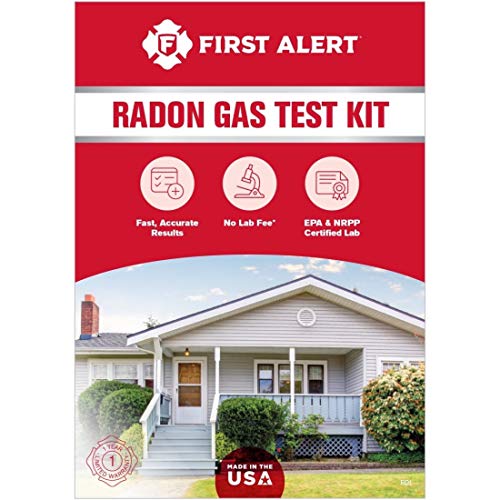 First Alert RD1 Radon Test Kit | Widely stocked; 48-hour charcoal test. | Amazon — $16.98 |
 Airthings Corentium Home | Digital monitor with a long-term average. | Amazon — $142.99 |