Continuous Radon Monitor: What Homeowners Know
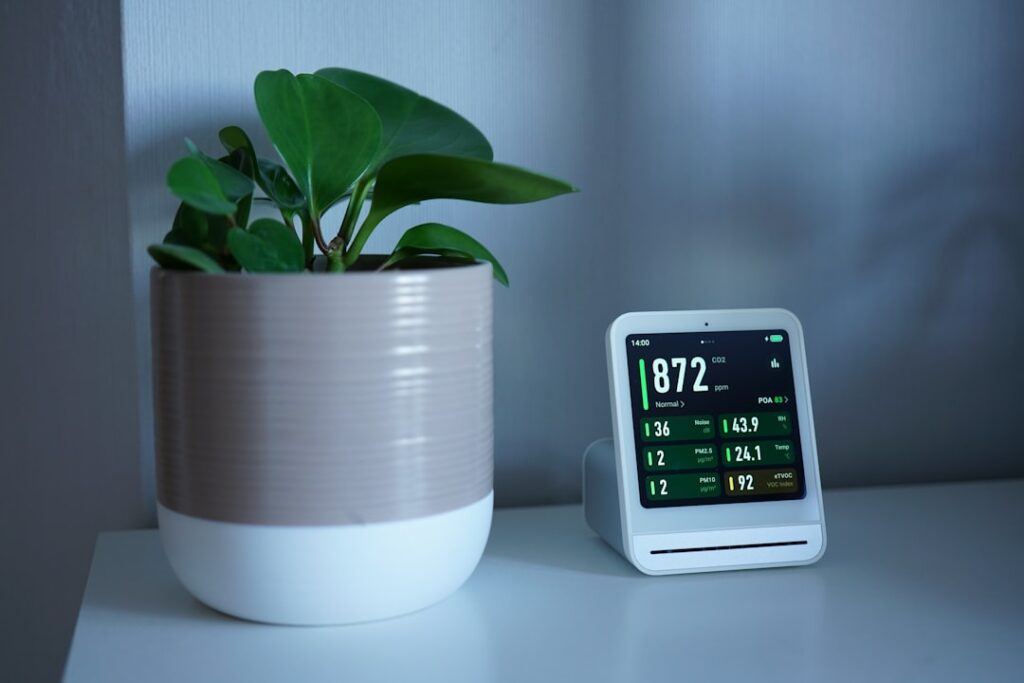
A single radon test gives one number for one window of time, but radon levels move — they climb on cold sealed-up nights, shift with the seasons, and respond to how a home is ventilated. A continuous radon monitor captures that movement, sampling the air over and over and reporting how levels change hour by hour and day by day. For Colorado homeowners in a high-radon region, that ongoing visibility turns an invisible gas into a trend they can watch and act on. This guide summarizes EPA and Colorado state health guidance current for educational purposes; consult a certified radon professional for testing and mitigation decisions.
Part of our Radon Levels guide — start there for the full picture →
What a continuous radon monitor does
A continuous radon monitor (CRM) is a device that measures radon concentration repeatedly over time and displays running short-term and long-term averages, usually in picocuries per liter (pCi/L). Unlike a passive test that captures radon over a fixed period and is then analyzed once, a CRM logs data continuously, building a picture of how radon behaves in a specific home across days, weeks, and seasons.
This distinguishes two families of products. Professional-grade CRMs are calibrated instruments inspectors use for real estate transactions and diagnostics. Consumer CRMs are affordable plug-in or battery devices that homeowners keep running for ongoing awareness. Both share the principle of continuous measurement; they differ in calibration, certification, and intended use. The broader rationale for testing in a high-radon state is laid out in our Colorado radon testing guide.
How a continuous radon monitor works
Most continuous monitors draw or allow air to diffuse into a detection chamber and count the radioactive decay events from radon and its decay products. The device converts those counts into a concentration reading. Because the measurement relies on counting random decay events, more time yields a more reliable average — short windows are statistically noisier than long ones.
Professional units often use a pump to actively move air through the chamber and include sensors for temperature, humidity, and barometric pressure, plus tamper detection — important when a test result affects a real estate deal. Consumer devices typically use passive diffusion and report through an app. The shared detection approach links the CRM to other home devices, and our overview of the digital radon detector explains the underlying technology in more detail.
Reading the data correctly
The most common mistake is overreacting to a single high hour. Radon naturally spikes and dips — a closed-up winter night can push a brief reading well above the daytime level. What matters is the long-term average, which smooths these fluctuations into a meaningful trend. A monitor showing a long-term average at or above the EPA action level of 4 pCi/L signals a genuine concern; a brief spike does not. Because radon settles in lower levels, placement in a basement or ground-floor living space gives the most relevant data, a point reinforced in our discussion of why radon concentrates in basements.
Continuous monitors versus short-term test kits
The two testing approaches answer different questions. A short-term lab test kit — a charcoal canister or alpha-track detector — sits exposed for a set period, then goes to a lab for a single precise reading. It is inexpensive, accepted for real estate use when conducted under proper closed-house conditions, and ideal for a one-time check. Our explainer on the radon gas test kit covers how these mail-in tests work.
A continuous monitor, by contrast, is a one-time purchase that measures indefinitely, revealing trends a single kit cannot. It also lets a homeowner verify that a mitigation system keeps levels low over time rather than testing just once after installation. The tradeoff is upfront cost and, for consumer models, the lack of lab certification for transactions. Many homeowners pair the two — a lab or professional test for the authoritative moment, a CRM for ongoing peace of mind. Comparing specific devices helps, and our look at Airthings radon monitors reviews a popular consumer option.
Professional-grade versus consumer monitors
The right monitor depends on the purpose. Professional CRMs used by certified inspectors are calibrated to a documented standard, include tamper and environmental sensors, and produce reports accepted in real estate transactions. They cost more and are typically owned by inspectors rather than homeowners. When a test result must hold up in a sale, a professional measurement is the appropriate choice.
Consumer CRMs are designed for awareness, not transactions. They reliably show whether a home’s radon is low, borderline, or high, and they track changes over time at a fraction of the cost of professional gear. For a homeowner who wants to keep an eye on radon year-round, a consumer monitor is well-suited. The key is matching the tool to the need: a one-time authoritative reading calls for a professional or lab test, while ongoing monitoring calls for a consumer device. Both feed into the same goal of keeping levels below the action threshold described in our guide to radon in homes.
Who should use a continuous radon monitor
A continuous monitor makes the most sense for homeowners in high-radon areas — which includes much of the Colorado Front Range — who want more than a single annual reading. It suits households using basements as bedrooms or living space, owners who have installed mitigation and want to confirm it keeps working, and anyone whose earlier test came back near the action level and who wants to watch the trend.
For a homeowner who simply needs one test to satisfy a purchase or a lender, a professional or lab test is the more economical path. A CRM is a complement, not a replacement, for that authoritative measurement. The continuous device fills the long gaps between formal tests with useful data, prompting action — a professional retest, better ventilation, or mitigation — when the trend warrants it.
Acting on what the monitor shows
The practical workflow is straightforward. Place the monitor in the lowest occupied level, let it run for at least several days to a few weeks, and watch the long-term average. If that average stays comfortably below 4 pCi/L, the home is in good shape, though periodic checks remain wise. If the average sits at or above the action level, confirm with a professional test and, if confirmed, arrange mitigation by a certified contractor.
Used this way, a continuous radon monitor becomes a quiet, ongoing safeguard. It does not replace the certified testing that anchors a transaction or a mitigation decision, but it gives a household constant feedback about an otherwise undetectable hazard. In a state where elevated radon is common, that steady awareness — backed by professional confirmation when readings call for it — is a sensible layer of protection for any home.
Why radon levels fluctuate so much
One of the most valuable things a continuous monitor reveals is just how variable radon can be, and understanding the causes helps homeowners interpret the data. Weather is a major driver. Barometric pressure changes alter the pressure difference between the soil and the home; a drop in atmospheric pressure can draw more soil gas inside. Wind affects how air moves through a house, and rain or snow can cap the soil and push gas toward foundation openings instead of venting at the surface.
The home’s own behavior matters too. Running exhaust fans, a clothes dryer, or a fireplace depressurizes the interior and can pull soil gas up through the foundation. Opening windows ventilates and lowers readings; sealing the house against cold raises them. Seasonal swings are pronounced on the Colorado Front Range, where readings typically peak in winter as homes are closed and heated, creating a strong stack effect. A single short-term test captures only one slice of this constantly shifting picture, which is precisely why a continuous monitor — and attention to the long-term average rather than any single reading — gives a truer sense of a home’s radon exposure. The seasonal pattern is one reason our guide to radon gas in homes recommends testing during the heating season.
Tamper resistance and data integrity
Professional-grade continuous monitors include features that matter in transactions: tamper detection, motion and tilt sensors, and environmental logging that flags conditions which could invalidate a test, such as a window left open during a closed-house measurement. These safeguards exist because a radon result can affect a home’s price, creating an incentive to influence the reading. Consumer monitors lack this certification and chain-of-custody rigor, which is why they are excellent for personal awareness but not accepted as the official measurement in a real estate deal. Knowing this distinction prevents a homeowner from relying on the wrong tool at the wrong moment.
Choosing and placing a continuous radon monitor
For homeowners buying a consumer monitor, a few practical considerations guide the choice. Decide whether radon alone is the concern or whether broader indoor air quality data — temperature, humidity, carbon dioxide — would be useful, since multi-sensor models cost more but consolidate measurements. Consider whether an app-only display suffices or whether an on-device screen is preferred. Battery versus plug-in power affects where the unit can sit. Across brands, the core radon function is similar; the differences lie in extra sensors, display, and app features.
Placement follows the same logic for any radon measurement. Put the monitor in the lowest occupied level — a basement living area or ground-floor room — at breathing height, away from drafts, exterior doors, windows, and direct sources of heat or humidity. Leave it in one spot rather than moving it around, so the long-term average reflects a consistent location. Give it time: a meaningful short-term reading takes at least a couple of days, and the long-term average grows more reliable over weeks. Treated as a permanent fixture rather than a one-time gadget, a continuous monitor delivers exactly the ongoing awareness it was designed for, complementing the periodic professional testing that anchors major decisions.
Using a continuous monitor after mitigation
One of the most practical uses for a continuous monitor comes after a home has been mitigated. A mitigation system is verified by a post-installation test, but that single test captures only one window. A continuous monitor left running afterward confirms the system keeps levels low across seasons, including the winter months when radon pressure peaks on the Front Range and a system is most stressed.
The monitor also serves as an early-warning device for system problems. If a mitigation fan fails or a new foundation pathway opens, indoor radon will climb, and the monitor’s rising long-term average flags the issue before it goes unnoticed for months. A manometer on the mitigation pipe confirms the fan is running, but the continuous monitor confirms the outcome that actually matters — that the air people breathe stays below the action level. Together, the gauge and the monitor give a mitigated home both a mechanical check and a results check, which is the most complete assurance a homeowner can have that the system continues to protect the household.
When a monitor reading should prompt action
Knowing when to act on a continuous monitor’s data prevents both complacency and overreaction. A long-term average comfortably below 2 pCi/L indicates a low-radon home that needs only periodic attention. An average hovering between 2 and 4 pCi/L sits in the range where the EPA suggests considering reduction, warranting a closer look and possibly a confirmatory professional test. A sustained long-term average at or above 4 pCi/L is the clear signal to confirm with an official test and, if confirmed, arrange mitigation by a certified contractor.
The key word is sustained. A single high hour after a closed-up winter night is normal and not a reason to act. The decision to test professionally or mitigate should rest on the trend over days and weeks, not on momentary spikes. Used this way, the monitor turns radon from an abstract worry into a clear, number-driven decision. In a state where elevated radon is common, having that steady stream of data — and knowing exactly which readings call for action — gives a household a practical, affordable way to keep an invisible hazard under control alongside the professional testing that anchors the most important decisions.
References
- How to Test Your Home for Radon — U.S. Environmental Protection Agency
- Radon Testing Guidance for Colorado — Colorado Department of Public Health and Environment
- Radon and Lung Health — American Lung Association
Frequently asked questions
What does a continuous radon monitor do?
It measures radon concentration repeatedly over time and displays running short-term and long-term averages. Unlike a one-time lab kit, it reveals how radon levels change across days, weeks, and seasons in a specific home.
Are consumer continuous radon monitors accurate?
Consumer monitors reliably show whether radon is low, borderline, or high and track trends well. For an official reading in a real estate transaction, a calibrated professional monitor or EPA-listed lab test is the standard.
Should I look at hourly readings or the average?
Watch the long-term average, not single hours. Radon naturally spikes and dips, especially on closed-up winter nights, so brief high readings are normal. The long-term average indicates whether the home has a radon problem.
Do I still need a lab test if I own a continuous monitor?
For real estate or official purposes, yes. A continuous monitor is ideal for ongoing awareness, but a professional or lab test provides the certified reading used in transactions and mitigation decisions.
Colorado homeowners who want help interpreting radon readings or connecting with a certified testing professional can reach out through our contact page.
Continuous radon detectors
A digital monitor gives you an always-on reading and a long-term average — better than a one-shot kit if you want to track levels over time.
| Product | Why | Buy |
|---|---|---|
 Airthings Corentium Home Airthings Corentium Home | Battery, portable; trusted long-term average. | Amazon — $142.99 |
 Ecosense RadonEye RD200 Ecosense RadonEye RD200 | Fast first reading (~1 hr); app logging. | Amazon — $169.00 |
 Airthings View Plus Airthings View Plus | Radon + CO2 + PM + VOC in one unit. | Amazon — $329.99 |