Radon in Homes: What Homeowners Need to Know
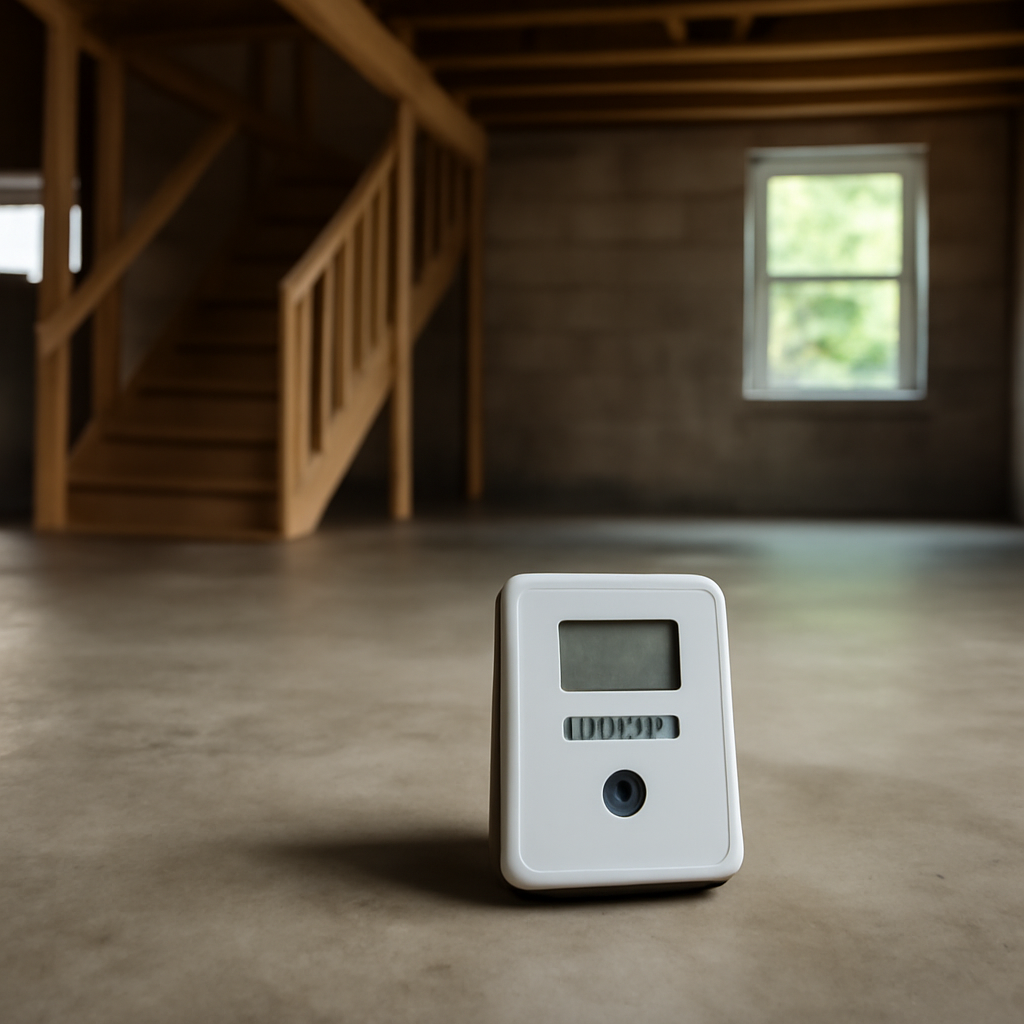
Radon in homes is one of those hazards you cannot see, smell, or taste, which is exactly what makes it dangerous. It is a naturally occurring radioactive gas that seeps up from the soil and can accumulate to harmful levels indoors, especially in basements and lower floors. The EPA identifies radon as the second leading cause of lung cancer in the United States and the leading cause among people who have never smoked. This guide summarizes EPA and Colorado health guidance current as of 2026 and is informational only — it is not a substitute for testing by a certified professional, and anyone concerned about radon’s health effects should consult their physician. For Front Range homeowners, the topic carries extra weight, because Colorado’s geology produces some of the highest radon levels in the country.
What is radon and how does it get into homes?
Radon is a colorless, odorless gas produced by the natural radioactive decay of uranium in soil, rock, and water. As uranium breaks down underground, it releases radon, which migrates upward through the soil and finds its way into buildings through the path of least resistance — the home above it. Because homes are often slightly depressurized relative to the soil beneath them, they actively draw radon in, like a straw pulling air.
The gas enters through cracks in the foundation slab and walls, gaps around pipes and utility penetrations, sump pits, crawl spaces, and joints where the floor meets the wall. Once inside, radon can accumulate, particularly in basements and ground-floor rooms with limited ventilation. Newer, tightly sealed homes are not immune; in fact, good air sealing can trap radon as effectively as it conserves energy. The broader picture of why this matters in Colorado is covered in our radon testing guide for Front Range homeowners.
Why is radon especially a concern in Colorado?
The Front Range and much of Colorado sit on uranium-bearing geology, which means more radon is generated in the soil and more of it migrates into homes. State and federal data place a large share of Colorado homes above the EPA action level of 4 picocuries per liter (pCi/L). Counties across the Denver metro — Douglas, Jefferson, Arapahoe, El Paso, Boulder, and others — routinely report elevated readings. No county is uniformly “safe,” because radon depends on the specific home, its construction, and the soil directly beneath it.
That variability is why neighboring houses can test very differently. One home may read 2 pCi/L while the house next door reads 12. Soil composition, foundation cracks, and how the home is operated all play a role. The only way to know your home’s level is to test it, which the EPA recommends for every home regardless of location or age. Our overview of the health effects of radon explains why those numbers matter.
How dangerous is radon in homes?
Radon’s health risk comes from radioactive decay. When you breathe radon, the gas and its decay products can lodge in lung tissue and emit radiation that damages cells over time. Prolonged exposure raises the risk of lung cancer. The EPA estimates radon contributes to roughly 21,000 lung cancer deaths in the United States each year, and the risk multiplies for people who also smoke. The danger is cumulative: years of exposure to elevated levels, not a single day, drive the risk.
Because the effect is long-term and silent, radon does not produce immediate symptoms. There is no acute “radon poisoning” the way carbon monoxide produces headaches and nausea. That absence of warning signs is precisely why testing is essential — you cannot rely on how you feel to detect it. Our honest answer about the first signs of radon exposure addresses this common misconception directly.
How do you test for radon in your home?
Testing is straightforward and affordable. Short-term tests — charcoal canisters or electret detectors — sit in the lowest livable level of the home for two to seven days and are then mailed to a lab. Long-term tests run for 90 days or more and give a better picture of the year-round average, since radon levels fluctuate with weather and season. Continuous radon monitors provide ongoing digital readings and are increasingly popular for homeowners who want to track trends.
Place the test in the lowest level you regularly use, keep windows and doors closed during a short-term test (closed-house conditions), and follow the kit instructions precisely. For a real estate transaction, a professional measurement following EPA protocols is the standard. If a short-term test reads at or above 4 pCi/L, confirm with a follow-up test before committing to mitigation. The EPA also suggests considering action between 2 and 4 pCi/L, since no level of radon is risk-free.
What the numbers mean
Radon is measured in picocuries per liter (pCi/L). The EPA action level is 4 pCi/L — at or above this, the agency recommends fixing the home. The average indoor level nationally is around 1.3 pCi/L, and outdoor air averages about 0.4 pCi/L. Because Colorado homes skew higher, many Front Range homes exceed the action level. There is no completely safe threshold, so lower is always better; mitigation systems commonly bring homes well below 2 pCi/L.
It helps to keep the risk in proportion. The EPA frames radon exposure in terms of long-term lung cancer risk that rises with both the level and the years of exposure, and it notes the risk is far higher for smokers because radon and tobacco smoke compound each other. A home at 8 or 12 pCi/L is not an emergency to flee tonight, but it is a clear signal to test, confirm, and mitigate — the same way you would address any slow, cumulative hazard rather than ignore it because nothing feels wrong today.
How do you reduce radon in a home?
When a home tests high, mitigation is reliable and permanent. The standard fix is active sub-slab depressurization: a pipe is inserted through the foundation slab into the soil beneath, and an in-line fan continuously draws radon-laden air from under the home and vents it safely above the roofline. A properly designed system typically reduces radon by 80 to 99 percent, bringing most homes well below the action level. Crawl-space homes use a sealed membrane connected to the suction system instead.
Sealing cracks helps but is not a standalone solution — the EPA notes that sealing alone rarely lowers radon enough, because the gas finds new entry paths. Mitigation should be installed by a certified contractor, and the home should be re-tested afterward to confirm the result. The full mechanics are explained in our guide on how to get rid of radon, including what to expect from a professional installation.
Does radon level change over time and season?
Radon is not a fixed number; it fluctuates with weather, season, and how the home is operated. Levels generally run higher in winter, when homes are sealed against the cold and the stack effect — warm air rising and escaping upstairs — pulls more soil gas in from below. Closed windows, running furnaces, and snow-covered or frozen ground that caps the soil all push winter readings up. Summer, with windows open and homes breathing more freely, often shows lower levels. This seasonal swing is why a single short-term test is a snapshot, not the full story.
Day-to-day factors matter too. Barometric pressure changes, wind, rainfall, and even running exhaust fans or a clothes dryer can shift indoor radon by drawing more or less air from the soil. A long-term test of 90 days or more, or a continuous monitor that logs readings over weeks, averages out these swings and gives a truer picture of year-round exposure. For a real estate transaction on a deadline, a short-term test under closed-house conditions is the accepted standard, but homeowners staying in a home benefit from the longer view.
What about radon in well water?
In most homes the airborne radon from soil is the dominant concern, but radon can also dissolve into groundwater and enter through a private well. When radon-laden water is agitated — showering, running the dishwasher, doing laundry — it releases gas into indoor air, and ingestion carries a smaller separate risk. Homes on municipal water are generally not affected, since treatment and open reservoirs release radon before it reaches the tap. Front Range homeowners on private wells who have elevated indoor radon may want to test the water as well, since waterborne radon calls for a different treatment (aeration or granular activated carbon) than soil-gas mitigation.
When should you test and act?
Test now if you have never tested, test again every few years even after a low result, and test before buying or selling a home. Re-test after any major foundation work, and after installing a mitigation system to verify it works. If your level is at or above 4 pCi/L, plan to mitigate; if it falls between 2 and 4, weigh mitigation given Colorado’s elevated baseline and whether children or anyone with lung concerns lives in the home. Because radon is invisible and its harm is cumulative, testing is the one action that turns an unknown risk into a managed one. For Front Range homeowners, it is a small, inexpensive step against a genuinely serious hazard.
References
- Health risk of radon — U.S. Environmental Protection Agency
- Radon in Colorado homes — Colorado Department of Public Health and Environment
- Radon and lung health — American Lung Association
Front Range homeowners who want to test for radon or connect with a certified mitigation professional can get in touch through our contact page for a referral to a trusted local expert.