Airthings Radon Monitors: What Homeowners Know
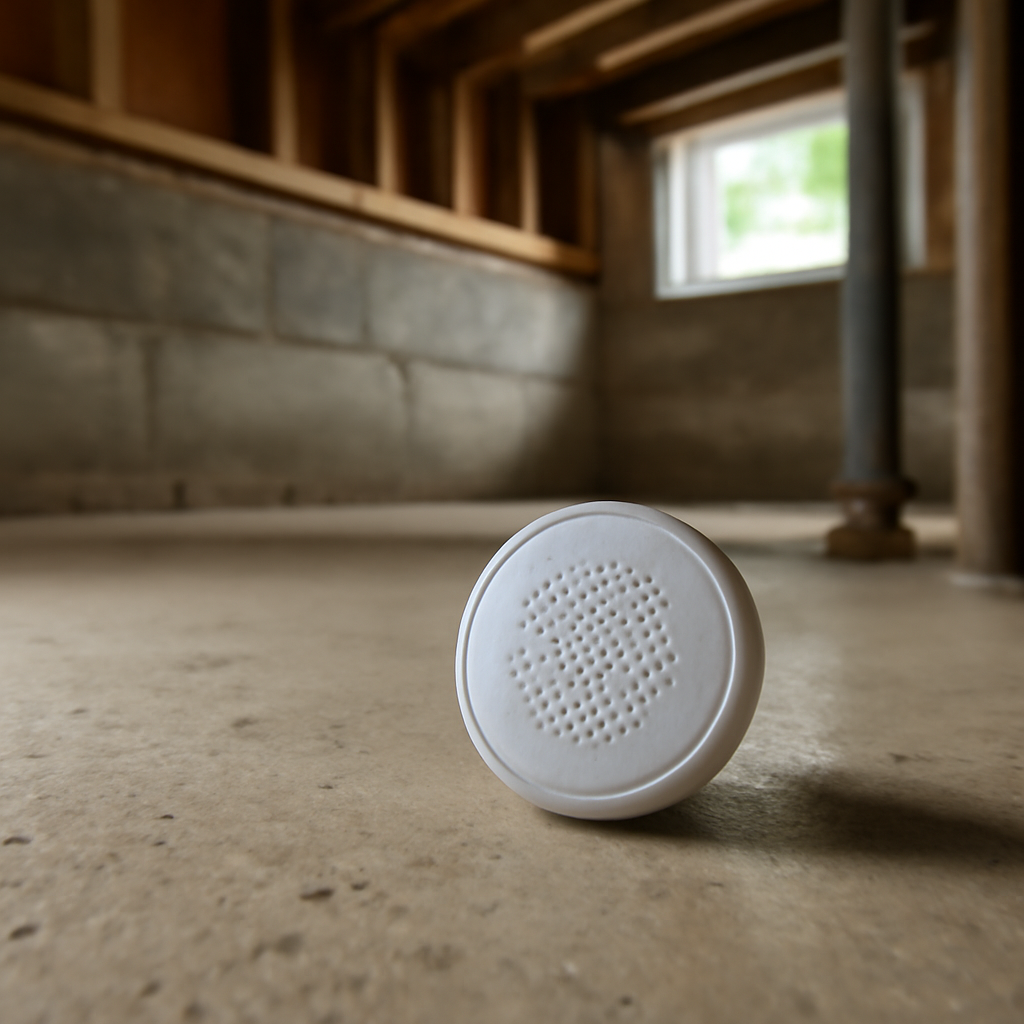
Airthings is one of the most recognized names in consumer radon monitoring, and its small digital devices have made continuous radon measurement accessible to ordinary homeowners. For Colorado residents living in a high-radon region, the appeal is obvious: a plug-in or battery-powered monitor that shows radon levels day after day rather than a single mailed-in snapshot. Understanding what Airthings radon monitors do, how accurate they are, and where they fit alongside professional testing helps homeowners decide whether one belongs in their home. This guide summarizes EPA and Colorado state health guidance current for educational purposes; consult a certified radon professional for testing and mitigation decisions.
Part of our Radon Levels guide — start there for the full picture →
What an Airthings radon monitor does
Airthings makes a line of digital radon detectors and indoor air quality monitors that continuously measure radon and display the results, typically through a companion app and sometimes an on-device screen. Rather than capturing radon over a few days and shipping a sample to a lab, these monitors sample the air on an ongoing basis and report short-term and long-term average readings that update over time.
The value of continuous monitoring is trend visibility. Radon levels fluctuate with weather, season, and how a home is ventilated — they often rise in winter when houses are sealed against the cold. A continuous monitor reveals these patterns, while a single short-term test captures only one window. For homeowners who want to understand their home’s radon behavior over months, this is a meaningful advantage. The broader case for ongoing measurement is covered in our overview of the continuous radon monitor category.
How Airthings monitors measure radon
Most consumer radon monitors, including Airthings devices, use a passive diffusion chamber paired with detection electronics. Air diffuses into a small chamber, and the device detects the radioactive decay of radon and its products inside that chamber, converting the count into a concentration reading expressed in picocuries per liter (pCi/L) or becquerels per cubic meter (Bq/m³).
Because the measurement is statistical — based on counting decay events — readings stabilize over time. A monitor needs a period after setup, often a day or more, before its short-term average is meaningful, and its long-term average grows more reliable the longer it runs. This is why a brand-new reading in the first hours should not be treated as definitive. The underlying detection approach is shared across the digital monitor category, and our guide to the digital radon detector explains the technology in more depth.
Placement matters
Where the monitor sits affects what it reports. Radon concentrates in the lowest occupied level of a home, so a basement or ground-floor living area gives the most relevant reading. The device should be placed away from drafts, exterior doors, and windows, at roughly breathing height, and left undisturbed. Moving it between rooms produces inconsistent data. Following placement guidance — similar to the rules for any short-term test — ensures the numbers reflect the home’s actual conditions, a point our discussion of why radon concentrates in basements reinforces.
How accurate are Airthings radon monitors?
Consumer continuous monitors have become quite capable, and Airthings devices are generally regarded as reliable for tracking trends and giving homeowners a useful sense of their radon levels. That said, accuracy expectations should be calibrated. These devices are excellent at showing whether levels are roughly low, borderline, or high, and at revealing changes over time. They are not laboratory instruments calibrated to the standard used in a real estate transaction.
For an official measurement — such as during a home purchase or to satisfy a regulatory or disclosure requirement — a professional test using calibrated equipment or an EPA-listed lab analysis remains the standard. The EPA recommends acting when long-term levels reach 4 pCi/L. A consumer monitor reading near that threshold should prompt confirmation with a professional test before deciding on mitigation. The distinction between consumer monitoring and official testing is central, and our broader guide to radon testing in Colorado explains when each is appropriate.
Airthings monitors versus lab test kits
The two approaches serve different needs. A mail-in lab test kit — a charcoal canister or alpha-track detector — exposes a medium to the air for a set period, after which a lab analyzes it and returns a precise reading for that window. It is inexpensive, accepted for real estate use when conducted properly, but provides only a single snapshot. Our explainer on the radon gas test kit describes how these mail-in tests work.
An Airthings monitor, by contrast, is a one-time purchase that measures continuously for years, revealing trends a single test cannot. Many homeowners use both: a lab test or professional measurement for an authoritative reading at a key moment, and a continuous monitor for ongoing peace of mind. The monitor is also valuable after installing mitigation, letting the homeowner watch levels stay low rather than testing only once. Comparing devices is worthwhile, and our look at the Airthings Corentium Home detector walks through one popular model.
Who benefits most from a continuous monitor
An Airthings radon monitor makes the most sense for homeowners in high-radon areas who want ongoing awareness rather than a one-and-done test. Colorado’s Front Range qualifies — large portions of the state show elevated radon potential, so continuous visibility has real value here. Homeowners who have installed a mitigation system benefit from watching the system’s performance, and those with finished basements used as living space gain confidence from constant readings.
A monitor is less necessary for someone who simply needs a single test to satisfy a transaction, where a professional or lab test does the job at lower upfront cost. The two are not mutually exclusive; a continuous monitor complements periodic official testing rather than replacing it. For households focused on health, the steady feedback a monitor provides can prompt action — opening up a basement, scheduling a professional test, or pursuing mitigation — that a single annual test might never trigger.
Using monitor data wisely
The right way to use an Airthings monitor is to watch the long-term average rather than reacting to hourly spikes. Radon naturally fluctuates, and a brief high reading after a closed-up cold night is normal. The long-term trend is what indicates whether the home has a radon problem. If that average sits at or above 4 pCi/L, the sensible next step is a confirmatory professional test and, if confirmed, mitigation by a certified contractor.
Treated this way, a continuous monitor becomes a practical health tool: it turns an invisible, odorless gas into a number a homeowner can see and act on. It does not replace the certified test that anchors a real estate deal or a mitigation decision, but it fills the long gaps between tests with useful information. In a high-radon state, that ongoing visibility — paired with professional confirmation when readings warrant it — is a reasonable layer of protection for any household.
Setting up and getting the most from the device
Getting reliable data from an Airthings monitor starts with proper setup. After powering the device or installing batteries, place it in the lowest occupied level of the home, set back from exterior walls, doors, and windows, and roughly at the height where people breathe. Avoid spots near drafts, heat sources, or humidity that could skew readings. Once placed, the device should be left undisturbed so its averages accumulate from a consistent location.
The companion app is where most of the value lives. It displays short-term and long-term averages, charts trends over days and weeks, and on multi-sensor models reports temperature, humidity, and other indoor air quality measures alongside radon. Reviewing the trend rather than fixating on the current hourly value is the key habit. Over a few weeks, the long-term average reveals whether the home sits comfortably low, hovers near the action level, or runs high enough to warrant professional confirmation and possible mitigation. Many homeowners check the app monthly once a baseline is established, treating the device as a quiet background monitor.
Comparing Airthings models
Airthings offers several devices at different capability levels, and choosing among them depends on what a household wants. Entry models focus on radon alone and report through the app, offering an affordable way to track levels continuously. Mid-range and higher models add sensors for temperature, humidity, carbon dioxide, and other indoor air quality factors, and some include an on-device display or a hub for continuous data syncing. For a homeowner whose only concern is radon, a radon-focused model suffices; for those interested in broader air quality, a multi-sensor model consolidates several measurements into one device. None of the consumer models is a substitute for a calibrated professional measurement when an official reading is required, but each serves the goal of ongoing awareness well.
How continuous monitoring complements professional testing
The strongest approach pairs a continuous monitor with periodic professional or lab testing rather than choosing one over the other. A professional short-term test or an EPA-listed lab kit provides the authoritative, closed-house measurement used at key moments — buying a home, deciding to mitigate, or confirming a system works. The continuous monitor then fills the long stretches in between, catching seasonal swings and alerting the homeowner if levels drift upward over time.
After mitigation, this pairing is especially useful. A post-installation professional test confirms the system brought levels below the action threshold, and the continuous monitor then verifies the system keeps doing its job year after year, including through the winter months when radon pressure peaks on the Front Range. If the monitor’s long-term average ever climbs back toward 4 pCi/L, it signals that the system may need service — a failed fan or a new foundation pathway. Used together, the two tools give a household both the official numbers that matter for decisions and the ongoing reassurance that an invisible hazard is staying under control, which is exactly the layered protection that suits a high-radon region. The broader context for that protection is laid out in our overview of radon gas in homes.
Understanding the readings Airthings reports
An Airthings monitor typically reports radon as both a short-term and a long-term average, and knowing the difference prevents misreading the data. The short-term value reflects recent days and responds quickly to changes — a cold snap, a closed-up house, or running exhaust fans can nudge it up or down. The long-term value averages over a longer window and is the figure that best represents the home’s true exposure, since it smooths out the daily noise that radon naturally produces.
The EPA’s action level of 4 pCi/L is the reference point most homeowners watch, with 2 pCi/L marking the level at which the agency suggests considering further reduction. A long-term average comfortably below 2 pCi/L indicates a low-radon home; one at or above 4 calls for confirmation and likely mitigation. Brief spikes above these numbers are normal and not cause for alarm on their own. The discipline of watching the long-term trend, rather than reacting to any single hour, is what makes a continuous monitor genuinely useful rather than a source of needless worry.
Limitations to keep in mind
Honest expectations make a continuous monitor more useful. Consumer devices are not calibrated to the documented standard used in real estate transactions, so a lender, buyer, or seller will generally want a professional or EPA-listed lab measurement for an official reading. The monitor also measures only where it sits; a basement reading does not necessarily reflect an upstairs bedroom, though radon concentrates lowest, so a basement figure is conservative.
Battery life, sensor drift over many years, and the need to keep the device in a stable location all matter for data quality. None of these limitations undermines the core value — ongoing trend awareness — but they explain why the device complements rather than replaces periodic authoritative testing. A homeowner who treats the monitor as a vigilant background sensor, confirms important readings with a professional test, and acts on a sustained high average gets the full benefit of the technology. In a high-radon state like Colorado, that combination of constant awareness and professional confirmation is a sensible, affordable layer of protection for the household.
References
- How to Test Your Home for Radon — U.S. Environmental Protection Agency
- Radon Testing Guidance for Colorado — Colorado Department of Public Health and Environment
- Radon and Lung Health — American Lung Association
Frequently asked questions
Are Airthings radon monitors accurate?
They are generally reliable for tracking radon trends and giving a useful sense of levels in a home. For an official measurement during a real estate transaction, a professional or EPA-listed lab test remains the standard.
How long does an Airthings monitor take to give a reading?
Because measurement is based on counting radioactive decay, readings stabilize over time. The short-term average becomes meaningful after about a day, and the long-term average grows more reliable the longer the device runs.
Where should I place a radon monitor?
Place it in the lowest occupied level, such as a basement or ground-floor living area, at breathing height and away from drafts, doors, and windows. Leave it undisturbed for consistent readings.
Do I still need a lab test if I have an Airthings monitor?
For real estate or official purposes, yes. A continuous monitor is excellent for ongoing awareness, but a professional or lab test provides the authoritative reading used in transactions and mitigation decisions.
Colorado homeowners who want help interpreting radon readings or connecting with a certified testing professional can reach out through our contact page.
Test your home for radon
Radon is invisible and odorless, so a test is the only way to know your level. A short-term kit gives a first reading in days; a digital monitor tracks it over time.
| Product | Why | Buy |
|---|---|---|
 AirChek Charcoal Radon Test Kit AirChek Charcoal Radon Test Kit | Lab fee usually included; EPA short-term protocol. | Amazon — $21.95 |
 First Alert RD1 Radon Test Kit First Alert RD1 Radon Test Kit | Widely stocked; 48-hour charcoal test. | Amazon — $16.98 |
 Airthings Corentium Home Airthings Corentium Home | Digital monitor with a long-term average. | Amazon — $142.99 |