How to Test for Radon Poisoning: A Plain-Language Guide
“Radon poisoning” is a phrase that appears regularly in homeowner search queries, but medically it is a misnomer. Radon does not poison the body the way lead, mercury, or carbon monoxide does. Radon causes lung cancer over years of exposure by depositing radioactive decay products in lung tissue, where alpha-particle radiation damages cell DNA and increases cancer risk. There is no home test for “radon poisoning” because the body does not accumulate measurable radon the way it accumulates a toxin. The test runs on the home, not the body. This guide summarizes EPA, CDC, and American Lung Association guidance current as of 2026 — anyone concerned about radon-related lung symptoms should consult their physician for evaluation and imaging.
Part of our Radon Levels guide — start there for the full picture →
How to Test for Radon Poisoning: Why the Question Has Two Answers
The phrase “how to test for radon poisoning” has two valid interpretations. The first, and more common, is testing the home to measure indoor radon concentration so the resident can mitigate before lung damage occurs. The second is the medical question — what tests would a physician order if a patient presents with radon-related lung concerns. The two are linked but not interchangeable. The home test prevents future exposure; the medical test evaluates lung tissue for early signs of cancer that may have developed from past exposure.
The home-test answer is straightforward: deploy an EPA-recognized short-term or long-term radon test device in the lowest occupied level of the home, follow closed-house conditions, and compare the result to EPA’s 4 pCi/L action level. The medical-test answer requires a physician because lung-cancer screening is not a do-it-yourself process. The standard imaging modality for high-risk patients is low-dose computed tomography (LDCT) of the chest, ordered through a primary-care or pulmonology referral.
Why “Radon Poisoning” Is a Misnomer
Toxins like lead and mercury accumulate in the body and produce symptoms that physicians can diagnose with blood or urine tests. Radon is different. Radon is a noble gas — chemically inert — that does not bind to body tissue or accumulate in any measurable way. Inhaled radon mostly exhales again within minutes. The cancer risk comes not from radon itself but from short-lived radioactive decay products (called radon progeny or radon daughters: polonium-218, lead-214, bismuth-214, polonium-214) that attach to dust particles, are inhaled, and lodge in lung tissue where they emit alpha-particle radiation as they continue decaying.
Alpha radiation damages lung-cell DNA over years of repeated exposure, increasing lung-cancer risk. The cancer typically develops 10 to 30 years after the relevant exposure period. There is no acute “radon poisoning” event — only cumulative lung-cancer risk that climbs with cumulative exposure. EPA estimates that radon exposure causes roughly 21,000 lung-cancer deaths per year in the United States, making it the second-leading cause of lung cancer after smoking. The EPA health risk of radon page covers the cancer-risk mechanism in detail.
Home Testing: The Practical First Step
The home-side test answers the question “is my exposure ongoing right now?” An EPA-recognized 48-hour short-term test produces a snapshot reading. A 90+ day long-term test produces an annual-average estimate that accounts for seasonal variation. Either result compared to EPA’s 4 pCi/L action level tells the resident whether mitigation is warranted.
Short-term tests use either a continuous radon monitor (CRM) with electronic logging or a charcoal canister with lab analysis. Long-term tests use alpha-track detectors or electret ion chambers. The radon testing pillar guide for Front Range homeowners walks through device choice. Colorado homes in EPA Zone 1 should test at least once on initial occupancy and again every 24 months thereafter.
Medical Side: When to See a Doctor
Patients with documented long-term radon exposure (high pre-mitigation readings, years of occupancy, smoker status combining with radon exposure to multiply risk) may want to discuss lung-cancer screening with a physician. The U.S. Preventive Services Task Force and the American Lung Association recommend annual low-dose CT screening for adults aged 50 to 80 with significant smoking history. Radon exposure is not currently a standalone trigger for screening eligibility, but a physician evaluating overall lung-cancer risk may factor it in for borderline cases.
Symptoms that warrant immediate physician evaluation include persistent cough lasting more than 8 weeks, blood in sputum, unexplained chest pain, recurrent respiratory infections, wheezing, and unexplained weight loss. These symptoms are not specific to radon-related cancer — they can have many causes — but they all warrant a clinical evaluation rather than internet self-diagnosis. American Lung Association radon resources describe the lung-cancer risk pathway.
Smoker-Plus-Radon: A Multiplicative Risk
The single most important risk-modifying factor is smoking status. Smoking and radon exposure are multiplicative, not additive. A lifetime smoker with elevated home radon faces lung-cancer risk roughly 8 to 10 times higher than a non-smoker with the same radon exposure. EPA tables estimate the lifetime lung-cancer risk for never-smokers at typical 4 pCi/L radon exposure at about 7 in 1,000; the same exposure for smokers carries roughly 62 in 1,000 lifetime risk.
Smoking-cessation guidance, available through every primary-care office, is the single highest-leverage intervention for radon-exposed smokers. Home radon mitigation is the second. Both together produce the largest absolute risk reduction.
What Home Radon Tests Will Not Do
Home radon tests measure indoor radon concentration. They cannot measure past exposure, cannot diagnose any medical condition, and cannot predict whether a specific individual will develop lung cancer. The relationship between home concentration and individual lung-cancer risk is statistical across populations, not deterministic for any one person. A home test produces a number; a physician produces a clinical assessment. The two are complementary but distinct.
This distinction matters for buyers and sellers. A home radon test result is part of a real-estate transaction. An individual’s lung-cancer risk evaluation is part of medical care. Neither replaces the other. The pillar guide on radon testing for Colorado homeowners covers the property-level testing pathway.
EPA’s 4 pCi/L Action Level Explained
EPA’s 4 pCi/L action level is a regulatory threshold, not a medical “safe vs unsafe” line. EPA states explicitly that no level of indoor radon is risk-free, but identifies 4 pCi/L as the level at which mitigation is recommended and 2 pCi/L as the level at which mitigation should be considered when achievable. Both values reflect epidemiological estimates of lung-cancer risk balanced against the cost of widespread mitigation. International thresholds vary: the World Health Organization recommends a reference level of 2.7 pCi/L (100 Bq/m3), tighter than EPA’s value.
For Colorado homes, the practical guidance is to mitigate any home that tests above 4 pCi/L on a properly conducted test and to consider mitigation at 2 to 4 pCi/L if the home has children, pregnant residents, or smokers. The CDPHE radon program follows EPA guidance with additional Colorado-specific recommendations.
If You Suspect Past Exposure
Anyone who has lived for years in a home that later tested above 4 pCi/L should mitigate the home now and discuss past exposure with a physician. The conversation focuses on individualized risk factors — age, smoking history, family cancer history, current pulmonary symptoms, length and intensity of past radon exposure. The physician may recommend baseline imaging, smoking-cessation support, or simply periodic monitoring depending on the risk profile.
Lung cancer detected at early stage has substantially better survival outcomes than late-stage diagnosis, which is the rationale behind low-dose CT screening for high-risk adults. Radon-related cancers behave clinically like other lung cancers — early detection matters.
Practical Steps to Take Today
Three actions reduce both current exposure and future risk. First, test the home with an EPA-recognized short-term test ($30 for a charcoal canister mailed to a lab; $150-250 for a professional CRM test). Second, if the result is above 4 pCi/L, mitigate the home using an active sub-slab depressurization system installed by a Colorado-licensed contractor. Third, if smoking is part of the picture, talk to a physician about cessation support and any individualized lung-cancer screening recommendations.
The Radon Progeny Detection Concept
For readers curious about the underlying physics, radon itself emits alpha-particle radiation as it decays into polonium-218 with a half-life of 3.8 days. Polonium-218 in turn decays to lead-214 (half-life 27 minutes), bismuth-214 (half-life 20 minutes), and polonium-214 (half-life 164 microseconds). Each of these short-lived decay products emits alpha or beta radiation. The combined emission rate from a sealed sample of radon-laden air is what radon detectors measure. Continuous radon monitors typically detect alpha particles from polonium-218 and polonium-214 inside an ionization chamber or solid-state silicon diode sensor.
Charcoal canisters and electret ion chambers measure the integrated effect of decay-product accumulation over the test period. Alpha-track detectors record permanent etched tracks in plastic film from alpha-particle strikes over months. All of these methods measure the radon decay rate indirectly through its progeny rather than measuring radon atoms themselves. The methods produce different uncertainty profiles, which is why EPA’s measurement protocols specify acceptable methods and certified labs.
Low-Dose CT Screening for High-Risk Adults
Low-dose computed tomography (LDCT) of the chest is the screening modality recommended by the U.S. Preventive Services Task Force for adults aged 50 to 80 with a 20 pack-year or greater smoking history (current smokers, or those who quit within the past 15 years). The screen detects small lung nodules that may indicate early-stage cancer, allowing intervention at a stage when treatment outcomes are substantially better than late-stage diagnosis. Radon exposure is not currently a standalone eligibility criterion, but a physician evaluating overall lung-cancer risk may factor it in for borderline cases or extend screening recommendations to high-risk radon-exposed never-smokers in some cases.
The screening test is non-invasive, takes under 30 seconds, and involves a small radiation dose roughly equivalent to a few months of natural background exposure. False positives are common and may lead to follow-up imaging or biopsy. Most lung-cancer screening programs include counseling about the benefits and limitations of screening before scheduling the test.
Real Estate Transactions and the Snapshot Limitation
Buyers running radon tests during the inspection objection period are working with a 48-hour snapshot rather than an annual-average exposure estimate. The snapshot is sufficient for transaction decisions because it triggers EPA’s recommended action when above 4 pCi/L. But the snapshot does not tell the buyer what they will actually breathe over the year — that depends on seasonal variation, weather, and household ventilation behavior. Buyers in Colorado homes with borderline 48-hour results (2-4 pCi/L) often run long-term alpha-track testing after move-in to refine the annual-average estimate.
The pillar guide on radon testing for Front Range homeowners covers the snapshot-versus-annual-average question and the long-term radon testing guide walks through the multi-month device options.
More Questions About Radon Exposure
What are the symptoms of radon exposure?
Radon exposure itself has no immediate symptoms; people cannot see, smell, or feel it, and there are no warning signs like headaches or nausea.
The main health risk is lung cancer, which may develop years or decades after long-term exposure. Symptoms of lung cancer, such as a persistent cough, coughing up blood, chest pain, or shortness of breath, should be discussed with a doctor right away. Testing the home is the only way to know about radon exposure.
How much radon exposure is dangerous?
There is no known safe level of radon exposure, but the EPA recommends fixing homes at 4 pCi/L or above, and suggests considering action between 2 and 4 pCi/L.
Risk depends on both concentration and duration, so years spent in a home with elevated levels add up. Smokers face much higher risk at the same radon level. Reducing indoor radon lowers future risk no matter how long a household has lived there.
Can radon cause health problems other than lung cancer?
Lung cancer is the only health effect that major health agencies have clearly linked to radon exposure in homes.
Radon is considered the leading cause of lung cancer among people who have never smoked and the second leading cause overall in the United States. Researchers continue to study other possible effects, but current public health guidance focuses on lung cancer. Claims that radon causes rashes, fatigue, or headaches are not supported by mainstream health agencies. Anyone with health concerns should talk with a doctor, and anyone worried about exposure should start by testing the home.
Are children more at risk from radon?
Some health agencies note that children may be more sensitive to radon because of their smaller lungs and faster breathing rates, and because they have more years of potential exposure ahead.
The practical message is the same for every household: test the home, and mitigate if levels are high. Bedrooms and play areas on the lowest level deserve attention since children may spend many hours there. Schools and child care centers in some states are also required or encouraged to test, and parents can ask for those results.
References
- EPA Health Risk of Radon — U.S. Environmental Protection Agency
- CDC Radon Information — Centers for Disease Control and Prevention
- American Lung Association Radon Resources — American Lung Association
- CDPHE Radon Program — Colorado Department of Public Health and Environment
Frequently asked questions
Is there a blood test for radon exposure?
No. Radon is a noble gas that does not accumulate in body tissue, so blood and urine tests cannot measure it. The cancer risk comes from radioactive decay products in lung tissue, evaluated through chest imaging when clinically indicated.
Can a home radon test tell me if I have lung cancer?
No. A home test measures indoor radon concentration in pCi/L. Lung-cancer diagnosis requires medical imaging and biopsy performed by a physician. The home test prevents future exposure; the medical test evaluates lung tissue.
How long does it take for radon exposure to cause cancer?
Radon-related lung cancer typically develops 10 to 30 years after the relevant exposure period. The cumulative dose over years matters more than any short-term exposure event.
Should smokers worry more about radon?
Yes. Smoking and radon are multiplicative risk factors. A lifetime smoker with elevated home radon faces lung-cancer risk 8-10 times higher than a non-smoker with the same exposure. Smoking cessation and home mitigation together produce the largest risk reduction.
Can you remove radon from your body?
Radon itself is breathed out quickly, but radiation damage from its decay products to lung tissue cannot be reversed by any treatment. The most effective step is reducing ongoing exposure by testing and mitigating the home, avoiding smoking, and talking with a doctor about any lung symptoms.
Does radon mitigation reduce lung cancer risk?
Yes, radon mitigation reduces future lung cancer risk by lowering ongoing exposure. Systems commonly reduce indoor radon by large margins. Past exposure cannot be undone, which makes earlier testing and mitigation better. A follow-up test after installation confirms the system is working as intended.
Is radon in drinking water a health risk?
Radon in drinking water mainly adds to risk when it is released into indoor air during showering and other water use, raising the amount breathed in. Swallowing radon is a smaller concern. Private well owners in high-radon areas can test their water.
Test your home for radon
Radon is invisible and odorless, so a test is the only way to know your level. A short-term kit gives a first reading in days; a digital monitor tracks it over time.
| Product | Why | Buy |
|---|---|---|
 AirChek Charcoal Radon Test Kit | Lab fee usually included; EPA short-term protocol. | Amazon — $21.95 |
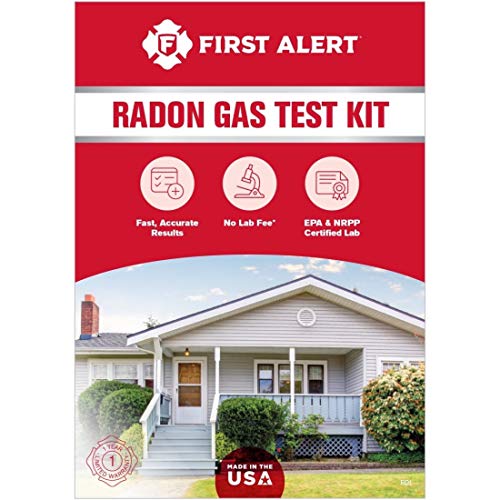 First Alert RD1 Radon Test Kit | Widely stocked; 48-hour charcoal test. | Amazon — $17.95 |
 Airthings Corentium Home | Digital monitor with a long-term average. | Amazon — $99.99 |