What Are the Signs of Radon Poisoning: Plain-Language Guide
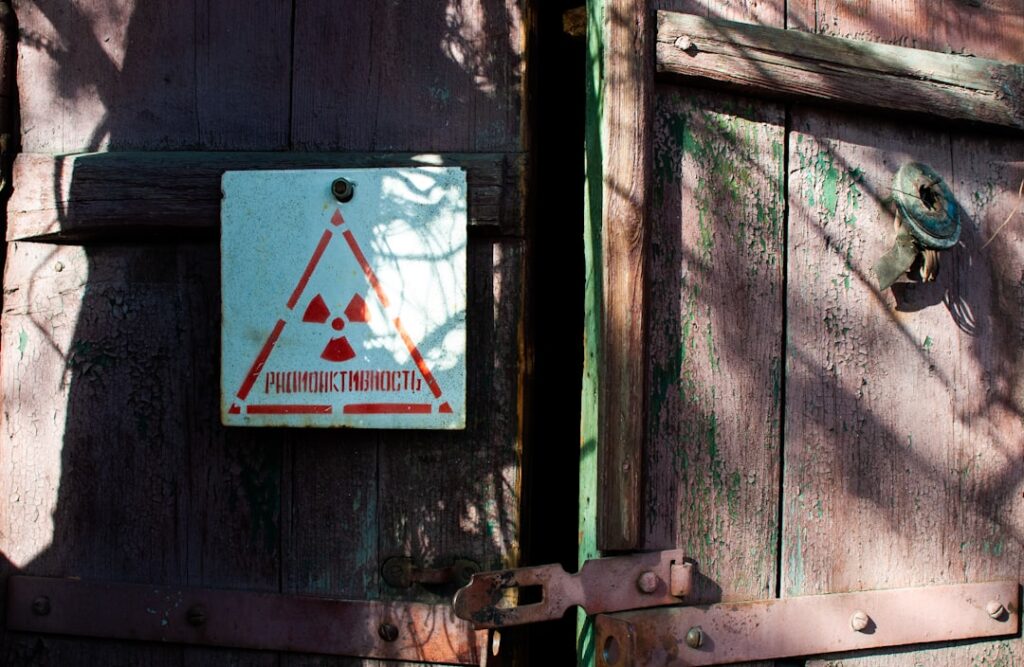
Despite the popular search term “what are the signs of radon poisoning,” radon exposure does not cause acute toxic symptoms. There is no detectable sign or symptom of radon exposure that an individual can feel or observe. The only known health effect of radon exposure is increased long-term lung cancer risk, manifesting five to twenty-five or more years after sustained elevated exposure. EPA and the Surgeon General estimate radon causes approximately 21,000 lung cancer deaths per year in the United States — the second leading cause of lung cancer after smoking. Any respiratory symptom, persistent cough, or lung-related concern should be evaluated by a physician immediately; symptoms are not caused by recent radon exposure and require independent medical evaluation. The signs worth looking at are in the home, not in the body. This guide pivots from the misnamed search term to the actual home conditions that correlate with elevated indoor radon. Consult EPA and CDPHE guidance for testing decisions and consult your physician for any respiratory symptom.
Part of our Radon Levels guide — start there for the full picture →
Why “Signs of Radon Poisoning” Is the Wrong Question
Radon is a colorless, odorless, tasteless radioactive noble gas. It causes no symptoms at any environmental concentration. Inhaled radon progeny deposit alpha-particle energy in lung tissue silently, with no inflammation, immune response, or sensory perception. Years to decades later, accumulated DNA damage in lung cells may produce lung cancer, but no symptom announces the exposure itself. The phrase “radon poisoning” implies an acute toxic event, which is not what happens. The biology is a slow-motion cancer risk, not a poisoning.
The right question is not “what are the signs of poisoning” — there are none — but rather “what are the signs that my home is the kind of home that often has elevated radon?” That question has real answers. Several home and site characteristics correlate strongly with elevated indoor radon, and a homeowner who recognizes those features in their own property has identified a reason to test. The signs are in the building envelope, the foundation, the soil, and the regional geology.
Home Sign 1: Underlying Geology
Radon originates from the natural radioactive decay of uranium in soil and rock. The amount of radon in soil gas varies with the underlying geology. Granite, shale, and certain phosphate-rich soils produce higher radon. The U.S. Geological Survey and EPA jointly publish radon-potential maps that classify counties into three zones: Zone 1 (highest predicted indoor levels, above 4 pCi/L average), Zone 2 (moderate, 2 to 4 pCi/L), and Zone 3 (low, below 2 pCi/L average).
Most of Colorado is Zone 1. The Front Range counties — Denver, Boulder, Douglas, Jefferson, El Paso, Adams, Larimer, Weld — are all classified Zone 1 by EPA. Living in a Zone 1 county is the largest single sign that a home likely has elevated indoor radon. Statewide median indoor concentrations in Colorado are approximately twice the U.S. average, and many tested homes return results above 4 pCi/L on the first measurement.
Home Sign 2: Basement or Slab-on-Grade Foundation
Radon enters homes through any opening between the foundation and the soil. The largest entry points are slab cracks, sump pits, plumbing penetrations, expansion joints, and floor-wall joints. Homes with basements and slab-on-grade foundations have the most foundation surface area in contact with soil gas and consistently show higher indoor radon than homes with crawlspaces or pier-and-beam construction.
A finished basement that occupants regularly use as living space increases the exposure dose because occupants spend more hours in the lowest level. A finished basement bedroom or home office is a particularly high-exposure location, often four to ten times the concentration measured on the main floor. Front Range homes with finished basements should be tested in the basement living space, not on the main floor, to capture the actual exposure of the occupants who use that space.
Home Sign 3: Stone, Brick, or Granite Construction
Some building materials contribute small additional radon emissions in addition to soil-gas entry. Granite countertops, stone fireplaces, brick exteriors, and certain concrete formulations made with high-radioactivity aggregates can contribute. The contribution from building materials is typically small relative to soil-gas entry, but it can be material in tightly sealed homes with minimal air exchange. A homeowner who recently installed extensive granite countertops or moved into a stone-clad home should test partly for this reason.
Home Sign 4: Tight Building Envelope
Modern energy-efficient construction reduces air infiltration and air exchange between indoors and outdoors. The lower the air-exchange rate, the higher the indoor radon concentration for any given soil-gas entry rate. New Energy Star and Passive House construction often shows higher indoor radon than older drafty homes on the same lot for exactly this reason. The trade-off between energy efficiency and indoor air quality is well-documented in building-science literature, and the standard mitigation — active sub-slab depressurization — addresses both.
Home Sign 5: Wintertime Stack Effect
Indoor-outdoor temperature differential drives the stack effect — warm air rising and exiting at high points, cooler air drawn in at low points. In winter, the stack effect pulls air (and soil gas) into the basement and through the lowest levels of the home. Front Range winters are long and cold, and many homes test substantially higher in January and February than in June and July. A home that tests near the action level in summer may exceed the action level in winter. EPA-protocol testing under closed-house conditions captures a representative snapshot, but homeowners should understand that real-world concentrations vary seasonally.
Home Sign 6: Age and Renovation History
Older homes are not necessarily higher or lower in radon than newer homes — both extremes appear in the data. But homes that have been renovated to seal the building envelope (replacement windows, foam insulation, sealed rim joists, attic air-sealing) often show higher indoor radon after the renovation than before, because the air-exchange rate dropped while the soil-gas entry rate stayed constant. A homeowner who has completed any energy retrofit should test or retest indoor radon to confirm the concentration did not rise as a side effect of the air-sealing.
Home Sign 7: Neighborhood and Adjacent-Property Results
Radon varies house-to-house even within the same neighborhood. Two adjacent homes can show dramatically different concentrations because of foundation differences, ventilation differences, and small-scale soil heterogeneity. That said, a neighborhood where multiple homes have tested above the action level is a stronger indicator that any individual home in that neighborhood deserves testing. CDPHE publishes county-level summary data, and several Front Range counties have published neighborhood-level summaries through local health departments. Neighbors who have already mitigated are often willing to share their pre- and post-mitigation results, which helps a homeowner understand the local pattern before commissioning their own test.
Home Sign 8: Sump Pit, Crawl Space, or Floor Drains
Open sump pits in basements and unfinished crawl spaces are direct soil-gas pathways into the home. A sump pit that lacks a sealed cover acts as a permanent vent from the sub-slab soil into the living space. Floor drains in basement utility rooms function similarly when the trap dries out or was never properly installed. Older homes with multiple unsealed penetrations through the slab consistently test higher than homes where the slab has been well-sealed during construction or retrofit. A sealed sump cover and properly maintained floor-drain traps reduce radon entry, although they are not a substitute for active mitigation when concentrations exceed the action level.
Home Sign 9: Walk-Out Basement Configurations
Walk-out basements and split-foyer designs combine living space at or below grade with frequent occupancy. Front Range builders have used both configurations extensively, and many of those homes return some of the highest indoor radon concentrations measured in the region. The combination of basement-level living space, slab-on-grade portions, and partial below-grade walls creates multiple soil-gas entry pathways. A walk-out basement that the household uses for a bedroom, family room, or home office should be tested with the detector placed in the actual living area, not in a remote utility room.
What Symptoms Should Trigger a Physician Visit (Not a Radon Conclusion)
Persistent cough lasting more than three weeks, unexplained shortness of breath, chest pain not associated with exertion, coughing up blood, recurrent respiratory infections, and unexplained weight loss all warrant a primary-care physician’s evaluation. The differential diagnosis is broad — asthma, COPD, infection, allergy, lung cancer from any cause, and other conditions — and the workup typically includes imaging and possibly biopsy. The conclusion of the workup is independent of any radon question. A patient should not assume radon caused the symptoms and should not assume the absence of radon excludes the diagnosis. Symptoms get the physician’s attention; the home gets the radon test.
Why the Body-Sign Frame Persists
The “signs of radon poisoning” search persists for understandable reasons. Most environmental hazards do produce symptoms — carbon monoxide, mold, certain chemical exposures, and many infectious agents announce themselves. The exception of radon is counterintuitive, and the public-health agencies have spent decades trying to communicate it without success in moving the search behavior. Search engines continue to surface “symptoms” content because the queries continue to come in. The result is a self-perpetuating cycle where the wrong question keeps generating the wrong-shape answers.
The path out of the cycle is to recognize the question itself as the problem and to redirect attention to the home signs. EPA, CDC, NIH, the American Lung Association, and the Surgeon General are all aligned on this point. Pages that suggest otherwise — that radon “poisoning” has identifiable symptoms — are misleading regardless of their search ranking.
The Right Response to Recognizing Home Signs
Recognizing one or more of the home signs above is a reason to test. Testing is inexpensive — a charcoal kit costs $25 to $75 and a continuous-monitor test by a certified provider costs $125 to $250. The radon testing pillar guide walks through the testing methods, and a CDPHE free radon test kit program is available to Colorado residents while supplies last.
If testing returns a result above the EPA action level of 4 pCi/L, the right next step is to commission a mitigation system from a certified mitigator. Standard residential sub-slab depressurization systems run $1,500 to $3,500 in Front Range markets and typically reduce indoor concentration from above 4 pCi/L to below 2 pCi/L. A post-mitigation confirming test verifies the system is working as designed, and EPA recommends periodic retesting every two years to confirm sustained performance over time.
References
- EPA health risk of radon — Environmental Protection Agency
- CDC radon overview — Centers for Disease Control and Prevention
- CDPHE Colorado radon program — Colorado Department of Public Health and Environment
- American Lung Association radon information — Lung.org
Frequently asked questions
What are the signs of radon poisoning in the body?
There are none. Radon causes no acute symptoms at any environmental concentration. The only health effect is long-term lung cancer risk, which manifests 5 to 25 or more years after sustained exposure. Acute respiratory symptoms warrant a physician's evaluation but are not radon-caused.
What are the signs that my home might have elevated radon?
Underlying geology classified as EPA Zone 1, a basement or slab-on-grade foundation, granite or stone construction, a tightly sealed energy-efficient building envelope, a neighborhood with elevated test results, and any recent energy retrofit that reduced air exchange. Front Range Colorado homes share most of these features.
Should I worry about acute radon poisoning?
No. Radon is not acutely toxic. There is no concentration at which a person experiences acute poisoning symptoms. The risk is long-term lung cancer from sustained elevated exposure, and the risk is dose-dependent across the entire range with no identified threshold.
What should I do if I recognize the home signs?
Test the air in your home. EPA-protocol short-term tests run 48 hours under closed-house conditions and cost $25 to $250 depending on method. Front Range homeowners may qualify for a free CDPHE test kit. If the result is above 4 pCi/L, commission a mitigation system from a certified mitigator.
Front Range homeowners who recognize the home signs above can reach our team through the contact page for a referral to a certified tester or mitigator.
Test your home for radon
Radon is invisible and odorless, so a test is the only way to know your level. A short-term kit gives a first reading in days; a digital monitor tracks it over time.
| Product | Why | Buy |
|---|---|---|
 AirChek Charcoal Radon Test Kit AirChek Charcoal Radon Test Kit | Lab fee usually included; EPA short-term protocol. | Amazon — $21.95 |
 First Alert RD1 Radon Test Kit First Alert RD1 Radon Test Kit | Widely stocked; 48-hour charcoal test. | Amazon — $16.98 |
 Airthings Corentium Home Airthings Corentium Home | Digital monitor with a long-term average. | Amazon — $143.65 |