Long Term Radon Testing: 90+ Day Devices and Annual Average
Long-term radon testing measures indoor radon concentration over a period of more than 90 days, producing an annual-average estimate that accounts for seasonal variation in soil-gas entry. Short-term tests of 48 hours are sufficient for real-estate transactions because the inspection objection window does not allow longer protocols, but long-term tests give a more accurate picture of typical exposure for non-transaction monitoring. EPA recommends long-term follow-up testing whenever a short-term result is between 2 and 4 pCi/L, when seasonal variation may have skewed the snapshot, or when a homeowner wants a definitive annual-average reading. This guide summarizes EPA, CDPHE, and American Lung Association guidance current as of 2026 — consult a certified radon measurement professional for testing decisions that will support real-estate or remediation decisions.
Part of our Radon Levels guide — start there for the full picture →
Long Term Radon Testing: The 90+ Day Standard
EPA defines a long-term radon test as any measurement running 90 days or longer. The most common consumer long-term device is the alpha-track detector — a small plastic chip in a holder that records alpha-particle strikes from radon decay over the test period. At the end of the test window, the chip is mailed to a lab where the etched track density is counted under a microscope and converted to an average pCi/L value. Alpha-track tests typically run 90 to 365 days, with the longer end of that range producing the most representative annual average.
A second long-term option is the electret ion chamber, which uses an electrically charged disc that loses voltage as radon decay products discharge it. The voltage change over the test window converts to an average concentration. Electret tests are typically deployed by certified professionals rather than mailed to consumers. A third long-term option is a continuous radon monitor (CRM) left in place for 90+ days, which produces both an average and an hour-by-hour trace showing exactly how concentration varied through the test period.
Why Long-Term Tests Matter
Short-term 48-hour tests produce a snapshot reading. That snapshot may not represent the typical concentration the resident actually breathes over a year. Three sources of variation drive the snapshot-vs-annual gap. Seasonal variation — winter heating creates strong stack effect that pulls soil gas in, while summer increases air exchange and dilutes radon. Weather variation — barometric pressure drops can temporarily increase radon entry; high winds can change pressure relationships and shift readings. Use-pattern variation — open windows, HVAC settings, and occupant behavior change air-exchange rates.
A 48-hour winter test may register 8 pCi/L while the same home’s annual average is 5 pCi/L. A 48-hour summer test may register 3 pCi/L while the annual average is 5 pCi/L. The annual average is the metric most directly relevant to long-term cancer risk, and only a long-term test produces it. The EPA citizen’s guide to radon covers the seasonal-variation question.
When EPA Recommends Long-Term Follow-Up
EPA’s measurement guidance lays out specific scenarios for long-term follow-up testing. First, when a short-term test returns a result between 2 and 4 pCi/L — the borderline range where mitigation may or may not be warranted depending on annual-average exposure. Second, when seasonal conditions during the short-term test may have skewed the result (testing in winter or during weather events). Third, when the short-term test was performed under non-ideal conditions (occupants unable to maintain closed-house, devices in suboptimal placement).
Long-term tests are also valuable as ongoing monitoring after a home has been mitigated, confirming that the mitigation system continues to perform across seasons rather than just on the day of the post-install verification test. EPA recommends post-mitigation testing every 24 months at minimum.
How a Long-Term Test Is Deployed
Deployment follows the same placement protocol as a short-term test — the device is placed in the lowest occupied level, at least 20 inches above the floor, 12 inches from exterior walls, and 4 feet from windows, exterior doors, and HVAC vents. The difference is duration. The device stays in place for 90 days minimum, often 6 to 12 months for the most representative result.
Long-term tests do not require closed-house conditions because the device is recording the resident’s actual living pattern over months, not a controlled 48-hour snapshot. Windows can be opened seasonally, HVAC operates normally, and occupants live their lives. The long duration averages out short-term variation that would otherwise dominate a snapshot result.
Alpha-Track Detectors in Detail
Alpha-track detectors are the most common consumer long-term device. They are small (typically 1.5 inches diameter), inexpensive ($20 to $40 including lab analysis), and require no batteries or maintenance. The detector chip is exposed to ambient air for the test period; alpha particles from radon decay products etch tiny tracks in the plastic. After the test, the chip ships to a lab in a sealed envelope and the lab counts track density under microscope to convert to pCi/L.
Alpha-track results have analytical uncertainty of roughly ±20 percent at typical residential concentrations, with better precision at higher concentrations. The detectors are EPA-recognized when manufactured by participating lab programs and analyzed by NRPP or NRSB-certified labs. Front Range homeowners can order alpha-track kits through the CDPHE radon program at subsidized prices.
Electret Ion Chambers
Electret ion chambers (EICs) use a polymer disc carrying a stable electrical charge. As radon decay products enter the chamber, they ionize the air, and the ions discharge the electret over time. The voltage drop between deployment and retrieval converts to an average radon concentration via a calibration formula. EICs are typically deployed by certified professionals because the voltage measurement requires specialized equipment.
EICs produce results within minutes of retrieval and offer competitive analytical precision. They are commonly used for short-term, intermediate, and long-term applications depending on the disc configuration. Some Colorado measurement contractors prefer EICs over CRMs for certain commercial and large-residential applications.
Continuous Radon Monitors for Long-Term Use
Many homeowner-grade continuous radon monitors are designed for long-term in-home use. Products from Airthings, Ecosense, RadonEye, and similar manufacturers retail for $150 to $400 and provide real-time hourly readings plus running long-term averages displayed on the device or through a phone app. These monitors are useful for ongoing personal monitoring rather than for regulatory measurement, though some models from professional-grade manufacturers carry NRPP or NRSB certification suitable for real-estate decisions.
The hourly trace from a long-term CRM deployment reveals patterns that snapshot tests miss — daily variation tied to thermostat cycling, weekly variation tied to occupancy patterns, and weather-event spikes following barometric pressure changes. The data are diagnostically useful even if the homeowner is not planning mitigation, because they reveal how home behavior affects radon entry.
Long-Term Testing in Mitigated Homes
Homes with active mitigation systems benefit from periodic long-term re-testing to confirm sustained performance. The mitigation fan ages over 8 to 12 years, and the soil-gas pathways beneath the slab can change with seasonal soil moisture and minor foundation movement. A long-term alpha-track test running 6 to 12 months in the basement of a mitigated home produces an annual-average reading that confirms continued operation.
EPA recommends post-mitigation testing every 24 months. Many Colorado homeowners use a low-cost alpha-track for the routine biennial check, supplementing with a continuous monitor for ongoing real-time visibility. The pillar guide on radon testing for Colorado homeowners covers the testing-mitigation-monitoring lifecycle.
Seasonal Patterns in Colorado
Front Range homes typically show winter radon readings 50 to 100 percent higher than summer readings in the same property. The pattern reflects winter stack effect — heated indoor air rising and exhausting through upper-level penetrations, creating slight negative pressure at the basement level that actively draws soil gas in. Summer cooling reverses this pattern; air conditioning produces less aggressive stack effect, and open-window ventilation periods further dilute indoor concentrations.
The seasonal pattern means that any 48-hour test result needs to be interpreted in the context of the testing season. A summer test result of 3.5 pCi/L could correspond to a winter peak of 6 pCi/L or higher, and the annual average might still warrant mitigation. Long-term testing eliminates this interpretation question by directly measuring the annual average.
Costs and Lab Turnaround
Alpha-track kits run $20 to $40 per detector including lab analysis. Multiple-detector kits for testing several rooms simultaneously run $60 to $120. Lab turnaround after the detector arrives is typically 5 to 15 business days. Electret testing costs depend on the certified professional’s pricing — typically $100 to $200 per deployment. Continuous monitors are a capital expense rather than a per-test cost; a $200 monitor pays back over multiple years of use.
For a homeowner planning to test annually as part of routine home maintenance, the alpha-track approach is the most cost-effective. For a homeowner who wants ongoing visibility, the CRM approach pays back through real-time information. Both are EPA-recognized when the device and lab participate in the NRPP or NRSB certification framework. American Lung Association radon resources describe both device categories.
Deployment Logistics for Long-Term Tests
Practical deployment of a long-term test starts with selecting the location and confirming undisturbed placement for the full duration. Pick a spot in the lowest occupied level where the device can sit on a stable surface (table, shelf, or wall-mounted bracket) at least 20 inches above the floor without being moved, bumped, or covered. Avoid spots where pets or young children might disturb the detector, where direct sunlight could affect plastic-track devices over months of exposure, and where seasonal moisture changes could affect the device housing.
Mark the deployment date clearly on a calendar reminder and on the detector itself. Document the device serial number, lab account number, and deployment location for the lab analysis paperwork. At the end of the test window, retrieve the device, seal it according to the kit instructions, and ship it back to the lab promptly — most kits include a prepaid return mailer. Delays of more than 30 days between retrieval and shipping can affect alpha-track analysis precision because environmental exposure during shipping continues to accumulate tracks.
Interpreting Long-Term Results
A long-term result is an annual-average estimate when the test runs a full year, or a multi-month average when shorter. The interpretation framework is identical to short-term tests in terms of EPA action levels — above 4 pCi/L warrants mitigation, 2-4 pCi/L is the borderline range, below 2 pCi/L is acceptable per EPA guidance. The long-term result is generally considered more representative of actual occupied exposure than a snapshot, so it provides higher-confidence input for mitigation decisions outside the real-estate transaction context.
If a short-term and long-term test in the same home produce different results, the long-term result is typically the more reliable estimate of typical exposure. A short-term winter test reading 8 pCi/L combined with a long-term annual test reading 5 pCi/L would suggest the home averages around the annual figure with winter peaks well above. Both numbers inform the mitigation decision; both would typically support installing an active mitigation system given the winter peak.
Annual Re-Testing in Mitigated Homes
EPA recommends re-testing mitigated homes every 24 months minimum. Many Colorado homeowners exceed this minimum by deploying an inexpensive alpha-track detector every year alongside continuous monitor visibility. The annual alpha-track produces a defensible documented record of system performance suitable for resale disclosure or insurance documentation. Continuous monitors provide same-day awareness of any fan failure or pipe-blockage events.
For mitigated homes that have changed hands, the new owner’s first action should be confirming current system performance with a fresh 48-hour or alpha-track test. Long-term testing in the first occupied year produces an annual-average baseline against which future tests can be compared. The pillar guide on radon testing for Front Range homeowners covers the monitoring cadence in more detail.
References
- EPA Citizen’s Guide to Radon — U.S. Environmental Protection Agency
- CDPHE Radon Program — Colorado Department of Public Health and Environment
- American Lung Association Radon Resources — American Lung Association
- CDC Radon Information — Centers for Disease Control and Prevention
Frequently asked questions
How long should a long-term radon test run?
EPA defines long-term as 90 days or longer. The most representative results come from tests running 6 to 12 months, which capture both winter heating-season and summer cooling-season conditions for a true annual average.
Are alpha-track tests accurate?
EPA-recognized alpha-track detectors have analytical uncertainty of roughly ±20 percent at typical residential concentrations. The long test duration averages out short-term variation that would otherwise dominate a snapshot test.
Should I run long-term testing if my short-term result was clearly above 4 pCi/L?
Probably not necessary for the mitigation decision — a clear short-term result above the action level typically warrants mitigation without follow-up. Long-term testing is most useful in the 2-4 pCi/L borderline range or as post-mitigation verification.
Can I use a long-term test for a real-estate transaction?
Generally no — inspection objection windows in Colorado are 7 to 14 days, far shorter than a 90+ day test. Real-estate transactions use 48-hour short-term tests; long-term tests are appropriate for non-transaction monitoring after move-in.
Front Range homeowners weighing long-term monitoring or post-mitigation verification can reach out through our contact page for a connection to a vetted Colorado measurement professional.
Test your home for radon
Radon is invisible and odorless, so a test is the only way to know your level. A short-term kit gives a first reading in days; a digital monitor tracks it over time.
| Product | Why | Buy |
|---|---|---|
 AirChek Charcoal Radon Test Kit | Lab fee usually included; EPA short-term protocol. | Amazon |
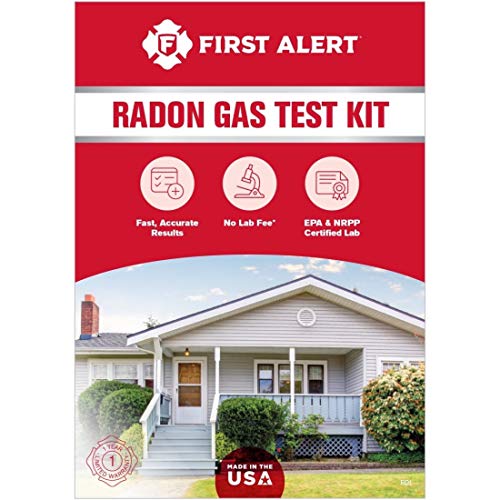 First Alert RD1 Radon Test Kit | Widely stocked; 48-hour charcoal test. | Amazon — $17.95 |
 Airthings Corentium Home | Digital monitor with a long-term average. | Amazon — $142.99 |