How Long Should a Radon Test Take: A Plain-Language Guide
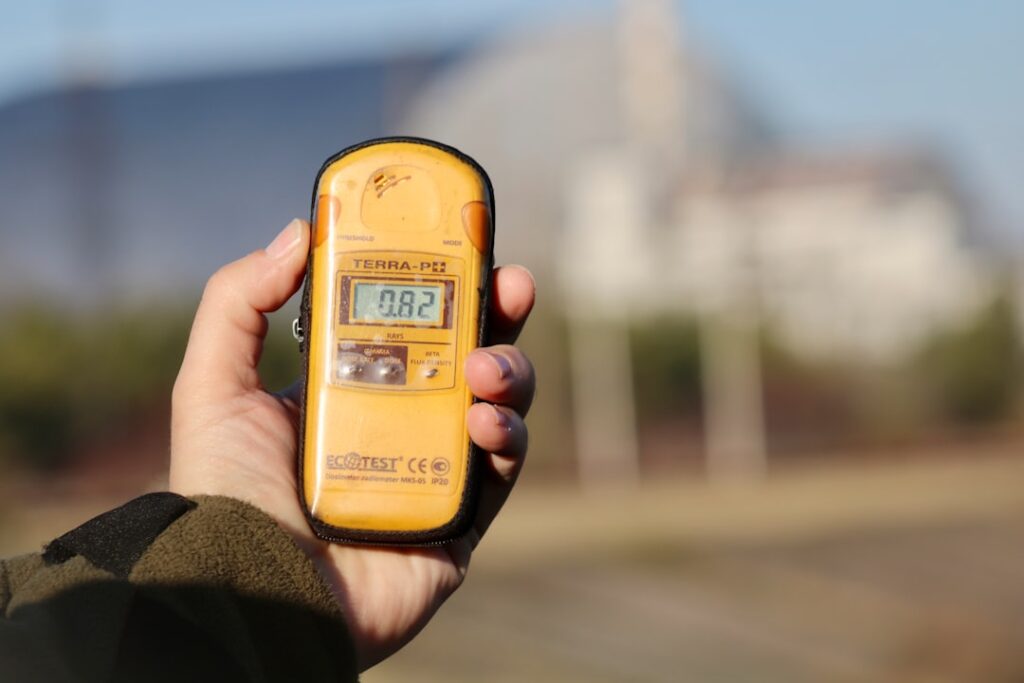
How long a radon test takes depends on the device type and the goal of the testing. Short-term tests run 48 to 96 hours under closed-house conditions. Long-term tests run 90 days to one year and produce an annual-average estimate. Continuous radon monitors record hourly readings electronically and produce results immediately at the end of the deployment. Each duration has trade-offs in cost, accuracy, and seasonal representativeness. This guide summarizes EPA testing protocol durations and CDPHE Colorado guidance current as of 2026 — consult your physician for any health-symptom concerns and an EPA-listed measurement professional for testing tied to financial transactions.
Short Answer: 48 Hours to One Year
Total test duration ranges from a minimum of 48 hours (short-term protocol) to a maximum of one year (long-term alpha-track maximum deployment). The most common residential testing duration is 48 to 96 hours under EPA’s short-term protocol. For real-estate transactions, 48 hours is the EPA-defined minimum with results returned same-day from a continuous monitor or in 7 to 14 days from a mailed passive kit. For mitigation-decision testing where seasonal variability matters, 90 days to one year captures a more representative average.
Short-Term Test Duration: 48 to 96 Hours
EPA’s short-term testing protocol calls for a minimum 48 hours and a maximum 96 hours under closed-house conditions. The 12 hours preceding the test must also be closed-house. Total commitment is roughly 60 to 108 hours of closed-house operation. The 48-hour minimum exists because shorter deployments don’t accumulate enough radon decay signal in passive devices to support reliable laboratory analysis. The 96-hour maximum exists because longer short-term deployments under continuously closed-house conditions become impractical for occupants and risk protocol breaches.
Why 48 Hours and Not Just a Few Hours
Passive devices (charcoal canisters, alpha-track detectors) accumulate signal over time. Charcoal canisters absorb radon and its decay products onto activated carbon, which the lab analyzes by gamma counting. Two days of accumulation provides enough signal to differentiate genuine readings from background lab noise. Shorter deployments produce results with such wide confidence intervals that the test isn’t useful for decisions. Continuous monitors that record hourly can technically produce shorter test results, but the EPA protocol still calls for 48 hours minimum to capture diurnal radon variation.
Continuous Radon Monitor Duration
Continuous radon monitors (CRMs) deploy for 48 to 96 hours like passive tests, but produce results immediately at the end of the deployment rather than requiring lab analysis. Devices like the AccuStar 1028, RadStar RS300, and SunNuclear 1028 record hourly readings and detect environmental changes (closed-house breach, device movement, power loss). The report includes hourly graphs that reveal whether levels were stable or spiked during specific hours. For real-estate transactions, CRM testing is preferred because of tamper-resistance and immediate results. See how does radon test work for device physics.
Long-Term Alpha-Track Duration: 90 Days to One Year
Long-term alpha-track detectors deploy for a minimum 90 days and a maximum one year. The plastic film inside the detector accumulates alpha-particle tracks from radon decay. After deployment, the lab dissolves the film in a chemical etching solution that reveals the tracks under microscopy. Track counts convert to pCi/L using a calibration constant. Long-term tests produce a much better annual-average estimate because they smooth out daily variation, seasonal swings, and weather-related fluctuations. They’re not appropriate for real-estate transactions because the timeline is too long.
Trade-Off: Short-Term Faster But Less Representative
Short-term tests are faster and cheaper but capture a snapshot, not an average. A 48-hour test during a cold-snap with high stack effect can read 30 to 50 percent higher than the home’s annual average. A 48-hour test in summer with windows opened immediately after the test ends can read significantly lower. EPA acknowledges this variability in the Citizen’s Guide by recommending confirmation testing when initial results fall in the 2.0 to 6.0 pCi/L ambiguity range — either a second short-term test or a long-term test to better characterize typical exposure.
Trade-Off: Long-Term More Accurate But Slower
Long-term tests provide a better estimate of typical annual exposure but require months of deployment. They’re appropriate when the testing goal is to understand long-term health risk rather than transaction-driven decision making. A 90-day test deployed through a winter heating season captures conservative seasonal conditions. A full-year test captures all seasonal variation. The trade-off is patience — homeowners who want answers within a week shouldn’t choose long-term testing as their primary method.
Pre-Test Setup Time
Closed-house preparation begins 12 hours before the test starts. During this preparation, windows and exterior doors stay closed, whole-house and attic fans are turned off, and high-volume exhaust systems are off. The pre-test 12-hour window is part of the protocol because radon levels need time to stabilize in the closed-house condition before measurement begins. Failing to observe the 12-hour pre-test closed condition produces a test that captures transition rather than steady-state — typically reading lower than steady-state levels.
Lab Turnaround Time
Charcoal canister analysis typically returns results in 7 to 14 business days. Alpha-track analysis takes longer because of the chemical etching step — typically 6 to 10 weeks for short-term alpha-track and longer for long-term. Continuous monitor deployments produce results immediately at the end of the deployment via the device’s electronic readout. For real-estate transactions where contingency periods are typically 7 to 14 days, CRM testing or expedited charcoal canister analysis is preferred over standard mail-in turnaround.
Test Duration for Different Goals
Match test duration to the goal. Real-estate transaction: 48-hour CRM is standard. Mitigation decision: two short-term tests or one long-term test to support the decision. Post-mitigation verification: short-term test 30 days after activation. Annual monitoring: short-term test once a year, alternating placement locations across years for whole-home coverage. Pre-listing seller test: 48-hour CRM to control the disclosure narrative. Long-term health-risk understanding: full-year alpha-track for the most representative result. The Colorado radon testing pillar covers these goals in more depth.
Closed-House Compliance During Long Tests
Long-term tests don’t require continuous closed-house conditions like short-term tests do. The longer deployment averages across whatever conditions actually occur, providing a realistic typical-use exposure estimate. This is actually a benefit of long-term testing — it captures real-world conditions rather than artificially conservative closed-house conditions. The trade-off is that long-term results reflect actual occupant behavior, not standardized testing conditions, so comparisons across homes are less direct.
When 48 Hours Is Long Enough
For most real-estate transaction testing, 48 hours of continuous monitor deployment captures enough data for the buyer-seller negotiation. The closed-house protocol concentrates radon to the upper end of typical daily variation, ensuring the test result is conservatively biased toward higher numbers. A 48-hour CRM result below 4.0 pCi/L is generally accepted as evidence of low radon. A result above 4.0 pCi/L typically triggers mitigation negotiation regardless of whether longer testing might produce lower averages.
When 96 Hours Is Better Than 48
96 hours (four full days) captures two complete diurnal cycles and is less affected by single-day anomalies (a quick storm, a brief failure of closed-house conditions). For homes where the buyer wants more confidence in the result, or where initial 48-hour test produced ambiguous results in the 3.5 to 4.5 pCi/L range, extending to 96 hours adds robustness. The extra time costs nothing if the CRM is already deployed; mailed passive kit re-deployment costs another full kit fee.
When a Long-Term Test Beats Two Short-Term Tests
If the testing goal is long-term health risk understanding rather than transaction decision-making, a single 90-day test produces a more representative result than two short-term tests separated by a month or two. The long-term test averages out seasonal weather, daily HVAC patterns, and any short-term anomalies. The cost ($25 to $50 for the kit) is no greater than two short-term tests, though the result takes much longer to receive.
Total Time From Decision to Mitigation
For a homeowner deciding to test and then act on the result, the full timeline is: pre-test setup (1 day), deployment (2 to 4 days), lab analysis (7 to 14 days for charcoal canister, immediate for CRM), result interpretation (1 day), mitigation contractor selection (1 to 2 weeks), mitigation installation (1 day), and post-mitigation verification (30 days plus 2 to 4 days test plus lab turnaround). Total elapsed time: 6 to 10 weeks from decision to verified mitigation outcome. Most of this is waiting time; active homeowner effort totals less than a day.
Testing After a New Mitigation System Install
The post-mitigation testing window of 30 days exists for two reasons. First, the system needs time to reach steady-state operation as soil-gas pressure differentials stabilize. Second, residual indoor radon needs time to decay and dilute through ventilation. Testing too soon (within the first week) often shows levels above 2.0 pCi/L not because the system is failing but because the home hasn’t fully equilibrated. Testing at 30 days is the standard verification window that allows reliable assessment of system performance.
How Diurnal Variation Affects Test Duration
Radon levels typically follow a diurnal pattern — higher overnight when the home is closed up and tighter, lower during the day when doors open more frequently and HVAC operation creates more air movement. A 24-hour test captures only one full cycle. A 48-hour test captures two cycles. A 96-hour test captures four cycles and averages more reliably. The 48-hour minimum exists in part to capture at least two full diurnal cycles, smoothing out single-day anomalies that could skew results upward or downward.
Test Duration During Weather Events
Weather events affect radon concentrations. Pressure changes from passing storm fronts pull more soil gas into the home. Heavy snow cover acts as an insulator that traps soil gas under the building. Drought reduces soil moisture and increases soil-gas permeability. A 48-hour test conducted during a major weather event captures that anomalous condition rather than typical levels. Extending to 96 hours or repeating after the weather settles produces a more representative result. Long-term tests of 90 days to one year average across weather variability.
Scheduling the Test During Closed-House Friendly Periods
For homeowners with flexibility, scheduling the test during seasons when closed-house conditions are easy to maintain produces the cleanest result. Late fall, winter, and early spring all work well in Colorado because HVAC operation already implies closed windows. Mid-summer is more challenging because of the temptation to open windows on cool nights. Mid-spring and early fall are the trickiest because mild weather encourages window opening. If you’re going to break the closed-house protocol because the weather is too pleasant, choose a different time window.
When to Skip Right to Long-Term Testing
For some homeowners, skipping short-term testing and going directly to long-term alpha-track testing makes sense. If you’re not under a transaction timeline, if you’ve already done a short-term test that came back in the ambiguous 2 to 6 pCi/L range, and if your goal is understanding typical exposure rather than worst-case, long-term testing provides better information. The trade-off is patience — results take 4 to 14 months total. For long-term testing comparisons see the long-term radon testing guide.
References
- EPA Citizens Guide to Radon Testing Protocol — U.S. Environmental Protection Agency
- American Lung Association Radon Resources — American Lung Association
- CDPHE Colorado Radon Testing Information — Colorado Department of Public Health and Environment
- CDC Radon Testing and Health — Centers for Disease Control and Prevention
If you want professional radon testing on a 48-hour timeline on the Front Range, you can reach out through our contact page for a continuous monitor deployment by a credentialed Colorado measurement professional.