How Long Does It Take for Radon to Affect You?

Radon does not cause immediate or acute effects at any timeframe. The only known health effect of radon exposure is increased long-term lung cancer risk that manifests 5 to 25+ years after sustained elevated exposure. There is no symptom or sensation tied to recent radon exposure. EPA and the U.S. Surgeon General have stated this clearly and consistently: radon’s harm is delayed, cumulative, and asymptomatic during the exposure period itself. This guide explains the latency model, the EPA risk estimates, why no acute effects exist, and why the only useful action is testing your home rather than monitoring your body. This information summarizes EPA, CDC, and Surgeon General guidance current as of 2026; for any respiratory symptoms see your physician.
Part of our Radon Levels guide — start there for the full picture →
The direct answer: no acute effects, ever
Radon is a colorless, odorless, tasteless radioactive gas. It does not cause headaches, fatigue, nausea, dizziness, coughing, or any other immediate symptom regardless of concentration or duration of exposure. People asking “how long does it take for radon to affect you” are usually looking for an acute timeframe — hours, days, weeks. No such timeframe exists in the scientific literature, in EPA documentation, or in CDC guidance. The biological mechanism of radon-induced lung damage is cumulative cellular DNA damage from alpha radiation in the lung tissue, and that damage only produces clinical disease (lung cancer) after years of cellular accumulation.
The EPA and U.S. Surgeon General have repeatedly emphasized this point in public health communications. Radon’s hazard is not a poisoning event with a recognizable onset; it is a long-term cumulative risk factor. Any respiratory or constitutional symptoms a homeowner experiences are caused by something else — viral infection, allergies, asthma, occupational exposures, smoking history, or unrelated medical conditions — and require a physician’s evaluation, not a radon test.
The latency window: 5 to 25+ years
Radon-induced lung cancer has a latency period of 5 to 25 or more years between the start of sustained elevated exposure and clinical diagnosis. Most cases manifest at the upper end of that range. The reason is mechanical: alpha particles emitted by radon decay products lodge in lung tissue and cause DNA damage in individual cells. Most damaged cells die or are repaired by normal cellular mechanisms. A small fraction accumulate mutations that escape repair and eventually become cancerous, and that process unfolds over years.
Latency is not a homeowner-controllable variable. It is set by the biology of carcinogenesis. The implication is that the question “how long does it take for radon to affect you” is the wrong question. The right question is “what is my home’s radon level and what is the cumulative exposure dose over the time I have lived there.” That question can be answered with a test, and the resulting data can be acted on. The radon testing plain-language guide for Front Range homeowners covers how Colorado geography shapes residential risk. The how long before radon affects you guide covers the same latency model from a slightly different framing.
EPA’s risk model: 21,000 lung cancer deaths per year
EPA attributes approximately 21,000 lung cancer deaths annually in the United States to radon exposure. That number is derived from epidemiological studies of uranium miners (who experienced extremely high occupational radon exposure) combined with case-control studies of residential radon exposure. The risk is dose-dependent: higher cumulative exposure produces higher cancer risk, and the relationship is roughly linear with no known threshold below which risk is zero.
For a homeowner living for decades at the EPA action level of 4 pCi/L, the lifetime lung cancer risk is approximately 7 in 1,000 for never-smokers and 62 in 1,000 for smokers (per EPA’s Citizen’s Guide to Radon). At 10 pCi/L the risks roughly double. At 20 pCi/L they roughly quadruple. Smokers face dramatically higher risk because tobacco smoke and radon decay products both damage lung tissue, and the combined effect is greater than the sum of the parts.
Why “symptoms of radon exposure” returns no clinical answer
Web searches for radon symptoms surface long lists of vague complaints — fatigue, cough, chest pain, shortness of breath — and present them as warning signs. None of those associations are supported by EPA, CDC, or peer-reviewed medical literature. They are SEO content lists, not clinical descriptions. The only health effect of radon exposure with evidence behind it is lung cancer, and lung cancer in early stages is usually asymptomatic until the disease has progressed substantially.
Any homeowner experiencing persistent cough, unexplained chest pain, shortness of breath, or coughing up blood should see a physician. Those are clinically meaningful symptoms regardless of radon history. They are not specific to radon, and a radon test does not diagnose them. Consult your doctor first, then separately address radon levels through home testing.
What sustained elevated exposure actually means
“Sustained elevated exposure” in EPA framing means years of living in a home with radon concentrations above the action level (4 pCi/L for residential settings). Brief or transient exposure does not produce meaningful cancer risk. A weekend in a basement with elevated radon is not a clinical concern. A decade of living in a home averaging 8 pCi/L is. The dose-time integral matters, and short-term anxiety about a recent exposure event is not biologically warranted.
This framing also clarifies why the question “how long does it take to affect you” has no useful answer in the short term. Radon’s effect is the slow accumulation of cellular damage from continuous exposure. There is no event horizon at which exposure becomes harmful — every additional hour of elevated exposure adds incrementally to cumulative risk, but no individual hour is the “dangerous one.”
What “cumulative exposure” actually measures
The cumulative exposure dose for radon is measured in working level months (WLM) — a unit derived from uranium mining epidemiology that captures both the concentration and the time-integral of exposure. One working level month equals exposure to 1 working level (the equivalent of 200 pCi/L of radon decay products) for 170 hours. Residential exposure at the EPA action level of 4 pCi/L for a year of normal occupancy produces approximately 0.4 to 0.5 WLM annually.
The total lifetime WLM is the relevant exposure metric for lung cancer risk. Decades of residential exposure at moderately elevated concentrations produces cumulative WLM in the range that uranium mining epidemiology associates with measurable cancer risk. The math is not precise at the individual level — risk varies with smoking history, age at exposure, and genetic factors — but the population-level relationship is well-characterized.
Why the BEIR VI report is the foundation for current risk estimates
EPA’s current radon risk estimates are based primarily on the National Research Council’s BEIR VI report (Biological Effects of Ionizing Radiation, Volume VI), published in 1999 and updated through subsequent research. BEIR VI used pooled data from 11 uranium miner cohort studies, totaling more than 65,000 miners followed for several decades, to model the relationship between cumulative radon exposure and lung cancer risk. The model then extrapolates from high-dose miner exposures to lower-dose residential exposures using a linear no-threshold assumption.
The linear no-threshold model has been challenged in some scientific debate, but EPA, the National Cancer Institute, and the World Health Organization all use it as the regulatory and public health basis. The implication is that no level of radon exposure is considered risk-free; the action level of 4 pCi/L is a practical threshold for mitigation, not a safety threshold. Lower concentrations carry lower but non-zero risk.
What homeowners should actually do
Test the home. EPA recommends a short-term (48-hour to 7-day) test as a first screen, followed by a long-term (90-day to 12-month) test if the short-term result is above 4 pCi/L. Colorado is a Zone 1 high-radon state with widespread elevated levels across the Front Range, and CDPHE recommends every home be tested regardless of zip code. Test kits are available from CDPHE for free or at low cost, and licensed radon measurement professionals can perform continuous monitoring.
If results exceed 4 pCi/L, plan for mitigation. Sub-slab depressurization (SSD) is the most common residential mitigation method and typically reduces concentrations by 80% to 99%. A typical mitigation system in Colorado costs $1,500 to $3,500 installed. Re-test after mitigation to confirm the system performs as designed.
When to call a physician versus when to test
For any respiratory symptom — persistent cough, chest pain, shortness of breath, coughing blood, unexplained weight loss — see a physician. Bring your radon history if you know it. The physician will rule out infectious causes, evaluate for occupational and environmental exposures (including radon), and order imaging or lung function testing as appropriate. Self-diagnosis through web searches is not a substitute for clinical evaluation.
For the radon side of the equation, test the home. Testing answers the only actionable question: is the home’s average concentration elevated, and if so, what mitigation reduces it. The two tracks — clinical evaluation of symptoms and home testing for radon — run in parallel and do not overlap diagnostically.
Why early-life exposure carries greater risk than late-life exposure
Epidemiological data suggests that radon exposure during childhood and young adulthood carries greater long-term cancer risk than exposure later in life. The mechanism is that childhood lung tissue is more sensitive to radiation damage, and the latency period is more likely to fall within the person’s expected remaining lifespan. A 70-year-old exposed to elevated radon for the rest of life has limited time for radon-induced cancer to manifest; a 10-year-old has decades during which the latent damage can develop.
This is one reason home testing is particularly important for households with children. CDPHE recommends testing all homes regardless of occupancy, but the urgency of mitigation is somewhat higher for homes with children spending substantial time in lower-level living spaces. Front Range homes with finished basements used as children’s playrooms, bedrooms, or family rooms warrant prompt testing.
Why short-term exposure during home visits is not a clinical concern
Homeowners visiting properties with known elevated radon — Airbnb stays, real-estate showings, visiting friends or relatives — sometimes worry about brief exposure during the visit. Brief exposure does not produce meaningful cumulative dose. A few hours or even a few days at 10 to 20 pCi/L adds essentially nothing to a person’s cumulative WLM relative to background. The clinical concern is sustained elevated exposure over years, not transient exposure events.
The implication is that radon mitigation is not a real-estate transaction emergency in the acute-harm sense. It is a long-term residential issue that warrants mitigation before the buyer or tenant occupies the property for extended periods. Negotiating mitigation as part of the closing process or completing it within the first weeks of occupancy provides essentially the same protection as completing it before showing the property to potential buyers.
When to call a professional
For radon measurement and mitigation, work with NRPP-certified or NRSB-certified professionals. CDPHE maintains a roster of certified radon professionals in Colorado. Avoid measurement firms that bundle measurement with mitigation under one roof — the same conflict-of-interest principle that applies to asbestos applies to radon. Independent measurement first, then competitive mitigation quotes if levels are elevated.
More Questions About Radon Exposure Timelines
How long does a radon mitigation system take to install?
A typical radon mitigation system takes one day to install in most single-family homes, often four to eight hours of on-site work. The contractor drills a suction point through the basement slab or seals a crawl space with a plastic membrane, runs a vent pipe up through or along the house, and mounts an inline fan that runs continuously.
Homes with several separate foundations, a crawl space plus a basement, or hard-to-route pipe paths can take longer. Scheduling usually adds days or weeks, depending on how busy local certified mitigators are.
How fast do radon levels drop after a mitigation system starts?
Radon levels usually drop within hours of a mitigation fan starting, because the system pulls soil gas from under the slab before it can seep indoors. A well-designed active soil depressurization system commonly cuts indoor radon by 50 to 99 percent, according to industry estimates.
The first reading is not the final word, though. The EPA advises running a short-term test at least 24 hours after the system starts and within 30 days of installation, then retesting every two years or after major renovations to confirm the system is still working.
Does radon exposure at work or school add to home exposure?
Yes, radon exposure anywhere adds to the same lifetime total, because lung cancer risk tracks cumulative dose rather than where the dose happened. Most people get the largest share of their radon dose at home simply because they spend the most hours there, especially while sleeping.
Schools and workplaces on the ground floor or in basements can also carry elevated radon. The EPA encourages schools to test, and some states require it. Asking an employer or school district whether the building has been tested is a reasonable step.
Do radon levels change from season to season?
Yes, radon levels in most homes run higher in winter than in summer. Closed windows, heating systems and the stack effect, where warm indoor air rises and draws soil gas in at the foundation, all pull more radon indoors during cold months.
Radon can also swing day to day with wind, rain and barometric pressure. That variation is why a single short-term test is treated as a screening result. A long-term test of 90 days to a year gives a better picture of the average level a household actually breathes.
Does it matter how many hours a day someone spends at home?
Yes, hours at home matter, because radon risk depends on the concentration multiplied by the time spent breathing it. Someone who works from home, a retiree, or a young child who naps in a basement bedroom accumulates more dose than a resident who is away most of the day.
The EPA’s risk estimates assume a lifetime of typical occupancy. A household with heavy use of a lower level, such as a basement bedroom or home office, has a stronger reason to test that level and act on elevated results.
References
- EPA Citizen’s Guide to Radon and lifetime risk estimates — Environmental Protection Agency
- CDC radon health effects and prevention guidance — Centers for Disease Control and Prevention
- CDPHE Colorado radon program and free test kits — Colorado Department of Public Health and Environment
- American Lung Association radon and lung cancer overview — American Lung Association
Frequently asked questions
Can radon make you feel sick the same day?
No. Radon does not cause acute symptoms at any concentration or duration. The only known health effect is increased long-term lung cancer risk after years of sustained elevated exposure. Same-day symptoms are caused by something else and warrant a physician visit.
How long until radon causes lung cancer?
Latency is 5 to 25 or more years from the start of sustained elevated exposure to clinical diagnosis. Most cases manifest at the upper end of that range. The exact latency depends on cumulative dose and individual susceptibility.
Is there a safe level of radon exposure?
EPA's position is that the dose-response relationship is roughly linear with no known threshold. The action level is 4 pCi/L; below that, risk is reduced but not zero. EPA recommends mitigation at any level above 4 pCi/L.
What should I do if I think I have been exposed?
Test the home to determine the current concentration. If results exceed 4 pCi/L, install a mitigation system and re-test. For any respiratory symptoms, see a physician separately; symptoms are not specific to radon and require clinical evaluation.
Can an air purifier reduce radon risk?
No, a standard air purifier does not meaningfully reduce radon, because radon is a gas that passes through HEPA filters. Some filters capture radon decay products briefly, but the EPA does not recommend air cleaners as a radon fix. Sealing and active soil depressurization are the proven methods.
Does opening windows lower radon quickly?
Opening windows can lower radon temporarily by diluting indoor air, but the effect disappears once windows close. Ventilation is not a reliable long-term solution in cold or hot weather, and it can invalidate a radon test that requires closed-house conditions. A mitigation system is the lasting fix.
Is radon a concern in upstairs apartments?
Radon is usually lower on upper floors because the gas enters from the soil, but it is not always zero. Elevator shafts, utility chases and some building materials can carry radon higher. The EPA recommends testing units on the lowest three floors, and testing is inexpensive enough to settle the question.
Can radon cause health problems other than lung cancer?
Lung cancer is the only health effect that major agencies such as the EPA and CDC firmly link to residential radon exposure. Radon does not cause headaches, rashes or fatigue. Anyone with respiratory symptoms or health concerns should see a doctor rather than assume radon is the cause.
Front Range homeowners can reach out through our contact page for a referral to an NRPP-certified radon measurement professional working in the Denver metro corridor.
Test your home for radon
Radon is invisible and odorless, so a test is the only way to know your level. A short-term kit gives a first reading in days; a digital monitor tracks it over time.
| Product | Why | Buy |
|---|---|---|
 AirChek Charcoal Radon Test Kit | Lab fee usually included; EPA short-term protocol. | Amazon — $21.95 |
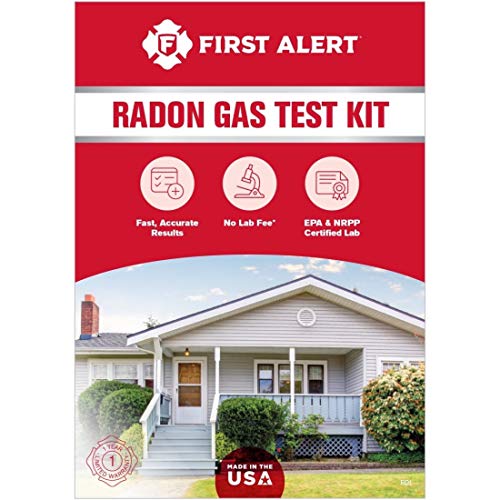 First Alert RD1 Radon Test Kit | Widely stocked; 48-hour charcoal test. | Amazon — $17.95 |
 Airthings Corentium Home | Digital monitor with a long-term average. | Amazon — $99.99 |