Radon Symptomer: The Honest International Answer

“Radon symptomer” is the Norwegian and Swedish word for “radon symptoms.” It surfaces in U.S. and international search data because Scandinavian readers — and English-speaking readers who are partway between languages — sometimes mix the Scandinavian spelling with the English-language query intent. The answer is the same in any language: radon does not cause acute symptoms. The U.S. Environmental Protection Agency, the U.S. Surgeon General, the World Health Organization, and the European Union’s radiation-safety directive all agree on this. Radon is a long-term lung-cancer risk, not a short-term illness. This guide summarizes EPA, CDC, WHO, and U.S. Surgeon General guidance current as of 2026 — consult your physician for acute respiratory symptoms (which are not caused by radon) and a state-licensed measurement professional for testing decisions.
Part of our Radon Levels guide — start there for the full picture →
Radon Symptomer: The Honest Answer Across Languages
Radon does NOT cause acute symptoms. It is an odorless, colorless, tasteless radioactive gas. Per the U.S. Surgeon General and EPA, radon is the second-leading cause of lung cancer after smoking — responsible for roughly 21,000 deaths per year in the United States — but ONLY after long-term exposure with a 5- to 25-plus-year latency. There are no immediate signs of “radon sickness” or “radon poisoning.” If a household member has acute respiratory symptoms — cough, shortness of breath, chest pain, fever — those are NOT caused by radon. Acute respiratory symptoms warrant a physician visit for evaluation of asthma, allergies, infection, or other respiratory conditions. The same answer holds in Norwegian, Swedish, English, German, French, and every other language: there are no acute symptoms of radon exposure. Our broader radon testing guide for Front Range homeowners covers what radon does cause and how to act on the long-term risk.
International Authoritative Sources Agree
The convergence of international guidance on this point is unusually strong. Across continents, regulatory bodies issue the same essential message: radon causes lung cancer through long-term exposure, with no acute symptoms.
U.S. Authority
The U.S. Environmental Protection Agency, the U.S. Surgeon General, and the Centers for Disease Control and Prevention all confirm that radon causes no acute symptoms. EPA recommends action at indoor concentrations of 4.0 pCi/L or higher. The Surgeon General’s 2005 Health Advisory (still authoritative as of 2026) identifies radon as the second-leading cause of lung cancer.
World Health Organization
The WHO published a comprehensive Handbook on Indoor Radon in 2009 recommending a stricter action level than EPA: 100 becquerels per cubic meter (Bq/m³), equivalent to roughly 2.7 pCi/L. WHO confirms the same lung-cancer pathway, the same absence of acute symptoms, and the same multiplicative risk with smoking. WHO estimates radon causes between 3% and 14% of lung cancers globally, depending on national smoking and radon profiles.
European Union
The EU Basic Safety Standards Directive (2013/59/Euratom) establishes a reference level of 300 Bq/m³ (about 8.1 pCi/L) as the level above which member states must implement national action plans. Member states implement at their own thresholds — Norway, Sweden, Denmark, Finland, and Germany generally adopt stricter thresholds aligning with WHO.
National Implementations
Norway’s Strålevernforskriften (Radiation Protection Regulation) and Sweden’s Strålsäkerhetsmyndigheten (Radiation Safety Authority) both implement strict national radon programs. Both countries recommend mitigation at relatively low concentrations (200 Bq/m³ in many cases) and have widespread radon-mapping programs across residential housing stock. Resources from international agencies and epa.gov/radon describe these programs.
Why International Convergence Matters
When agencies in different countries, regulating under different legal systems, and answering to different political constituencies all reach the same conclusion, the underlying science is robust. The radon-lung cancer link is supported by multiple independent epidemiological studies — including the well-known U.S. uranium miners cohort, the Hornblende ore mine cohort in Czechoslovakia, the Swedish residential studies, and the large pooled European residential analyses.
None of these studies have identified an acute-symptom syndrome associated with radon exposure. The biological mechanism — alpha radiation from radon progeny damaging lung tissue cells — is consistent with a long-latency cancer outcome and inconsistent with acute illness. Our companion piece on radon symptoms in humans covers the symptom-search pattern in additional detail.
What Acute Respiratory Symptoms Actually Mean
If someone in a household is experiencing acute respiratory symptoms, the cause is something other than radon. The list of common causes is well-defined:
- Asthma or allergies. Cough, wheezing, shortness of breath, especially with seasonal or environmental triggers. Often responds to bronchodilators or antihistamines.
- Viral or bacterial respiratory infection. Cold, flu, COVID-19, bronchitis, pneumonia. Often accompanied by fever, fatigue, or body aches.
- Indoor air quality issues. Mold spores, dust mites, pet dander, smoke, household chemicals, or off-gassing from building materials.
- Carbon monoxide exposure. Headache, dizziness, nausea, confusion. This is an acute-symptom gas exposure and is medically urgent — CO detectors are essential and should be installed and tested in every home.
- Chronic conditions. COPD, heart failure, lung cancer (regardless of cause), pulmonary fibrosis, or other long-term diagnoses.
A physician can evaluate symptoms and order appropriate diagnostic tests. Radon testing in the home is a separate parallel workstream that addresses long-term lung cancer risk, not the immediate symptoms.
The Right Action Path
For any household where radon concern intersects with respiratory symptoms, two parallel tracks make sense.
Symptoms Track (Physician)
Acute respiratory symptoms warrant clinical evaluation. The physician evaluates the cause and orders tests as needed — pulmonary function, chest imaging, blood work, allergy testing. This track does not involve radon.
Radon Track (Home Test)
Concern about radon warrants a home test regardless of symptoms. The sequence:
- Short-term test kit in the lowest livable level of the home for 2 to 7 days. Consumer kits cost $15 to $30.
- If the result is at or above 4 pCi/L (or 100 Bq/m³ by WHO threshold, or 300 Bq/m³ by EU threshold), confirm with a follow-up test or a longer-term measurement.
- If confirmation remains elevated, contract a state-licensed mitigation professional. Front Range mitigation costs $1,000 to $2,500.
- Post-mitigation, re-test to confirm reduction.
The two tracks run independently. Mitigating radon does not address symptoms; treating symptoms does not address radon. Both should be pursued where both apply.
Unit Conversions for International Readers
Different countries use different units. A quick reference:
- 1 pCi/L (picocurie per liter, U.S. standard) = 37 Bq/m³ (becquerel per cubic meter, international standard).
- EPA action level: 4.0 pCi/L = 148 Bq/m³.
- WHO recommended action level: 100 Bq/m³ = 2.7 pCi/L.
- EU Basic Safety Standards reference level: 300 Bq/m³ = 8.1 pCi/L.
- U.S. average indoor radon: about 1.3 pCi/L (48 Bq/m³).
- Outdoor air: about 0.4 pCi/L (15 Bq/m³).
International readers comparing local guidance with U.S. sources should keep these conversions handy. Our piece on radon symptoms across language and culture covers similar international vocabulary patterns.
Combined Risk With Smoking — Worldwide
The single most important variable in radon risk is smoking status. This finding is consistent across U.S., European, and Asian epidemiological studies. The two risk factors multiply rather than add. A non-smoker exposed to 4 pCi/L faces about a 7-in-1,000 lifetime lung cancer risk from radon; a smoker exposed to the same level faces about a 62-in-1,000 risk. International data confirms the same multiplicative pattern.
Households with smokers should prioritize both smoking cessation and radon mitigation. The combined risk reduction is substantial regardless of which intervention is implemented first. Smoking cessation typically provides the larger individual benefit; radon mitigation provides ongoing protection for non-smoking household members as well.
The Long-Latency Picture
Radon-induced lung cancer typically appears 5 to 25 years after sustained exposure. The latency is consistent with the underlying biological process: alpha-particle damage accumulates in lung cells, mutations occur, and eventual tumor formation follows after years of cellular-level events. This means the lung cancer cases attributable to radon in any given year reflect exposure from 1990 to 2020, not exposure from 2025.
For homeowners who have lived in a high-radon home for years, the right response is mitigation now plus appropriate health monitoring with a primary-care physician. Lung cancer screening guidelines from the U.S. Preventive Services Task Force apply for smokers in certain age and pack-year ranges. International screening guidelines vary; consultation with a local physician determines what applies.
How International Mitigation Standards Compare
Mitigation practices differ slightly across countries even though the underlying physics is identical. U.S. mitigation under EPA RMS-LL favors active sub-slab depressurization with continuous fan operation. Scandinavian countries often emphasize crawl-space ventilation and whole-house air exchange in addition to ASD, partly because Scandinavian housing stock includes a higher proportion of crawl-space foundations and partly because higher heating costs make heat-recovery ventilation more attractive. German mitigation practice integrates radon control with broader Passivhaus airtightness and ventilation requirements.
Despite these variations, the core engineering approach is consistent across countries. Negative pressure beneath the foundation, controlled exhaust above the roof line, sealing of major entry pathways, and continuous operation. The differences are at the margins — fan sizing, supplemental ventilation, and the integration with other building systems — rather than at the level of the basic approach.
Why Norwegian and Swedish Search Volume Is Significant
Norway and Sweden have among the highest residential radon concentrations in the world due to their granitic geology. Norwegian government data shows that approximately 9% of residential dwellings exceed the national action level of 200 Bq/m³, with significantly higher percentages in granite-rich regions like Bergen and the eastern interior. Swedish data shows similar patterns, with the highest concentrations in regions with uranium-rich bedrock.
The high baseline radon levels combined with strong national awareness programs mean that Scandinavian readers frequently search for radon-related health information in their native languages. “Radon symptomer,” “radon symptom,” and similar variants are common queries that surface alongside the equivalent English-language searches. The answer is consistent regardless of language: no acute symptoms, long-term lung cancer risk, mitigation as the action response.
Real Estate Disclosure Across Countries
Real estate disclosure rules for radon vary widely across countries. The United States does not have a federal radon disclosure rule — only individual states (Illinois, Maine, New Jersey, and a handful of others) require radon-specific disclosure at home sale. Norway and Sweden have mandatory residential radon measurement in many municipalities, with the results forming part of the property record. France requires landlords in designated high-radon zones to provide tenants with a radon information sheet.
Front Range buyers in Colorado should request radon test results from the seller as part of standard pre-purchase due diligence even though Colorado does not require disclosure. Most listing agents along the Front Range now include recent radon test results in the disclosure package because the Front Range’s Zone 1 status makes the question all but certain to come up during the buyer’s inspection.
References
- EPA Health Risk From Radon — U.S. Environmental Protection Agency
- CDC Radon Health Information — Centers for Disease Control and Prevention
- American Lung Association Radon Resources — American Lung Association
- Colorado Radon Program — Colorado Department of Public Health and Environment
Frequently asked questions
What does 'radon symptomer' mean?
It is the Norwegian and Swedish word for 'radon symptoms.' The answer is the same in any language: radon does not cause acute symptoms. EPA, the U.S. Surgeon General, CDC, the World Health Organization, and the European Union all agree that radon is a long-term lung-cancer risk, not an acute illness.
What are the WHO and EU radon action levels?
WHO recommends action at 100 Bq/m³ (about 2.7 pCi/L). The EU Basic Safety Standards Directive (2013/59/Euratom) establishes a reference level of 300 Bq/m³ (about 8.1 pCi/L) for member-state action plans. EPA's U.S. action level is 4.0 pCi/L (148 Bq/m³). Norway and Sweden implement stricter national thresholds, typically around 200 Bq/m³.
Do Norway and Sweden have strict radon programs?
Yes. Both countries implement national radon-mapping programs and strict mitigation thresholds under Norway's Strålevernforskriften (Radiation Protection Regulation) and Sweden's Strålsäkerhetsmyndigheten (Radiation Safety Authority). National guidance generally aligns with WHO's recommended 100 Bq/m³ action level.
If I have respiratory symptoms in Norway or Sweden, should I test for radon?
Test for radon as a separate parallel action — it is good practice in any high-radon country — but acute respiratory symptoms have other causes (asthma, infection, allergies, air quality). See a physician for clinical evaluation. The radon test addresses long-term lung cancer risk; the physician evaluates the current symptoms.
Front Range homeowners or international readers visiting Colorado with radon concerns can connect with a vetted local inspector to coordinate testing and discuss mitigation if levels are elevated.
Test your home for radon
Radon is invisible and odorless, so a test is the only way to know your level. A short-term kit gives a first reading in days; a digital monitor tracks it over time.
| Product | Why | Buy |
|---|---|---|
 AirChek Charcoal Radon Test Kit | Lab fee usually included; EPA short-term protocol. | Amazon — $21.95 |
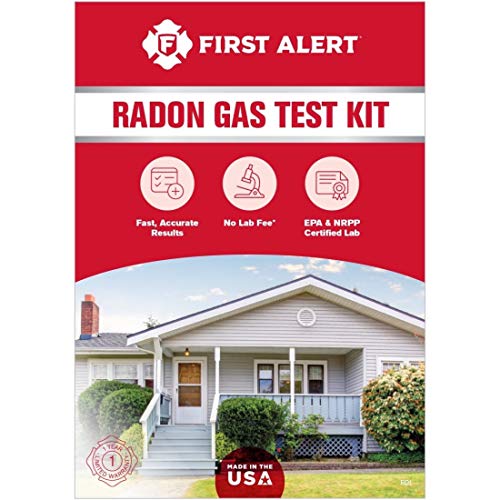 First Alert RD1 Radon Test Kit | Widely stocked; 48-hour charcoal test. | Amazon — $17.95 |
 Airthings Corentium Home | Digital monitor with a long-term average. | Amazon — $142.99 |