Radon Signs and Symptoms: House vs Body Distinction

Radon signs and symptoms is a search phrase that productively splits into two questions: what signs of radon presence does a house show, and what symptoms does radon exposure cause in the body? The distinction matters because the answers diverge. House-side signs exist as risk-elevating indicators (Front Range geology, basement construction, foundation features) that point toward the need for testing. Body-side symptoms of radon exposure do not exist at residential levels. Despite the popular framing, radon does not cause acute toxic symptoms in humans. EPA and the U.S. Surgeon General document only one health effect: increased long-term lung cancer risk over 5 to 25 or more years. EPA estimates radon causes approximately 21,000 lung cancer deaths per year in the United States — the second leading cause after smoking. Any respiratory symptom should be evaluated by a physician immediately. This guide summarizes EPA, Surgeon General, and CDC guidance current as of 2026 and is informational only.
Part of our Radon Levels guide — start there for the full picture →
Body-side symptoms: none at residential levels
Begin with the medical question because it has the most consequential answer. Radon is a colorless, odorless, tasteless radioactive noble gas. As an inert gas it does not react with body tissues, and the body has no sensory receptors for it. EPA’s Citizen’s Guide to Radon states explicitly that radon “cannot be seen, smelled, or tasted.” There is no acute or sub-acute symptom set associated with residential radon exposure. Cough, shortness of breath, fatigue, chest tightness, sinus irritation — none of these are caused by radon at levels found in homes. They have other causes (infection, allergies, asthma, cardiac issues, occupational exposures) and need separate medical evaluation.
The harm radon causes is silent and cumulative. Decay daughters (polonium-218 and polonium-214) deposit on lung tissue and emit alpha radiation that damages cellular DNA over years. The eventual cancer is biologically identical to other lung cancers and presents the same way — persistent cough, blood in sputum, chest pain, weight loss, recurrent pneumonia — but 5 to 25 years after the exposure period. The Surgeon General’s Health Advisory on radon documents this dose-response and lag in detail.
House-side signs: real but indirect
House signs are different. Front Range homes show several indirect indicators that elevate the probability of finding elevated indoor radon when tested. The strongest indicator is geology: most Colorado counties along the I-25 corridor sit in EPA Zone 1, the highest radon-potential tier. Granite-rich foothills, uranium-bearing sandstones, and Precambrian metamorphic rock collectively elevate the regional source. Adams, Arapahoe, Boulder, Broomfield, Denver, Douglas, El Paso, Jefferson, Larimer, and Weld counties all sit in Zone 1.
Within Zone 1, three house-level factors raise risk further. First, basement construction with significant time spent in finished basements. Second, foundation features that allow soil-gas entry: cracks, slab penetrations for plumbing and HVAC, open sump pits, crawl spaces with poor ventilation. Third, building tightness — modern energy-efficient construction with low air-change rates can concentrate radon higher than older leaky houses for the same source flux.
None of these house signs reliably predict any individual home’s radon level. Two adjacent homes can test at 1 pCi/L and 12 pCi/L based on subtle differences in slab sealing, foundation cracking, and HVAC operation. House signs motivate testing; they do not substitute for it. For broader context on the testing-to-mitigation pathway, see the radon testing pillar overview.
What testing actually measures
Radon test kits measure airborne radon-gas concentration averaged over the kit’s exposure period. Short-term kits (charcoal or electret) average 48 hours to 7 days. Long-term kits (alpha-track) average 90 days. Units are picocuries per liter (pCi/L) of air. EPA’s action level is 4 pCi/L; mitigation is recommended above that threshold. Levels between 2 and 4 pCi/L are below action but still elevated above outdoor background (which averages around 0.4 pCi/L); EPA suggests homeowners “consider” mitigation in this range.
Continuous radon monitors (Airthings View Plus, AirRadon, Corentium Pro) report hourly readings and a running 24-hour, 7-day, and long-term average. These monitors are useful for ongoing tracking after mitigation, or for understanding seasonal variation (radon levels typically rise in winter as homes are closed up and HVAC pulls more soil gas in). The radon test price guide covers the cost-versus-method comparison.
Mitigation removes the source contribution
When testing shows elevated radon, the standard residential intervention is sub-slab depressurization (SSD). A sealed PVC vent pipe is routed from beneath the foundation slab to above the roofline, with an inline fan creating negative pressure beneath the slab. Soil gas is drawn into the pipe before it can enter living space. Front Range installation runs $1,200 to $2,500 turnkey by an NRPP-certified mitigator, and post-installation testing typically shows 80 to 99 percent reduction in indoor levels.
After mitigation, the homeowner should test the home short-term within 30 days of system activation to confirm the system works, then long-term in the second year of operation, then every two to five years thereafter. Mitigation systems have moving parts (the fan, typically rated for 5 to 10 years of continuous operation) that can fail silently. Periodic re-testing catches failures.
Why the symptom-search persists
Searches for “radon signs and symptoms” persist because consumers reasonably assume any environmental hazard with significant health consequences also has identifiable warning signs. Carbon monoxide has acute symptoms. Lead has measurable blood levels. Mold has visible growth and (in sensitive individuals) allergic symptoms. Radon is unique in being completely silent both in the home and in the body. The only signal available is a test result on a piece of paper.
This silence is also why radon testing is so often skipped. Without a symptom prompting action, homeowners delay testing until a real estate transaction forces it. Front Range buyers should treat the test as routine, similar to checking smoke detectors. Sellers benefit too, because pre-listing testing avoids deal-killing surprises during inspection contingency. For a related framing question, the radon symptom singular framing guide explores why the search persists despite the absence of a clinical answer.
How real estate transactions handle radon
Front Range real estate transactions routinely include radon testing during the inspection contingency. The buyer’s inspector deploys a continuous radon monitor or a passive short-term test kit during the inspection visit. Tests typically run for 48 hours (continuous monitor) or 4 to 7 days (passive kit) and the results are part of the inspection report. If the result exceeds 4 pCi/L, the buyer typically requests one of three outcomes: seller installs mitigation prior to closing, seller credits the buyer at closing to cover post-closing mitigation, or buyer accepts the issue and proceeds with the purchase as-is.
Pre-listing radon testing by the seller can streamline this process. Sellers who test their homes before listing know the result going into negotiations and can either price-adjust upfront, install mitigation as a value-add, or disclose the result and let buyers factor it into offers. The latter approach is increasingly common in markets where buyer awareness of radon is high, which describes the Front Range market in 2026.
What mitigation does for resale value
Properly installed and documented radon mitigation has a small but measurable positive effect on resale value of Front Range homes. The cost of installation ($1,200 to $2,500) is generally recovered in the sale price when the home is marketed to buyers aware of regional radon prevalence. More importantly, mitigation removes a potential negotiation point during inspection contingency. Homes without mitigation that test high during buyer inspection often face buyer credit demands at the upper end of the mitigation cost range plus a premium for buyer inconvenience.
NRPP-certified mitigators provide installation documentation and warranty paperwork that the homeowner retains in the home’s records. At resale, this documentation supports the asking price and reduces buyer concerns. The Front Range market has matured to the point that buyers of mid-range and higher-priced homes routinely ask whether mitigation has been installed, and the absence of mitigation in a basement-construction home is sometimes interpreted as deferred maintenance.
Distinguishing genuine respiratory symptoms from radon worry
If a homeowner is currently experiencing any respiratory symptom, the workflow is: see a physician immediately for the symptom, and separately, test the home for radon. The two investigations do not interact in the short term. The physician’s evaluation will rule in or out a range of causes for the current symptom. The radon test will measure the long-term cancer-risk contribution.
A common mistake is to delay the medical visit on the assumption that “if the radon test is clean, I do not need a doctor.” Symptoms can be caused by many things other than radon. Symptoms present today were not caused by radon exposure today — radon’s lung-cancer effect takes years to decades. So the symptom requires immediate medical attention regardless of any radon-test plan.
The placebo effect and radon symptom worry
Once a homeowner learns about radon and reads about hypothetical symptoms, some people begin to notice symptoms they had not noticed before. This is a well-documented psychological phenomenon (sometimes called the nocebo effect when applied to feared exposures). The person was not feeling worse before; the worry has heightened attention to normal day-to-day sensations that were always present. This is not evidence that radon causes those sensations. It is evidence of how worry shapes perception.
The clinical recommendation for someone who develops symptom-attention after learning about radon is the same as for any persistent symptom: see a physician for an objective evaluation. The physician’s workup distinguishes real pathology from heightened attention to normal sensations. If the symptoms are determined to be the latter, addressing the underlying anxiety (often through cognitive-behavioral therapy or simply by reading authoritative resources on radon that clarify the absence of acute symptoms) usually resolves the perceived symptom pattern. Radon mitigation, while indicated if the home tests high, does not directly address symptom-attention.
Testing during pregnancy and infancy
Expectant parents sometimes ask whether testing or mitigating radon during pregnancy is appropriate. The answer is yes. There is no risk to the pregnancy from conducting a radon test (the test itself is passive sampling or continuous monitoring with no emission of anything into the home). Mitigation installation during pregnancy is also safe; the installation work happens in the basement and the resulting system reduces ongoing radon exposure for both the pregnant parent and the future infant.
For families with infants and young children, radon mitigation should be prioritized if testing shows elevated levels. Children’s developing lung tissue is particularly sensitive to radiation damage, and they spend disproportionately more time at home than adults. EPA recommends mitigation as a child-safety measure analogous to installing smoke detectors and securing electrical outlets. The cost of installation ($1,200 to $2,500 in the Front Range) is modest compared to the lifetime risk reduction for children growing up in the home.
References
- EPA radon program and Surgeon General Health Advisory — U.S. Environmental Protection Agency
- American Lung Association radon health overview — American Lung Association
- CDC radon-related health information — Centers for Disease Control and Prevention
- NIH lung cancer and environmental radon research — National Institutes of Health
Frequently asked questions
What are the signs and symptoms of radon?
Radon has no symptoms in humans at residential exposure levels. House-side signs that elevate risk include basement construction, foundation cracks, slab penetrations, and Front Range geological factors. Only an actual radon test measures the level in a specific home.
Can you tell if a house has radon without a test?
No. Adjacent homes can test radically different despite identical apparent house features. Geological zone, age of construction, and foundation type elevate or lower the probability, but no observable house feature substitutes for a test result.
Are respiratory symptoms a sign of radon exposure?
No. Respiratory symptoms experienced today were not caused by recent radon exposure. Radon causes lung cancer that appears 5 to 25 years after sustained exposure, not acute symptoms. Any persistent respiratory symptom should be evaluated by a physician immediately for other causes.
What is the EPA action level for radon?
EPA recommends mitigation when indoor radon measures 4 picocuries per liter or higher. Levels between 2 and 4 pCi/L are elevated above background and warrant consideration of mitigation. The Front Range averages 40 to 50 percent of homes above 4 pCi/L.
Front Range homeowners ready to test for radon and connect with an NRPP-certified mitigator can reach out through our contact page.
Test your home for radon
Radon is invisible and odorless, so a test is the only way to know your level. A short-term kit gives a first reading in days; a digital monitor tracks it over time.
| Product | Why | Buy |
|---|---|---|
 AirChek Charcoal Radon Test Kit | Lab fee usually included; EPA short-term protocol. | Amazon — $21.95 |
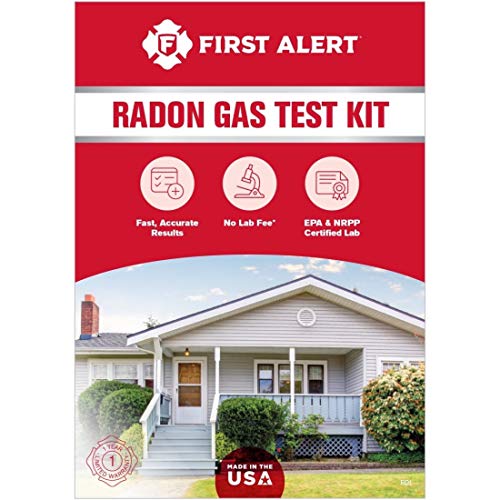 First Alert RD1 Radon Test Kit | Widely stocked; 48-hour charcoal test. | Amazon — $16.98 |
 Airthings Corentium Home | Digital monitor with a long-term average. | Amazon — $142.99 |