Outdoor Ceiling Fans: Damp vs Wet Ratings and Mounting
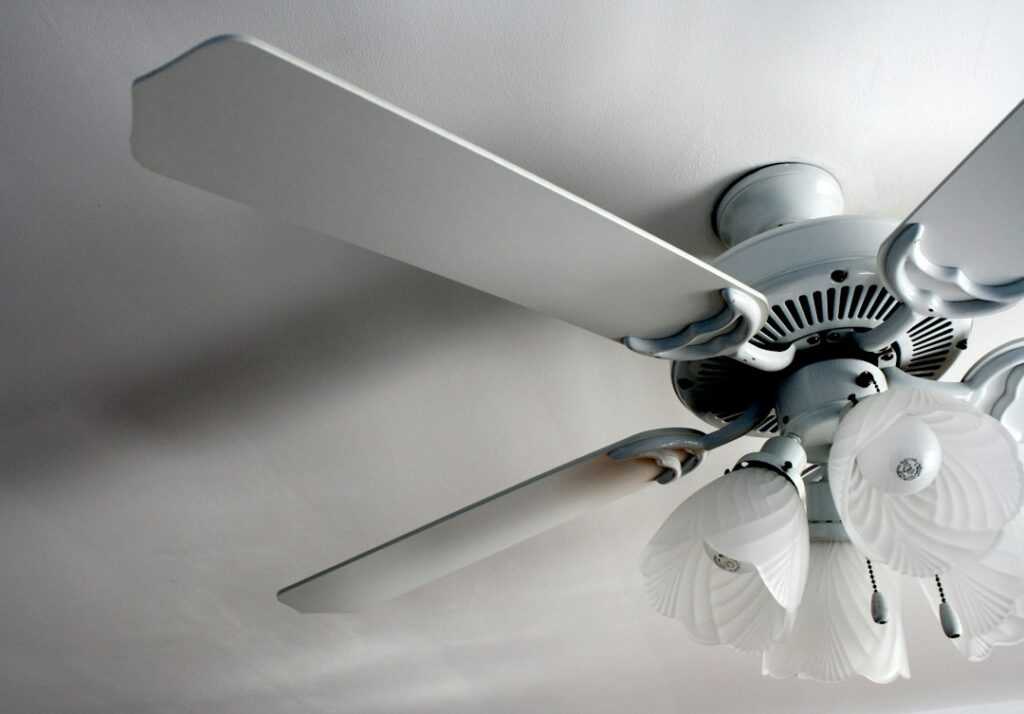
A covered porch, a pergola or a screened patio can feel ten degrees cooler with a fan moving air overhead, and on a still July afternoon along the Front Range that difference decides whether anyone uses the space. Outdoor ceiling fans look a lot like indoor models, but they live a much harder life. They face humidity, blowing rain, dust, temperature swings, high-altitude sun and, in Colorado, gusty winds and occasional wet spring snow that drifts under porch roofs. A fan built for a bedroom will often rust, warp or short out in weeks or months outside. This guide explains damp and wet ratings, how outdoor fans should be mounted on porch ceilings, wiring and GFCI considerations, energy efficiency, exposure to wind and snow, what inspectors notice and what installation may cost. Electrical work should be done by a licensed electrician under local permit rules.
Part of our Home Electrical guide — start there for the full picture →
What Makes Outdoor Ceiling Fans Different
Outdoor ceiling fans are built and listed to tolerate moisture. The difference shows up in sealed motor housings, corrosion-resistant hardware and finishes, blades made of materials such as ABS plastic or treated composites rather than unsealed wood or particleboard, and electrical components protected from water. They are tested and listed by a recognized laboratory for a specific type of location, and that listing appears on the box and the fan’s label.
The two listings that matter for outdoor use are:
- Damp-rated (damp location listed). Suitable for covered outdoor areas that see humidity and condensation but are protected from direct rain, snow and water spray. A deep covered porch, an enclosed screened porch or a covered patio well under a roof usually qualifies.
- Wet-rated (wet location listed). Suitable for spots where the fan may be directly exposed to rain, snow or water spray. Pergolas, gazebos with open sides, shallow porches, open-beam structures and spots near pools or hosed-down areas usually call for wet rating.
An indoor-only fan, labeled for dry locations, does not belong outdoors at all, even under a roof. Moisture from humid air and temperature changes can corrode internal parts and sag or warp blades over time.
Choosing between damp and wet
The question is not just “is it covered?” but “can water reach it?” Wind-driven rain and snow travel a long way under a porch roof. A useful rule of thumb many installers apply: if blowing rain or snow ever reaches the fan’s location, or the area is washed with a hose, choose a wet-rated model. Wet-rated fans cost more, but they can be used in damp locations as well, so they provide margin. A damp-rated fan in a wet spot is a mismatch.
The same location thinking applies to any light kit on the fan, and to nearby fixtures. The guide to porch lights covers damp and wet ratings for exterior light fixtures.
Mounting an Outdoor Fan on a Porch Ceiling
Support is where outdoor fan installations most often go wrong. A ceiling fan is a moving, vibrating load, and porch ceilings are often built more lightly than interior ceilings.
Fan-rated boxes
ENERGY STAR’s installation guidance advises using an appropriate UL-listed metal box marked “For Use With Ceiling Fans,” notes that if a ceiling fixture is being replaced the electrical box will most likely need to be replaced, and points out that ceiling fans can weigh as much as 50 pounds. It recommends anchoring the fan to a ceiling joist where possible, or using a special fan mounting bracket between joists. Outdoor locations add one more requirement: the box and its connections need to be suitable for the damp or wet location, with appropriate gaskets and covers.
The guide to ceiling fan installation walks through fan-rated boxes, braces and downrod selection in more detail.
Porch ceiling construction
Porch ceilings vary widely, and each type has its own mounting questions:
- Beadboard or tongue-and-groove over joists. A common look on older and craftsman-style homes. The fan needs to be fastened to framing or a brace above the boards, not to the boards themselves.
- Vinyl or aluminum soffit panels. Thin panels carry no load. A fan box must be supported by framing above the panels, and the panels need a clean cutout and trim.
- Exposed beams and pergolas. Fans may hang from a beam with a beam-mount kit, or from a box attached to a block between rafters. Open-sided structures usually need wet-rated fans and careful wire routing.
- Sloped porch ceilings. A sloped-ceiling adapter and longer downrod may be needed for blade clearance and proper hang.
Older porch roofs, especially ones added onto a house or built as a DIY project, sometimes have undersized or widely spaced framing. Water damage from years of exposure can weaken wood around the mounting point. An electrician or carpenter may need to add blocking before the fan goes up.
Clearance and blade height
Ceiling fans are typically installed with blades at least 7 feet above the floor, with more height often recommended for comfort and airflow; the fan’s instructions and local code govern the exact requirement. Porches with low ceilings may need a flush-mount or “hugger” fan. Blade clearance from walls, posts, railings, light fixtures and hanging plants also matters, since outdoor spaces tend to collect hanging baskets and string lights over time.
Wiring, GFCI and Controls
Outdoor ceiling fans connect to house wiring in a location exposed to moisture, which raises the stakes for proper wiring methods.
The Consumer Product Safety Commission’s home electrical safety checklist notes that moisture can get into outdoor outlets and cause a malfunction that may pose a shock or fire hazard, recommends weatherproof covers, and states that many local building codes require GFCIs for outside circuits when new homes are built or existing ones are renovated. Whether a hardwired fan circuit itself needs ground-fault protection depends on the code edition and the specific installation, so a licensed electrician should determine what applies. Outlets on the porch typically do require GFCI protection, and the guide to outdoor outlets explains weatherproof-while-in-use covers and receptacle requirements.
Wiring considerations commonly addressed by electricians include:
- Cable or conduit rated for the location. Wiring exposed to weather, or running through open structures, needs a wiring method suited to damp or wet conditions.
- Sealed boxes and connections. Gaskets, weatherproof covers and correct fittings keep water out of splices.
- Circuit capacity. Adding a fan to an existing lighting circuit is often fine, but adding several fans, heaters or other loads may require a new circuit.
- Grounding. Metal fan housings and boxes need a proper equipment ground.
- Permits. New outdoor wiring or a new circuit generally requires a permit in Colorado jurisdictions. Like-for-like replacements may not, depending on local rules.
Controls for outdoor fans
Wall controls let the fan and any light operate separately. Remote and receiver kits are convenient where running a second switch cable is impractical, but the receiver lives inside the fan canopy and should be the one specified for that fan. Pull chains on outdoor fans can corrode or become brittle in the sun. Some wet-rated fans include remotes and DC motors with multiple speeds.
If a porch GFCI keeps tripping after a storm, moisture in a box or fixture is a frequent cause. The guide on a GFCI outlet that is not working covers basic troubleshooting before calling an electrician.
Wind, Snow and Sun Exposure on the Front Range
Colorado’s climate adds stresses that brochures for humid coastal markets do not always cover.
- Wind. Chinook and downslope winds can gust strongly along the foothills. A fan in an open pergola or on a shallow porch can windmill even when turned off, and repeated gusts can loosen mounting hardware or set up wobble. Some owners use fans with blades that are stiff and well balanced, and they check mounting screws after windy seasons.
- Snow. Wet spring snow can drift under porch roofs, coating blades and motor housings. Wet-rated fans handle this better, but heavy ice or snow on blades can still unbalance a fan if it is switched on before clearing.
- Sun. High-altitude UV fades finishes and can make some plastic blades brittle over time. Shaded porches extend fan life; fans in direct sun benefit from UV-resistant materials.
- Dust and insects. Dry, dusty conditions and insect nests in canopies are common. Periodic cleaning keeps blades balanced and motors cool.
- Temperature swings. Expansion and contraction loosen screws over time. A seasonal check of blade screws and canopy fasteners is a reasonable habit.
Wobble is a symptom worth acting on. A wobbling fan stresses its mount and box. The guide to ceiling fan balance explains how to diagnose and correct wobble with blade alignment and balancing kits.
Sizing and Choosing an Outdoor Fan
Outdoor spaces are usually larger, more open and breezier than indoor rooms, so a fan that feels strong in a bedroom may barely register on a wide patio. A few specifications help narrow the choice.
Blade span and coverage
Fan size is measured as blade span, the diameter of the circle the blades sweep. Small porches and entry stoops often suit compact fans, while long porches and large patios usually work better with either one large fan or two or more medium fans spaced along the length. Manufacturers publish sizing charts that match blade span to floor area; those charts are a reasonable starting point, adjusted for ceiling height and how open the sides are.
Airflow and efficiency figures
Fan boxes commonly list airflow in cubic feet per minute (CFM), power draw in watts and airflow efficiency in CFM per watt. Higher airflow moves more air, and higher efficiency means more air per unit of electricity. Comparing those numbers across models is more useful than comparing motor size or blade count alone.
Features that matter outdoors
- Sealed, corrosion-resistant hardware such as stainless or coated fasteners.
- Blade material that resists moisture and UV, such as ABS or other outdoor-rated composites.
- Enclosed light kits listed for the same location as the fan, if a light is wanted.
- Remote or wall control options that suit how the space is wired.
- Downrod choices that fit the ceiling height while keeping blades at a safe distance above the floor.
Matching the fan’s finish to the house is a matter of taste, but darker finishes tend to show dust and pollen less, while lighter finishes may show rust staining sooner if hardware is not corrosion-resistant.
Energy Efficiency and ENERGY STAR Fans
ENERGY STAR certifies ceiling fans that meet its efficiency criteria and states that certified ceiling fans are up to 44% more efficient than conventional fans. Many certified models include integrated LED light kits. Outdoor-rated models appear among certified fans, so owners can look for both the location listing and the ENERGY STAR label.
ENERGY STAR’s usage tips note that ceiling fans cool people, not rooms, and recommend turning a fan off when the space is unoccupied. That point is especially relevant outdoors, where a fan left running all evening on an empty porch uses electricity without benefit. Fan direction also matters: the guide to ceiling fan direction covers which way blades should spin for a cooling breeze.
DC-motor fans tend to use less power than older AC-motor designs, run quieter and often offer more speed settings. They usually cost more upfront.
What Inspectors Notice About Outdoor Ceiling Fans
The ASHI Standard of Practice directs inspectors to inspect a representative number of installed lighting fixtures, switches and receptacles, along with ground fault and arc fault circuit interrupters. Porch fans and their controls often get operated during that sample. Conditions commonly noted include:
- Indoor-rated fans installed in exposed outdoor locations.
- Rust, corrosion or water staining on the motor housing, canopy or box.
- Warped, cracked or sagging blades.
- Wobble, noise or loose mounting.
- Fans hung from soffit panels or light boxes without visible fan support.
- Exposed wiring, missing canopy covers or open splices.
- Blades too low or too close to posts, railings or other fixtures.
- Inoperable fans, lights or controls.
- Water damage or rot in the porch ceiling around the fan.
An inspector does not disassemble fans or verify the box rating behind a canopy, so concerns about support or wiring are usually referred to an electrician. The electrical inspection hub explains how electrical systems are evaluated during an inspection.
What Outdoor Ceiling Fans May Cost
Costs depend on rating, size, motor type, features and how much wiring and framing work is needed. These are general 2026 estimates.
- Damp-rated fan: basic models often start around the low hundreds of dollars, with higher-end designs costing more.
- Wet-rated fan: typically priced somewhat higher than comparable damp-rated models, especially with DC motors and remotes.
- Replacing an existing fan with a fan-rated box in place: labor commonly runs from roughly a hundred to a few hundred dollars.
- Replacing a light with a fan: adding a fan-rated box and brace, and possibly blocking, increases labor.
- New fan where no wiring exists: running cable or conduit, adding a switch and possibly a new circuit can reach several hundred to more than a thousand dollars, depending on access and finishes.
- Porch ceiling repairs: replacing water-damaged beadboard or soffit, or adding framing, varies widely by size and material.
When to Call a Professional
Changing blades or cleaning a fan is a homeowner task. A licensed electrician is the better choice when:
- Installing a fan where a light or nothing existed before.
- The existing box is not visibly fan-rated, or the fan wobbles despite balancing.
- Water has entered the fan, box or switch.
- GFCIs or breakers trip when the fan runs.
- New wiring, switches or circuits are needed.
For buyers, a porch fan is a small item, but it can reveal bigger things, such as moisture in the porch roof or improvised wiring. The hiring process guide covers how to plan an inspection and follow-up evaluations.
References
- Ceiling Fans — ENERGY STAR
- Ceiling Fan Installation and Usage Tips — ENERGY STAR
- Home Electrical Safety Checklist — U.S. Consumer Product Safety Commission
- ASHI Standard of Practice for Home Inspections — American Society of Home Inspectors
Frequently asked questions
What is the difference between damp-rated and wet-rated outdoor ceiling fans?
Damp-rated fans are listed for covered areas that see humidity but are protected from direct rain and snow. Wet-rated fans are listed for locations where water can reach the fan directly, such as pergolas or shallow porches. Wet-rated fans can also be used in damp locations.
Can an indoor ceiling fan be used on a covered porch?
It is not recommended. Indoor fans are listed for dry locations, and outdoor humidity and temperature swings can corrode parts and warp blades. A fan listed for damp or wet locations is the appropriate choice.
Does an outdoor ceiling fan need a special electrical box?
It needs a box listed and marked for fan support, securely attached to framing or a fan brace, and suitable for the damp or wet location. Many porch light boxes are not designed to carry a fan.
Do outdoor ceiling fans need GFCI protection?
Requirements depend on the locally adopted code and how the fan is installed. Porch outlets typically need GFCI protection, and many codes require GFCIs on outdoor circuits. A licensed electrician can confirm what applies.
How much does it cost to install an outdoor ceiling fan?
Fans often start in the low hundreds of dollars, with wet-rated and DC-motor models costing more. Labor to swap an existing fan may be roughly a hundred to a few hundred dollars, while new wiring can exceed a thousand. These are general 2026 estimates.
Planning to buy a home with a porch, pergola or patio full of fans and fixtures? Talk with us about connecting with a Front Range inspector who checks outdoor electrical work.