Outdoor Outlet: GFCI, In-Use Covers and Weatherproof Boxes
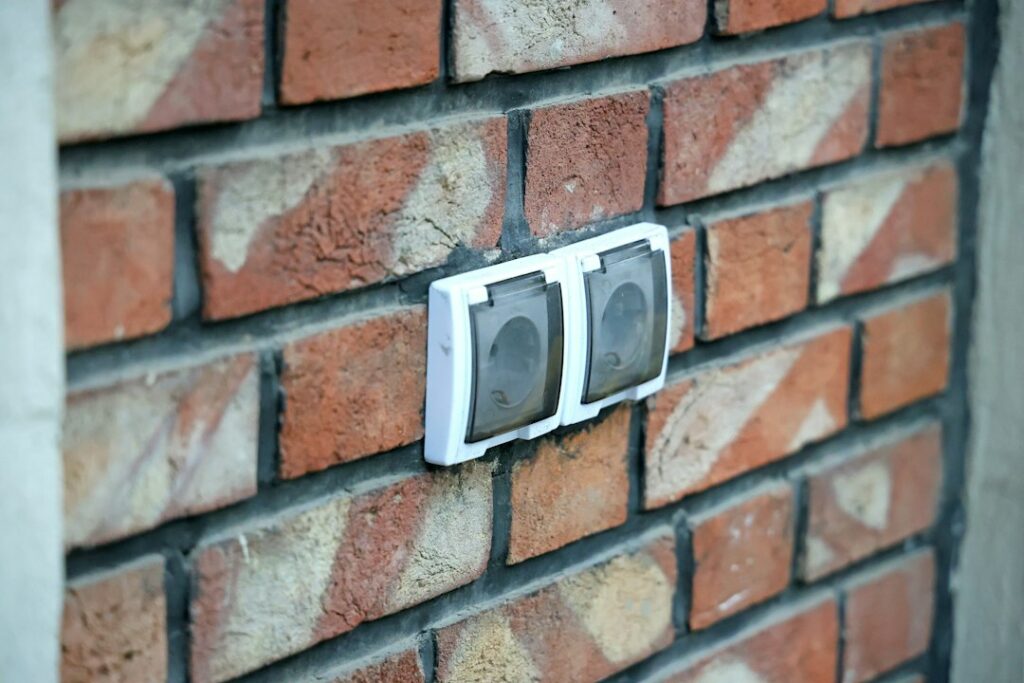
An outdoor outlet looks like a simple thing: a receptacle on the back wall of the house, a cover that flips up, and somewhere to plug in a leaf blower or a string of patio lights. In practice, exterior receptacles take more abuse than almost any other part of a home’s wiring. They sit in rain, snow and direct sun, they get bumped by lawn equipment, and they often power cords that run across wet grass. On the Colorado Front Range, they also ride through freeze-thaw cycles, hail and intense high-altitude UV that cracks plastic covers faster than many owners expect. This guide explains how exterior receptacles are supposed to be protected, what the different cover styles do, where problems tend to show up on siding, how holiday lighting and extension cords fit in, and what a home inspector typically checks during a standard inspection.
Part of our Home Electrical guide — start there for the full picture →
Electrical problem? Talk to a licensed electrician.
📞 Call (877) 560-2714What a Safe Outdoor Outlet Needs
A safe exterior receptacle generally combines four layers of protection. First, the circuit needs ground-fault protection, usually from a GFCI receptacle or a GFCI breaker. Second, the receptacle itself should be a weather-resistant (WR) type designed to tolerate moisture and temperature swings. Third, the box and cover need to keep water out, and in many locations that means an in-use cover that stays closed while a cord is plugged in. Fourth, the box should be securely mounted and sealed to the wall so water cannot run behind siding or into the wall cavity.
Exact requirements depend on the electrical code version adopted by each city or county, and requirements have tightened over successive code cycles. A home built in the 1970s may have an exterior receptacle with no ground-fault protection at all, while a newer home in Douglas or Larimer County will typically have GFCI protection, a WR receptacle and an in-use cover from the start. Older installations are not automatically illegal, but they are frequently flagged as safety upgrades during a home inspection, and many electricians recommend bringing them up to current practice when a receptacle is replaced.
The quick checklist most homeowners can use:
- Press the TEST button on the GFCI that protects the outlet. Power at the outdoor receptacle should shut off. Press RESET to restore it.
- Look for “WR” stamped on the face of the receptacle.
- Check whether the cover can close with a plug inserted. If it cannot, it is a flip cover rather than an in-use cover.
- Look for cracked plastic, missing gaskets, loose boxes, rust or gaps where the box meets the siding.
GFCI Protection Outdoors
A ground-fault circuit interrupter compares current flowing out on the hot conductor with current returning on the neutral. If some of that current leaks elsewhere, such as through a wet extension cord or through a person standing on damp ground, the device trips and cuts power in a fraction of a second. That is why ground-fault protection is the single most important safety feature for any exterior receptacle.
The protection can come from several places:
- A GFCI receptacle at the outdoor location. The TEST and RESET buttons are right on the outlet. This is convenient, though the device itself is exposed to the weather.
- A GFCI receptacle upstream. A GFCI in a garage, bathroom or basement may protect the outdoor receptacle “downstream” on the same circuit. Owners often do not realize this, which is why a dead patio outlet is sometimes fixed by finding and resetting a GFCI in the garage. Look for a small “GFCI Protected” sticker on the downstream receptacle.
- A GFCI breaker in the panel. The whole circuit is protected from the panel, and the TEST button lives on the breaker. See the guide to GFCI breakers for how these differ from receptacle-type devices.
If an outdoor receptacle is dead, the first step is to find the protecting device and reset it. If it will not reset, or trips again immediately, water intrusion or a damaged cord is a common cause. Unplug everything, let the box dry, and try again. Repeated nuisance tripping after rain is often a sign that the cover or box seal has failed. The troubleshooting steps in GFCI outlet not working walk through the most common scenarios, including devices that have reached the end of their service life and no longer trip when tested.
GFCI devices do wear out. Many manufacturers recommend testing them monthly. A GFCI that does not cut power when the TEST button is pressed should be replaced, since it may no longer provide protection even though the receptacle still delivers power.
Weather-Resistant and Tamper-Resistant Receptacles
Weather-resistant (WR) receptacles
A weather-resistant receptacle is built with materials meant to hold up to moisture, UV exposure and temperature extremes. Typical features include corrosion-resistant metal parts and UV-stabilized plastic. The letters “WR” are usually molded into the face. Standard interior receptacles installed outdoors tend to corrode, crack and lose their grip on plugs, which can lead to poor connections and heat at the contacts.
On the Front Range, the combination of strong sun at elevation and repeated freezing can be hard on plastic. Covers and receptacle faces on south- and west-facing walls often chalk, yellow or crack within a decade. A brittle receptacle face that is cracked around the slots should be replaced rather than taped over.
Tamper-resistant (TR) receptacles
Tamper-resistant receptacles have internal shutters that only open when both prongs of a plug press in at the same time. That makes it much harder for a child to push a key, hairpin or stick into one slot. The U.S. Fire Administration recommends installing tamper-resistant outlets in homes with young children. Many current receptacles intended for outdoor use are marked both TR and WR, and a GFCI device can carry both ratings as well.
For families with toddlers, exterior receptacles on patios and decks deserve the same attention as interior ones. The guide to outlet covers explains plug-in caps, sliding plates and when a TR receptacle makes those accessories less necessary. The Consumer Product Safety Commission’s childproofing guidance notes that outlet covers and plates can help prevent electrical shock, but also cautions that outlet protectors should not be easy for children to remove and should be large enough not to be a choking hazard.
In-Use “Bubble” Covers vs Flip Covers
The cover is where many exterior receptacles fall short. There are two broad styles.
Flip covers (weatherproof when closed)
A flat flip cover snaps shut over the receptacle and seals reasonably well when nothing is plugged in. Once a cord is inserted, the lid cannot close, leaving the receptacle face exposed to rain and snowmelt. Flip covers are generally considered acceptable only where a cord is used briefly and then removed, such as plugging in a hedge trimmer for twenty minutes. Older homes often have these on every exterior receptacle.
In-use covers (weatherproof while in use)
An in-use cover, often called a bubble cover or extra-duty cover, is a deeper hood that closes over the plug while the cord is connected. The cord exits through a notch or knockout at the bottom. These are the expected choice for receptacles in wet locations where something may stay plugged in, such as a fountain pump, holiday lights, a heated bird bath or a low-voltage lighting transformer.
Install the hood so the cord exits at the bottom, choose a depth that fits the plug or transformer, and replace cracked or hail-damaged hoods and flattened gaskets promptly.
Box Mounting on Siding, Brick and Stucco
Many exterior receptacle failures start with the box rather than the receptacle. Water gets behind the siding, into the box, or into the wall cavity, and the result can be corrosion, tripping, or rot that goes unnoticed until siding is removed.
Lap siding
Mounting a flat cover directly on the sloped face of lap siding leaves gaps that rain can enter. The better practice is a mounting block, a small flat platform that integrates with the siding and housewrap, so the box and cover sit on a flat, flashed surface. Vinyl and fiber-cement siding manufacturers make blocks sized for receptacle boxes. A bead of exterior sealant across the top and sides of the cover plate helps, though many installers leave the bottom unsealed so any water that gets in can drain.
Brick, stone and stucco
On masonry, boxes are often surface-mounted with conduit. Inspectors look for secure anchoring, sealed conduit entries and covers that are not pulling away. On stucco, a box that has been patched around with mismatched material may hide cracks that channel water. Common Front Range stucco problems, such as cracking from movement and freeze-thaw, can affect the seal around exterior electrical penetrations.
When an exterior box needs to be relocated or added, the wiring connections inside walls and attics still need accessible, covered boxes. The guide to junction boxes covers buried splices, missing covers and other issues that sometimes turn up when outdoor circuits are extended.
Holiday Lights, Extension Cords and Seasonal Loads
Outdoor receptacles see their heaviest use in November and December, when roof lines, trees and yard displays come out. Federal fire and product safety agencies publish straightforward guidance for this season:
- The U.S. Consumer Product Safety Commission advises never stringing together more than three sets of incandescent lights and never overloading electrical outlets.
- The U.S. Fire Administration recommends inspecting holiday lights each year before putting them up, throwing away strands with frayed or pinched wires, and reading the manufacturer’s instructions for how many strands can be connected.
- The U.S. Fire Administration also advises replacing worn, old or damaged extension cords right away, avoiding places where cords can be damaged or pinched, and using power strips with internal overload protection.
Beyond those agency tips, a few habits reduce problems with outdoor receptacles specifically. Use extension cords and lights marked for outdoor use. Keep connections between cords off the ground, or inside a weatherproof connector box, so they do not sit in puddles or melting snow. Avoid running cords through windows or doors where they can be pinched. If a GFCI keeps tripping during wet weather, treat it as a warning rather than an annoyance; it is responding to leakage somewhere in the cords, connectors or fixtures.
EV Chargers, Outdoor Kitchens and Landscape Lighting
Outdoor receptacles are increasingly asked to handle larger or longer-running loads. A standard 15- or 20-amp exterior receptacle was not intended for every one of them.
Electric vehicles
Many EV owners start by plugging a portable Level 1 charger into an existing garage or exterior receptacle. That can work, but a long charging session draws significant current for hours, which exposes worn receptacles and loose connections. Using an extension cord with an EV charger is typically discouraged by manufacturers. For daily charging, most households move to a dedicated circuit, often 240 volts. The guide to EV charger installation covers circuit sizing, permits and hardwired versus plug-in units.
Outdoor kitchens
An outdoor kitchen may include a refrigerator, a grill igniter, lighting, a pizza oven or a beverage cooler, all in a wet location. These setups usually need dedicated circuits, GFCI protection, weather-resistant receptacles and in-use covers, plus planning for where water from cleaning and rain will go. The USFA advises plugging major appliances directly into a wall outlet and never using an extension cord with a major appliance, which applies outdoors as much as indoors. See the guide to outdoor kitchens for layout and utility considerations.
Landscape lighting
Low-voltage landscape lighting usually runs from a transformer that plugs into an exterior receptacle, often with a timer or photocell. The transformer should be mounted per the manufacturer’s instructions, the receptacle needs an in-use cover deep enough to close over the plug, and the low-voltage cable should be buried or protected where it crosses walkways. The guide to landscape lighting covers line-voltage versus low-voltage systems and the most common installation problems.
Before swapping in a receptacle with built-in USB ports for patio convenience, confirm it is rated for wet or damp locations; the guide to USB outlets explains the ratings.
What Home Inspectors Check on Exterior Receptacles
The American Society of Home Inspectors (ASHI) Standard of Practice requires inspectors to inspect a representative number of installed lighting fixtures, switches and receptacles, and to inspect ground fault circuit interrupters and arc fault circuit interrupters. In practice, that usually means an inspector will:
- Test exterior receptacles with a plug-in tester for power, polarity and grounding.
- Operate the GFCI TEST button, or use a tester with a ground-fault function, and confirm power actually shuts off.
- Note receptacles that have no apparent ground-fault protection.
- Look at covers, gaskets and the condition of the receptacle face.
- Note loose boxes, missing mounting blocks, gaps at siding, and exposed or damaged cable.
- Report receptacles that are dead or could not be reset.
The same standard lists items inspectors are not required to evaluate, including low-voltage wiring systems and components and ancillary wiring that is not part of the primary electrical power distribution system. Landscape lighting runs, low-voltage transformers’ secondary wiring and some outdoor entertainment wiring may therefore receive only limited comment. The standard also does not require inspectors to measure amperage, voltage or impedance, so questions about whether a circuit can support a hot tub or an EV charger belong with a licensed electrician.
Most outdoor findings are inexpensive individually, but a pattern of missing protection, unsealed boxes and DIY extensions can point to broader wiring issues worth an electrician’s review. The electrical inspection hub and the main guide to hiring a home inspector explain how such findings are typically reported.
Costs to Repair or Add an Outdoor Outlet
Costs vary with access, wall type, distance from the panel, local permit fees and electrician rates, and Front Range labor rates differ between metro Denver, Colorado Springs and smaller mountain towns. Treat the ranges below as rough planning figures rather than quotes:
- Replacing an in-use cover: the part itself is often modest, roughly $15 to $40 for a quality hood. Installation may be a simple DIY task on a de-energized circuit or a short service call.
- Replacing an existing receptacle with a WR GFCI device: commonly in the low hundreds of dollars when done by an electrician, depending on trip charges and the condition of the box.
- Adding a new exterior receptacle near an existing circuit: often several hundred dollars, more if wall fishing, masonry drilling or patching is involved.
- New dedicated circuits for outdoor kitchens, hot tubs or EV chargers: can run from several hundred to a few thousand dollars, depending on amperage, trenching, panel capacity and whether a panel upgrade is needed.
Permits are commonly required for new circuits and for many exterior additions. Even when a repair looks minor, working on energized circuits is dangerous; turning off the breaker and verifying the circuit is dead with a non-contact tester or meter is the minimum precaution, and hiring a licensed electrician is the safer route for anything beyond swapping a cover.
More Questions About Outdoor Outlets
Can an outdoor outlet be added to a brick house?
Yes, an outdoor outlet can be added to a brick house, but the job takes more labor than on siding because the opening must be cut or drilled through masonry. Electricians often cut the opening in a mortar joint where possible, since mortar is easier to patch than brick.
A common alternative is surface-mounting a weatherproof box on the brick and feeding it from inside through a small drilled hole. Either way, the box needs sealing at the masonry, GFCI protection and an in-use cover. In older brick homes, checking for lead paint on any painted brick before drilling is a sensible precaution.
Can I install an outdoor outlet myself?
Some homeowners install an outdoor outlet themselves where local rules allow homeowner electrical permits, but the work carries shock and fire risk if done wrong. Many jurisdictions require a permit and inspection for new outdoor receptacles.
A correct installation needs GFCI protection, a weather-resistant and tamper-resistant receptacle, a wet-location box and an in-use cover, plus proper sealing at the wall. Mistakes such as reversed line and load wires on a GFCI or an unsealed box are common. A licensed electrician is the safer choice for new circuits.
How high should an outdoor outlet be off the ground?
An outdoor outlet is commonly placed somewhere around 12 to 18 inches or higher above finished grade or deck surface, high enough to stay clear of snow, splashing and standing water. Local codes and practice vary, so an electrician or building department can confirm requirements.
Practical placement also matters. Outlets near patios, decks and front entries are used most for lights and tools. Avoid spots where sprinklers, downspouts or roof drip lines hit the cover. For snowy climates, mounting a bit higher keeps the receptacle accessible all winter.
Why does my outdoor outlet have no power?
An outdoor outlet with no power most often has a tripped GFCI, either at the outlet itself or at an upstream GFCI in a garage, bathroom or basement. Pressing the reset button on each GFCI in the house often restores power.
If the GFCI will not reset, moisture in the box, a damaged cord or a failed device may be the cause. A tripped breaker at the panel is another possibility. Repeated trips after rain usually mean water is getting into the box, which needs a better cover or replacement.
References
- ASHI Standard of Practice for Home Inspections — American Society of Home Inspectors
- Appliance and Electrical Fire Safety — U.S. Fire Administration
- Holiday Fire Safety — U.S. Fire Administration
- Holiday Safety — U.S. Consumer Product Safety Commission
- Childproofing Your Home — U.S. Consumer Product Safety Commission
Frequently asked questions
Does an outdoor outlet need to be GFCI protected?
Current electrical codes generally require ground-fault protection for exterior receptacles, and inspectors routinely flag outdoor outlets without it. Protection can come from a GFCI receptacle at the outlet, a GFCI upstream on the same circuit, or a GFCI breaker in the panel.
What is the difference between a flip cover and an in-use cover?
A flip cover only seals when nothing is plugged in. An in-use or bubble cover is a deeper hood that closes over the plug while a cord is connected, so it is the better choice for anything left plugged in, such as holiday lights or a landscape lighting transformer.
Why does my outdoor outlet stop working after rain?
Water in the box, a failed cover gasket, or a wet cord or connector can cause leakage current that trips the GFCI. Unplug everything, let it dry, and reset the protecting GFCI. Repeated tripping usually points to a cover, box or cord that needs repair.
How many strands of holiday lights can be plugged into one outdoor outlet?
The CPSC advises never stringing together more than three sets of incandescent lights and never overloading outlets. The USFA recommends reading the manufacturer's instructions for the number of strands that can be connected, since limits vary by product.
Can an EV charger plug into an existing outdoor outlet?
A portable Level 1 charger can plug into a standard receptacle in good condition, but long charging sessions stress worn outlets and extension cords are generally discouraged. Many owners install a dedicated circuit, often 240 volts, planned by a licensed electrician.
Can an outdoor outlet be on the same circuit as indoor outlets?
Yes, an outdoor outlet can share a circuit with indoor outlets in many homes, as long as the outdoor receptacle has GFCI protection and the circuit is not overloaded. High-draw outdoor loads such as hot tubs and EV chargers need their own dedicated circuits.
What type of wire is used for outdoor outlets?
Outdoor outlets typically use wire rated for wet locations, such as UF cable for direct burial or individual THWN conductors in conduit. Standard indoor NM cable is not rated for wet or buried use. An electrician chooses wire gauge based on breaker size and run length.
Do outdoor outlets need to be tamper resistant?
Yes, outdoor receptacles in dwelling units generally need to be both tamper resistant and weather resistant under current electrical code. Older homes may have outlets that predate these rules, and replacing them with WR/TR devices is a common, inexpensive upgrade.
Buying a Front Range home with a patio, deck or outdoor kitchen? Contact us to be matched with a local inspector who will test the exterior receptacles and GFCI protection as part of the inspection.