What Is a GFCI Outlet? How It Works, Where It’s Required, Costs
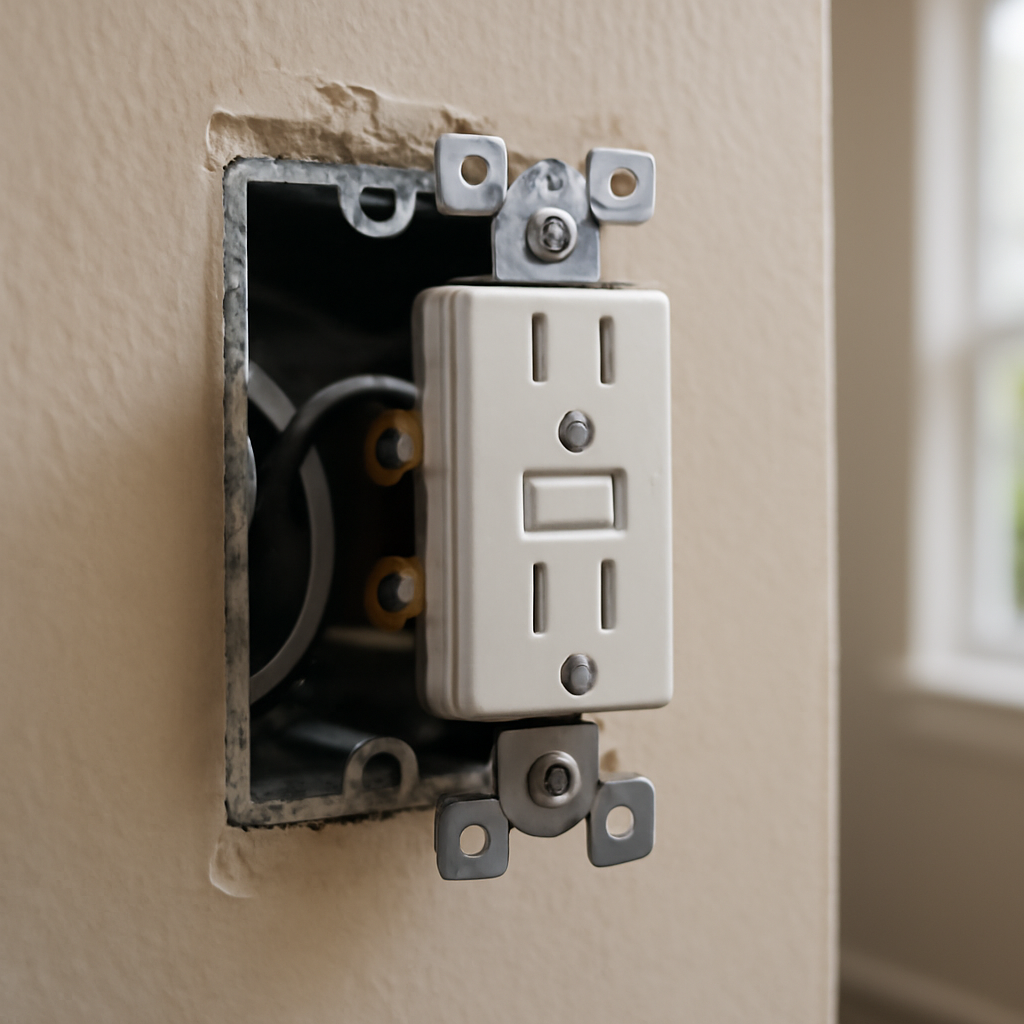
A GFCI outlet is an electrical receptacle with a built-in safety device that shuts off power in a fraction of a second when it senses electricity leaking out of the circuit, for example through a person who is touching a faulty appliance near water. GFCI stands for ground-fault circuit interrupter, and you can usually recognize one by the TEST and RESET buttons in the middle of the faceplate. If you are wondering what is a GFCI outlet because a home inspection report flagged a missing or failed one, the short version is that these devices are one of the most effective shock-prevention tools in a house and are expected in kitchens, bathrooms, garages, basements and outdoors. This guide explains how a GFCI works, the main types, the terms on packaging and quotes, typical costs, testing and maintenance, common problems and what a home inspector checks. It summarizes general guidance as of 2026; electrical work should be done by a licensed electrician following the code adopted in your area.
Part of our Home Electrical guide — start there for the full picture →
Electrical problem? Talk to a licensed electrician.
📞 Call (877) 560-2714What a GFCI Outlet Does, in Plain Terms
Normal household circuits are protected by breakers or fuses in the panel. Those devices protect the wiring: they trip when too much current flows, such as during a short circuit or an overload, and they prevent wires from overheating. They are not designed to protect a person. The current that can seriously injure someone is far smaller than the current it takes to trip a standard 15- or 20-amp breaker.
A GFCI fills that gap. OSHA’s electrical guidance describes a ground fault as a break in the low-resistance grounding path, after which current may take an alternative path to the ground through the user, resulting in serious injuries or death. It describes the GFCI as a fast-acting circuit breaker designed to shut off electric power in the event of a ground fault within as little as 1/40 of a second.
In other words, a regular breaker watches for too much current, while a GFCI watches for current going somewhere it should not. That is why the two are complementary rather than interchangeable.
How a GFCI Works, Step by Step
Inside every GFCI is a small sensing coil that both circuit conductors, hot and neutral, pass through. The sequence looks like this:
- Current flows out on the hot wire. When you plug in a hair dryer and turn it on, current travels from the panel through the hot conductor to the appliance.
- Current returns on the neutral wire. In a healthy circuit, the same amount of current comes back on the neutral.
- The GFCI compares the two. The sensing coil continuously measures any difference between outgoing and returning current. OSHA explains that when the amount going differs from the amount returning by approximately 5 milliamperes, the GFCI interrupts the current.
- A difference means leakage. If some current is not returning on the neutral, it is leaking somewhere else, possibly through water, a damaged cord or a person.
- The device trips. A spring-loaded mechanism opens the contacts, cutting power to the outlet and to anything wired downstream of it. The RESET button pops out.
- Someone resets it. Once the cause is removed, pressing RESET restores power. If the fault is still present, it should trip again right away.
Two limits are worth knowing. First, OSHA notes that a GFCI will not protect against line contact hazards, such as a person holding a hot and a neutral wire in each hand; in that case the current goes out and comes back normally, so the device sees no imbalance. Second, the person may still feel a shock before the device trips; the goal is that the shock is brief enough not to be harmful.
Line and load terminals
A GFCI receptacle has two sets of screw terminals. The LINE terminals connect to the wires coming from the panel. The LOAD terminals are optional and feed other ordinary outlets further down the circuit. When an electrician uses the load side, those downstream outlets are also protected, and they will lose power whenever the GFCI trips. This is why a dead bathroom outlet is sometimes fixed by pressing RESET on a GFCI in another bathroom, the garage or even outdoors. Our guide to a GFCI outlet not working walks through that hunt in detail.
Main Types of GFCI Protection
A “GFCI outlet” is only one way to get ground-fault protection. An electrician may choose a different device depending on the circuit, the location and the panel.
| Type | Where it is installed | What it protects | Good fit for | Trade-offs |
|---|---|---|---|---|
| GFCI receptacle (outlet) | In the wall box, replacing a standard outlet | That outlet, plus downstream outlets if wired on the load side | Kitchens, bathrooms, laundry, garage, outdoor spots | Easy to test and reset where you use it; uses more box space |
| GFCI circuit breaker | In the electrical panel | The entire branch circuit | Hard-to-reach outlets, hot tubs, circuits with many outlets | Reset is at the panel; costs more than a receptacle |
| Dual-function AFCI/GFCI breaker | In the panel | Whole circuit against ground faults and dangerous arcing | Kitchens and laundry areas where both protections are expected | Highest device cost; must match the panel brand |
| Blank-face (deadfront) GFCI | In a wall box, with no plug slots | Downstream outlets or equipment | When the reset button needs to be accessible but the outlets are not | Less common; still needs a labeled location |
| Portable or cord-connected GFCI | Plugs into an outlet or is built into a cord | Only what is plugged into it | Temporary outdoor work, tools, older homes awaiting upgrades | Not a permanent substitute for required protection |
For a closer look at the panel-side option, see our guide to the GFCI breaker. If the question is about arcing rather than shock, the guide to the arc-fault breaker explains AFCIs.
GFCI versus AFCI
The two acronyms are easy to mix up. NFPA’s electrical safety guidance explains that ground-fault circuit interrupters are used to reduce the risk of shock and protect people from hazardous ground faults, for example from defective appliances or corded equipment, while arc-fault circuit interrupters shut off electricity when they sense abnormal arcing on the electrical system, a fire risk. A home may need both on the same circuit, which is where dual-function devices come in.
GFCI Terms You Will See on Labels and Quotes
- Ground fault: current leaving its intended path and flowing to ground through something else, such as water, a metal case or a person.
- Trip threshold: the leakage level at which the device opens. OSHA describes the trigger as a difference of approximately 5 milliamperes. Residential personnel-protection GFCIs are commonly listed as “Class A,” which trip in roughly the 4 to 6 milliampere range.
- Self-test or auto-monitoring: many GFCIs sold in recent years periodically check their own circuitry and may indicate a failure with a light or by refusing to reset. They still need the manual monthly test.
- Tamper-resistant (TR): internal shutters that block objects other than a plug. Many GFCI receptacles are also TR rated, which is typically expected in new residential work.
- Weather-resistant (WR): a rating for outlets in damp or wet locations, made with corrosion-resistant parts and UV-stable materials.
- 15 A versus 20 A: the receptacle rating, which must suit the circuit. A 20-amp receptacle has a T-shaped neutral slot.
- “GFCI Protected Outlet” sticker: a label placed on a regular outlet that is protected by an upstream GFCI. It tells future users where the protection comes from.
- “No Equipment Ground” sticker: used when a GFCI replaces an old two-prong outlet on a circuit without a ground wire. The GFCI provides shock protection, but it does not create a true equipment ground.
Where GFCI Protection Is Expected
GFCI requirements come from the National Electrical Code, which states and cities adopt and amend on their own schedules. Requirements were introduced in the 1970s for a few locations and have expanded steadily with each code cycle. For homeowners, NFPA’s plain-language guidance is a good summary: it recommends that GFCIs be installed by a licensed electrician in bathrooms, kitchens, garages and basements, and that all outdoor receptacles be GFCI protected.
Other locations commonly addressed in recent code editions include laundry areas, areas near sinks outside the kitchen and bathroom, crawl spaces, boathouses, and outlets serving hot tubs, pools and some appliances. Our guide to the bathroom GFCI outlet covers the details for that room.
Two points are worth keeping straight:
- Older homes are not automatically “out of code.” Codes generally apply when work is done. A 1980s house may legally have fewer GFCIs than a new one. Inspectors still recommend upgrading because the safety benefit is the same regardless of the home’s age.
- Local adoption varies. Front Range cities and counties may be on different code editions with local amendments, so a licensed electrician or the local building department is the authority for what a specific project requires.
Typical GFCI Costs and Lifespan
Ground-fault protection is one of the less expensive safety upgrades in a home. The ranges below are typical national figures for 2026, not quotes.
| Item | What is usually included | Typical national range, 2026 (get local quotes) |
|---|---|---|
| GFCI receptacle, device only | 15 A or 20 A, often TR and WR rated | About $15 to $40 |
| GFCI receptacle installed by an electrician | Replace an existing outlet, test, label downstream outlets | About $100 to $250 per outlet |
| Several GFCIs on one visit | Typical after-inspection upgrade list | Lower per-outlet cost; often about $75 to $175 each after the trip charge |
| GFCI breaker installed | Breaker matched to panel brand, labeling | About $150 to $350 |
| Dual-function AFCI/GFCI breaker installed | Breaker, testing, any neutral rewiring at the panel | About $175 to $400 |
| New outdoor GFCI outlet on a new circuit | Wiring, weatherproof in-use cover, permit where required | About $250 to $800 or more |
The main cost drivers are the number of outlets, whether wiring is already in place, box size (GFCIs are deeper than standard outlets, so a crowded box may need to be replaced), panel brand and condition for breaker options, permit requirements and whether an outlet is hard to reach. Our guide to GFCI outlet installation covers what the job involves.
On lifespan, a common rule of thumb is that GFCI receptacles last roughly 10 to 15 years, sometimes less in outdoor, damp or heavily used locations. Lightning, power surges and moisture can shorten that. Age alone is not a reason to replace a device that passes its test, but a GFCI that will not trip or will not reset should be replaced promptly.
Testing and Maintenance Basics
NFPA advises testing AFCIs and GFCIs after installation and once a month thereafter, according to the manufacturer’s recommendations. Testing takes a minute:
- Plug a lamp or nightlight into the GFCI and turn it on.
- Press TEST. The RESET button should pop out and the lamp should go off.
- If the GFCI protects downstream outlets, check that those lost power too.
- Press RESET firmly. The lamp should come back on.
- If the device does not trip, will not reset or the lamp stays on after pressing TEST, the protection has failed and the device should be replaced by an electrician.
A plug-in tester with its own GFCI test button is a handy second check, especially for outlets protected by an upstream device. Our guide to the GFCI tester explains how these tools work and their limits. Note that a plug-in tester relies on a ground wire, so on ungrounded circuits its GFCI button may not trip a properly working device; use the device’s own TEST button there.
NFPA also cautions that a defective device can create a false sense of security, which is the strongest argument for regular testing.
Common GFCI Problems
Nuisance tripping
A GFCI that trips repeatedly is usually doing its job. Common causes include moisture in an outdoor box or cover, a worn appliance cord, an old refrigerator or freezer with insulation breakdown, a damaged extension cord, or too many devices on one protected circuit adding up small amounts of leakage. Unplug everything, reset, then add devices back one at a time to find the culprit.
Will not reset
The device may have no power (a tripped breaker or upstream GFCI), the fault may still be present, the line and load wires may be reversed, or the GFCI may have reached end of life. Many newer models will not reset at all if they are miswired or their internal test fails.
Dead outlets with no visible GFCI
One GFCI can protect outlets in several rooms. Check bathrooms, the garage, the basement, the kitchen and outdoor outlets, and look for a GFCI breaker in the panel.
Missing protection
Inspection reports often call out standard outlets near sinks, in garages, in unfinished basements and outdoors. In older homes, two-prong outlets are another common item. Replacing them with GFCIs and labeling them “No Equipment Ground” is one accepted approach, though some appliances and electronics still need a true ground.
Weather damage outdoors
Outdoor GFCIs fail sooner when the box lacks an in-use (bubble) cover, when caulk and gaskets have cracked, or when water runs down the wall into the box.
What a Home Inspector Checks
The ASHI Standard of Practice lists “ground fault circuit interrupters and arc fault circuit interrupters” among the electrical components an inspector shall inspect, along with “a representative number of installed lighting fixtures, switches, and receptacles.” In practice, an inspector typically:
- Tests accessible GFCI devices with their TEST button or a plug-in tester
- Notes locations where GFCI protection appears to be missing, such as kitchen counters, bathrooms, garages, basements, laundry areas and exterior outlets
- Reports GFCIs that fail to trip or fail to reset
- Notes outlets that are dead, loose, damaged or missing covers
- Looks for two-prong outlets, reversed polarity and open grounds
- Checks outdoor outlets for weather-resistant covers
An inspection is visual and does not involve opening walls or dismantling devices, and inspectors generally do not test every outlet in a house. When problems turn up, the usual recommendation is evaluation and repair by a licensed electrician. Our electrical hiring guide explains how to vet one.
Front Range Notes
Ground-fault protection works the same way in Colorado as anywhere else, but a few local conditions come up often in Front Range inspections:
- Outdoor outlets through freeze-thaw winters. Snow, meltwater running down siding and repeated freezing can work moisture into exterior boxes. Weather-resistant GFCIs, sound in-use covers and intact sealant help reduce nuisance trips and corrosion.
- Garages and finished basements. Many Front Range homes have attached garages and basements finished over the years, sometimes without permits. Outlets in those areas are frequent GFCI call-outs.
- Hot tubs and outdoor kitchens. These are popular additions and have specific GFCI and disconnect requirements that a licensed electrician should verify.
- Older Denver-area housing stock. Homes from before the 1970s often have two-prong outlets and few GFCIs. Upgrading the wet locations is a common and affordable first step.
When to Call an Electrician or Inspector
Homeowners can test GFCIs, reset them and track down which device controls a dead outlet. Replacing or adding a GFCI involves working inside live electrical boxes, identifying line and load wiring correctly and confirming the box and circuit are suitable, so it is generally a job for a licensed electrician. Call one when a GFCI will not trip or reset, trips repeatedly without an obvious cause, feels warm, shows scorch marks, or when an inspection report lists missing protection. If you are buying a home or simply want an overall picture of the electrical system before deciding what to fix first, a home inspection gives an independent list of priorities.
References
- Electrical Incidents: Ground-Fault Circuit Interrupters (GFCI) — Occupational Safety and Health Administration
- Electrical Safety in the Home — National Fire Protection Association
- ASHI Standard of Practice for Home Inspection — American Society of Home Inspectors
- Appliance and Electrical Fire Safety — U.S. Fire Administration
Frequently asked questions
What is the difference between a GFCI outlet and a regular outlet?
A regular outlet simply supplies power. A GFCI outlet also monitors the current going out and coming back, and it cuts power within a fraction of a second if it detects leakage that could pass through a person. It has TEST and RESET buttons on the face.
How often should a GFCI outlet be tested?
NFPA advises testing GFCIs after installation and once a month afterward, following the manufacturer's instructions. Press TEST to confirm the power cuts off, then press RESET to restore it.
Why does one GFCI control several outlets?
A GFCI receptacle can be wired to protect other outlets downstream on the same circuit. When it trips, those outlets lose power too, which is why a dead bathroom outlet is often fixed by resetting a GFCI in another room, the garage or outdoors.
Can a GFCI replace a two-prong outlet?
In many cases an electrician can install a GFCI in place of an ungrounded two-prong outlet and label it No Equipment Ground. It adds shock protection, but it does not create a true ground for equipment that needs one.
Is a GFCI breaker better than a GFCI outlet?
Neither is better in every case. A breaker protects the whole circuit from the panel and suits hard-to-reach outlets, while a receptacle is cheaper and can be tested and reset where it is used. An electrician can recommend the right fit for the circuit.
Did an inspection flag missing or failed GFCI protection, or are you buying a home and want the electrical system checked? Contact our team to schedule a Front Range home inspection.