GFCI Tester: What Homeowners Need to Know
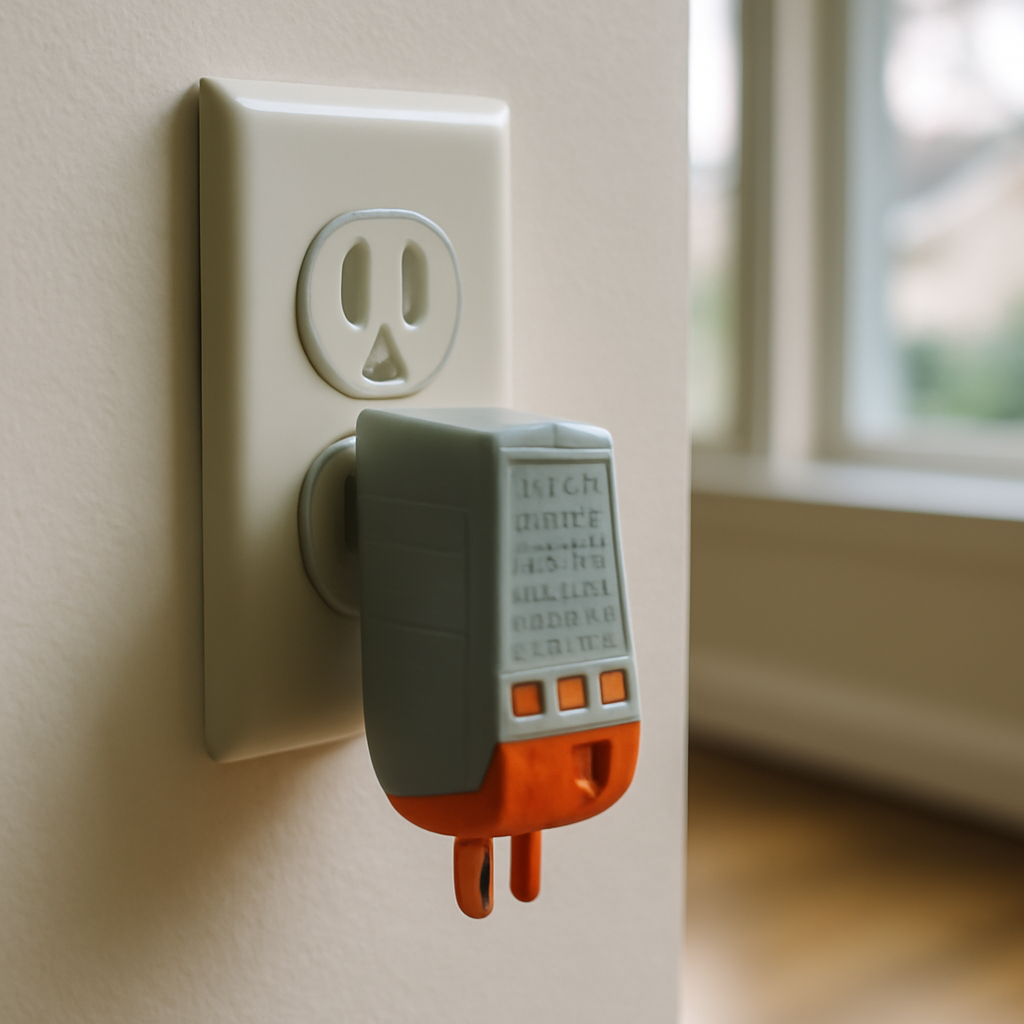
The GFCI outlets in a kitchen, bathroom, or garage are quiet safety devices designed to cut power in a fraction of a second if electricity strays where it should not — through a person, for example. A GFCI tester is the small plug-in tool that confirms those outlets actually work. It is one of the most useful and affordable tools a homeowner or inspector can own, but it has real limits worth understanding. This guide explains how a GFCI tester works, what it can and cannot confirm, and how to use one correctly.
What does a GFCI tester do?
A GFCI (ground-fault circuit interrupter) tester verifies two things: that an outlet is wired correctly and that its ground-fault protection trips when it should. The basic version is a three-prong plug-in unit with indicator lights and a test button. The lights show common wiring conditions — correct wiring, open ground, open neutral, reversed polarity, and similar faults. Pressing the test button introduces a small simulated ground fault; on a working GFCI, that should cause the device to trip and cut power within milliseconds.
A GFCI is meant to protect against electric shock by detecting tiny imbalances between the hot and neutral conductors — the kind that occur when current leaks to ground through a person or water. Confirming that the trip mechanism works is the whole point, because a GFCI that no longer trips offers no protection even though it still delivers power. These small testers are a staple in any home inspection tool kit.
How a GFCI tester works
When plugged into a properly wired outlet, the tester’s indicator lights map to a legend printed on the device. A specific light pattern means “correct,” and other patterns flag faults. Pressing the test button creates a small, deliberate current imbalance — typically around the milliamp range a GFCI is designed to catch — routed to simulate a ground fault. A healthy GFCI senses that imbalance and trips, removing power. If power stays on after the button press, the GFCI is not protecting that circuit and needs attention.
Resetting is simple: press the GFCI device’s own reset button to restore power after a successful test. This plug-in tester differs from a basic outlet tester, which checks wiring but may not test the ground-fault trip function specifically.
Reading the indicator lights
Correct wiring
The legend pattern for “correct” confirms hot, neutral, and ground are connected as expected. This is the baseline a homeowner wants to see.
Common faults
Patterns can indicate an open ground (no ground connection — common in older homes), open neutral, open hot, hot-neutral reversal, or hot-ground reversal. Reversed polarity and missing ground are frequent findings in pre-1970s wiring. Each fault has safety implications and generally warrants evaluation by a licensed electrician.
What a GFCI tester cannot tell you
These testers have notable blind spots. A common one: on outlets without a ground connection — older two-wire systems — the plug-in tester’s button may not be able to trip the GFCI at all, even when the GFCI is functioning, because the tester relies on the ground path to simulate a fault. In that case, the correct check is the GFCI’s own built-in test button. A plug-in tester also cannot detect certain miswiring conditions, such as a bootleg ground (ground and neutral tied together), which can read as “correct” while being unsafe.
The tester confirms the outlet trips; it does not evaluate the broader circuit, panel, or load capacity. For that, inspectors use additional instruments. A GFCI tester is a quick screening tool, not a complete electrical assessment, and a few of its readings can be misleading without an electrician’s interpretation.
Where GFCI protection is required
Electrical codes have steadily expanded where GFCI protection is required. It is commonly mandated for receptacles in kitchens, bathrooms, garages, basements, crawl spaces, outdoors, and near sinks and other water sources — locations where shock risk is highest. Requirements come from the National Electrical Code, which is updated on a cycle and adopted with local amendments. A home built before current rules may lack GFCI protection in places now considered essential. Testing these locations and adding protection where missing is a meaningful safety upgrade, typically handled by an electrician.
Using a GFCI tester correctly
Plug the tester fully into the outlet and read the indicator lights against the legend. To test the trip function, press the tester’s test button and confirm power cuts off; then press the GFCI’s reset button to restore power. For outlets that do not respond — especially older ungrounded ones — use the GFCI device’s own built-in test and reset buttons monthly, as manufacturers and safety organizations recommend. If the GFCI does not trip with its own button, or does not reset, it has likely failed and should be replaced by a qualified electrician.
Test GFCIs periodically, not just once. The internal mechanism can wear out, and a device that worked years ago may no longer trip. Monthly testing using the built-in button is a simple habit that keeps the protection real.
GFCI versus AFCI protection
It helps to know what a GFCI tester does not cover. A GFCI protects against ground faults — current leaking to ground through a person or water — and prevents shock. An AFCI, or arc-fault circuit interrupter, addresses a different hazard: dangerous electrical arcs from damaged or loose wiring that can start fires. Modern codes require AFCI protection in many living areas and GFCI protection in wet and outdoor locations, and some devices combine both functions. A standard plug-in GFCI tester checks ground-fault tripping; it does not test arc-fault protection, which has its own test button on the AFCI device or breaker.
Homeowners sometimes assume one tester confirms all electrical safety. It does not. GFCI and AFCI are separate protections for separate dangers, and verifying each requires the appropriate method. An inspector or electrician evaluates both where code requires them, rather than relying on a single plug-in tool.
Choosing and using a GFCI tester
For most homeowners, a basic plug-in GFCI tester with a clear light legend is enough for periodic checks. Models with a printed legend on the body are easier to read than those requiring a separate chart. Some testers add features like a digital voltage display, but the core function — confirming correct wiring and that the device trips — is what matters. Build quality and reliable indicator lights are worth more than extra features that may not be accurate.
Use the tester as a screening step, not a verdict. A “correct” reading is reassuring but cannot rule out every wiring fault, such as a bootleg ground. A fault light, or a GFCI that fails to trip with its own button, is a clear signal to bring in a licensed electrician. Treating the tester as a quick first pass that flags problems for professional follow-up is the right mental model, and it fits naturally alongside other screening tools an inspector carries.
GFCI testers in home inspection
Home inspectors routinely carry a GFCI tester to check required locations during an inspection, alongside an outlet tester and other electrical screening tools. They use it to flag outlets that fail to trip, wiring faults, and missing protection in code-required areas, then recommend an electrician for repairs. The tester is a fast first-pass tool; the inspector’s judgment and an electrician’s follow-up complete the picture. Related screening devices are covered in our outlet tester guide and the broader tools hub.
Why GFCIs fail and need testing
A GFCI is a mechanical-electronic device, and like any such device it can wear out or fail over time. The internal sensing circuit and the trip mechanism can degrade, sometimes leaving an outlet that still delivers power but no longer trips on a fault — the most dangerous failure mode, because it looks fine while offering no protection. Power surges, lightning, age, and moisture intrusion can all contribute. This is exactly why periodic testing with a GFCI tester or the device’s own test button matters: the only way to know a GFCI still protects is to confirm it trips.
Safety organizations recommend testing monthly. A GFCI that will not trip when tested, or will not reset afterward, has reached the end of its useful life and should be replaced by a qualified electrician. Replacing a failed GFCI is inexpensive relative to the shock protection it restores, and it is not a place to defer maintenance, particularly in kitchens, bathrooms, and outdoor locations near water.
Interpreting confusing tester results
Some readings need careful interpretation rather than a snap conclusion. An “open ground” indication is common and expected in older two-wire homes that never had a grounding conductor; it is not necessarily a defect to panic over, but it does affect what protection is available and warrants an electrician’s input on whether a GFCI without ground is acceptable in that location. A tester that reads “correct” can still miss a bootleg ground, where neutral and ground are improperly tied together, which a plug-in unit cannot detect. Reversed polarity — hot and neutral swapped — is a real hazard that should be corrected.
The lesson is that a GFCI tester is a screening tool whose results sometimes require professional interpretation. A clean reading is reassuring but not a guarantee of perfect wiring, and an ambiguous or fault reading is a prompt to bring in a licensed electrician rather than to attempt a fix without understanding the cause. Used this way — as a fast first pass that triggers expert follow-up when warranted — the tester earns its place in any homeowner’s or inspector’s kit.
Building GFCI testing into home maintenance
The most valuable habit a GFCI tester supports is routine testing as part of home maintenance. Safety organizations recommend testing GFCI-protected outlets monthly, using either the tester or the device’s own test-and-reset buttons, because the protection only counts if the device still trips. A quick monthly pass through the kitchen, bathrooms, garage, basement, and outdoor outlets takes minutes and catches the silent failure mode where an outlet still delivers power but no longer protects against shock.
For homeowners buying an older property, an initial sweep with a GFCI tester reveals which required locations have working protection and which need an electrician’s attention — missing GFCIs, ungrounded outlets, or wiring faults. Home inspectors perform this check as a matter of course during an inspection. Treating the tester as a maintenance tool rather than a one-time gadget keeps a home’s shock protection genuinely functional year after year, and turns up problems while they are cheap and easy to correct.
The cost-benefit is hard to beat. A basic GFCI tester is inexpensive and lasts for years, while the protection it verifies guards against electric shock in exactly the wet locations — kitchens, bathrooms, garages, and outdoors — where the hazard is greatest. For a few dollars and a few minutes a month, a homeowner confirms that one of the home’s most important safety systems is actually doing its job, and identifies any failed device that needs an electrician before it matters. That makes it one of the highest-value tools in a household toolbox.
References
- GFCI Receptacles and Inspection — International Association of Certified Home Inspectors
- Electrical Safety and GFCI Protection — National Fire Protection Association
- Electrical Code and Safety Resources — International Code Council