GFCI Outlet Installation: Line vs Load, Testing, Where Required
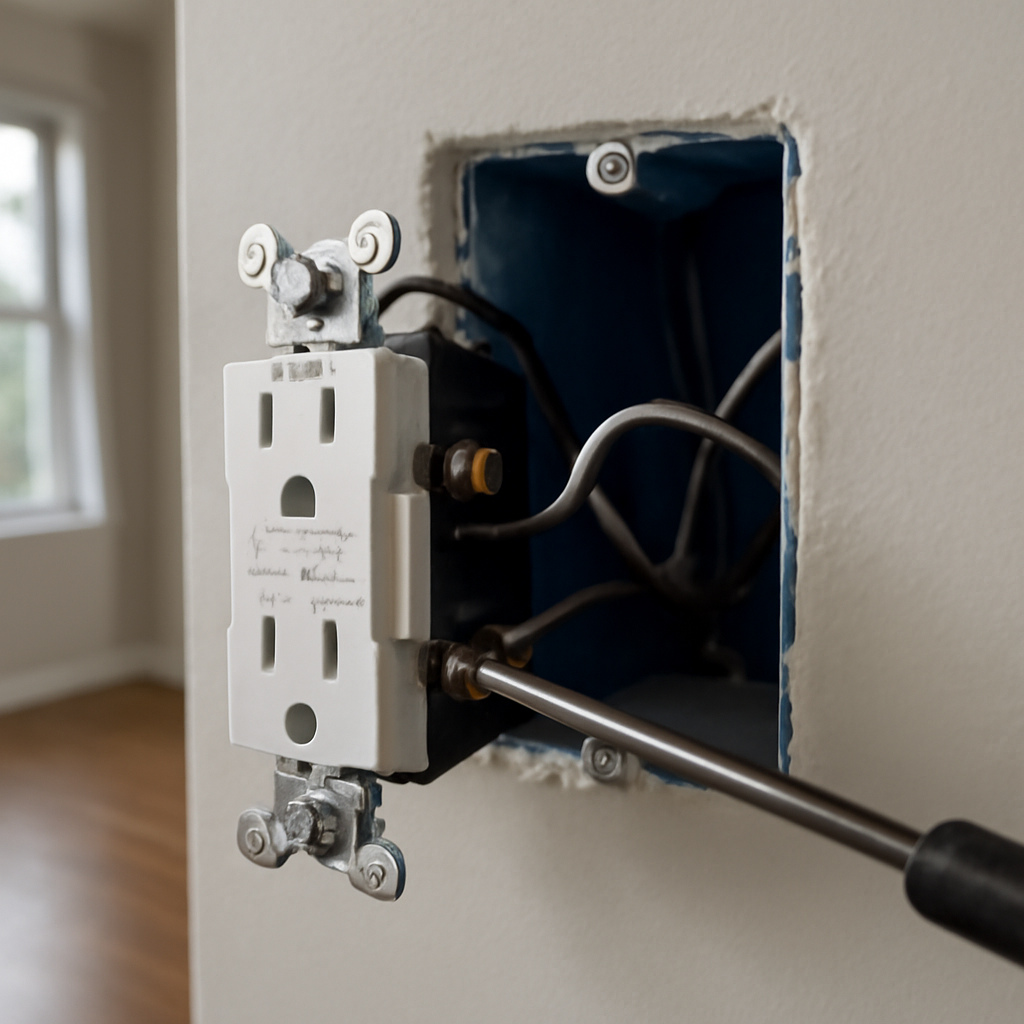
A ground-fault circuit interrupter is one of the cheapest life-safety devices in a house, and one of the most frequently miswired. The device itself is simple: it watches the current on a circuit and cuts power in a fraction of a second when some of that current appears to be leaking somewhere it should not, such as through a person standing on a wet floor. The trouble is that a GFCI receptacle has two sets of terminals, and connecting the circuit to the wrong pair can leave the outlet looking normal while protecting nothing downstream, or nothing at all. This guide covers what homeowners and buyers should know about GFCI outlet installation: where protection is commonly required, LINE versus LOAD wiring, two-prong upgrades, testing, GFCI breakers as an alternative, typical costs and when the job belongs with a licensed electrician. Most Colorado jurisdictions treat receptacle replacement and new circuits as permitted electrical work, so local rules matter.
Part of our Home Electrical guide — start there for the full picture →
Electrical problem? Talk to a licensed electrician.
📞 Call (877) 560-2714What GFCI Outlet Installation Involves
At the most basic level, installing a GFCI outlet means replacing a standard receptacle with a GFCI receptacle, connecting the incoming power conductors to the terminals marked LINE, optionally connecting conductors that continue to other outlets to the terminals marked LOAD, folding everything back into a box with enough room and confirming the device trips and resets. The device is noticeably deeper than a standard receptacle, so a crowded or shallow box can be a real obstacle.
The Occupational Safety and Health Administration describes how these devices work in its publication on controlling electrical hazards. A GFCI compares the current flowing out to equipment with the current returning along the circuit conductors, and if the difference exceeds 5 milliamperes, it shuts off power, interrupting the flow in as little as 1/40 of a second. OSHA notes that GFCIs are used in wet locations, construction sites and other high-risk areas. That speed and sensitivity is what makes the device useful in a bathroom or at an outdoor outlet. It is also why an incorrectly wired unit is a hazard: the occupant believes the protection exists when it does not.
GFCI protection is primarily about shock, not fire. Fuses and breakers protect wiring from overloads and short circuits, and arc-fault devices address certain arcing conditions. A GFCI does something different: it reacts to small leakage currents that would never trip an ordinary breaker but can still injure or kill a person.
Three common scenarios
- Replacing an existing GFCI. The circuit was presumably wired for one before, though the LINE and LOAD connections still need to be identified rather than assumed.
- Adding GFCI protection to a standard outlet. The most common project, often done because an inspector flagged a bathroom, kitchen or garage outlet without protection.
- Upgrading an ungrounded two-prong outlet. A GFCI is one recognized path to replacing two-slot receptacles with three-slot ones, with specific labeling, covered below.
Where GFCI Protection Is Commonly Required
Requirements depend on the edition of the National Electrical Code a jurisdiction has adopted and any local amendments, and they have expanded over successive editions. A house wired decades ago may have been compliant when built even though it lacks protection a new house would need. With that caveat, the locations below are the ones where modern codes commonly call for GFCI protection on 125-volt receptacles in dwellings:
- Bathrooms. Usually all receptacles. Our bathroom GFCI outlet guide covers sink-side placement and shared-circuit layouts.
- Kitchens. Countertop receptacles in older editions, broadened in newer editions to more of the kitchen.
- Garages and accessory buildings. Including receptacles for freezers or openers in many newer editions, which surprises owners when a power blip trips a garage freezer.
- Outdoors. Receptacles on decks, patios and exterior walls. See our outdoor outlet guide for weather-resistant devices and in-use covers.
- Unfinished basements and crawl spaces. Areas near the ground and moisture.
- Laundry areas and near sinks. Receptacles within a set distance of a sink, tub or shower, and in laundry rooms.
Newer code editions have also extended GFCI requirements to some 240-volt receptacles and certain appliance outlets. Because the details shift edition by edition, the reliable question for a specific Front Range home is what the local building department in Denver, Jefferson, Arapahoe, Douglas, El Paso or another county or city currently enforces. Home inspectors typically report missing GFCI protection in these locations as a safety upgrade even when the home was compliant at the time of construction.
LINE vs LOAD: The Wiring Detail That Matters Most
Every GFCI receptacle has two pairs of screw terminals, usually labeled on the back of the device and often covered by a sticker over the LOAD terminals when new. The difference is not cosmetic.
LINE terminals
The LINE terminals are where power from the panel enters the device. Connecting the supply cable here is what allows the GFCI to monitor the circuit and protect its own face. Many modern GFCIs are designed so that if power is mistakenly connected to the LOAD side, the device will not reset or will not deliver power, a feature intended to flag reversed wiring. Older units may not have that safeguard and can appear to work while providing no protection.
LOAD terminals
The LOAD terminals feed outlets farther along the same circuit. Anything connected here receives GFCI protection from the upstream device. One GFCI in the first box on a run can therefore protect several standard receptacles downstream, which is why a bathroom outlet sometimes goes dead when a GFCI in a different bathroom or a garage trips.
That arrangement has tradeoffs. Protecting downstream outlets saves money and box space at those locations, but it also means a single trip can kill power in places that seem unrelated. If a sump pump, freezer or medical device shares the run, an unnoticed trip can have consequences beyond inconvenience. Some installers prefer to connect only the LINE side and leave downstream outlets unprotected when those outlets do not need protection.
“GFCI Protected” stickers
GFCI receptacles usually come with small “GFCI Protected Outlet” labels. Placing one on each downstream receptacle protected through the LOAD terminals tells the next owner, tenant or inspector that the standard-looking outlet is protected and where to look when it goes dead. Missing labels are common in older homes, and their absence makes troubleshooting much slower.
Identifying the incoming cable
In a box with two cables, the one carrying power from the panel is not always obvious. The usual approach is to separate the conductors, turn the breaker back on, and identify the energized cable with a tested voltage tester before turning power off again and making connections. That step involves live conductors, which is one reason this work is often left to an electrician.
Self-test, weather-resistant and tamper-resistant models
GFCI receptacles sold today often include features older units lacked. Many perform a periodic automatic self-test and show an indicator light or refuse to deliver power when the internal circuitry fails, although manufacturers still generally recommend pressing TEST monthly. Outdoor locations and other damp or wet areas typically call for weather-resistant (WR) devices, which use materials meant to resist corrosion and UV exposure, paired with a cover rated for the location. Many GFCI receptacles are also tamper-resistant, with internal shutters that keep objects out of the slots; our tamper-resistant outlet guide explains how that marking works. Choosing a device rated for the location is part of a correct installation, not an upgrade. A standard indoor GFCI in an exposed outdoor box can corrode, trip repeatedly and fail early, and a homeowner who sees a dead outlet may simply stop using it rather than replace it.
Upgrading Two-Prong Outlets With a GFCI
Many older Front Range homes, particularly those built before grounded branch wiring became standard, still have two-slot receptacles. Replacing them with three-slot receptacles on an ungrounded circuit creates a false impression of grounding. Common code provisions allow a GFCI receptacle, or a GFCI-protected circuit, to serve as one approved replacement, provided the receptacles are marked “No Equipment Ground.” The GFCI adds shock protection but does not create an equipment ground, which matters for surge protectors and some electronics. Our two-prong outlet guide compares that option with running a new grounded circuit.
The labels carry information. A plug-in tester on a properly GFCI-protected but ungrounded outlet will typically report an open ground, which is expected in that situation. Our explainer on what open ground means on an outlet tester walks through how to read that result. Some plug-in GFCI testers also cannot trip a GFCI that lacks a ground, because they rely on the ground path to create the test imbalance; the device’s own TEST button is the better check there.
Testing a GFCI: Monthly and With a Tester
Manufacturers generally recommend pressing the TEST button monthly. The device should click and cut power, and a lamp or nightlight plugged into it, and into any downstream outlets, should go off. Pressing RESET should restore power. If TEST does nothing, or RESET will not hold, the device or its wiring needs attention.
A plug-in tester adds information the buttons cannot. A basic three-light outlet tester shows common wiring faults such as reversed polarity or an open ground. A tester with a GFCI trip button, covered in our GFCI outlet tester guide, creates a small imbalance to confirm that a downstream outlet is actually protected. Inspectors use these routinely; homeowners can find options in our electrical tester shop category.
Common troubleshooting signs
- Will not reset. Often no power is reaching the LINE terminals, the wiring is reversed, a ground fault is still present, or the device has reached the end of its life.
- Trips repeatedly. Moisture in an outdoor box, a damaged cord, a failing appliance or a long run of downstream outlets can all cause nuisance trips.
- Dead outlets with no visible GFCI. An upstream GFCI in another room, the garage or outside may have tripped.
- Warm faceplate or buzzing. A reason to stop using the outlet and call an electrician.
Our GFCI outlet not working guide covers these in more detail. The Consumer Product Safety Commission’s electrical safety materials list warning signs of electrical system hazards that apply here too, including plugs that pull out of the receptacle easily, hot switch plates and outlet covers, sizzling or buzzing sounds, and circuit breakers that need resetting frequently. CPSC suggests having a licensed electrician check the home’s electrical system when those signs appear.
GFCI Breakers as an Alternative
A GFCI breaker installs in the panel and protects an entire circuit from its origin. It suits situations where a GFCI receptacle is awkward: shallow boxes that cannot fit the deeper device, circuits feeding hard-to-reach outlets, or circuits where protection at every point is the goal. The tradeoff is convenience. When a GFCI breaker trips, the reset is at the panel, which may be in a basement or garage. GFCI breakers are also typically more expensive than receptacles, and they must be compatible with the specific panel brand. Our GFCI breaker guide compares the two approaches in more depth, including combination breakers that also provide arc-fault protection.
Panel work carries more risk than replacing a receptacle, since the service conductors in the panel stay energized even with the main breaker off in many configurations. That job belongs with an electrician.
Typical Costs
Costs vary with the home, the number of outlets, access, local labor rates and permit fees. As rough 2026 ranges, a GFCI receptacle itself often costs somewhere in the range of $15 to $40, with weather-resistant and self-test models toward the higher end. Electrician labor to replace a single standard receptacle with a GFCI often lands somewhere around $100 to $250 when it is part of a service call, with additional outlets on the same visit typically costing less each. A GFCI breaker plus installation often runs higher, commonly a few hundred dollars depending on the panel. Projects that require a new circuit, a larger box, a new outdoor receptacle or repairs to damaged wiring can cost considerably more. These figures are general estimates; quotes from local electricians are the only reliable number for a specific house.
For buyers, missing GFCI protection on an inspection report is usually an inexpensive repair relative to the purchase, and it is a reasonable item to request or negotiate.
When to Hire a Licensed Electrician
Swapping a receptacle can look like a small job, but GFCI installation combines several decisions that are easy to get wrong: identifying the incoming cable, choosing whether to protect downstream outlets, fitting a deeper device into a crowded box and labeling the result. A licensed electrician is the right choice when:
- The home has aluminum branch wiring, cloth-insulated or brittle conductors, or no ground.
- The box is crowded, damaged, shallow or not securely mounted.
- The device will not reset after installation, or trips with nothing plugged in.
- The work involves the panel, a GFCI breaker or a new circuit.
- A permit is required by the local jurisdiction, which is common in Colorado for electrical work.
The U.S. Fire Administration estimates that there were 23,700 residential building electrical malfunction fires in 2023, with 305 deaths and 800 injuries. GFCIs are not primarily fire-prevention devices, but those numbers are a reminder that wiring mistakes in a house have real consequences and that electrical work is worth doing correctly.
What a home inspector checks
Under the American Society of Home Inspectors Standard of Practice, inspectors are to inspect a representative number of installed lighting fixtures, switches and receptacles, along with ground-fault circuit interrupters and arc-fault circuit interrupters. In practice that means testing accessible GFCIs, checking outlets in wet locations for protection and noting reversed polarity, open grounds and missing labels. Inspectors do not open walls or trace every circuit, so a finding usually leads to a recommendation for an electrician. Our electrical inspection section covers the rest of the electrical portion, and the main guide to hiring a home inspector explains how to compare inspectors and what a report should include.
Sellers preparing a Front Range listing can also benefit. Testing every GFCI, adding missing labels and correcting obvious gaps before listing removes easy items from a buyer’s repair request.
More Questions About GFCI Outlet Installation
How long does it take to install a GFCI outlet?
Installing a GFCI outlet typically takes an experienced electrician about 15 to 30 minutes when replacing an existing outlet in a standard box. Extra time may be needed to identify LINE and LOAD cables, fit the bulkier device into a crowded box, or replace a box that is too small. A homeowner doing it for the first time may need an hour or more, including turning off the right breaker and testing for power. Adding a new outlet where none existed takes considerably longer and usually needs a permit.
How many outlets can one GFCI outlet protect?
One GFCI outlet can protect every standard outlet wired downstream from its LOAD terminals on the same circuit, with no fixed limit in most cases. Practical limits come from the circuit’s capacity and nuisance tripping, since long runs and many devices add small leakage currents that can trip the GFCI. Many electricians limit a single GFCI to a few outlets in one area so it is easy to find and reset. Every protected outlet should carry a “GFCI Protected” label.
Can a 15-amp GFCI outlet go on a 20-amp circuit?
Yes, a 15-amp GFCI outlet can generally be installed on a 20-amp circuit when there is more than one receptacle on that circuit, because most 15-amp GFCIs are rated for 20 amps of feed-through current. A single receptacle alone on a dedicated 20-amp circuit must be rated 20 amps. Check the device’s labeling for its feed-through rating. Never install a 20-amp outlet on a 15-amp circuit, since the wiring is sized for the smaller breaker.
Can a GFCI outlet be installed on aluminum wiring?
Most GFCI outlets are not rated for direct connection to aluminum wiring, so connecting them directly can create a fire risk at the terminals. Homes with aluminum branch wiring, common in some houses built in the mid-1960s to mid-1970s, usually need a licensed electrician to add approved copper pigtails using connectors listed for aluminum-to-copper connections. The GFCI then connects to the copper pigtails. Standard twist-on connectors are not approved for this repair.
Do GFCI outlets need a deeper electrical box?
GFCI outlets do not strictly require a deeper box, but they are bulkier than standard outlets and often do not fit well in small or crowded boxes. A box with several cables, especially in older homes, may not have room for a GFCI plus the wires, and forcing it in can loosen connections. Electrical codes limit how many conductors can share a box based on its volume. If the device will not fit easily, the safer fix is a larger box or an extension ring, or protecting the circuit from a GFCI breaker.
References
- Controlling Electrical Hazards (OSHA 3075) — Occupational Safety and Health Administration
- Electrical Safety — U.S. Consumer Product Safety Commission
- Residential Building Electrical Malfunction Fire Trends — U.S. Fire Administration
- ASHI Standard of Practice for Home Inspections — American Society of Home Inspectors
Frequently asked questions
What is the difference between LINE and LOAD on a GFCI outlet?
LINE terminals receive power from the panel. LOAD terminals feed outlets farther down the same circuit and give them GFCI protection. Reversing them can leave outlets unprotected, though many newer devices will not reset if wired backward.
Can a GFCI replace a two-prong outlet without a ground?
Common code provisions allow a GFCI as one replacement option for ungrounded two-slot receptacles, provided the outlets are labeled No Equipment Ground. The GFCI adds shock protection but does not create a ground.
How often should a GFCI outlet be tested?
Manufacturers generally recommend pressing the TEST button monthly, confirming power cuts off, then pressing RESET. A plug-in GFCI tester can confirm that downstream outlets are actually protected.
Is a GFCI breaker better than a GFCI outlet?
Neither is universally better. A breaker protects the whole circuit and suits shallow boxes, but resets at the panel. A receptacle resets where it is used and usually costs less.
How much does GFCI outlet installation cost?
As rough 2026 ranges, a single GFCI replacement by an electrician often runs about $100 to $250 including the device, with extra outlets on the same visit costing less each. New circuits or panel work cost more.
Do you need a permit to install a GFCI outlet?
Replacing an existing outlet with a GFCI usually does not require a permit in many areas, while adding a new outlet or circuit usually does. Rules vary widely, so checking with the local building department before starting is the safest approach.
Can a GFCI outlet be installed upside down?
Yes, a GFCI outlet can usually be installed with the ground hole up or down, since electrical codes generally do not specify an orientation. Some electricians prefer ground-up so a falling metal object hits the ground pin first. The device works the same either way.
Can a GFCI outlet be installed outdoors?
Yes, outdoor outlets generally require GFCI protection, and outdoor GFCI outlets should be weather-resistant types installed in a weatherproof box with an in-use cover that stays closed while a cord is plugged in. Outdoor GFCIs face moisture and temperature swings, so testing them monthly and before using power tools outside is a good habit.
Not sure whether the outlets in a home you are buying are properly protected? Reach out through our contact page to connect with a Front Range inspector who tests GFCIs, polarity and grounding.