Two-Prong Outlet: Ungrounded Receptacles and Safe Upgrades
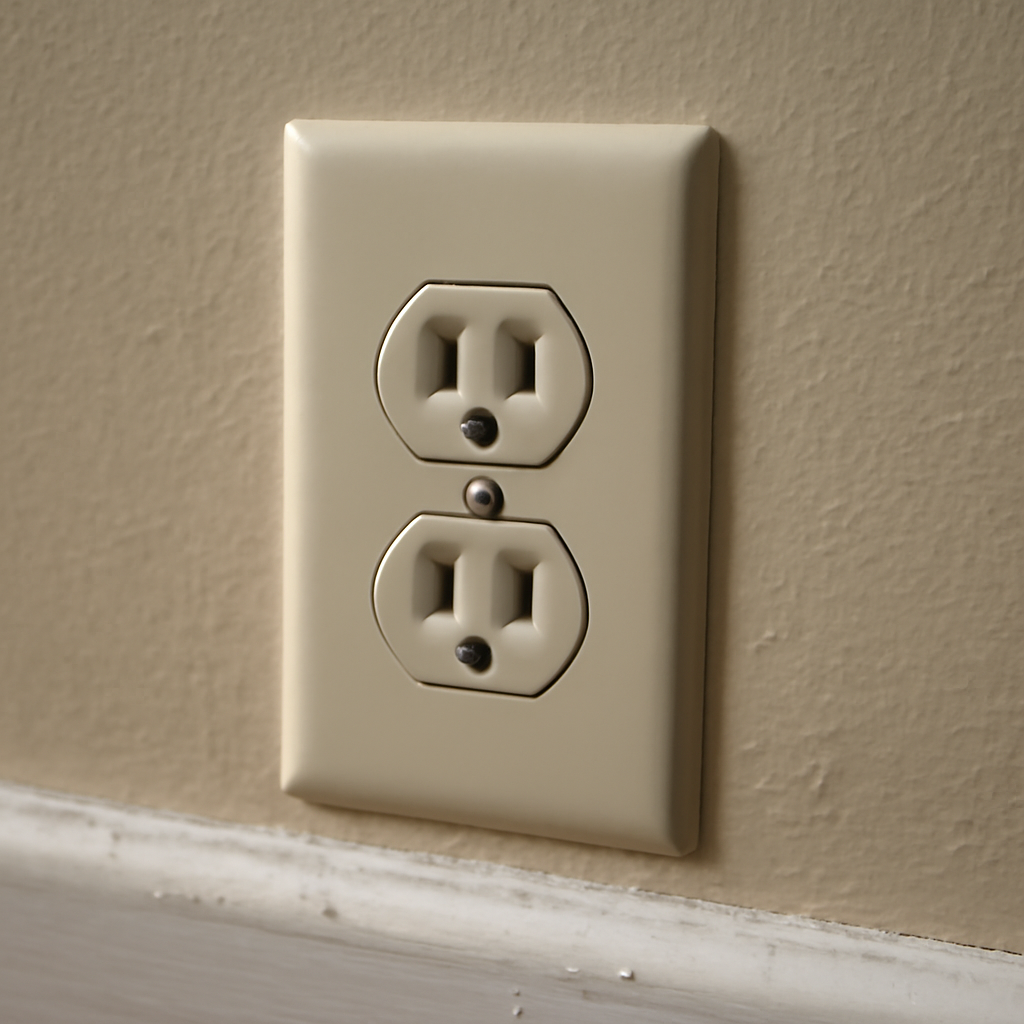
Walk through a house built before the mid-1960s and there is a good chance some of the wall outlets have only two slots. Those two-prong receptacles were standard for decades, and many still work fine for lamps and phone chargers. The trouble starts when a three-prong plug meets a two-slot outlet: people reach for an adapter, snap off the ground pin or swap in a three-prong outlet without adding a ground wire. Each of those shortcuts leaves the home looking more modern than it is. This guide explains why older homes have two-prong outlets, what the missing ground actually does, why cheater adapters do not create a ground, the legitimate options for upgrading, why surge protectors depend on grounding, and how inspectors report ungrounded receptacles. Electrical work involves shock and fire hazards, so anything beyond plugging in a tester belongs with a licensed electrician.
Part of our Home Electrical guide — start there for the full picture →
Electrical problem? Talk to a licensed electrician.
📞 Call (877) 560-2714Why Older Homes Have Two-Prong Outlets
A two-prong outlet has a hot slot (the shorter one) and a neutral slot (the taller one, on polarized receptacles). Early two-wire wiring systems, including knob-and-tube and many early cable types, carried only a hot and a neutral conductor. There was no separate equipment grounding conductor running back to the panel, so there was nothing for a third prong to connect to.
Three-prong grounding receptacles became the standard for new residential construction during the 1960s, although the timing varied by location and builder. Many Front Range neighborhoods built before then, from older bungalows in central Denver to early postwar homes in Aurora, Lakewood, Colorado Springs and Pueblo, still have original two-wire circuits in at least some rooms. Some of those houses have had partial upgrades, so a single home can mix grounded and ungrounded circuits.
The guides to knob-and-tube wiring and aluminum wiring cover two older wiring types that often show up in the same homes and can affect upgrade decisions.
What the Ground Wire Actually Does
The round third prong connects an appliance’s metal frame or case to the equipment grounding conductor. If a hot wire inside the appliance comes loose and touches the metal case, the ground gives that fault current a low-resistance path back to the panel. Ideally the current rises enough to trip the breaker or blow the fuse, cutting power before someone touches the energized case.
Without a ground, that same fault can leave the metal case energized, waiting for a person to complete the circuit. That is the main shock hazard grounding addresses. The guide to electrical grounding explains the difference between the grounding electrode system at the service and the equipment grounding conductors that run to each outlet.
Grounding also matters for some electronics and for surge protection, covered below. It does not prevent every kind of shock. A person touching a hot conductor and a grounded surface can still be shocked, which is the hazard ground fault circuit interrupters (GFCIs) are designed to address.
Why Cheater Adapters Do Not Add a Ground
A three-to-two adapter, sometimes called a cheater plug, lets a three-prong cord plug into a two-slot outlet. Most adapters have a small metal tab or a short green wire meant to be fastened under the cover-plate screw.
The CPSC’s Home Electrical Safety Checklist addresses these adapters directly. It advises always connecting the adapter’s grounding wire or metal tab to the center screw on the outlet cover, describes the adapter’s grounding feature as a safety feature meant to lessen the risk of fire or shock in case of an appliance fault, and warns never to defeat the adapter’s grounding feature or break the ground pin off a three-prong plug.
The catch is that the cover-plate screw is only grounded if the metal outlet box behind it is grounded. In many two-wire systems the box has no grounding path at all, so fastening the tab to the screw connects the appliance to nothing. Plastic boxes, ungrounded metal boxes and painted-over screws all defeat the idea. Unless an electrician has confirmed the box is grounded, an adapter should be treated as providing no ground.
The U.S. Fire Administration’s outlet-safety advice includes a related, simpler rule: never force a three-prong cord into a two-slot outlet. Breaking off the ground pin or filing down a plug to make it fit removes the protection the manufacturer built into the product.
Options for Upgrading a 2 Prong Outlet
Homeowners have several legitimate paths. Which ones are permitted depends on the locally adopted electrical code, and electrical work in many Colorado jurisdictions requires a permit, so a licensed electrician should confirm the right approach before work begins. The options below reflect common approaches under the National Electrical Code as adopted in many areas, but local amendments vary.
1. Add an equipment ground
The most complete fix is to provide an equipment grounding conductor to the outlet. Depending on the house, that may mean running new cable from the panel, or in some situations running a separate grounding conductor from the outlet to an acceptable grounding point. Electrical codes limit where a retrofit ground can connect, so this is a job for an electrician. Running a new grounded circuit is often the best choice for locations that serve computers, home offices, kitchen appliances or anything with a metal case.
2. Install GFCI protection
Many codes allow an ungrounded two-prong outlet to be replaced with a GFCI receptacle, or with three-prong receptacles protected by an upstream GFCI device. A GFCI monitors the current going out on the hot wire and returning on the neutral; if some of that current leaks to another path, such as through a person, it trips quickly. That protection works without a ground wire.
When three-prong receptacles are installed on an ungrounded circuit under GFCI protection, the outlets are typically required to be labeled “No Equipment Ground,” and outlets protected by an upstream GFCI are commonly labeled “GFCI Protected” as well. These labels tell future owners, electricians and inspectors that the third prong is not connected to a ground. A GFCI protects people against shock, but it does not give electronics or surge protectors the ground path they may need. Guides to a GFCI outlet that is not working and to the GFCI breaker option explain how these devices are tested and where each type fits.
The CPSC checklist recommends testing GFCIs monthly using the test and reset buttons, and replacing a GFCI that fails the test.
3. Replace with a new two-prong outlet
Where there is no ground and GFCI protection is not being added, the straightforward legal option in many jurisdictions is to replace a worn two-prong outlet with a new two-prong outlet. Replacement two-prong receptacles are still sold for this purpose. The CPSC checklist notes that loose-fitting plugs can cause overheating and fires and advises having such outlets replaced. A worn receptacle that no longer grips plugs firmly should not be left in service just because a three-prong replacement is not appropriate. The guide to outlet replacement covers the general process.
4. Rewire the circuit or the house
In homes with knob-and-tube wiring, deteriorated insulation, many ungrounded circuits or an undersized service, piecemeal fixes may not be the best value. Rewiring adds grounded circuits throughout and often goes hand in hand with an electrical panel upgrade. The guide to house rewiring cost explains what drives the price.
Surge Protectors Need a Ground
Many plug-in surge protectors rely on components that divert excess voltage to the ground conductor. Plugged into an ungrounded outlet, whether through an adapter or into a three-prong receptacle with no ground behind it, many surge protectors cannot do that job as designed. Some surge strips include a “grounded” or “protected” indicator light that stays off when no ground is present, which is a useful clue.
A GFCI-protected outlet labeled “No Equipment Ground” is safer for people, but it still does not provide the ground path a surge protector expects. For valuable electronics on an older circuit, adding a true equipment ground or a new grounded circuit is usually the better answer. The U.S. Fire Administration also recommends using power strips that have internal overload protection and not overloading them, which applies regardless of grounding.
Three-Prong Outlets on Ungrounded Circuits
One of the most common electrical findings in older homes is a three-prong outlet that is not actually grounded. Sellers and previous owners sometimes swap two-prong outlets for three-prong versions to make rooms look updated, without adding a ground or GFCI protection. To a buyer, the outlets look modern. To an appliance, the third prong is connected to nothing.
Inspectors often use a plug-in receptacle tester, which typically shows an “open ground” pattern on these outlets. Common related findings include:
- Open ground. A three-prong outlet with no equipment ground connected.
- Missing labels. Three-prong outlets on a GFCI-protected ungrounded circuit that lack the “No Equipment Ground” marking.
- Reverse polarity. Hot and neutral swapped, which can leave parts of a lamp socket or appliance energized even when switched off.
- Bootleg ground. A jumper from the neutral terminal to the ground terminal. This can fool a basic plug-in tester into showing correct wiring while actually putting current-carrying neutral on the metal parts of connected equipment. It is a hazardous condition that needs an electrician.
- Loose or worn receptacles. Plugs that fall out easily, which the CPSC links to overheating.
The ASHI Standard of Practice directs inspectors to inspect a representative number of installed lighting fixtures, switches and receptacles, along with ground fault and arc fault circuit interrupters, and to describe the predominant branch circuit wiring method. Because the standard calls for a representative sample, an inspection may not test every outlet. Buyers of older homes may want an electrician to evaluate every circuit if the report shows ungrounded receptacles.
Home electrical problems are not trivial. The U.S. Fire Administration estimates that in 2021, about 24,200 residential building electrical fires were reported to U.S. fire departments, causing an estimated 295 deaths, 900 injuries and over $1.2 billion in property loss. Grounding is only one part of electrical safety, but it is part of the overall picture an inspector and an electrician weigh.
Which Devices Need a Grounded Outlet
Not everything plugged into a home needs a ground. Many small devices, such as phone chargers, lamps and some small appliances, come with two-prong plugs by design. Many of those are double insulated, meaning they are built with an extra layer of insulation so a single internal fault cannot energize anything a person can touch. Products with a three-prong plug, on the other hand, were designed to rely on the ground connection.
The CPSC checklist makes this distinction for power tools. It asks whether corded power tools have three-prong plugs or are marked as double insulated, and suggests that older tools lacking those safety features be replaced or, at the very least, plugged into a working GFCI outlet during use. It also notes that metal-cased electrical tools without proper grounding become more dangerous as old internal insulation wears and cracks.
The same checklist warns that using a three-prong product with a two-prong extension cord eliminates the grounding protection and increases the likelihood of electrocution or fire if the tool has an internal fault. That is a reminder that the ground has to be continuous from the appliance all the way back to the panel. A three-prong extension cord plugged into an ungrounded outlet has the same gap as an adapter.
Devices that commonly come with three-prong plugs include refrigerators, washing machines, microwaves, window air conditioners, desktop computers, many power tools and some home theater equipment. Households that rely on these items in rooms with two-prong outlets have a clear reason to prioritize grounding upgrades in those locations first.
Simple checks homeowners can do
An inexpensive plug-in receptacle tester can show open grounds and reverse polarity on three-prong outlets without opening anything up. It cannot detect every defect, including some bootleg grounds, but it gives a useful first look. Outlets that feel warm, show scorch marks, buzz or let plugs fall out are worth reporting to an electrician regardless of what a tester shows.
Safety, Permits and When to Call an Electrician
OSHA notes that working with electricity can be dangerous. Even replacing a single receptacle means working inside a box with conductors that may be live, and older homes add complications such as brittle insulation, shared neutrals, mislabeled breakers and fuses. Basic safety points:
- Turn off power at the breaker or fuse and verify that the outlet is dead with a non-contact voltage tester or meter before touching any wire.
- Do not assume a breaker label is accurate in an older home.
- Stop and call a licensed electrician if insulation crumbles, wires are aluminum, the box shows scorching or the wiring is knob-and-tube.
- Check whether the local building department requires a permit before replacing or adding receptacles.
What upgrades commonly cost
Prices vary by region, access and the condition of existing wiring. Broadly:
- Replacing a two-prong outlet with a new two-prong: usually a small per-outlet charge when done during a larger service visit.
- Installing a GFCI receptacle at the start of a circuit: commonly in the low hundreds of dollars installed, depending on the device and labor, with downstream outlets labeled.
- GFCI breaker: depends on panel compatibility; some older panels have limited breaker options.
- Running a new grounded circuit: often several hundred dollars or more per circuit depending on distance and wall access.
- Whole-house rewiring: a substantially larger project that depends on house size, access and finish repairs.
Asking an electrician to list which circuits are ungrounded, which approach is recommended for each and whether permits are included makes quotes easier to compare. The electrical hiring guide covers how to choose the right professional, and the broader home inspector hiring guide explains what a general inspection covers in an older home.
More Questions About Two-Prong Outlets
Can you sell a house with two-prong outlets?
Yes, a house with two-prong outlets can be sold, and many older homes still have them. Two-prong outlets are not automatically a code violation if they were installed under earlier codes and remain in good condition.
Home inspectors typically note ungrounded outlets, and some buyers, lenders, or insurers ask for upgrades. Sellers can offer a credit, install GFCI protection on ungrounded circuits with proper labeling, or have an electrician add grounding where needed. Disclosing known electrical conditions upfront avoids surprises later.
How much does it cost to replace two-prong outlets?
Replacing two-prong outlets typically costs anywhere from a modest per-outlet fee for a GFCI upgrade to considerably more when a ground wire must be added. Rewiring a whole house costs much more, depending on house size, wall access, and local labor rates.
GFCI protection on the first outlet of a circuit can protect downstream outlets at lower cost. Adding a ground often requires running new cable. Get quotes from licensed electricians, and ask whether permits are included.
Do two-prong outlets affect homeowners insurance?
Two-prong outlets can affect homeowners insurance, especially when they signal older wiring such as knob-and-tube or ungrounded systems throughout the house. Some insurers ask about wiring type and age, and some may require upgrades or charge higher premiums for older electrical systems.
Policies vary by company and state. An electrician’s evaluation and documentation of any upgrades, such as GFCI protection or rewiring, helps when applying for coverage or answering insurer questions after a home inspection.
Can a two-prong outlet cause a fire?
A two-prong outlet does not cause fires simply because it lacks a ground, but old outlets with worn contacts, loose connections, or damaged wiring can overheat. Warning signs include warm cover plates, scorch marks, crackling sounds, or plugs that fall out easily.
Overloading old outlets with power strips and high-wattage appliances adds to the risk. An electrician can replace worn devices, check connections, and evaluate the wiring, especially in homes with original or deteriorated electrical systems.
References
- Home Electrical Safety Checklist (Pub. 513) — U.S. Consumer Product Safety Commission
- Appliance and Electrical Fire Safety — U.S. Fire Administration (FEMA)
- Electrical Safety Overview — Occupational Safety and Health Administration
- ASHI Standard of Practice for Home Inspections — American Society of Home Inspectors
Frequently asked questions
Are two-prong outlets safe?
A two-prong outlet in good condition is not automatically dangerous for two-prong devices such as lamps. The concern is that it has no equipment ground, so appliances with three-prong plugs lose a safety feature. Worn outlets that do not grip plugs firmly should be replaced.
Does a three-prong adapter ground a two-prong outlet?
Only if the tab or wire is fastened to a cover screw that is itself grounded through a grounded metal box. Many older two-wire systems have no grounding path at the box, so the adapter connects to nothing. An electrician can confirm whether the box is grounded.
Can a GFCI replace a two-prong outlet without a ground wire?
Many electrical codes allow a GFCI receptacle, or three-prong outlets protected by an upstream GFCI, on an ungrounded circuit when the outlets are labeled No Equipment Ground. The GFCI protects people from shock but does not provide a ground for electronics or surge protectors.
Will a surge protector work in a two-prong outlet?
Many surge protectors rely on a ground conductor to divert excess voltage, so they may not work as designed on an ungrounded outlet, even one with a GFCI. Some surge strips have an indicator light that shows whether a ground is present.
Is an ungrounded three-prong outlet an inspection issue?
Yes, it is a common finding in older homes. Inspectors often note open grounds, missing No Equipment Ground labels and other wiring defects, and recommend evaluation by a licensed electrician.
Can you use a refrigerator on a two-prong outlet?
A refrigerator should be plugged into a properly grounded outlet, because its metal case and compressor benefit from a ground path. Using a cheater adapter on a two-prong outlet does not provide that ground. An electrician can add a dedicated grounded circuit or install GFCI protection with proper labeling where allowed.
Is it safe to use a three-prong adapter temporarily?
A three-prong adapter only provides grounding when its tab is connected to a grounded box and screw, which is rarely the case in older homes. Without that, the adapter offers no ground. It may work for small appliances short term, but a proper upgrade is the safer long-term fix.
How do you tell if an outlet is grounded?
A plug-in outlet tester with indicator lights is the simplest way to check whether an outlet is grounded. It shows open ground, reversed polarity, and other wiring faults. A three-prong outlet that tests as open ground may be ungrounded and should be checked by an electrician.
Looking at an older Front Range home with two-prong outlets or three-prong outlets that may not be grounded? Reach out to us to schedule an inspection that documents the electrical system before you commit.