Electrical Panel Upgrade: Signs, Costs and Permits
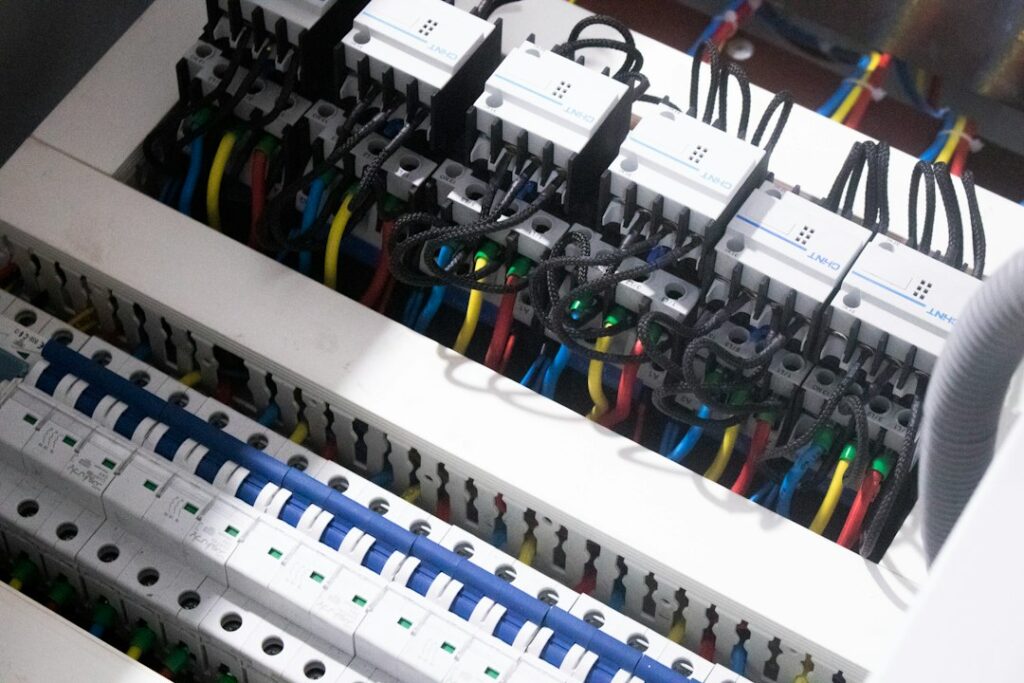
The electrical panel is the quiet center of a house. It takes power from the utility, splits it into branch circuits and shuts those circuits off when something goes wrong. Many Front Range homes built before the 1980s still run on panels sized for a household with a refrigerator, a range and a few lamps, not two home offices, a heat pump and an electric vehicle. Upgrading electrical panel capacity can solve nuisance tripping, open the door to electrification projects and clear an inspection or insurance flag. It is also a permitted job that involves the utility, the building department and a licensed electrician. This guide covers the warning signs, how 100, 150 and 200 amp service compare, what the work involves, which panels inspectors commonly call out and what homeowners can expect to pay. Cost figures are general industry estimates, not quotes.
Part of our Home Electrical guide — start there for the full picture →
Electrical problem? Talk to a licensed electrician.
📞 Call (877) 560-2714When Is Upgrading an Electrical Panel Worth It?
A panel upgrade usually makes sense when the existing equipment is too small for the home’s current or planned electrical load, when it shows signs of overheating or damage, or when the brand or type is one that inspectors, electricians and insurers routinely question. Common triggers include breakers that trip during normal use, 60 or 100 amp service in a house with modern appliances, plans for an EV charger or all-electric heating, an old fuse box, and visible scorching or warmth at the panel cover.
A bigger panel is not automatically the answer. Sometimes one overloaded circuit needs to be split, a single bad breaker needs replacement, or a load calculation shows the existing service has room to spare. A licensed electrician can run a load calculation based on the National Electrical Code and tell you whether you need more amperage, more breaker spaces or simply a cleaner layout. That distinction matters, because a full service upgrade costs several times more than adding a subpanel or replacing a few breakers.
Warning Signs Your Panel Needs Attention
Some signs point to capacity problems. Others point to safety problems that deserve a call to an electrician this week, not next year.
Breakers That Trip Often
A breaker that trips when the microwave and toaster run together is doing its job, but frequent trips on everyday loads suggest circuits that are overloaded or a panel that was never sized for the way the house is used now. NFPA’s home electrical safety guidance lists frequent problems with blowing fuses or tripping circuit breakers among the reasons to call a qualified electrician. Repeated resetting is not a fix.
Fuses Instead of Breakers
Screw-in fuse panels still turn up in older Denver, Englewood, Littleton and Colorado Springs neighborhoods. Fuses can protect a circuit when sized correctly, but the system is easy to defeat: a 15 amp fuse swapped for a 30 amp fuse lets a small wire carry more current than it was designed for. Fuse panels also tend to be small, often 60 amps, with few circuits. Many insurers ask about them, and many buyers’ inspectors recommend evaluation by an electrician.
60 to 100 Amp Service With Modern Loads
A 100 amp service can be adequate for a modest gas-heated home. It gets tight fast once you add central air, an electric dryer, an induction range, a hot tub or a Level 2 EV charger. Homeowners considering an electric tankless unit should look at the circuit requirements early; our guide to the tankless water heater decision covers why whole-house electric models can call for very large dedicated circuits. Heat pumps and induction cooking have similar effects on the load calculation.
Double-Tapped Breakers and Crowded Panels
A double tap is two wires under a terminal designed for one. It is one of the most common panel findings in home inspection reports. Some breakers are listed for two conductors, but many are not, and a loose second wire can arc and overheat. A panel full of double taps and tandem breakers is often a sign the house outgrew its breaker spaces years ago.
Heat, Scorching, Buzzing or Odors
A panel cover that feels warm, discolored breakers, melted insulation, a burning or rubbery smell or a buzzing sound are reasons to stop and call an electrician. NFPA’s safety tips also flag discolored or warm wall outlets and flickering or dimming lights as warning signs. Do not remove the panel cover yourself to look; the bus bars and service conductors inside remain energized even with the main breaker off.
Rust, Water and Physical Damage
Panels mounted on exterior walls, in damp basements or under leaking plumbing can corrode. Rust on breakers or the bus can cause poor connections and failures. Water stains on the cover or inside the box are a strong signal that the panel and the source of moisture both need evaluation.
100 vs 150 vs 200 Amp Service
Service size is the total current the house can draw from the utility. The right number depends on square footage, heating fuel, appliances and future plans, and it should be confirmed with a load calculation rather than a rule of thumb.
- 100 amps: common in mid-century homes and smaller houses. Often workable for a gas-heated home with modest air conditioning, but little headroom for EV charging, electric heat or a major remodel.
- 150 amps: a middle option some electricians recommend when 200 amps would require costly utility changes. It may suit a medium-size home with one or two large new loads.
- 200 amps: the standard choice for many new homes and full upgrades. It typically leaves room for an EV charger, a heat pump, an electric dryer and a range, though an all-electric home with several large loads can still need careful planning.
- 320/400 amps: used on larger homes, homes with multiple EV chargers or all-electric homes with high heating loads. These services often involve a different meter base and more utility coordination.
Breaker spaces matter too. A 200 amp panel with 40 spaces gives far more flexibility than a 200 amp panel with 20 spaces. Ask the electrician how many open spaces will remain after the job, and whether the panel can accept the AFCI and GFCI breakers that modern codes call for. Load management devices, which shed or delay certain loads such as an EV charger when the house is drawing heavily, are another option some electricians suggest when a full service upgrade would be expensive.
What an Electrical Panel Upgrade Involves
A panel swap looks simple from the outside. In practice it is a coordinated job with several parties.
Load Calculation and Scope
The electrician starts by sizing the job: existing loads, planned loads, the condition of the service entrance cable and meter base, grounding and bonding, and the location of the panel. Some homes need only a panel replacement at the same amperage. Others need a full service upgrade, which can include a new meter base, new service entrance conductors and sometimes a new service drop or underground lateral from the utility.
Permit and Utility Coordination
Panel replacements and service upgrades generally require an electrical permit from the city or county building department. Along the Front Range, that might be Denver Community Planning and Development, a city building department such as Aurora or Lakewood, or a county office for unincorporated areas. The utility, often Xcel Energy or a local municipal provider, typically has to disconnect and reconnect service, and for service upgrades it may need to approve the new meter location or upgrade its own equipment. Utility scheduling is one of the most common sources of delay.
The Installation Day
On the day of the swap, power is shut off, the old panel is removed, the new panel is mounted, and each circuit is reconnected and labeled. Grounding electrodes and bonding are checked or upgraded. Many swaps take most of a working day; full service changes can take longer. Plan for the house to be without power for several hours, and for refrigerators, medical equipment and home offices accordingly.
Inspection and Reconnection
After installation, a municipal electrical inspector verifies the work. In some jurisdictions the utility will not restore permanent power until the inspection is passed or a release is issued. Keep the permit card and the final inspection record; buyers, insurers and future inspectors may ask for them.
Things That Can Expand the Scope
Opening up a panel can reveal problems that were hidden. Examples include undersized or damaged service conductors, missing grounding, branch circuits that need repair, and older wiring types. Homes with aluminum branch wiring need connections and devices rated for aluminum or a listed repair method, and homes with knob-and-tube circuits often get a broader rewiring recommendation. A good bid explains how these surprises will be handled and priced.
How Much Does a Panel Upgrade Cost?
Prices vary widely by region, home age, distance from the meter, and whether utility equipment changes. As broad industry estimates, not quotes:
- Panel replacement at the same amperage: often somewhere around $1,500 to $3,000 or more, including breakers, permit and labor.
- Upgrade from 100 to 200 amps: commonly in the range of roughly $2,500 to $5,000, and higher where the meter base, mast or service entrance cable must be replaced.
- Service upgrades with underground or utility-side work: can climb well past $5,000, especially when trenching, a new meter location or a larger utility transformer is involved.
- Subpanel addition: often around $500 to $2,000, depending on size and distance from the main panel.
- 320/400 amp services: frequently priced well above 200 amp upgrades because of heavier equipment and utility requirements.
Drywall patching, stucco or siding repair around a relocated panel, AFCI breakers, surge protection, and permit fees are often line items of their own. Utilities sometimes charge for their part of a service change, while some offer rebates or programs for electrification projects; check current offerings directly with your provider. Get at least two or three written bids that spell out amperage, panel brand and space count, breaker types, grounding work, permit and utility coordination.
Many electricians now recommend adding a whole house surge protector during the panel swap, since recent code editions call for surge protection when services are replaced and the installation is easiest while the panel is open.
Panels That Inspectors Commonly Flag
Home inspectors are not electricians, but the ASHI Standard of Practice directs them to inspect service equipment, the interior components of service panels and subpanels, and overcurrent protection devices, and to describe the amperage rating of the service. During that review, certain brands and conditions come up again and again.
Federal Pacific Electric Stab-Lok
Federal Pacific Electric panels with Stab-Lok breakers are among the most frequently flagged panels in the country. Reports and private testing have raised concerns that some Stab-Lok breakers may not trip reliably under overload. Our guide to the Federal Pacific panel covers the history, how to identify one and the replacement options.
Zinsco and Sylvania-Zinsco
Zinsco panels, also sold under the Sylvania name, are also commonly called out by inspectors and electricians. Concerns raised in the trade include breakers that can loosen or fuse to the bus bar. As with any older panel, the practical step is an evaluation by a licensed electrician rather than a judgment based on the label alone.
Other Common Findings
- Fuse panels and panels with very few circuits.
- Breakers that do not match the panel’s listing (mixed brands).
- Missing knockouts or open slots that expose live parts.
- Improper bonding of neutral and ground in subpanels.
- Panels located in closets, bathrooms or over stairs, where code clearances are not met.
A general electrical inspection by a licensed electrician goes deeper than a home inspection, including testing and removal of devices where appropriate. Buyers who see a panel flagged in their report often order one during the inspection period.
Insurance, Home Sales and Warranties
Insurance companies ask about electrical systems because electrical failures are a well-documented cause of home fires. NFPA’s research on home fires caused by electrical failure or malfunction estimates that local fire departments responded to an annual average of roughly 46,650 such fires in 2020 to 2024. Some insurers ask the age and type of panel on applications, and some may decline coverage, require an electrician’s letter or require replacement for certain panels or for fuse boxes. Practices vary by company and change over time, so ask your agent directly instead of relying on general claims.
In a home sale, a flagged panel can become a negotiating item. Buyers may ask for a credit, a price reduction or replacement before closing. Sellers who upgrade in advance should keep the permit, final inspection and invoice in their disclosure packet. Most home warranty plans exclude pre-existing conditions and code upgrades, so they are rarely a substitute for replacing an outdated panel.
Why This Is a Licensed Electrician’s Job
Panel work is not a do-it-yourself project. The service conductors coming from the utility stay energized even with the main breaker off, and only the utility can disconnect them. Mistakes in grounding, bonding, conductor sizing or torque can create shock and fire hazards that may not show up for months. NFPA’s home safety tips advise having all electrical work done by a qualified electrician, and most jurisdictions require a licensed electrical contractor and a permit for this scope.
When comparing electricians, confirm the Colorado license, ask whether they will pull the permit and coordinate with the utility, and ask who handles drywall or exterior patching. A clear bid lists the panel brand and model, amperage, number of spaces, breaker types, grounding work and how unexpected findings will be priced.
If you are buying a home and the panel is in question, it helps to understand where electrical review fits in the overall inspection process. Our guide to hiring a home inspector explains what a standard inspection covers and when to add a specialist.
Planning an Upgrade: A Simple Checklist
- List current large loads and planned additions, such as an EV charger, heat pump, induction range or hot tub.
- Ask an electrician for a load calculation before choosing an amperage.
- Decide whether you need more amps, more spaces or both, and whether load management could help.
- Get two or three written bids with permit, utility coordination and grounding spelled out.
- Confirm the utility’s lead time and any charges for its side of the work.
- Plan for a power outage day and protect sensitive equipment.
- Keep the permit and final inspection record with your home documents.
More Questions About Electrical Panel Upgrades
Will the power be off all day during a panel upgrade?
Power is usually off for about four to eight hours on the day of a panel replacement or service upgrade, though some jobs take longer. The utility typically disconnects service at the meter or the pole, the electrician swaps the panel and reconnects circuits, and power is restored after an inspection or utility reconnection. Delays can happen when the utility or inspector arrives late, or when the work reveals damaged wiring. Planning ahead for refrigerators, medical equipment and home offices makes the outage easier to manage.
Does a panel upgrade increase home value?
An electrical panel upgrade rarely adds dollar-for-dollar value on its own, but it can make a home easier to sell and insure. Buyers and inspectors often react strongly to outdated fuse boxes, 60-amp service or panels with known problem histories, and replacing them removes an objection during negotiation. A 200-amp service also supports EV chargers, heat pumps and other electrification upgrades that many buyers want. The return is usually better framed as avoided discounts and smoother transactions than as a direct increase in appraised value.
Can solar or a battery system be added without upgrading the panel?
Solar and battery systems can sometimes be added without a full panel upgrade, depending on the panel’s busbar rating, main breaker size and the system’s output. Codes limit how much backfed current a panel can accept, so larger arrays often push homeowners toward a new panel, a derated main breaker or a supply-side connection. Some installers use load-management devices to avoid an upgrade. A licensed electrician or solar installer should run the calculation, because the right answer depends on the specific panel and system size.
What happens if you need a panel upgrade and do not do it?
Skipping a needed panel upgrade usually means living with nuisance tripping, limits on new appliances, and in some cases a higher risk of overheating at worn or overloaded components. Panels with known breaker problems or visible scorching can be a fire hazard, and continuing to add loads to an undersized service makes overheating more likely. Some insurers decline or surcharge homes with certain older panels or fuse boxes. The panel’s condition, not just its age, determines how urgent the upgrade is.
Are there rebates or tax credits for an electrical panel upgrade?
Panel upgrade incentives typically exist when the upgrade is tied to electrification, such as installing a heat pump, heat pump water heater or EV charger. The federal energy tax credit that once covered part of qualifying panel upgrades ended for work completed after 2025, but some utilities and state programs offer rebates for income-qualified households. Program rules and availability change frequently, so homeowners should confirm current eligibility with the utility, the state energy office or a tax professional before relying on any incentive.
References
- Electrical Safety in the Home — National Fire Protection Association
- Home Fires Caused by Electrical Failure or Malfunction — National Fire Protection Association
- NFPA 70, National Electrical Code (NEC) — National Fire Protection Association
- ASHI Standard of Practice for Home Inspections — American Society of Home Inspectors
Frequently asked questions
How much does it cost to upgrade an electrical panel to 200 amps?
As a rough industry estimate, upgrading from 100 to 200 amps often runs about $2,500 to $5,000, including permit and labor. Costs rise when the meter base, service entrance cable or underground utility lines must also be replaced. Get written bids for your specific home.
How do I know if my electrical panel needs to be upgraded?
Common signs include breakers that trip during normal use, a fuse box, 60 or 100 amp service with growing loads, double-tapped breakers, no open spaces, and warmth, scorching or burning smells at the panel. A licensed electrician can confirm with a load calculation.
Do I need a permit to replace an electrical panel?
In most Colorado jurisdictions, yes. Panel replacements and service upgrades generally require an electrical permit and a municipal inspection, and the utility usually must disconnect and reconnect service. A licensed electrician typically pulls the permit.
Is 100 amp service enough for an EV charger?
Sometimes, but not always. It depends on the home's other loads and the charger's circuit size. An electrician's load calculation will show whether there is room, whether a load management device could work, or whether a service upgrade is the better path.
How long does an electrical panel upgrade take?
The installation itself often takes most of a working day, with power off for several hours. Permitting, utility scheduling and the final inspection can stretch the overall timeline to days or weeks depending on the jurisdiction and utility.
Can a panel upgrade be done in winter?
Panel upgrades can be done in winter, though the power outage means the home will be without heat for several hours. Many homeowners schedule winter upgrades on mild days and keep pipes and pets in mind. Frozen ground can complicate underground service work, so overhead service upgrades are usually easier to schedule during cold months.
Do you need a new meter with a panel upgrade?
A new meter base is often needed when the service amperage increases, such as moving from 100 to 200 amps, because the old meter base may not be rated for the higher load. The meter itself usually belongs to the utility and is swapped or reinstalled by them. Same-amperage panel replacements often keep the existing meter base if it is in good condition.
Should knob-and-tube wiring be replaced at the same time as the panel?
Replacing knob-and-tube wiring during a panel upgrade is often worth considering, since the electrician is already working on the system and some insurers will not cover homes with active knob-and-tube circuits. It is not always required by code. A licensed electrician can assess which circuits remain and quote rewiring separately so the homeowner can phase the work.
Buying a Front Range home with an older or undersized panel? Reach out through our contact page and we can connect you with a local inspector who can document the electrical system before you negotiate.