Electrical Panel Upgrade Cost: Typical Ranges in 2026
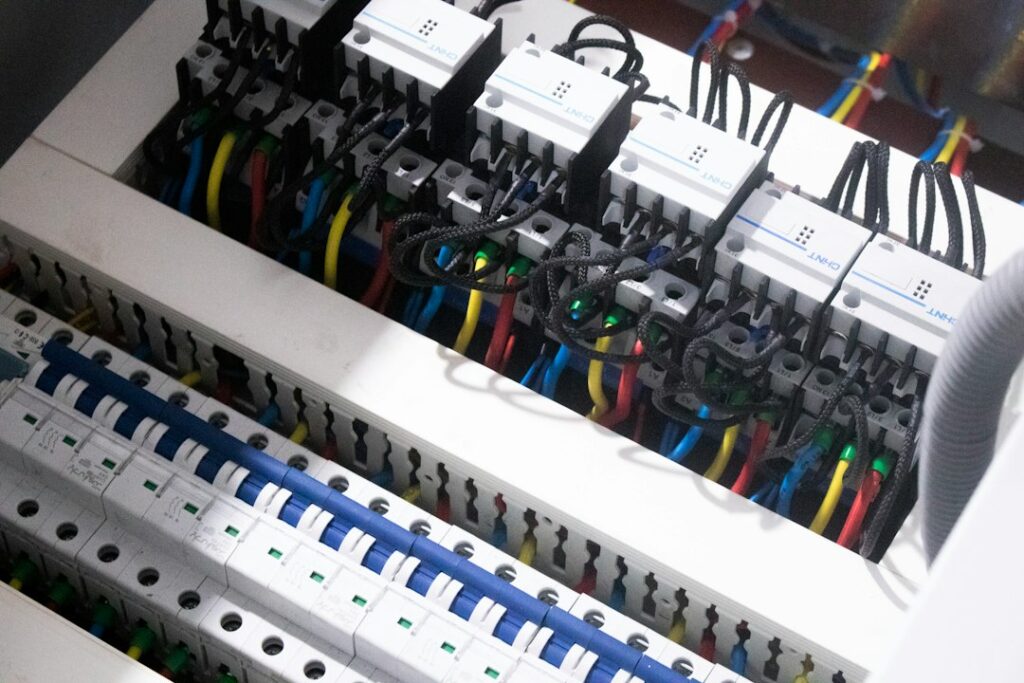
Electrical panel upgrade cost typically runs about $1,500 to $3,000 to replace a panel at the same amperage and roughly $2,500 to $6,000 for a full service upgrade from 100 to 200 amps, with complex jobs, long service runs or 400-amp services going well beyond that. The spread comes from how much of the service has to change (just the panel, or also the meter base, service entrance cable and grounding), how accessible the panel is, permit and utility coordination and what the electrician finds once the cover comes off. These are typical national ranges for 2026; get local written quotes from licensed electricians before deciding.
Part of our Home Electrical guide — start there for the full picture →
Homeowners usually arrive at this question for one of three reasons: an inspector or electrician flagged an old or unsafe panel, the house needs more capacity for a heat pump, EV charger or remodel, or breakers trip constantly. Our main guide to the electrical panel upgrade covers the signs that a panel needs attention; this guide focuses on what the work typically costs, what changes the price, when replacement is worth it and how to read the quote.
Electrical problem? Talk to a licensed electrician.
📞 Call (877) 560-2714Typical Panel Upgrade Costs at a Glance
Typical national range, 2026 — get local quotes. Figures assume a licensed electrician, permit and standard residential work, and do not include drywall or paint repair around the panel.
| Job | Typical installed range | What is usually included |
|---|---|---|
| Breaker replacement or panel repair | About $150–$600 | Replacing a failed breaker, tightening or repairing connections, correcting a double tap |
| Panel replacement, same amperage | About $1,500–$3,000 | New panel and breakers, reconnecting existing circuits, permit |
| Service upgrade, 100 to 200 amps | About $2,500–$6,000 | New panel, meter base, service entrance conductors, grounding and bonding, utility coordination |
| Service upgrade to 400 amps (or 320-amp class) | About $5,000–$10,000+ | Larger equipment, often two panels, more utility work |
| Subpanel addition | About $800–$2,500 | Subpanel, feeder breaker and cable from the main panel |
| Panel relocation | About $2,000–$5,000+ on top of the upgrade | Extending circuits to the new location, new service entry, wall repair |
| Underground service or long overhead run changes | Varies widely | Trenching, conduit, utility requirements; often the largest single variable |
A full service upgrade costs more than a panel swap mainly because it changes everything from the utility’s connection point to the breakers: the service drop or lateral connection, the mast or conduit, the meter base, the service entrance conductors, the main disconnect, the grounding electrode system and the panel itself. A panel-only replacement keeps the existing service and changes just the box and breakers.
What Drives the Price
Scope: panel only versus whole service
The biggest question is whether the existing service is adequate. If the service entrance conductors, meter base and grounding are sound and correctly sized, a same-amperage panel replacement is a contained job. If the house needs more capacity, most of the service has to be replaced to match the new rating, which roughly doubles the work.
Number and condition of circuits
Each circuit has to be landed on a new breaker. Homes with many circuits, aluminum branch wiring, short or brittle conductors that will not reach the new panel’s terminals, or ungrounded older wiring take longer. Codes in effect at the time of the work may also require newer protection types, such as arc-fault or ground-fault breakers, on some circuits when they are modified, which raises breaker costs. If the electrician finds widespread wiring problems, the panel quote may turn into a conversation about partial or full rewiring; our guide to house rewiring cost covers that larger project.
Access and location
Panels in finished walls, tight closets, behind cabinets or in locations that no longer meet clearance rules may need wall work or relocation. Exterior meter and panel combinations are usually simpler to replace than an interior panel fed by a long service cable.
Utility coordination and service type
Upgrading the service requires the utility to disconnect and reconnect power, and sometimes to upgrade its own equipment. Overhead services may need a new mast or weatherhead. Underground services may need new conduit or trenching. Utility scheduling can add days or weeks, and some utility-side work may be billed separately.
Permits and inspection
Panel and service work almost always requires a permit and inspection, and the utility will typically not reconnect a new service without the local inspection sign-off. Permit fees vary by city and county; check with your local building department.
Panel brand and features
Standard panels from major manufacturers are broadly similar in cost. Panels with more spaces, whole-house surge protection, smart breakers, energy monitoring or generator and solar-ready features add cost. Adding a surge protective device during a panel replacement is usually a modest add-on, and current code often calls for one when a service is replaced.
Emergency work
A panel that has failed, burned or been damaged by water or a storm may need same-day work, temporary power and after-hours labor, all of which raise the price. Planned upgrades are almost always cheaper.
Repair, Replace or Upgrade? Decision Logic
The rules of thumb below are general guidance. A licensed electrician’s evaluation, including a load calculation where capacity is the question, should drive the final decision.
When repair is reasonable
- A single failed breaker, a loose connection or a double-tapped breaker in an otherwise sound, modern panel is usually a repair, not a replacement.
- A panel with available spaces and adequate capacity can often accept a new circuit or a subpanel instead of a full upgrade.
When replacement is usually recommended
- Obsolete or problem panels. Some older panel lines have long-standing reliability concerns, and many electricians and inspectors recommend replacing them regardless of age. Our guide to the Federal Pacific panel explains the concerns with one line that still turns up in older Front Range homes. Fuse boxes in active use are also commonly flagged for replacement.
- Damage. Scorching, melted insulation, corrosion, water intrusion, rust or evidence of overheating call for evaluation and usually replacement.
- Age. As a rule of thumb, panels are often described as lasting several decades. A panel well past that range, especially one with hard-to-find replacement breakers, is a candidate for replacement when other work is planned.
- Repairs piling up. If needed breaker and connection repairs approach roughly a third to half the cost of a new panel, replacement often gives better long-term value.
When a capacity upgrade is needed
Capacity is decided by a load calculation, not by how old the house is. Adding a heat pump, electric range, electric water heater, hot tub or EV charger can push a 100-amp service past what it can safely supply. The ENERGY STAR guidance on EV chargers notes that Level 2 chargers “require professional installation” and need a “heavy duty electrical circuit and plug (like an electric dryer) (240 volt).” Our guide to EV charger installation explains how load management and smaller-circuit chargers can sometimes avoid a full service upgrade. A subpanel can add spaces but not capacity; if the service is already near its limit, a subpanel will not solve that.
Signs that justify a call now
The NFPA’s home electrical safety guidance tells homeowners to call a qualified electrician if they have “frequent problems with blowing fuses or tripping circuit breakers,” “discolored or warm wall outlets,” “a burning or rubbery smell coming from an appliance,” “flickering or dimming lights” or “sparks from an outlet.” Those are reasons for an evaluation regardless of budget.
How to Read a Panel Upgrade Quote
Get two or three written quotes from licensed electricians for the same scope. Ask each one to describe the existing service and what they plan to change, so you can tell whether the quotes cover the same work.
Line items that should be there
- Existing service size and the proposed new size, with a note on whether a load calculation was done
- Scope: panel only, or panel plus meter base, service entrance conductors, mast or conduit and main disconnect
- Panel make, model, number of spaces and main breaker rating
- Number and type of breakers, including any arc-fault, ground-fault or dual-function breakers required
- Grounding and bonding work, such as new grounding electrodes and bonding of water and gas piping
- Surge protection, if included
- Circuit labeling at completion
- Permit, inspection and utility coordination, with who is responsible for each
- Drywall, stucco or siding repair, or a clear note that it is excluded
- Expected outage time and schedule
- Warranty on labor and parts
Red flags
- No permit. A contractor who suggests skipping the permit is risking your safety, insurance coverage and resale. Utilities typically need the inspection sign-off to reconnect an upgraded service anyway.
- Capacity upsells without a load calculation. Claims that “every house needs 400 amps” or that an EV charger always requires a service upgrade should be backed by numbers.
- Vague lump sums. A single price with no description of what is being replaced makes it impossible to compare quotes or hold the contractor to the scope.
- Pressure tactics. A real hazard deserves prompt attention, but “sign today or the house will burn down” sales tactics deserve a second opinion from another licensed electrician.
- Reusing damaged parts. Reinstalling old breakers in a new panel, or mixing breakers not listed for the panel, is a shortcut to avoid.
- Large up-front payments before materials are delivered or work begins.
Questions to ask
- What is the current service size, and how did you determine what we need?
- Is the existing service entrance and meter base being reused or replaced?
- Which circuits will need new arc-fault or ground-fault protection under current code?
- How long will the power be off, and who coordinates with the utility?
- Will you label every circuit when you finish?
Good labeling saves money for years afterward. Our guide to electrical panel labeling shows what a complete directory should look like.
What Happens During a Typical Service Upgrade
Knowing the sequence helps you judge timelines and spot missing steps in a quote. A typical 100-to-200-amp upgrade on an overhead service tends to run like this, though details vary by utility and jurisdiction.
- Evaluation and load calculation. The electrician surveys the existing service, panel and circuits, lists current and planned loads and confirms the size needed.
- Permit and utility request. The electrician pulls the permit and asks the utility to schedule a disconnect and reconnect. This step is often the longest wait in the whole process.
- Shutdown and removal. On the scheduled day the utility disconnects power, and the old panel, meter base and service entrance are removed.
- New equipment. The new meter base, mast or conduit, service conductors, main disconnect, panel and grounding electrode system are installed, and each branch circuit is landed on a new breaker.
- Inspection. The local building inspector checks the work. Some jurisdictions allow a same-day inspection; others require a separate visit, during which the home may stay on temporary power or without power.
- Reconnection and labeling. After the inspection passes, the utility reconnects the service, the electrician restores and tests circuits, and the panel directory is filled in.
Expect at least several hours without power and plan for food storage, sump pumps, medical equipment and home offices. In winter, ask how long the furnace will be offline; a short outage is usually fine, but a delayed inspection on a cold day is worth planning around.
A simple budgeting example
Suppose a 1970s ranch has a 100-amp panel in good condition, and the owners want a Level 2 EV charger and a heat pump. As a rule-of-thumb way to frame the decision, they might collect three numbers: a quote for the EV circuit alone with load management, a quote for a 200-amp service upgrade with both new circuits, and the electrician’s load calculation. If the calculation shows the existing service can carry the new loads with load management, the smaller job may be enough. If not, the upgrade quote becomes the realistic budget, and doing it before the heat pump and charger are installed avoids paying twice for circuit work.
Front Range Factors That Affect Panel Work
Electrification and new loads
Cold-climate heat pumps, induction ranges, heat-pump water heaters and EV chargers are increasingly common in Front Range homes, and some local programs encourage them. Many mid-century homes in the metro area were built with 60- or 100-amp services. A load calculation tells you whether a full upgrade is needed or whether load management, a smaller charger circuit or an efficient heat pump can fit the existing service.
Hail, wind and the service mast
Overhead service masts and weatherheads take a beating in hail and windstorms, and a damaged mast or meter base sometimes forces service work sooner than planned. If a storm insurance claim includes the exterior service equipment, ask your electrician to document the damage.
Dry soil and grounding
Dry, rocky soils in parts of the region can make grounding electrodes less effective than in damp soil. The electrician should install grounding electrodes as required by the locally adopted code and make sure bonding to water and gas piping is in place.
Local codes and permits
Cities and counties along the Front Range adopt the National Electrical Code on their own schedules and sometimes with local amendments. The NFPA publishes the code as NFPA 70 and lists the 2026 edition as current, but your jurisdiction may enforce an earlier edition. Requirements for surge protection, outdoor emergency disconnects, arc-fault protection and panel location can differ as a result. Check with your city or county building department before work begins.
How a Home Inspection Flags Panel Problems
The ASHI Standard of Practice directs home inspectors to inspect the service drop, service entrance conductors, “service equipment and main disconnects,” service grounding, the “interior components of service panels and subpanels” and overcurrent protection devices, and to describe “the amperage rating of the service” and the “location of main disconnect(s) and subpanels.” That makes the panel one of the most consistently examined systems in a standard inspection.
A report may note:
- Panel brands or models with known reliability concerns, and fuse panels in active service
- Double-tapped breakers, mismatched or unlisted breakers and breakers that appear oversized for their wire
- Scorching, corrosion, rust or signs of water entry
- Missing dead-front screws, open knockouts or missing blanks
- Missing or deficient grounding and bonding
- Inadequate clearance around the panel
- An unlabeled or poorly labeled circuit directory
- A service size that seems small for the home’s existing or planned loads
Home inspectors do not perform load calculations or engineering analysis, and they recommend evaluation by a licensed electrician when they see defects. That evaluation is the right starting point for a quote. Electrical fires remain a serious risk; the U.S. Fire Administration reports that in 2021, “an estimated 24,200 residential building electrical fires were reported to United States fire departments.” Our electrical hiring guide explains how to choose and vet an electrician.
If you are buying a home and want the panel and service evaluated before closing, or you want an independent opinion after receiving an upgrade quote, contact our team to schedule a Front Range inspection.
References
- Electrical Safety in the Home — National Fire Protection Association
- NFPA 70, National Electrical Code — National Fire Protection Association
- Appliance and Electrical Fire Safety — U.S. Fire Administration
- Electric Vehicle Chargers — ENERGY STAR
- ASHI Standard of Practice for Home Inspection — American Society of Home Inspectors
Frequently asked questions
How much does an electrical panel upgrade typically cost?
Typical national ranges in 2026 are about $1,500 to $3,000 to replace a panel at the same amperage and about $2,500 to $6,000 to upgrade a service from 100 to 200 amps. Larger services, relocations and underground work can cost considerably more. Get local written quotes.
Does every home need a 200 amp panel?
Not always. The answer comes from a load calculation of the home's existing and planned loads. Homes adding heat pumps, electric cooking, EV charging or other large loads often need 200 amps, while others can stay at 100 amps with load management.
How long does a panel upgrade take?
The electrical work itself is often done in a day, with the power off for several hours. Permits, utility disconnect and reconnect scheduling and the final inspection can stretch the whole process to days or weeks.
Does a panel upgrade require a permit?
Almost always. Panel and service work typically requires a permit and inspection, and the utility usually will not reconnect an upgraded service without the inspection sign-off. Check with your city or county building department.
Should an old Federal Pacific or fuse panel be replaced?
Many electricians and inspectors recommend replacing panels from lines with known reliability concerns, along with fuse panels still in service. A licensed electrician should evaluate the specific panel and give a written quote.
Want the electrical panel in a home you are buying evaluated before closing? Get in touch with our team to arrange a Front Range inspection.