How to Put Out an Electrical Fire Safely (and When to Leave)
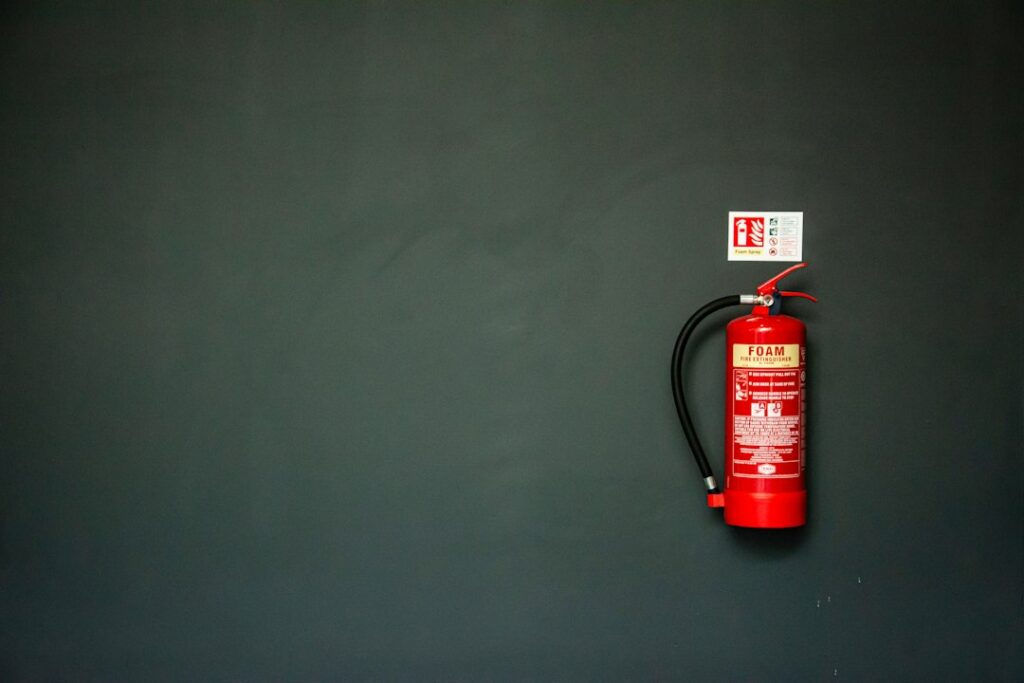
To put out a small electrical fire, never use water: cut the power only if you can reach the plug or breaker without passing the flames, then use a fire extinguisher rated for Class C fires (a multipurpose ABC or a BC unit) and aim at the base of the fire. If the fire is larger than a wastebasket, is spreading, is filling the room with smoke or is inside a wall or the electrical panel, get everyone out, close the door behind you and call 911 from outside. Those two sentences are the whole answer, and the rest of this guide explains the reasoning, the decision points and what to do afterward. It summarizes public guidance from the U.S. Fire Administration (USFA) and the National Fire Protection Association (NFPA) current as of 2026. It is general safety information, not a substitute for training from your local fire department, and the fire department should always be called, even for a fire that seems to be out.
Part of our Specialty Home Inspections guide — start there for the full picture →
Electrical problem? Talk to a licensed electrician.
📞 Call (877) 560-2714The Short Answer: What to Do in the First Few Seconds
Electrical fires tend to start small and grow fast. The order of operations matters more than the tool, so the table below lays out the decision a homeowner faces in the first moments.
| Situation | What to do | What not to do |
|---|---|---|
| Small flame or smoke at a plug, cord or small appliance, and you can reach the plug or breaker safely | Alert others, cut power, then use a Class C-rated (ABC or BC) extinguisher if it is still burning | Do not use water; do not yank a melting cord with bare hands |
| Small fire on a device, but the plug or breaker is behind the flames | Use a Class C-rated extinguisher from a safe distance with an exit at your back, or leave | Do not reach past or over the fire to unplug it |
| Fire coming from an outlet, switch, wall, ceiling or light fixture | Get out, close doors, call 911; the fire may already be inside the wall | Do not open the wall or keep spraying a spot you cannot see behind |
| Fire at or inside the main electrical panel or meter | Get out and call 911; tell the dispatcher it is electrical | Do not touch the panel, the meter or the service wires |
| Smoke filling the room, fire growing, or any doubt at all | Leave immediately, close the door, call 911 from outside | Do not go back in for pets, phones or valuables |
| Fire is out | Keep power off to that circuit, call the fire department to check for hidden heat, then call a licensed electrician | Do not reset the breaker or plug the device back in |
The NFPA’s fire extinguisher guidance puts it plainly: a portable extinguisher is for a fire that is confined to a small area, such as a wastebasket, and is not growing, and only when everyone has exited, the fire department has been called or is being called, and the room is not filled with smoke. Every one of those conditions has to be true. If any is false, the right move is to leave.
Why Water Makes an Electrical Fire Worse
Ordinary tap water conducts electricity. Throwing water on a fire that is still connected to a live circuit can carry current back through the stream, through a wet floor and into the person holding the bucket. That shock hazard is the main reason fire-safety agencies separate electrical fires into their own category.
There is a second problem. Water can spread burning materials that sit on top of it, and many appliance fires involve plastics, oils or other materials that do not behave like a burning log. Water can also short out other parts of the circuit, creating new arcs in places that were not burning before.
The USFA describes Class C extinguishers as being for electrical equipment like appliances, tools or other equipment that is plugged into an outlet, and notes that Class C extinguishers use an agent that does not conduct electricity. That non-conductive agent is the whole point. A Class A water extinguisher, a garden hose, a pot of water or a wet towel all fail that test while the circuit is live.
Does cutting the power make water safe?
Once a circuit is truly de-energized, what is left burning is an ordinary fire of plastic, wood, fabric or paper, and a multipurpose extinguisher still handles it best. The trouble is certainty. A homeowner rarely knows for sure that the right breaker was switched off, that the device has no internal battery or capacitor, or that a second circuit is not feeding the area. For that reason, the conservative rule is simple: treat it as live and keep water away.
Step by Step: Putting Out a Small Electrical Fire
The steps below assume a genuinely small fire, the kind confined to a toaster, a power strip, a phone charger or a single cord. For anything larger, skip straight to the last step.
- Alert everyone in the home. Shout “fire” and get children, older relatives and pets moving toward the exit. Make sure someone is calling 911 or will call as soon as they are outside.
- Check your exit. Before doing anything else, confirm you have a clear path out that does not pass the fire. Keep that path at your back the whole time.
- Cut the power if you can do it safely. If the plug is within easy reach and nowhere near the flames, pull it out by the plug body, not the cord. If the breaker panel is in another room and the path is clear, switch off the breaker for that circuit or the main breaker. Do not reach over or past flames, and do not touch a cord that is melting or sparking.
- Use a Class C-rated extinguisher. Stand several feet back, then follow the PASS method the USFA and NFPA both teach: Pull the pin, Aim low at the base of the fire, Squeeze the lever slowly and evenly, and Sweep the nozzle from side to side.
- Watch it closely. Electrical fires can flare back up when hot components re-ignite plastic. Back away toward your exit and keep watching. If the extinguisher empties and the fire is not out, leave.
- Get out if it grows. If at any point the fire spreads, the smoke thickens or you feel unsure, leave the room, close the door behind you to slow the spread, get outside and call 911 from a mobile phone or a neighbor’s phone.
Small home extinguishers empty in a matter of seconds, which is another reason the fire has to be small to begin with. Practicing with the instructions before an emergency, as the NFPA recommends, helps the few seconds count.
What about baking soda or a fire blanket?
Baking soda is sometimes suggested for a very small fire on a de-energized appliance, because it does not conduct electricity and can smother a small flame. It is not a substitute for an extinguisher, and most people do not have enough of it at hand to matter. A fire blanket is designed mainly to smother small cooking fires and clothing fires. If an appliance fire is small, power is already off and the blanket can be placed over the item without reaching across flames, it may help, but read the product label first. Our explainer on the fire blanket covers what these products are and are not meant for. Neither option replaces a properly rated extinguisher mounted where you can reach it.
Choosing the Right Extinguisher Before You Need It
The best time to think about electrical fires is before one starts. The USFA lists five primary extinguisher classes and notes that multipurpose extinguishers labeled “B-C” or “A-B-C” can be used on most types of home fires, with most home improvement stores carrying multipurpose units that cover Class A through Class C.
| Class | Designed for | Safe on electrical fires? |
|---|---|---|
| A | Ordinary combustibles such as cloth, wood and paper | No, unless also rated C |
| B | Flammable liquids such as grease, gasoline and oil-based paint | No, unless also rated C |
| C | Energized electrical equipment; uses a non-conductive agent | Yes |
| D | Combustible metals, mostly in industrial settings | Not intended for home use |
| K | Cooking oils and fats in commercial kitchens | Not the right choice for electrical fires |
Reading the label is easier than it looks. According to the USFA, the number before the “A” represents a multiple of 1.25 gallons of water, the number before the “B” represents the square footage of fire it can handle, and the “C” simply indicates it can be used on electrical fires. A label reading 1A:10B:C works on all three household classes. The USFA also advises looking for a “UL Listed” or “ULC Listed” label and choosing the largest extinguisher the user can safely and comfortably operate.
For most homes, a multipurpose ABC dry chemical unit near the kitchen, one in the garage and one on each additional level is a common starting point. Our overview of choosing a fire extinguisher for home use explains placement and sizing in more detail, and when you are ready to buy, see our picks in the best fire extinguisher for home roundup.
Dry chemical versus clean agent
Dry chemical ABC units are the inexpensive standard, typically costing far less than clean agent models. The trade-off is mess. The powder is fine, mildly corrosive and spreads through a room, which can damage electronics that were not even burning. Clean agent and CO2 extinguishers rated for Class C leave little or no residue and are often chosen for home offices or rooms full of electronics, though they cost more and usually carry lower ratings for Class A fires. Either type is acceptable on an electrical fire as long as the label includes “C.”
Common Electrical Fire Scenarios and How They Differ
“Electrical fire” covers several very different situations. The right response depends on where the fire is.
Appliances, chargers and power strips
These are the fires a homeowner is most likely to be able to handle, because the source is a single object and the plug is often reachable. Cut power, use the extinguisher, and do not use the item again. A charred power strip or toaster belongs in the trash, not back on the counter.
Space heaters
Portable heaters can ignite nearby curtains, bedding or furniture. Once surrounding materials are burning, it is no longer just an electrical fire, and it can grow quickly. If it is still small, cut power and use a multipurpose extinguisher. If fabric or furniture is fully involved, leave.
Outlets, switches, light fixtures and walls
Smoke or flame coming from an outlet, a switch plate or a ceiling fixture often means the fire started on wiring inside the wall or ceiling. What you see may be only the visible edge of it. This is a get-out-and-call-911 situation. Firefighters have thermal cameras and tools to open walls safely; homeowners do not.
The electrical panel or meter
A fire, heavy smoke or loud buzzing and arcing at the main panel or the outdoor meter involves high-energy equipment that the homeowner cannot de-energize from inside the house. Do not touch it. Leave and tell the 911 dispatcher it is an electrical panel fire so the utility can be called to cut service.
Lithium-ion batteries, e-bikes and scooters
Battery fires behave differently from cord or appliance fires. They can burn intensely, release toxic smoke and reignite after appearing to go out. Our stance mirrors the agencies: for a burning e-bike, scooter, power tool battery or large battery pack, get out and call 911 rather than trying to fight it.
What to Do After the Fire Is Out
The minutes after an electrical fire carry their own risks. Heat can linger inside a wall cavity long after the visible flame is gone, and a damaged circuit can start a second fire if it is turned back on.
- Call the fire department anyway. Even if the fire seems completely out, firefighters can check for hidden heat in walls and ceilings with thermal imaging.
- Leave the power off. Do not reset a tripped breaker or plug the device back in. Leave the affected circuit off until it has been inspected.
- Ventilate carefully. Open windows to clear smoke, and keep people with asthma or other breathing problems out of the area until it clears.
- Call a licensed electrician. The wiring, outlet or appliance circuit should be evaluated and repaired before it is used again.
- Document everything. Take photos of the damage and the extinguisher used, keep the damaged device if it may be a defective product, and contact your insurer.
- Recharge or replace the extinguisher. Any extinguisher that has been discharged, even briefly, needs to be recharged by a service company or replaced if it is a disposable unit.
Dry chemical residue should be cleaned promptly, because it can be corrosive to metals and electronics. For anything beyond a small cleanup, such as soot spread through a room or smoke odor in the HVAC system, our guide to fire damage restoration explains what professional cleanup involves.
Warning Signs That Often Come Before an Electrical Fire
Most electrical fires give some warning first. The NFPA advises calling a qualified electrician or landlord if you notice any of the following:
- Frequent problems with blowing fuses or tripping circuit breakers
- A tingling feeling when you touch an electrical appliance
- Discolored or warm wall outlets
- A burning or rubbery smell coming from an appliance
- Flickering or dimming lights
- Sparks from an outlet
The USFA’s appliance and electrical safety guidance adds everyday habits that prevent many of these fires. It recommends plugging major appliances such as refrigerators, stoves, washers and dryers directly into a wall outlet and never using an extension cord with a major appliance, because the cord can overheat and start a fire. It also advises not overloading outlets or power strips, using power strips with internal overload protection, replacing worn or damaged extension cords right away, and keeping cords out from under rugs where they can be pinched. The USFA estimates that in 2021 roughly 24,200 residential building electrical fires were reported to U.S. fire departments, causing an estimated 295 deaths and 900 injuries, so these habits are worth taking seriously.
Working smoke alarms matter just as much as extinguishers. An electrical fire inside a wall may produce smoke well before anyone sees a flame, and an alarm can buy the time needed to get out. If your alarms are old or missing, see our picks in the best smoke detector roundup.
Front Range Homes: Older Wiring, Dry Air and Winter Loads
Several conditions common along the Colorado Front Range make electrical fire prevention worth a closer look. Older homes in established Denver, Lakewood, Englewood, Boulder and Colorado Springs neighborhoods may still have two-prong ungrounded outlets, undersized circuits, amateur additions or, in some mid-century houses, branch-circuit aluminum wiring that needs proper connectors. These are not automatically dangerous, but they deserve evaluation by a qualified electrician.
Winter is also when electrical loads climb. Space heaters in basements and drafty rooms, heated mattress pads, engine block heaters, heat tape on pipes and holiday lighting all draw power through cords and outlets that may not see that kind of use the rest of the year. The very dry indoor air of a Colorado winter does not cause electrical fires, but it does mean that dust, paper and fabric near a hot appliance dry out and ignite more readily.
A home inspection can flag visible concerns such as scorched outlets, double-tapped breakers, missing knockouts in the panel, ungrounded three-prong outlets and extension cords used as permanent wiring. Our page on what a fire safety inspection covers explains how a broader review of alarms, extinguishers and egress fits in, and the specialty inspections hub lists other targeted evaluations buyers and owners commonly order.
When to Call a Professional
Call 911 first for any fire that is not small, contained and clearly under control, and for any fire involving walls, ceilings, the panel or a lithium-ion battery. After the emergency, a licensed electrician is the right professional for repairs, because electrical work on a damaged circuit is not a do-it-yourself job.
A home inspector is useful in a different way. Buyers who notice scorch marks, warm outlets or a burning smell during a showing, or owners who want an independent look at an older system before a remodel, can ask for a visual evaluation that documents concerns and recommends the right specialist. If you are in the Denver metro or anywhere along the Front Range and want help finding a qualified inspector, reach out through our contact page.
References
- Choosing and Using Fire Extinguishers — U.S. Fire Administration
- Fire Extinguishers — National Fire Protection Association
- Electrical Home Fire Safety — National Fire Protection Association
- Appliance and Electrical Fire Safety — U.S. Fire Administration
- Battery Fire Safety — U.S. Fire Administration
Frequently asked questions
Can you put out an electrical fire with water?
No. Water conducts electricity, so spraying or throwing it on a fire connected to a live circuit can shock the person holding it and spread the fire. Use a Class C-rated extinguisher, such as a multipurpose ABC or a BC unit, and only on a small, contained fire.
What type of fire extinguisher is used for electrical fires?
Look for a label that includes the letter C, which means the agent does not conduct electricity. Multipurpose ABC dry chemical extinguishers are the common household choice, and clean agent or CO2 units rated for Class C are alternatives that leave less residue.
Should you turn off the breaker during an electrical fire?
Only if you can reach the plug or breaker without passing the fire. Cutting power stops the fire from being fed by current. If the panel is near the fire or the fire is at the panel itself, leave the house and call 911 instead.
Do you need to call 911 if you put out an electrical fire yourself?
Yes, it is the conservative choice. Heat can linger inside walls after the visible flame is gone, and firefighters can check for hidden fire with thermal imaging. Keep the circuit off until a licensed electrician has inspected it.
When should you not try to fight an electrical fire?
Leave if the fire is bigger than a wastebasket, is spreading, is coming from a wall, ceiling or panel, involves a lithium-ion battery, or the room is filling with smoke. Close the door behind you, get outside and call 911.
Concerned about scorched outlets, flickering lights or an aging panel in a home you own or are buying? Get in touch with our team to connect with a qualified Front Range inspector.