Electrical Panel Labeling: Circuit Directories That Matter
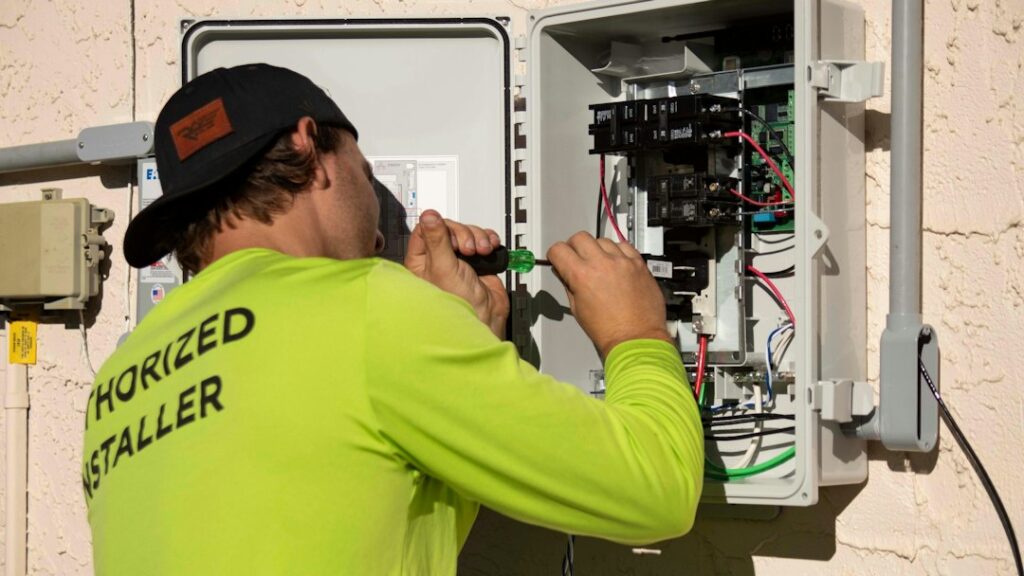
Most people open their breaker panel only when something stops working, and that is exactly when a vague or missing label causes trouble. A directory that reads “lights,” “plugs” and “misc,” or one written by a previous owner before a remodel, leaves everyone guessing which breaker controls the outlet that just sparked or the kitchen circuit that keeps tripping. Good electrical panel labeling is a small, inexpensive job that pays off in emergencies, during repairs and when a house is sold. This guide explains why accurate circuit directories matter, what electrical codes generally expect, how to map circuits with a helper and a plug-in tester, how to label tandem and double-pole breakers, what home inspectors commonly find, and how labeling connects to larger panel upgrades. It is general information; anything beyond identifying circuits, including removing the panel cover, is work for a licensed electrician.
Part of our Home Electrical guide — start there for the full picture →
Why Electrical Panel Labeling Matters
A breaker panel’s directory is the map of a home’s electrical system. When it is accurate, anyone can find and switch off the right circuit in seconds. When it is wrong, people flip breakers at random, shut off the furnace or freezer by mistake, or, worse, believe a circuit is off when it is not.
Emergencies
Smoke from an outlet, a buzzing switch, a flooded basement near receptacles or a fixture that suddenly gets hot all call for cutting power quickly. A clear directory lets anyone in the household, including guests and older children taught how, shut off the right circuit without hunting. The main breaker remains the fallback that shuts off everything at once, but turning off the whole house is not always the best first step in the dark or with medical equipment running.
Electrical fires are a real household risk. The U.S. Fire Administration reports an estimated 24,200 residential building electrical fires in 2021, causing an estimated 295 deaths, 900 injuries and more than $1.2 billion in property loss. Labeling does not prevent those fires by itself, but it shortens the time it takes to respond to warning signs.
Safety for anyone working on wiring
In workplaces, OSHA’s control of hazardous energy rules, commonly called lockout/tagout, require that energy sources be isolated and controlled before servicing equipment, because unexpected startup or release of stored energy can cause serious injury or death. OSHA lists electrocution and burns among the possible injuries and notes that electricians are among the workers who face the greatest risk. Those rules apply to employers, not homeowners, but the concept carries over: before anyone touches wiring, the right circuit must be identified, turned off and verified dead. An accurate directory is the first step; testing with a proper tester is the second, because labels can be wrong.
Repairs, remodels and resale
Electricians bill by the hour, and time spent tracing circuits is time on the invoice. Accurate labels also help when adding a circuit, diagnosing a breaker that keeps tripping or replacing a breaker with an arc-fault or GFCI breaker. During a home sale, a clear directory signals a well-maintained system, while a blank or obviously outdated one commonly shows up in the inspection report.
What Codes Generally Expect From Panel Labels
Electrical work in most U.S. jurisdictions follows an adopted edition of the National Electrical Code, often with local amendments. In general terms, the code expects each circuit in a panel to be legibly identified as to its purpose, with enough detail to distinguish it from all others, and expects that identification to be on a directory at the panel. Vague descriptions that depend on transient conditions, such as “spare room” for a space that no longer exists or “Bob’s office,” are generally discouraged in favor of descriptions tied to fixed locations and uses.
Exact wording, effective dates and enforcement vary by code edition and jurisdiction, and local building departments in Colorado adopt their own editions. Practical takeaways that hold across most editions:
- Every breaker in use should have a description.
- Descriptions should identify the area or equipment served, such as “Kitchen counter receptacles, south wall” or “Furnace.”
- Spare breakers and blank spaces should be marked as such.
- The directory should be legible and durable, typically on the inside of the panel door.
- Subpanels need their own directories, and the feeder breaker in the main panel should identify which subpanel it serves and where it is located.
Electrical permits for new circuits or panel replacements usually include an inspection, and missing or incomplete directories are a common item for inspectors to flag before final approval.
How to Map Circuits With a Helper and a Plug-In Tester
Mapping circuits does not require opening the panel cover. It involves switching breakers off and on and noting what loses power. The job goes far faster with two people and a phone or walkie-talkie, and it is best done in daylight on a day when shutting off power for brief periods is not a problem.
Tools that help
- A plug-in receptacle tester with indicator lights, or a small lamp or radio, to show whether outlets are live.
- A non-contact voltage tester to check switches and fixtures, used according to its instructions and tested on a known live circuit first.
- A floor plan sketch of each level, with every receptacle, switch, fixture and hardwired appliance marked.
- Painter’s tape and a marker to number outlets temporarily as they are mapped.
- A circuit tracer, optional, which uses a plug-in transmitter and a handheld receiver passed over breakers to identify the circuit without switching anything off.
A step-by-step approach
- Prepare. Save work on computers, warn the household, and note devices such as medical equipment, sump pumps, aquariums and network gear that should not be interrupted without planning.
- Number the breakers if the panel does not already show slot numbers.
- Turn on lights and plug testers into as many receptacles as practical.
- Switch off one breaker at a time. The helper walks the house and reports everything that went dead: outlets, lights, appliances, exterior receptacles and garage circuits.
- Test both halves of each duplex receptacle, since some are split between circuits or controlled by a wall switch.
- Record the results on the floor plan and in a list keyed to breaker numbers.
- Restore power and move to the next breaker.
- Check hardwired equipment such as the furnace, water heater, dishwasher, disposal, range, dryer, well pump, smoke alarms and garage door opener.
Expect surprises. Older homes often have one breaker feeding outlets in three rooms, bathroom receptacles that share a circuit with another bathroom, or a single exterior outlet fed from an unlikely interior circuit. GFCI receptacles may protect downstream outlets elsewhere, so a dead outlet in the garage might trace back to a tripped GFCI in a bathroom rather than to the breaker being tested.
Anyone who finds warm breakers, scorch marks, a burning smell, buzzing or breakers that will not stay on during the process should stop and call an electrician. A larger house with 30 or 40 circuits can take a few hours to map completely, so splitting the job across two sessions is reasonable.
Writing a Useful Circuit Directory
A good directory is specific enough that a stranger could use it. Compare “Bedroom” with “Bedroom 2 (NE, upstairs) receptacles and ceiling light.” Some tips:
- Use fixed references: compass directions, floor levels and permanent room names.
- Note dedicated circuits for appliances: refrigerator, microwave, dishwasher, disposal, washer, dryer, range, furnace, air conditioner, water heater.
- Mark exterior and garage circuits clearly, since they matter in storms and floods.
- Mark spares and blanks so nobody assumes an unlabeled breaker is unused.
- Print or write neatly in permanent ink, and protect the card in a sleeve if the panel is in a garage or damp basement.
- Keep a backup with a photo stored on a phone or with house records.
- Update after every change, including remodels and added circuits.
Small adhesive numbers next to each breaker, matching the directory, help when the original slot numbers have worn off. Labels written directly on breakers with a marker tend to fade and are hard to read in a dim panel.
Labeling Tandem and Double-Pole Breakers
Some breakers do not fit the one-breaker, one-slot pattern, and they deserve special attention in the directory.
Tandem breakers
A tandem breaker fits two single-pole circuits into one panel slot. Each half controls a different circuit, so each needs its own description, usually noted as “12A” and “12B” or “top” and “bottom.” Panels accept tandems only in positions and quantities the manufacturer allows, so an unusual number of tandems is something an inspector may question.
Double-pole breakers
A double-pole breaker occupies two adjacent spaces and serves a 240-volt load such as a dryer, range, water heater, air conditioner or subpanel. The two handles are tied together and should be labeled as one circuit spanning both spaces, for example “14/16 Dryer, 240V.” Two separate single-pole breakers next to each other without a handle tie, feeding a 240-volt load, is a common defect electricians and inspectors look for.
The main breaker and subpanels
The main breaker should be identified as the service disconnect. Where a house has a subpanel, the main panel directory should name the feeder breaker and the subpanel’s location, and the subpanel should note where it is fed from. Houses with multiple disconnects, an outdoor meter-main or a generator interlock benefit from a short note on the directory explaining the arrangement.
Other Labels Worth Adding Near the Panel
The circuit directory is the core, but a few other notes posted at or near the panel make the whole system easier to manage:
- Location of the main disconnect if it is not in the panel itself, such as an outdoor meter-main common on newer Front Range homes.
- Subpanel locations, including detached garages, workshops and basement finishes.
- Generator or transfer equipment instructions, including which circuits a portable or standby generator can power and how the interlock works.
- Solar or battery system disconnects, which can keep parts of the system energized even when the utility power is off.
- The date of the last update to the directory and who made it.
Short, durable labels are better than long notes. A laminated card taped inside the panel door, plus a copy stored with house records, covers most households. When a house changes hands, leaving these notes behind is a courtesy the next owner will appreciate the first time a breaker trips at night.
Common Inspection Findings at the Panel
The American Society of Home Inspectors’ Standard of Practice directs inspectors to inspect service equipment and main disconnects, the interior components of service panels and subpanels, conductors and overcurrent protection devices, and to describe the amperage rating of the service and the location of main disconnects and subpanels. Within that scope, panel findings that come up again and again include:
- Missing directory or a directory with many blank entries.
- Mislabeled circuits, often discovered when an inspector trips a GFCI and the label does not match.
- Outdated labels that refer to rooms or appliances that no longer exist.
- Double-tapped breakers, where two conductors are connected under a breaker terminal designed for only one.
- Missing knockouts or open spaces in the panel cover, exposing live parts.
- Oversized breakers for the wire they protect.
- Signs of overheating, corrosion or water entry.
- Panels from brands with known concerns, discussed below.
Inspectors often recommend that an electrician evaluate and correct panel defects and update the directory at the same time. Buyers can ask that labeling be completed as part of repairs, though it is usually a minor item compared with safety defects.
Labeling and Panel Upgrades
A panel replacement is the ideal time to get a complete, accurate directory, since every circuit is disconnected and reconnected. Our guide to electrical panel upgrades covers when an upgrade makes sense, including for electrification projects such as heat pumps and EV chargers. Homes with panels that have a poor reputation, such as some Federal Pacific panels, are often replaced outright, and the electrician should produce a fresh directory as part of the job.
When a panel is replaced, it is worth asking the electrician to confirm the directory before final inspection and to leave a copy. Some electricians provide a printed directory as a standard part of the job.
What Panel Labeling Costs
Labeling is one of the cheaper electrical tasks. These are general 2026 estimates:
- DIY mapping costs little beyond a plug-in tester, a non-contact voltage tester and label supplies, often under $50 total.
- A circuit tracer adds roughly $30 to $150 depending on the model.
- Professional circuit mapping by an electrician commonly runs from about $150 to $500 or more for a typical house, depending on size, the number of circuits and how confusing the existing wiring is.
- Bundled with other work, such as a panel replacement or repair visit, labeling may add only modest labor time.
Correcting the problems mapping uncovers, such as double taps or overloaded circuits, costs more and should be done by a licensed electrician with permits where required.
When to Call a Professional
Homeowners can safely map and label circuits by switching breakers and testing devices. Removing the panel cover, tightening connections, moving wires or replacing breakers is work for a licensed electrician. Scorching, heat, buzzing, a burning odor or breakers that trip immediately after reset call for an electrician promptly. OSHA’s electrical safety page notes that its standards are designed to protect workers from dangers such as electric shock, electrocution, fires and explosions, which is a fair summary of what is behind the panel cover. For background on choosing an inspector who will review the panel, see the home inspector hiring guide and our electrical hub.
References
- Control of Hazardous Energy (Lockout/Tagout) — Occupational Safety and Health Administration
- Electrical Safety — Occupational Safety and Health Administration
- Appliance and Electrical Fire Safety — U.S. Fire Administration
- ASHI Standard of Practice for Home Inspections — American Society of Home Inspectors
Frequently asked questions
Is electrical panel labeling required by code?
In general terms, the National Electrical Code expects each circuit to be legibly identified as to its purpose at the panel, with enough detail to distinguish it from others. Exact wording and enforcement depend on the code edition and local jurisdiction.
How can you find out which breaker controls which outlet?
Switch off one breaker at a time while a helper checks outlets with a plug-in tester or lamp and checks lights and appliances. Record what goes dead on a floor plan. A circuit tracer can speed the job without shutting circuits off.
How should tandem and double-pole breakers be labeled?
Each half of a tandem breaker controls a separate circuit and needs its own description, such as 12A and 12B. A double-pole breaker serves one 240-volt load across two spaces and should be labeled as a single circuit, for example 14/16 Dryer.
Will a home inspector flag an unlabeled panel?
Often, yes. Missing, incomplete or mislabeled directories are common findings, along with double-tapped breakers, missing knockouts and signs of overheating. Inspectors typically recommend an electrician correct defects and update the labels.
How much does it cost to have an electrician label a panel?
As a general 2026 estimate, professional circuit mapping commonly runs about $150 to $500 or more depending on house size and circuit count. DIY mapping with a tester and label supplies often costs under $50.
Panel directory blank, outdated or full of question marks? Send us a note and we can connect you with a Front Range inspector who will look over the panel and flag what an electrician should address.