Breaker Keeps Tripping: Causes and When It’s Dangerous
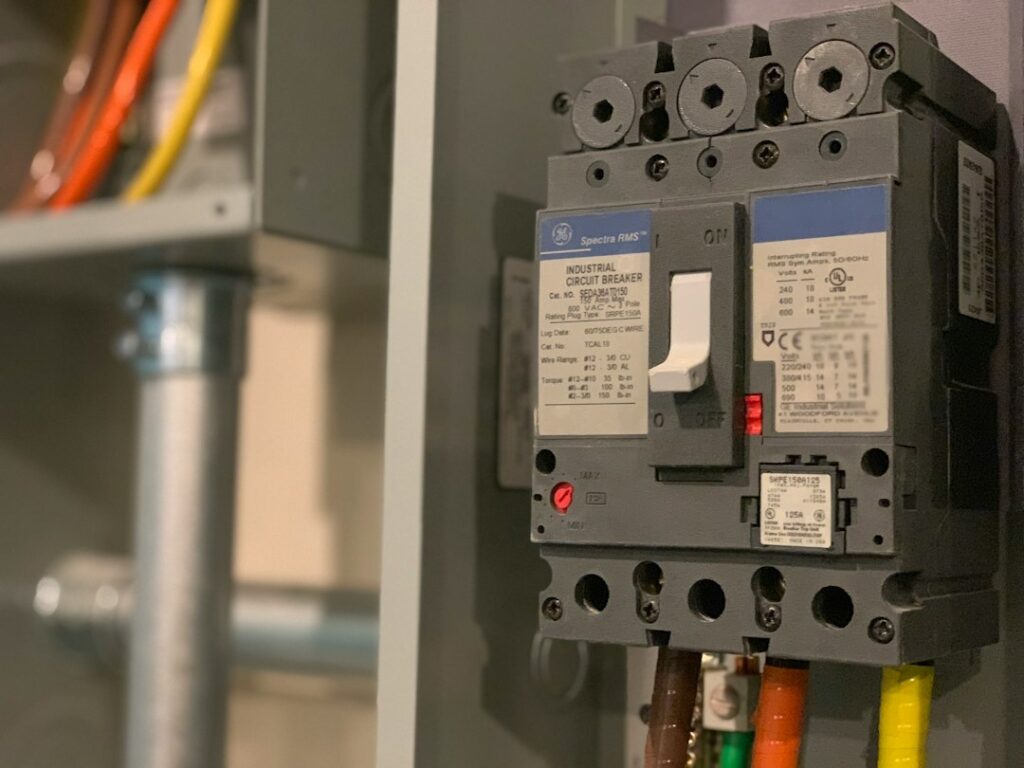
A circuit breaker that trips is doing its job: it detects a condition that could overheat wiring or shock someone, and it cuts power before damage occurs. When a breaker keeps tripping, though, it is sending a message that something on the circuit needs attention. Sometimes the answer is as simple as a space heater and a hair dryer sharing one bathroom circuit. Other times it points to a damaged cord, a failing appliance, a loose connection or a panel that has reached the end of its service life. This guide explains the main reasons breakers trip, the safe way to respond, the warning signs that call for an electrician right away, and how panel type and wiring age factor in. Electrical work carries real shock and fire risk, so the steps here stop at what homeowners can safely observe. Cost figures are general industry estimates, not quotes.
Part of our Home Electrical guide — start there for the full picture →
Electrical problem? Talk to a licensed electrician.
📞 Call (877) 560-2714Why a Breaker Keeps Tripping: The Five Main Causes
Most repeat trips trace back to one of five causes. Identifying which one applies starts with noticing when the trip happens.
| Cause | Typical pattern | Common examples |
|---|---|---|
| Overload | Trips after several minutes of heavy use | Space heater plus microwave; window AC on a shared circuit |
| Short circuit | Trips instantly, sometimes with a pop or spark | Damaged cord, loose wire touching another in a box |
| Ground fault | Trips when a specific appliance runs, often near water | Wet outdoor outlet, failing appliance element |
| Arc fault | AFCI breaker trips, sometimes intermittently | Nail through a cable, frayed cord, loose connection |
| Failing breaker | Trips with little or no load, or feels hot | Worn breaker, poor connection to the bus bar |
Circuit Overloads
An overload happens when devices on a circuit draw more current than the breaker and wire are rated to carry. A standard 15-amp general-purpose circuit can handle only so much at once, and heat-producing appliances such as space heaters, hair dryers, toasters, electric kettles and portable air conditioners draw a lot.
Overload trips usually follow a pattern. Everything works until one more appliance turns on, and then the breaker trips a few seconds or minutes later. The fix is usually redistribution rather than repair: move a high-draw device to a different circuit, or stop running two at the same time.
NFPA’s electrical safety guidance recommends plugging only one heat-producing appliance, such as a coffee maker, toaster or space heater, into a receptacle outlet at a time, and plugging major appliances directly into a wall outlet rather than an extension cord or plug strip. The U.S. Fire Administration similarly advises against overloading outlets and power strips and recommends power strips with internal overload protection.
If a circuit overloads during ordinary daily use, it may simply be undersized for how the household lives now. Kitchens and home offices in older Front Range homes, many built with far fewer circuits than modern homes, are common examples. An electrician can add a dedicated circuit for a heavy load.
Short Circuits
A short circuit occurs when a hot conductor contacts a neutral conductor, creating a low-resistance path and a sudden surge of current. Breakers respond to shorts almost instantly. Signs of a short include:
- The breaker trips the moment a specific device is plugged in or switched on.
- A pop, flash or spark at an outlet or switch.
- Scorch marks or a burnt smell at an outlet, switch or cord.
- The breaker trips immediately when reset, even with nothing plugged in.
If the short follows a particular appliance, the appliance or its cord is the likely culprit, and it should stay unplugged until repaired or replaced. If the breaker trips immediately with everything on the circuit unplugged, the short is likely in the fixed wiring, a device or a junction box. That is a job for a licensed electrician, not further resetting.
Ground Faults and GFCI Protection
A ground fault is a type of short where current finds an unintended path to ground, which can include a person. Ground faults are most dangerous in wet areas: kitchens, bathrooms, laundry rooms, garages, unfinished basements and outdoors.
Ground-fault circuit interrupters (GFCIs) are designed to catch these. NFPA explains that GFCIs reduce the risk of shock and protect people from hazardous ground faults that can come from defective appliances or corded equipment, and that a ground fault at a standard receptacle will trip the circuit breaker or GFCI receptacle that feeds it. NFPA also says GFCIs should be installed by a licensed electrician in bathrooms, kitchens, garages and basements, and that all outdoor receptacles should be GFCI protected.
GFCI Outlet vs Breaker
GFCI protection can live in a receptacle or in the breaker itself. When outlets go dead, check for a tripped GFCI receptacle before assuming the breaker is the problem. One GFCI outlet often protects several downstream outlets, sometimes in another room or outside. The guide to a GFCI outlet not working explains how to find and reset the controlling device.
Outdoor outlets that trip after rain or snowmelt, which is common during Front Range spring storms, often have water getting into the box or a cover that is not rated for use while a cord is plugged in.
Arc Faults and AFCI Breakers
Arc-fault circuit interrupters (AFCIs) are designed to detect dangerous electrical arcing, which can start a fire without ever tripping a standard breaker. NFPA’s guidance explains that arc faults can be caused by things like a nail driven into a wire while hanging a picture, or by plugging in an appliance with a defective cord, and that an AFCI senses abnormal arcing and opens the circuit when it detects it. NFPA also recommends asking a licensed electrician to install AFCI protection if a home does not already have it.
Nuisance Trips vs Real Problems
AFCI breakers have a reputation for nuisance tripping, especially earlier generations. Some motors, vacuum cleaners, treadmills and certain electronics can produce electrical noise that trips sensitive devices. Before assuming a trip is a nuisance, consider:
- Does the trip follow one appliance? Try that appliance on a different circuit.
- Did the trips start after a picture was hung, a shelf was mounted or other work was done on the walls?
- Is a cord pinched under furniture or a rug?
- Did trips begin after a new device was added to the circuit?
Never replace an AFCI or GFCI breaker with a standard breaker to stop trips. NFPA warns that a defective device may create a false sense of security, and it recommends replacing defective AFCIs and GFCIs immediately and testing them monthly according to the manufacturer’s recommendations. An electrician can determine whether a device is faulty, whether a firmware or model update is available, or whether a genuine wiring problem exists.
A Failing Breaker or a Problem Panel
Breakers wear out. A breaker that trips with very little load, feels warm, will not stay reset, or shows discoloration may itself be the fault. Loose connections where the breaker attaches to the bus bar can also cause heating and trips.
Panels With Known Concerns
Some older panels carry reputations that inspectors and insurers pay attention to. Federal Pacific Electric panels with Stab-Lok breakers are the best-known example; concerns center on breakers that may not trip reliably under overload. That is the opposite of the symptom described here, which is one reason a panel that seems to trip frequently, or one that never trips, both deserve a closer look. The guide to the Federal Pacific panel covers identification and replacement options.
Panels can also simply run out of capacity. Homes that add an EV charger, heat pump, hot tub or kitchen remodel may overload an older 100-amp service. The guide to an electrical panel upgrade covers when an upgrade makes sense and what drives cost.
Aluminum Branch Wiring
Some homes built in the mid-1960s through the 1970s used aluminum branch-circuit wiring. Aluminum connections can loosen and overheat at outlets, switches and splices, which can lead to intermittent problems. Trips, warm cover plates and flickering lights in a home of that era are worth investigating. The guide to aluminum wiring explains how to identify it and the remediation methods electricians use.
What to Do When the Breaker Trips
Use this sequence the first time a breaker trips:
- Unplug or switch off loads on the affected circuit. Turn off lights and unplug appliances in the rooms that lost power.
- Find the tripped breaker. It usually sits in a middle position or is visibly out of line with the others.
- Reset it once. Push the handle firmly to the full off position, then back to on. Stand to the side of the panel, keep hands dry, and do not open the panel cover.
- Add loads back one at a time. If the breaker trips when a specific device is plugged in, that device is the likely cause.
- Stop if it trips again right away. Do not keep resetting a breaker that trips immediately with nothing connected.
Repeatedly resetting a breaker forces it to interrupt a fault again and again, and it masks a condition that could be overheating somewhere inside a wall. NFPA advises calling a qualified electrician or landlord for frequent problems with blowing fuses or tripping circuit breakers. Frequent trips are on that list for a reason.
Homes With Fuses
Some older homes still have fuse panels. Never replace a blown fuse with a higher-rated one to stop it from blowing. The fuse rating is matched to the wire size, and oversizing it removes protection against overheating. Fuse panels themselves are not automatically unsafe, but many insurers ask about them, and their limited capacity often struggles with modern loads. An electrician can evaluate whether the existing fuse panel is adequate or whether replacement makes more sense.
How to Map Circuits and Prevent Repeat Trips
Many repeat trips happen because nobody in the household knows what is actually on each circuit. A panel directory that says “kitchen” or “bedrooms” is rarely precise, and in older homes it is often wrong after decades of remodeling.
Mapping circuits is a low-risk project that does not require opening the panel cover. With a helper, switch off one breaker at a time and walk the house to note which outlets, lights and appliances lose power. A plug-in outlet tester or a simple night-light makes checking receptacles faster. Record the results on a new directory card. Once the map exists, patterns become obvious: the bathroom outlet that shares a circuit with a bedroom, or the garage freezer on the same circuit as the workshop.
With a map in hand, prevention is mostly about spreading loads:
- Keep space heaters, hair dryers and portable AC units on separate circuits where possible.
- Avoid running two heat-producing countertop appliances on the same kitchen circuit at the same time.
- Plug major appliances directly into wall outlets, as both NFPA and USFA recommend.
- Replace worn or damaged extension cords, and keep cords out from under rugs and carpets, which USFA specifically cautions against.
Seasonal Patterns on the Front Range
Trip patterns often follow the seasons. Winter cold snaps bring out space heaters, heat tape on pipes and engine block heaters in garages, all of which add load to circuits that are fine the rest of the year. Summer brings window air conditioners and dehumidifiers in basements. If a breaker only trips in January or July, the seasonal load is the first thing to look at, and a dedicated circuit for that load may be the lasting fix.
Danger Signs: When to Stop and Call an Electrician Now
Some symptoms move this from a nuisance to a hazard. NFPA lists the following as reasons to call a qualified electrician:
- Frequent problems with blowing fuses or tripping circuit breakers.
- A tingling feeling when touching an electrical appliance.
- Discolored or warm wall outlets.
- A burning or rubbery smell coming from an appliance.
- Flickering or dimming lights.
- Sparks from an outlet.
Additional red flags include a panel cover or breaker that is hot to the touch, buzzing or crackling from the panel, scorch marks, and melted insulation. If there is smoke, visible flame or a strong burning odor, leave the home and call 911. Do not open the panel to investigate.
NFPA’s broader fire data puts these warnings in context: it reports that home structure fires involving electrical failure or malfunction caused an estimated annual average of 527 civilian deaths in 2020 through 2024.
What an Electrician Will Check and What It Costs
A licensed electrician typically measures load on the circuit, inspects the breaker and its connection to the bus, checks devices and splices on the circuit, and tests GFCI and AFCI function. The fix might be as simple as a new receptacle, or as involved as a new circuit or panel.
Costs vary by region and scope. Rough industry estimates:
- Diagnostic service call: commonly in the range of roughly $100 to $300.
- Replacing a standard breaker: often estimated around $150 to $350 installed.
- Replacing an AFCI or dual-function breaker: generally more, since the device costs more.
- Adding a dedicated circuit: frequently in the range of roughly $300 to $1,000 or more depending on distance and access.
- Panel replacement or service upgrade: often several thousand dollars, with permit, utility coordination and capacity driving the total.
Electrical work in Colorado generally requires a licensed electrician and, for many projects, a permit and inspection through the local building department.
What a Home Inspection Covers
For buyers, the ASHI Standard of Practice directs inspectors to inspect the service equipment and main disconnects, interior components of service panels and subpanels, conductors, overcurrent protection devices, and ground fault and arc fault circuit interrupters. Inspectors describe the amperage rating of the service and the predominant branch-circuit wiring method. The same standard does not require inspectors to measure amperage, voltage or impedance, so a load calculation or detailed circuit diagnosis is outside a standard inspection.
An inspection can flag a recalled or problematic panel, double-tapped breakers, scorch marks, aluminum branch wiring and missing protection. The guide to hiring a home inspector covers what to expect from the electrical portion of the report.
References
- Electrical Safety in the Home — National Fire Protection Association
- Appliance and Electrical Fire Safety — U.S. Fire Administration
- ASHI Standard of Practice for Home Inspections — American Society of Home Inspectors
Frequently asked questions
Is it dangerous if a breaker keeps tripping?
Frequent tripping means the breaker is responding to a real condition such as an overload, short or fault. NFPA lists frequent tripping as a reason to call a qualified electrician. It becomes urgent if there is a burning smell, warm or discolored outlets, sparks or a hot panel.
How many times can I reset a tripped breaker?
Reset it once after unplugging loads on the circuit. If it trips again immediately, or trips repeatedly over days, stop resetting it. Repeated resets can mask overheating wiring, and the circuit should be diagnosed by a licensed electrician.
Why does my breaker trip when nothing is plugged in?
A breaker that trips with no load usually points to a short or ground fault in the fixed wiring, a damaged device or junction box, or a failing breaker. This is not a DIY diagnosis; leave it off and call an electrician.
Can a circuit breaker go bad?
Yes. Breakers can wear out or lose a good connection to the panel bus bar, which causes heat and trips at low loads. Warmth, discoloration or a breaker that will not stay reset are signs it needs evaluation and possibly replacement.
Why does my AFCI breaker keep tripping?
AFCIs trip when they sense arcing, which can come from a damaged cord, a nail in a cable or a loose connection. Some appliances also produce electrical noise that trips sensitive devices. Never swap an AFCI for a standard breaker; have an electrician find the cause.
Buying a home with an older panel or wiring you are unsure about? Get in touch with InspectandTest to schedule an inspection that includes a close look at the electrical system.