Double Pole Breaker: 240-Volt Circuits, Handle Ties and Sizing
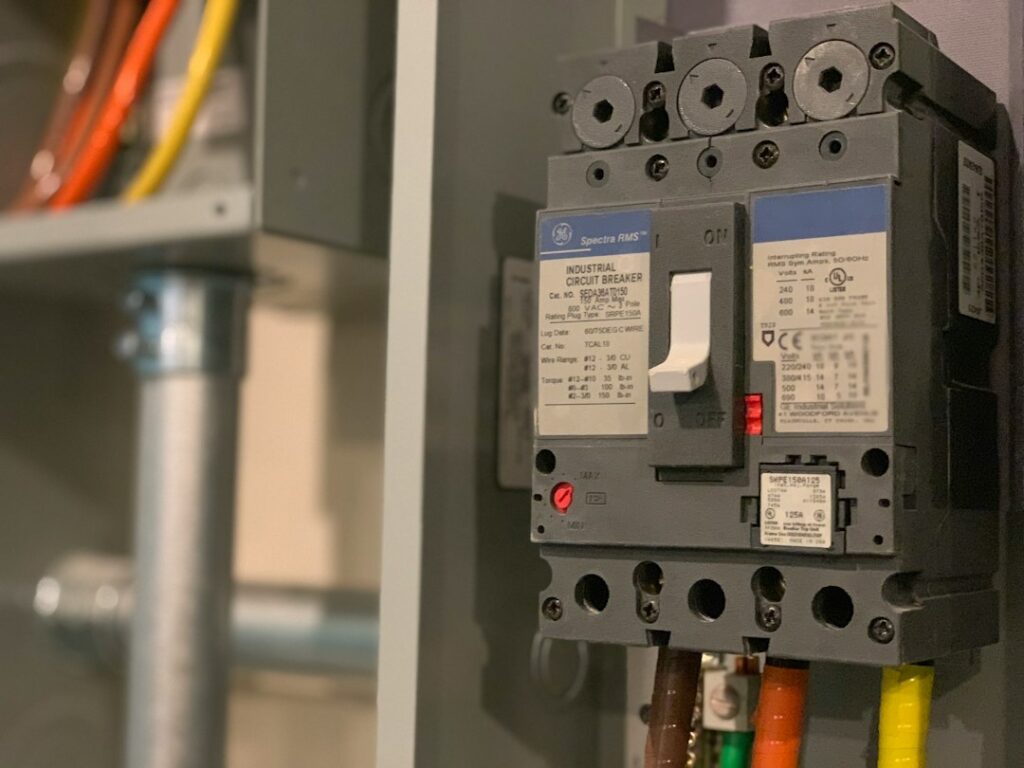
Most of the breakers in a home panel are narrow, single-handle devices that feed ordinary 120-volt lights and outlets. A handful are twice as wide, with two handles joined together. Those are double pole breakers, and they power the biggest loads in the house: the electric dryer, the range, the water heater, the central air conditioner or heat pump, and increasingly an EV charger. Understanding what a double pole breaker does helps homeowners read their panel, plan for new appliances and make sense of inspection report notes about handle ties, double taps and mismatched breaker sizes. This guide covers how 240-volt circuits work, the difference between a true common-trip breaker and two single breakers tied together, how breaker size relates to wire size, what inspectors commonly flag, how generator interlocks fit in, why these breakers trip and what work typically costs. It explains concepts only. Panel work belongs with a licensed electrician, because the service conductors and main lugs stay energized even with the main breaker off.
Part of our Home Electrical guide — start there for the full picture →
What Is a Double Pole Breaker?
A double pole breaker is a single device that connects to two adjacent bus stabs in the panel. In a standard North American residential panel, adjacent positions on each side of the panel alternate between the two “legs” of the incoming service. Each leg measures about 120 volts to neutral, and the two legs measure about 240 volts to each other. By grabbing one stab on each leg, a double pole breaker delivers 240 volts to the circuit.
Internally, a true double pole breaker has a common trip mechanism. If an overload or short circuit occurs on either leg, the breaker opens both legs at once. That is the key safety feature. A 240-volt appliance with one leg still energized is not “off,” even if it does not run, and anyone servicing it could be exposed to 120 volts from the remaining leg.
Common ratings in homes include 20, 30, 40, 50 and 60 amps, with larger double pole breakers used to feed subpanels. The rating is printed on the handle or the breaker body.
What Double Pole Breakers Power
Most large residential loads run at 240 volts because doubling the voltage halves the current needed for the same power, which allows reasonable wire sizes. Typical double pole circuits include:
- Electric clothes dryers. Usually on a 30-amp double pole breaker in many homes.
- Electric ranges, cooktops and wall ovens. Often 40 or 50 amps, depending on the appliance.
- Electric water heaters. Commonly 30 amps for standard tank units, with tankless electric units often needing much more.
- Central air conditioners and heat pumps. Sized to the nameplate on the outdoor unit.
- Electric furnaces and air handlers with electric heat strips. Often multiple large circuits.
- EV chargers. Level 2 charging equipment runs at 240 volts.
- Subpanels. A double pole breaker in the main panel feeds a garage, basement or addition subpanel.
- Welders, kilns, hot tubs and well pumps. Common specialty loads.
Many of these appliances use a dedicated 240-volt receptacle. Our guide to the 220 outlet explains receptacle types, the 3-wire versus 4-wire dryer and range cord change, and why the plug shape matters.
EV charging is the fastest-growing reason homeowners add a double pole circuit. The U.S. Department of Energy’s Alternative Fuels Data Center notes that EV owners may install Level 2 (240-volt) charging equipment at home for faster charging, that electricians can tell homeowners whether the home has adequate electrical capacity, and that a qualified electrician can add circuits to accommodate Level 2 charging when needed. The EV charger installation guide covers charger sizing, load calculations and permits.
120/240-Volt Circuits
Some appliances, including most ranges and dryers, use both voltages: 240 volts for heating elements and 120 volts for controls, lights or timers. These circuits include a neutral conductor along with the two hots. A double pole breaker still provides the overcurrent protection, and the neutral returns to the neutral bar.
Multiwire Branch Circuits
A double pole breaker can also feed a multiwire branch circuit: two 120-volt circuits that share one neutral. A classic example is a kitchen split receptacle or a dishwasher and disposal on one three-wire cable. The two hots must land on opposite legs so the neutral carries only the imbalance between them, and both hots must disconnect together. A double pole breaker, or two single-pole breakers with a listed handle tie, accomplishes both.
Common Trip vs Handle Ties
Here is where many inspection report comments come from. There are three different arrangements that can look similar at a glance.
True Double Pole Breaker (Common Trip)
One device, two poles, an internal common trip mechanism. A fault on either leg trips both. This is the standard way to protect a 240-volt appliance.
Two Single-Pole Breakers With a Listed Handle Tie
A handle tie is a small manufacturer-made clip or bar that mechanically joins the handles of two single-pole breakers so they are switched on and off together. For a multiwire branch circuit that only needs simultaneous disconnect, a listed handle tie can be acceptable. Handle ties are not the same as an internal common trip, though. Whether one tripped breaker reliably pulls its partner off depends on the breaker design, so 240-volt appliance circuits are normally on true double pole breakers rather than tied singles.
Improvised Ties: Nails, Wire and Pins
A nail, a piece of wire or a cotter pin pushed through the handles is not a listed handle tie. It is a common amateur repair and a common inspection finding. It suggests the circuit was modified without proper parts and is worth an electrician’s review.
Two Unconnected Single-Pole Breakers
Occasionally an inspector finds a 240-volt circuit fed by two single-pole breakers with no tie at all. One can trip or be switched off while the other stays on, leaving the appliance partly energized. That is a clear correction item.
Sizing: Matching the Breaker to the Wire
A breaker’s main job is to protect the wire it feeds from overheating. That means the breaker rating is chosen based on the conductor size and type, the appliance’s requirements and the applicable code, not on what keeps the breaker from tripping.
As a general concept, commonly cited residential pairings for copper building wire are roughly:
- 14 AWG copper with 15-amp breakers
- 12 AWG copper with 20-amp breakers
- 10 AWG copper with 30-amp breakers
- Larger gauges (8, 6 and up) for 40, 50 and 60 amps, depending on wire type, insulation rating and installation conditions
These are simplified rules of thumb. The actual allowable rating depends on the conductor material (copper or aluminum), insulation temperature rating, terminal ratings, cable type, how many conductors run together and the code edition in force. Air conditioners and heat pumps follow their own logic: the outdoor unit’s nameplate lists a minimum circuit ampacity and a maximum overcurrent protection rating, and the breaker should not exceed that maximum.
An oversized breaker on undersized wire is one of the more serious panel findings, because the breaker may allow the wire to carry more current than it can handle safely. The Consumer Product Safety Commission’s Home Electrical Safety Checklist makes the same point about fuses: the wrong size can allow too much current to flow and cause the wiring to overheat, creating a fire hazard. A common scenario is a tripping 20-amp circuit “fixed” by swapping in a 30-amp breaker on the same 12-gauge wire. The tripping stops; the risk increases.
Double-Tapped Breakers and Other Inspection Findings
The ASHI Standard of Practice directs home inspectors to inspect the interior components of service panels and subpanels, the conductors and the overcurrent protection devices. Within that scope, double pole breakers attract a predictable set of comments.
- Double taps. Two conductors under one breaker terminal. Most breakers are listed for a single conductor per terminal unless the manufacturer specifically allows two. A double tap on a double pole breaker often means a second circuit or a subpanel was added without a breaker of its own.
- Oversized breakers for the wire. For example, a 40-amp breaker on wire that appears sized for 30 amps, or an AC breaker above the nameplate maximum.
- Improvised or missing handle ties. As described above.
- Mismatched breaker brands. Breakers not listed or classified for the panel.
- Aluminum branch conductors without suitable terminations. Often seen on older range and dryer circuits; terminal compatibility and torque matter.
- Heat damage. Discolored insulation, melted plastic or scorch marks at the breaker or bus.
- Missing knockouts or open spaces. Gaps in the dead front where a breaker was removed and no filler plate installed.
Why do inspectors care so much about details that look minor? Large 240-volt loads carry substantial current for long periods. A dryer or water heater can run for an hour or more at a time, and an EV charger can draw heavy current for most of a night. Any weak point, whether a loose lug, an undersized conductor or a breaker that does not match the wire, has hours to build heat. The U.S. Fire Administration’s national estimates for 2023 count 23,700 residential building fires attributed to electrical malfunction, with 305 deaths and 800 injuries. Those figures cover every kind of electrical malfunction, not double pole circuits specifically, but they explain why inspectors treat improvised panel work as something to correct rather than tolerate.
Older Front Range homes add their own wrinkles. Houses built before central air or electric ranges were common often had smaller services, and later owners added 240-volt circuits one at a time. The result can be a panel where several large circuits were squeezed in with tandems, double taps or a breaker swapped to whatever size was on hand. Homes that converted from gas to electric appliances, or added a heat pump or charger in recent years, deserve a careful look at whether the panel and service still have room for the load.
Most of these are straightforward for an electrician to correct when found early. Our guide to hiring a home inspector explains how electrical findings are typically presented in a report.
Generator Interlocks and Backfed Breakers
Many Front Range homeowners use portable generators for winter outages and wildfire-related public safety power shutoffs. Connecting a generator to house wiring safely requires a way to make sure the house is disconnected from the utility first. Otherwise, generator power can travel back out through the service and endanger line workers.
One common approach is a generator inlet that feeds a dedicated double pole breaker in the main panel, combined with a listed mechanical interlock. The interlock is a sliding plate or bracket that physically prevents the main breaker and the generator breaker from being on at the same time. That generator breaker is technically a backfed breaker, so it normally must be secured with a manufacturer-approved hold-down kit to keep it from being pulled loose while energized.
The alternative is a manual or automatic transfer switch, which performs the same isolation in a separate device. The generator transfer switch guide compares interlocks, transfer switches and standby systems. Inspectors commonly note a generator inlet without any visible interlock or transfer device, and “suicide cords” (male-to-male plugs used to backfeed an outlet) are a serious safety concern wherever they are found.
Why a Double Pole Breaker Trips
A double pole breaker that trips is doing its job. Common reasons include:
- Overload. The appliance drew more current than the breaker allows, sometimes because of a failing component such as a heating element, motor or compressor.
- Short circuit. A hot conductor contacted another hot or neutral, often inside the appliance or at a damaged cord.
- Ground fault. A hot conductor contacted grounded metal; on GFCI-protected 240-volt circuits, small leakage currents can also trip the breaker.
- Hard-starting motors. AC compressors with a failing start capacitor can draw high current at startup.
- Loose connections or a worn breaker. Heat at a loose terminal can contribute to nuisance tripping, and breakers can wear out.
- Undersized breaker. A newer appliance may need a larger circuit than the old one, which may also mean larger wire.
Repeated tripping should not be solved with a larger breaker. The breaker keeps tripping guide walks through how electricians narrow down overloads, shorts and ground faults. On a 240-volt circuit that trips immediately on reset, leave it off and call an electrician.
CPSC’s checklist also recommends exercising circuit breakers periodically so they do not become stuck, and notes that appliances with compressor motors, such as refrigerators, freezers and air conditioners, should be turned off first because they can be damaged by repeated rapid cycling. Homeowners who are uncomfortable at the panel can ask an electrician to do this during a service visit.
What Double Pole Breaker Work Commonly Costs
Costs depend on breaker brand and type, panel condition, wire run length, permits and local labor. As broad 2026 ranges for planning only:
- Standard double pole breaker part: often around $15 to $75; GFCI or specialty double pole breakers often $90 to $200 or more.
- Electrician replacing a breaker: commonly about $150 to $350 including the service call.
- New 240-volt circuit for a dryer or range: often $300 to $1,000 or more, depending on distance and access.
- Level 2 EV charger circuit: frequently $500 to $2,000 or more for the electrical work, plus the charger itself; panel upgrades are extra if capacity is short.
- Generator inlet with interlock: commonly $600 to $1,500 or more installed.
- Correcting double taps or improper ties: often $150 to $500.
Permits are generally required for new circuits, panel modifications and generator connections in Front Range jurisdictions, and an electrician typically handles the permit and inspection.
When to Call a Licensed Electrician
Reading the panel label, noting breaker sizes and checking whether a tripped breaker resets are reasonable homeowner observations. Call an electrician for any of the following:
- A 240-volt breaker that trips immediately or repeatedly.
- Heat, scorch marks, a burning smell or buzzing at the panel.
- Plans for a new major appliance, EV charger, heat pump or subpanel.
- An inspection report noting double taps, improvised ties, oversized breakers or mismatched brands.
- A generator connection that lacks an interlock or transfer switch.
The electrical systems hub collects related guides on panels, breakers, outlets and service upgrades.
References
- Charging Electric Vehicles at Home — U.S. Department of Energy, Alternative Fuels Data Center
- Home Electrical Safety Checklist (Publication 513) — U.S. Consumer Product Safety Commission
- ASHI Standard of Practice for Home Inspections — American Society of Home Inspectors
- Residential Building Electrical Malfunction Fire Trends — U.S. Fire Administration
Frequently asked questions
What is a double pole breaker used for?
A double pole breaker connects to both legs of the service to supply 240 volts. It typically protects circuits for electric dryers, ranges, water heaters, air conditioners, heat pumps, EV chargers and subpanels.
Can two single-pole breakers replace a double pole breaker?
Not for a 240-volt appliance. Those circuits normally need a true double pole breaker with a common trip. A listed handle tie on two single-pole breakers can be acceptable for some multiwire branch circuits, but nails or wire used as ties are not.
What size wire goes with a 30-amp double pole breaker?
As a common rule of thumb, 10 AWG copper is paired with 30-amp breakers, but the correct size depends on wire type, insulation rating, terminals and local code. An electrician should confirm sizing.
Why does my double pole breaker keep tripping?
Common causes include an overloaded or failing appliance, a short circuit, a ground fault, a hard-starting compressor or a loose connection. Never fix repeated trips by installing a larger breaker.
How much does it cost to replace a double pole breaker?
As a broad 2026 range, a standard double pole breaker often costs about $15 to $75, and an electrician typically charges around $150 to $350 to replace one, including the service call.
Planning around a home with a crowded panel, a generator hookup or an EV charger on the wish list? Request a referral to a local inspector who can document the electrical system before you close.