220 Outlet: 240-Volt Receptacles, Circuits and Appliances
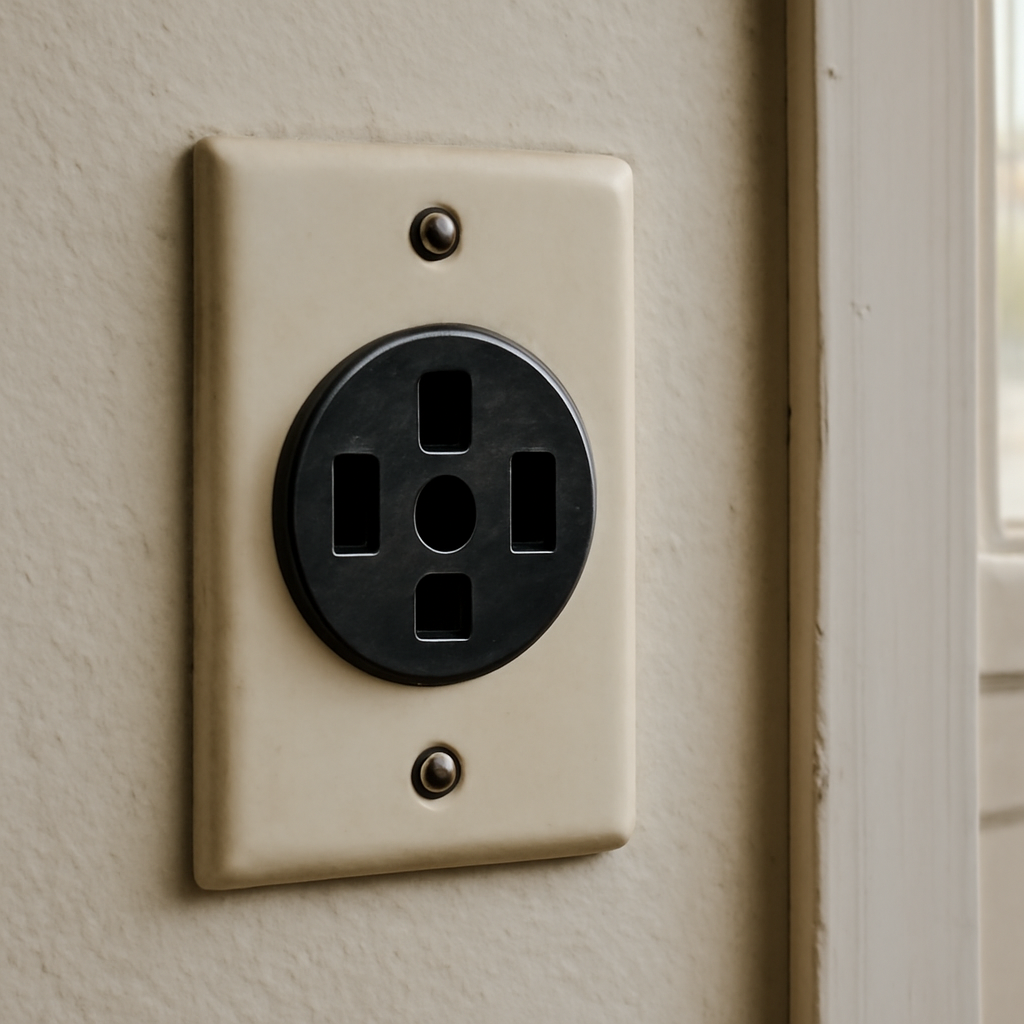
Most outlets in a house deliver about 120 volts, which is plenty for lamps, phones and kitchen gadgets. A handful of appliances need more: electric dryers, ranges and cooktops, some water heaters, larger air conditioners, welders, shop tools and Level 2 electric vehicle chargers. Those loads usually connect to a larger receptacle that people call a “220 outlet,” even though the voltage in a modern North American home is nominally 240. This guide explains what that outlet is, how the common receptacle styles differ, why newer dryer and range connections use four wires instead of three, how dedicated circuits and panel capacity limit what can be added, and what warning signs suggest trouble. It is a conceptual overview, not an installation guide. Work on these circuits involves enough energy to cause serious injury, so it should start with the power off and verified, and new circuits or receptacle changes generally belong with a licensed electrician, with a permit where the local jurisdiction requires one.
Part of our Home Electrical guide — start there for the full picture →
What a 220 Outlet Actually Is
A typical U.S. home receives split-phase service from the utility: two energized conductors, often called legs or lines, plus a neutral. Measured from either hot leg to neutral, the voltage is roughly 120. Measured between the two hot legs, it is roughly 240. A 220 outlet is simply a receptacle wired to both hot legs so the appliance can draw on that higher voltage.
The names “220,” “230” and “240” all describe the same thing in everyday speech. Older references, appliance nameplates and plenty of contractors still say 220, partly because nominal utility voltages were somewhat lower decades ago. Current standards use 240 volts nominal, and actual readings drift up or down a few volts depending on the utility and load. For a homeowner, the practical takeaway is that a “220 outlet,” a “240 outlet” and a “240-volt receptacle” are the same category of device.
Higher voltage allows an appliance to deliver the same power with less current, which keeps wire sizes manageable for heavy loads. A 5,000-watt dryer element at 240 volts draws about half the current it would at 120 volts. That is why big heating and motor loads are designed around 240 volts.
Common 240-Volt Receptacle Types
Receptacle and plug shapes follow configurations standardized by the National Electrical Manufacturers Association, usually written as a NEMA number such as 14-30. The first part describes the wiring arrangement and voltage, and the second part is the amperage rating. The shapes are deliberately different so that a 30-amp dryer cord cannot be plugged into a 50-amp range receptacle, or a 240-volt tool into a 120-volt outlet. The configurations homeowners encounter most often include:
- NEMA 10-30: an older three-prong 30-amp style found on many dryer circuits installed before the late 1990s. It has two hot slots and a neutral, with no separate ground.
- NEMA 14-30: the current four-prong 30-amp style used for most electric dryers, with two hots, a neutral and a ground.
- NEMA 10-50: an older three-prong 50-amp range receptacle, the range counterpart to the 10-30.
- NEMA 14-50: a four-prong 50-amp receptacle common for electric ranges, RV hookups and many plug-in EV chargers.
- NEMA 6-50: a three-prong 50-amp 240-volt receptacle with two hots and a ground but no neutral, often used for welders, some shop equipment and some EV chargers.
- NEMA 6-20 and 6-15: smaller 240-volt receptacles used for some window or wall air conditioners and stationary tools.
The appliance’s nameplate and installation manual specify which receptacle and circuit it needs. Swapping a cord or receptacle just to make a plug fit, or using an adapter between styles, can defeat the safety design and is a frequent red flag during inspections.
3-Wire vs 4-Wire Dryer and Range Connections
Many older homes on the Front Range still have three-prong dryer and range receptacles, and buyers often notice that a new dryer arrives with a four-prong cord. The difference is about grounding.
In older three-wire installations, the appliance’s metal frame was commonly bonded to the neutral conductor. That arrangement was permitted for decades, but it means the frame relies on the neutral both to carry normal return current and to provide the fault path. If that neutral connection loosens or breaks, the appliance frame can become energized.
Code changes adopted in the late 1990s generally require new dryer and range circuits to be four-wire, with a separate equipment grounding conductor and the neutral isolated from the frame. Existing three-wire circuits are often allowed to remain in place where they were legally installed, but newer installations and circuits that are extended or replaced are typically expected to use four wires. Rules depend on the code edition adopted locally, so confirm with your building department.
Two practical points follow:
- Matching the cord to the receptacle. Dryers and ranges are usually shipped so they can be configured for either three-wire or four-wire cords. The bonding strap or jumper at the appliance terminal block has to be set correctly for the cord being used. A four-wire cord installed with the bond still in place, or a three-wire cord with the bond removed, creates a hazard. The manufacturer’s instructions describe the correct setup.
- Upgrading the circuit. Converting a three-wire receptacle to four-wire generally requires a ground path back to the panel, which may mean a new cable run. That decision is best made by an electrician after inspecting the existing wiring.
Dedicated Circuits and Breaker Sizing
Most 240-volt appliances are served by a dedicated circuit, meaning the circuit feeds only that appliance. The circuit typically starts at a double-pole breaker in the panel, which occupies two adjacent spaces and connects to both hot legs. The two handles are tied together so that both legs shut off at once.
The breaker size, the wire gauge and the receptacle rating are meant to match each other and the appliance. As general examples, a 30-amp dryer circuit commonly uses 10-gauge copper conductors, and a 50-amp range circuit commonly uses larger conductors, often 6-gauge copper, though the correct size depends on the conductor material, cable type, insulation rating and length of the run. A breaker larger than the wire can safely carry is a serious defect, because the wire can overheat before the breaker trips. Aluminum branch conductors, which are more common on larger 240-volt circuits, need to be sized and terminated for aluminum.
Some loads are treated as continuous. The U.S. Department of Energy’s Alternative Fuels Data Center notes that EV charging infrastructure is considered a continuous load by the National Electrical Code and points to NEC Article 625 for most charging-equipment requirements. Continuous loads are typically sized so the breaker and wire have extra headroom above the charger’s steady draw, which is one reason an EV charger that pulls 40 amps is often installed on a 50-amp circuit.
Newer code editions have also expanded ground-fault protection requirements to include many 240-volt receptacles in locations such as garages, basements, laundry areas and outdoors. Where those rules have been adopted, a new receptacle may need GFCI protection, often provided by a two-pole GFCI breaker. The specifics vary by edition and local amendments, so this is another item to confirm with the electrician and the permitting office.
Panel Capacity: Can the House Handle Another 240-Volt Load?
Adding a 240-volt receptacle is not only about the outlet. Each new circuit needs two open spaces in the panel, and the total load on the service has to stay within what the service and panel are rated for. Homes with 100-amp service, or with older panels that are already full, often hit a limit when owners want to add an EV charger, a hot tub or a heat pump on top of an existing electric range and dryer.
Electricians usually perform a load calculation that estimates the home’s demand based on square footage, appliances and heating and cooling equipment. The result shows whether the existing service can absorb the new load. If not, options may include load-management devices that share capacity between circuits, smaller-amperage charger settings, or a service and panel upgrade. Our guide to the electrical panel upgrade explains when that becomes necessary and what the process involves.
Common Appliances on 240-Volt Circuits
Electric vehicle chargers
The Alternative Fuels Data Center describes Level 2 charging as 240-volt equipment that EV owners may install at home for faster charging, and notes that some homes may have insufficient electrical capacity for it, though a qualified electrician can add circuits to accommodate the capacity needed. It also states that installations must comply with local and state codes, that permits may be required, and that outdoor installations need outdoor-rated equipment. Some chargers plug into a NEMA 14-50 or 6-50 receptacle; others are hardwired. Plug-in setups are convenient, but the receptacle sees heavy, sustained use, so quality and correct installation matter. Our EV charger installation guide compares plug-in and hardwired options.
Clothes dryers
Electric dryers are the most common reason a laundry room has a 240-volt receptacle. The U.S. Fire Administration advises always plugging major appliances, including washers and dryers, directly into a wall outlet and never using an extension cord with a major appliance, because the cord can overheat and start a fire. USFA also reports that failure to clean was the leading factor contributing to the ignition of clothes dryer fires in homes from 2018 to 2020, which makes venting as important as wiring; see our guide to dryer vent installation. Homes with gas dryers still need a 120-volt receptacle for the controls and drum motor, plus a properly installed gas line; our gas dryer hookup guide covers that setup.
Ranges, cooktops and ovens
Freestanding electric ranges often plug into a 50-amp or 40-amp receptacle behind the unit, while built-in cooktops and wall ovens are frequently hardwired to a junction box. The receptacle behind a range is hard to see, so scorching or a loose plug can go unnoticed for years.
Generators, shop tools and other loads
Portable generators connect to home wiring through a transfer switch or interlock with a dedicated inlet, often a 240-volt twist-lock configuration. Backfeeding a house through a dryer receptacle with a so-called suicide cord is dangerous to occupants and to utility workers and should never be done. Our guide to the generator transfer switch explains the safe options. Welders, compressors, table saws and kilns in garages and workshops also commonly use 240-volt receptacles, as do some well pumps, hot tubs and baseboard heaters, many of which are hardwired.
Questions to Ask Before Adding a 240-Volt Outlet
A short conversation with the electrician before work starts tends to prevent the most common regrets. Useful questions include:
- Does the panel have two open spaces, and does the load calculation support the new circuit? If not, ask what load-management or upgrade options exist.
- Should this be a receptacle or a hardwired connection? Some EV chargers, water heaters and hot tubs are better hardwired, which can avoid receptacle wear and may change GFCI requirements.
- Which receptacle configuration and amperage match the appliance? Bring the nameplate data or the installation manual so the circuit is sized for the equipment, not the other way around.
- Is there room to size up for the future? Running slightly larger conductors now can make a later charger or appliance upgrade cheaper, though breaker size must still match the receptacle.
- Who pulls the permit, and when is the inspection? Keep the permit record with the house documents; buyers and insurers sometimes ask for it.
Written answers to these questions also make competing quotes easier to compare, since bids that look far apart often differ mainly in scope.
Warning Signs of a Problem 240-Volt Outlet
Because these receptacles carry large currents, small connection problems can generate a lot of heat. Signs worth acting on include:
- Scorching or discoloration on the receptacle face, the plug blades or the wall around the outlet.
- A plug or cord that feels warm or hot during normal operation, or a burning or melting-plastic smell.
- A loose fit, where the plug sags or falls out, suggesting worn contacts inside the receptacle.
- Repeated breaker trips when the appliance starts or runs. Our guide to a breaker that keeps tripping walks through common causes.
- Partial operation, such as a dryer that tumbles but will not heat, or a range where some elements work and others do not, which can point to one hot leg being lost.
- Adapters, extension cords or mismatched plugs used to make an appliance fit a different receptacle.
USFA’s general guidance to replace wall outlets when plugs do not fit snugly applies here as well. If any of these signs appear, turn the appliance off, switch off its breaker if it is safe to reach, and have an electrician evaluate the circuit before using it again.
Permits, Costs and What Inspectors Check
New 240-volt circuits, receptacle changes and panel work commonly require an electrical permit, and Colorado municipalities and counties set their own requirements and fees. A permit brings an inspection that checks wire size, breaker size, grounding and the receptacle installation. Some jurisdictions allow homeowners to pull permits for work on their own primary residence; others restrict that. Check with the local building department before work begins.
Costs vary with the distance from the panel to the receptacle location, wall and ceiling access, wire size, and whether the panel has room. As a rough industry estimate, adding a 240-volt receptacle near an accessible panel may run from a few hundred dollars to around $1,000 or more, while long runs through finished spaces, outdoor work or circuits that require panel changes cost more. A service upgrade is a separate and much larger project. Treat these as ballpark figures and get written quotes.
The ASHI Standard of Practice lists conductors, overcurrent protection devices, a representative number of installed receptacles, and GFCI and AFCI devices among the electrical items an inspector inspects, and it asks the inspector to describe the amperage rating of the service. It also states that inspectors are not required to measure amperage, voltage and impedance. In practice, inspectors look for scorched receptacles, missing cover plates, double-pole breakers sized larger than their wires, three-wire appliance connections, and extension cords on major appliances. For help choosing an inspector, start with the home inspector hiring guide or the electrical hiring hub.
References
- Charging Electric Vehicles at Home — U.S. Department of Energy, Alternative Fuels Data Center
- Appliance and Electrical Fire Safety — U.S. Fire Administration
- NFPA 70, National Electrical Code — National Fire Protection Association
- ASHI Standard of Practice for Home Inspections — American Society of Home Inspectors
Frequently asked questions
Is a 220 outlet the same as a 240 outlet?
Yes, in everyday use. U.S. homes receive split-phase service at a nominal 240 volts between the two hot legs, and 220 or 230 are older or informal names for the same circuit. Appliance nameplates may list any of these figures.
Why does my new dryer have a 4-prong cord when my outlet has 3 holes?
Newer circuits are generally required to be four-wire, with a separate ground, while many older homes still have legal three-wire receptacles. The cord and the bonding strap at the dryer must match the receptacle. An electrician can advise whether to change the cord or upgrade the circuit.
How much does it cost to add a 220 outlet?
As a rough estimate, a 240-volt receptacle near an accessible panel may cost a few hundred dollars to around $1,000 or more. Long runs, finished walls, outdoor work or a panel that lacks capacity raise the price. Get written quotes.
Can I plug an EV charger into a dryer outlet?
Sharing a dryer receptacle with an EV charger is generally not recommended, because EV charging is a continuous load and the circuit may not be sized or rated for it. A dedicated circuit installed by a licensed electrician, with a permit where required, is the safer approach.
Why is my 240-volt outlet hot or scorched?
Heat or scorching usually means a loose or worn connection in the receptacle, plug or wiring. Stop using the appliance, turn off the breaker if it is safe to reach, and have a licensed electrician inspect the circuit before using it again.
Seeing scorched receptacles or three-prong dryer outlets in a home you are considering? Let us know and we will help you find a Front Range inspector who reviews 240-volt circuits, panel capacity and appliance connections.