Outlet Covers: Childproofing, Tamper-Resistant Outlets and Plates
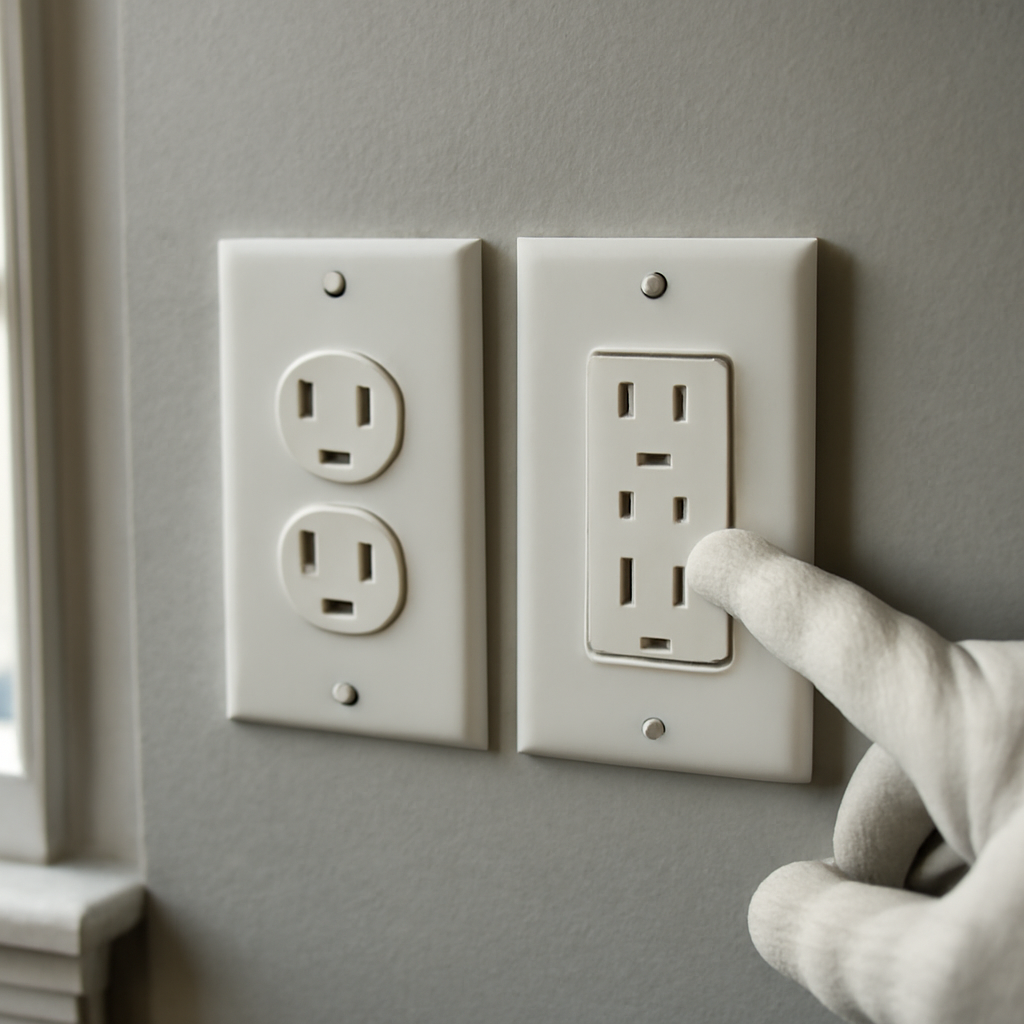
Wall receptacles sit right at crawling height, and the two slots in a standard outlet are exactly the size of a hairpin, key or paper clip. That is why outlet covers are one of the first purchases on most childproofing lists. The category is broader than the little plastic plugs sold in packs of 36, though. It includes sliding self-closing plates, tamper-resistant receptacles with built-in shutters, weatherproof in-use covers for outdoor outlets, and the ordinary cover plates that close off every receptacle and switch box in the house. This guide compares the choices, explains where tamper-resistant outlets fit, describes what home inspectors look for at receptacles and plates, and offers hedged cost ranges. It summarizes public guidance from the U.S. Consumer Product Safety Commission (CPSC), the National Fire Protection Association (NFPA) and the U.S. Fire Administration; it does not replace advice from a licensed electrician.
Part of our Home Electrical guide — start there for the full picture →
Electrical problem? Talk to a licensed electrician.
📞 Call (877) 560-2714Which Outlet Covers Work Best for Childproofing?
The short answer: a tamper-resistant (TR) receptacle is the most durable protection because it is part of the outlet itself and does not depend on anyone remembering to put a cap back in. Where receptacles are not TR, a sliding self-closing cover plate is usually a better everyday choice than removable plug-in caps. Plug-in caps are inexpensive and work for outlets that are rarely used, but they come with two well-known problems: they get pulled out and left on the floor, and a small cap is something a child can put in the mouth.
CPSC’s childproofing guidance addresses both points directly. It says outlet covers and outlet plates can help protect children from electrical shock and possible electrocution, and it advises making sure outlet protectors cannot be easily removed by children and are large enough that children cannot choke on them. The same guidance adds that if receptacles are being replaced, a tamper-resistant type should be used. That combination of advice points toward a layered approach: TR receptacles where possible, sliding plates or box-style covers where outlets stay in use, and plug caps only as a stopgap.
Quick comparison
- Plug-in caps: lowest cost, easy to install, but removable by adults and some children, often lost, and a potential choking item if small.
- Sliding self-closing plates: replace the existing cover plate; spring-loaded shutters slide back over the slots when a plug is removed.
- Box-style or plug-enclosure covers: enclose the receptacle and the plugged-in cords, useful behind entertainment centers or for lamps a toddler can reach.
- Tamper-resistant receptacles: internal shutters open only when both prongs of a plug press in at the same time; no accessory to lose.
- Weatherproof in-use covers: outdoor covers that stay closed with a cord plugged in, protecting the receptacle from rain and snow.
Plug-In Caps, Sliding Plates and Box Covers Compared
Most families end up using more than one type. The right choice depends on how often an outlet is used, what is plugged into it and who is able to reach it.
Plug-in caps
Plug-in caps are flat plastic pieces with two or three prongs that fit into the receptacle slots. They are cheap and need no tools, which makes them common in rentals and in homes where a baby has just started crawling. Their weaknesses are practical. Each time an adult unplugs a vacuum or phone charger, the cap has to be found and pushed back in, and in real households that often does not happen. Caps that fit loosely can be pried out with small fingers. And because they are small, a cap that ends up on the carpet becomes a separate hazard for a child who puts everything in the mouth. If caps are used, larger one-piece designs that are hard to pull out are generally preferable to tiny, thin ones, and they are best reserved for outlets that are almost never used.
Sliding self-closing plates
A sliding plate replaces the existing wall plate and is held on by the same screws. Spring-loaded covers slide aside when a plug is pushed in and snap back over the slots when the plug is removed. Because nothing has to be stored or replaced, these plates tend to stay effective over time. They do require removing the old plate, which means working close to energized parts unless the circuit is turned off at the panel first.
Box-style and plug-enclosure covers
Box covers mount over the outlet and enclose both the receptacle and the plugs, with a small slot for cords to exit. They are handy where a lamp, TV or router has to stay plugged in and a child can reach the plug. The tradeoff is bulk: some will not fit behind furniture, and a box cover can trap heat if a large transformer or power adapter is inside it.
Tamper-Resistant Receptacles: How They Differ
A tamper-resistant receptacle looks almost identical to a standard outlet, but behind the slots are spring-loaded shutters. NFPA describes TR receptacles as functioning electrically like a standard receptacle while adding a built-in safety mechanism that helps prevent electricity from energizing anything stuck into the receptacle that should not be there. In practice, the shutters open only when equal pressure is applied to both slots at once, as happens with a plug. A single object pushed into one slot meets a closed shutter.
Many TR receptacles are marked with the letters “TR” on the face, which is one quick way to identify them during a walk-through. Model electrical codes have required tamper-resistant receptacles in many locations in new dwellings for a number of code cycles, and NFPA’s guidance notes the requirement applies even in homes without children, because owners and tenants change and children visit homes of relatives and friends. Exactly which receptacles must be TR, and which edition of the electrical code applies, depends on the jurisdiction and when the house was built or the work was permitted. Older homes, including many built before the late 2000s along the Front Range, may have few or no TR receptacles unless they were updated during a remodel.
The U.S. Fire Administration’s outlet safety messages also recommend installing tamper-resistant outlets in homes with young children, and replacing wall outlets if plugs do not fit snugly. Loose-fitting receptacles are worth attention on their own: a plug that sags or falls out of the wall can expose the prongs while still partly energized.
Retrofitting TR outlets
Swapping a standard receptacle for a TR receptacle is a common upgrade, and TR devices are widely available at modest cost. Even so, receptacle replacement involves working inside an energized box, checking for aluminum branch-circuit wiring in some older homes, and confirming grounding and polarity afterward. A licensed electrician can replace several receptacles in a single visit and spot problems such as scorched contacts, loose back-stab connections or ungrounded three-prong outlets at the same time.
Outdoor Outlets and Weatherproof In-Use Covers
Outdoor receptacles face rain, snow, irrigation spray and, in Colorado, freeze-thaw cycles and intense UV that can make plastic covers brittle. Older flip-lid covers only protect the outlet when nothing is plugged in; once an extension cord is connected, the lid stays open and water can reach the slots. Weatherproof “in-use” or “bubble” covers stay closed with a cord plugged in, and current electrical codes commonly call for this style at many outdoor locations. Cracked, missing or permanently propped-open covers are a common exterior finding.
Outdoor outlets should also be GFCI protected. NFPA’s electrical safety guidance states that all outdoor receptacles should be GFCI protected, and it describes GFCIs as devices that shut off power when a ground fault occurs. A GFCI receptacle that trips frequently, will not reset or is protecting downstream outlets nobody can locate is a frequent source of confusion; the guide to a GFCI outlet that is not working walks through the usual causes.
Cover Plates, Junction Boxes and Inspection Findings
Every receptacle, switch and junction box in a house is supposed to be closed with a cover. That cover is more than cosmetic. It keeps fingers and objects away from terminal screws and conductors, contains sparks if a connection fails, and keeps dust and insulation out of the box. A missing plate on a single receptacle can expose energized terminals at floor level, which is exactly where a crawling child spends the day.
Home inspectors routinely note the following conditions at receptacles and plates:
- Missing cover plates on receptacles, switches or junction boxes, including boxes in basements, attics and garages.
- Cracked or broken plates that leave openings around the device or sharp edges.
- Gaps around the device where the drywall opening is oversized or the box is recessed too far behind the wall surface.
- Loose receptacles that move when a plug is inserted, which can stress the wire connections behind the plate.
- Open junction boxes in unfinished spaces, sometimes left after a light fixture or appliance was removed.
- Missing or damaged outdoor covers and outlets that are not GFCI protected where protection is expected.
- Signs of overheating such as discoloration, melted plastic or warm plates.
Open boxes deserve particular attention because they often show up in places families do not look, such as above a dropped ceiling or behind a storage shelf. The guide to junction boxes explains why splices must be enclosed in an accessible box with a cover and what a missing cover can indicate about past work.
The American Society of Home Inspectors (ASHI) Standard of Practice calls for inspecting a representative number of installed lighting fixtures, switches and receptacles, along with ground fault circuit interrupters and arc fault circuit interrupters. Inspectors generally test a sample of receptacles with a plug-in tester rather than every outlet in the home, and they are not required to remove cover plates throughout the house. Childproofing devices themselves are usually outside the formal scope, but missing plates, open boxes and damaged receptacles are standard findings that buyers can act on.
Warning signs that call for an electrician
Some conditions go beyond swapping a plate. Warm or discolored outlets, a burning smell, sparks when a plug is inserted, outlets that work intermittently, and breakers that trip repeatedly all point to problems behind the wall. NFPA lists discolored or warm wall outlets, sparks from an outlet and frequent tripping among the reasons to call a qualified electrician. If a receptacle has quit entirely, the troubleshooting steps in the guide to an outlet that stopped working can help sort a tripped device from a failed connection before calling for service.
USB Outlets, AFCI and GFCI: Related Upgrades
Childproofing is often the moment families revisit other receptacle upgrades. Several are worth knowing about when planning which outlets to replace.
USB receptacles
Combination receptacles with USB-A or USB-C ports reduce the number of plug-in chargers around a home, which also means fewer adapters sitting in outlets within a child’s reach. Many USB receptacles are tamper-resistant on the standard slots, but the USB ports themselves are not shuttered in the same way, and the deeper housings of these devices can make them a tight fit in older shallow boxes. The guide to USB outlets covers sizing, charging output and box-fill considerations.
AFCI and GFCI protection
Arc-fault circuit interrupters (AFCIs) and ground-fault circuit interrupters (GFCIs) address different hazards than outlet covers do. NFPA’s guidance explains that AFCIs shut off electricity when a dangerous arcing condition occurs, while GFCIs respond to ground faults that can cause shock. Neither prevents a child from pushing an object into a slot, but both add protection to the circuit as a whole. AFCI protection is commonly provided at the breaker; the guide to the arc-fault breaker explains how these devices work, why they sometimes nuisance-trip and how they are tested.
Outlet Cover Costs and Upgrade Options
Costs vary widely by product, region and the condition of existing wiring, so the following ranges are rough planning figures rather than quotes:
- Plug-in caps: often a few dollars for a multipack.
- Sliding self-closing plates: commonly a few dollars to roughly $10 or more per plate, depending on style and finish.
- Box-style enclosure covers: often in the range of roughly $10 to $25 each.
- Tamper-resistant receptacles: the devices themselves are typically inexpensive, often a few dollars each; installed cost depends mainly on labor, and electricians commonly charge a service-call minimum plus a per-device rate.
- Weatherproof in-use covers: commonly in the range of roughly $10 to $30 for the cover, more if the box or receptacle also needs replacement.
For a whole-house TR conversion, pricing depends on the number of receptacles, wall finishes, box condition and whether any wiring issues turn up. Requesting an itemized quote that separates device cost, labor and any repairs makes it easier to compare bids. Some homeowners replace receptacles themselves; where local rules allow it, the circuit must be de-energized and verified dead with a tester, and any uncertainty about wiring is a reason to stop and hire a licensed electrician.
A Room-by-Room Outlet Childproofing Plan
A simple plan helps match the right device to each location:
- Walk the house at a child’s eye level. Note every receptacle below about three feet, plus outlets behind low furniture and inside play areas.
- Check for TR markings. Receptacles already marked TR may only need intact plates.
- Replace damaged plates first. Cracked or missing plates and open boxes are the highest-priority fixes.
- Use sliding plates on high-use outlets such as those used for vacuums, chargers and kitchen appliances, if TR receptacles are not yet installed.
- Enclose permanently plugged-in cords behind TVs and lamps with box covers, and manage cords so they cannot be pulled.
- Inspect outdoor outlets for GFCI protection and intact in-use covers, especially near patios, play yards and pools.
Outlets are only one piece of home childproofing. Stair gates, window guards and anchoring heavy furniture often come next, and the companion guides to a baby gate for stairs, window guards and furniture anchors cover those steps.
Outlet Questions to Raise During a Home Inspection
Buyers with young children, or planning for them, can get more from the general inspection by asking specific questions about the electrical system. Useful topics include whether receptacles appear to be tamper resistant, whether any plates are missing or cracked, whether GFCI protection is present in kitchens, bathrooms, garages, basements and outdoors, whether any junction boxes are open, and whether any outlets showed reversed polarity, open grounds or signs of heat. The answers help separate quick weekend fixes from items that need an electrician before move-in.
For a broader view of how inspections are scoped and how to vet an inspector, see the guide to hiring a home inspector and the overview of electrical inspections, which explains when a dedicated electrical evaluation may be worth adding.
More Questions About Outlet Covers
At what age can outlet covers be removed?
Outlet covers are commonly kept in place until children are around school age and understand that outlets are not toys, but there is no fixed age. Each family’s timeline depends on the child’s behavior and whether younger siblings or visiting children are around.
Homes with tamper-resistant receptacles already have built-in shutters, which reduce the need for add-on covers. Removing plug-in caps also removes a small choking hazard. Keeping covers on outlets near water, such as in bathrooms and kitchens, can be worth extending a little longer.
Are outlet covers a choking hazard?
Yes, plug-in outlet caps can be a choking hazard if a child pulls one out, because they are small enough to fit in a mouth. Safety organizations generally recommend using caps that are hard for children to remove or choosing sliding plates instead.
Sliding self-closing plates and tamper-resistant receptacles avoid loose parts altogether. If plug-in caps are used, checking that they fit snugly and replacing ones that loosen over time helps. Caps should go back in immediately whenever a plug is removed, which is easy to forget.
Do outlet covers work on GFCI outlets?
Most standard plug-in caps fit GFCI outlets, but many sliding plate covers do not, because GFCI receptacles use a rectangular decorator opening. Sliding covers are sold in both duplex and decorator styles, so matching the opening is essential.
GFCI outlets in kitchens and bathrooms are common locations for childproofing, so a decorator-style sliding plate or a box-style cover that fits over the receptacle can work well. The test and reset buttons should remain accessible for monthly testing.
Can outlet covers reduce drafts?
Yes, outlet cover gaskets behind cover plates can reduce drafts from exterior wall outlets. Foam gaskets are inexpensive, install by removing the plate, and help limit air leakage around the box.
Child safety caps also block a small amount of air through unused slots. Drafty outlets on exterior walls can signal missing insulation or air sealing in the wall cavity. In homes with significant drafts, a professional energy audit can identify bigger leaks around windows, attics and rim joists.
References
- Childproofing Your Home: Safety Devices to Help Protect Your Children — U.S. Consumer Product Safety Commission
- Electrical Safety in the Home — National Fire Protection Association
- Appliance and Electrical Fire Safety Outreach Materials — U.S. Fire Administration
- ASHI Standard of Practice for Home Inspections — American Society of Home Inspectors
Frequently asked questions
Are plug-in outlet covers safe for babies?
They offer some protection, but CPSC advises making sure outlet protectors cannot be easily removed by children and are large enough that children cannot choke on them. Plug-in caps are also easy to lose, so sliding self-closing plates or tamper-resistant receptacles are often more reliable for outlets that get regular use.
Do tamper-resistant outlets still need outlet covers?
Generally no. Tamper-resistant receptacles have built-in shutters that open only when both prongs of a plug are inserted together, so a separate cap is not usually needed. The receptacle still needs an intact cover plate, and outlets with cords permanently plugged in may benefit from a box-style cover.
How can a homeowner tell if an outlet is tamper resistant?
Many tamper-resistant receptacles have the letters TR molded into the face, and the slots appear blocked by shutters when looked at closely. If there is no marking, an electrician or home inspector can help identify the device type.
Is a missing outlet cover plate a safety issue?
Yes. A missing plate can expose terminal screws and wiring, and home inspectors commonly report missing or cracked plates and open junction boxes as items to correct. Replacing a plate is usually inexpensive, but damaged or loose receptacles behind it may need an electrician.
What kind of cover should an outdoor outlet have?
Outdoor receptacles generally call for weatherproof in-use covers that stay closed while a cord is plugged in, along with GFCI protection. Cracked or missing outdoor covers should be replaced, and local code requirements can vary by jurisdiction and project date.
Are outlet covers required by code?
Cover plates over receptacles are required by electrical code, but child safety caps are not. Current code requires tamper-resistant receptacles in most new dwelling installations. A missing or cracked cover plate is a common home inspection finding.
Can outlet covers cause a fire?
Properly fitted outlet covers do not cause fires, but a box-style cover that traps heat around an overloaded plug or power strip can be a concern. Avoid covering heavily loaded plugs, and replace any cover that shows heat damage or discoloration.
How do you remove a stuck outlet cover cap?
A stuck outlet cover cap can usually be removed by gripping it firmly and pulling straight out, or by using a removal key if one came with the caps. Avoid prying with metal tools, which could touch the contacts inside the outlet.
Buying a Front Range home with little ones in mind? Reach out through our contact page to be connected with a local inspector who can flag missing plates, open boxes and outlet issues before closing.