Baby Gate for Stairs: Hardware-Mounted vs Pressure Gates
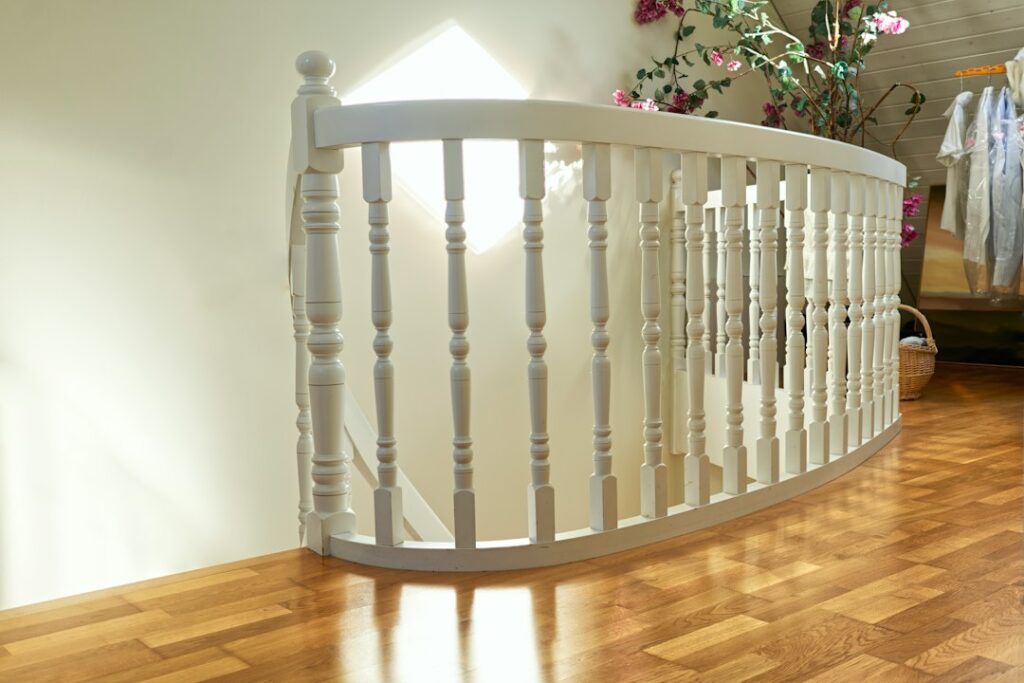
Stairs are one of the first hazards new parents notice once a baby starts crawling, and a baby gate for stairs is usually the first piece of childproofing hardware that goes into a house. The trouble is that gates look similar on the store shelf but behave very differently once they are installed. A gate that works well in a doorway between the kitchen and living room can be the wrong choice at the top of a staircase, where a gate that pops loose under a toddler’s weight turns a barrier into a launch point. This guide explains the difference between hardware-mounted and pressure-mounted gates, where each one belongs, how to anchor a gate into studs or a banister, which older designs to retire, and how stair railings, baluster spacing and upstairs windows fit into the same fall-prevention picture. It summarizes public safety guidance from the U.S. Consumer Product Safety Commission (CPSC) and published injury research; it is not a substitute for the gate manufacturer’s instructions.
Part of our Specialty Home Inspections guide — start there for the full picture →
Which Baby Gate for Stairs Is Safest?
The short answer: a hardware-mounted gate that screws into the wall framing belongs at the top of the stairs, and a pressure-mounted gate is generally reserved for the bottom of the stairs or for doorways on a level floor. CPSC states this plainly in its childproofing guidance: for the top of stairs, only use gates that screw to the wall. The same guidance says to use gates that meet current child safety standards, to look for gates that children cannot dislodge easily but that adults can open and close without difficulty, and never to use a pet gate as a child safety gate.
The reasoning is mechanical. A pressure gate holds itself in place with friction, using a spring or threaded spindles that push outward against two opposing surfaces. That works when a child pushes on it from a level floor and the worst outcome is the gate tipping over onto carpet. At the top of a stair run, a toddler leaning, pushing or climbing on a pressure gate can work it loose, and the child and the gate can go down the stairs together. Many pressure gates also have a bottom rail or threshold bar that spans the opening, which becomes a trip hazard for adults carrying a baby down the stairs.
Injury research supports taking gate choice seriously. A study of national emergency department data published in Academic Pediatrics estimated that 37,673 children were treated for gate-related injuries in the United States from 1990 to 2010, an average of 1,794 cases a year, and that the injury rate rose over that period. The authors found that children younger than 2 were most often injured by falls down stairs after the collapse of the gate, while children aged 2 to 6 were more often hurt by contact with the gate itself. That split mirrors the practical advice: secure the top of the stairs with hardware, and stop relying on gates once a child is old enough to climb over them.
Quick placement guide
- Top of stairs: hardware-mounted (screw-in) gate, swing-open style, ideally with a swing stop so it cannot open out over the stairs.
- Bottom of stairs: hardware-mounted or pressure-mounted gate, set at or near the first step so a child cannot climb a few steps and fall from partway up.
- Doorways and room openings: pressure-mounted gates are usually acceptable where there is no change in floor level.
- Wide or irregular openings: hardware-mounted configurable gates or extension panels, installed per the manufacturer’s maximum width.
Hardware-Mounted vs Pressure-Mounted Gates
Both styles have a place in a childproofed home. The key is matching the gate to the location and installing it exactly as the manufacturer specifies.
Hardware-mounted gates
A hardware-mounted gate attaches to the wall, newel post or banister with screws and mounting brackets. The hinge side is fixed, and the gate swings open and latches into a bracket on the other side. Well-designed top-of-stair models swing in one direction only, away from the stairs, and include a stop so the gate cannot be pushed out over the first step. Many have a latch that adults can operate with one hand while holding a child, and some auto-close when released.
The downsides are installation effort and holes in the trim or wall. Screws need to land in solid wood, which usually means a wall stud or a solid newel post rather than drywall alone. Drywall anchors are rarely adequate for a gate that will be pushed, pulled and climbed on daily. When the stud does not line up with where the gate needs to go, a mounting board or wall-mount extension kit from the gate manufacturer can bridge the gap.
Pressure-mounted gates
Pressure gates install in minutes with no tools and leave no holes, which makes them popular with renters and for temporary use. They hold best between two flat, solid, parallel surfaces such as door jambs. They are weaker against angled walls, baseboards that keep the spindles from seating squarely, or a wall on one side and a round spindle baluster on the other. Pressure gates also loosen over time as the rubber pads compress, so they need periodic re-tightening.
Some pressure gates come with optional wall cups that screw into the wall to keep the spindles from sliding. Those cups improve stability, but the gate is still a pressure gate. Unless the manufacturer explicitly rates a particular model for top-of-stair use with its hardware kit installed, a pressure gate should stay off the top landing.
Retractable and configurable gates
Retractable mesh gates roll into a housing on one side and latch into a bracket on the other. They suit wide openings and leave no visible gate when retracted, but they need hardware mounting on both sides, and the mesh should be pulled taut and latched every time. Configurable panel gates can wrap around a fireplace hearth or span very wide openings. For any of these, the manufacturer’s instructions on maximum width, mounting surfaces and approved locations govern.
Installing a Gate Into Studs, Banisters and Newel Posts
Most installation problems at the top of a staircase come from the mounting surface rather than the gate. Typical layouts include a wall on one side and a newel post or banister on the other, a wall on both sides, or a short half-wall with a round or square post.
- Wall side: locate a stud with a stud finder and mount the hinge or latch brackets into solid framing using the screws supplied. If the stud falls in the wrong place, a manufacturer mounting board or wall extension can spread the attachment across two studs.
- Banister or newel post side: banister adapter kits use straps or clamps that wrap around a round or square post, giving the gate a flat surface to screw into without drilling the post itself. This is useful for historic or stained newel posts that owners do not want to drill.
- Two banisters: some staircases have no wall at the top at all. Adapter kits on both sides, or a gate specifically designed for banister-to-banister use, are the usual solution.
- Angled openings: some hardware-mounted gates have swivel brackets that allow the gate to sit at an angle when the top step and wall do not line up square.
After installation, a simple stress test helps: push and pull firmly at the top rail from both sides, lift upward on the gate, and check that the latch engages fully every time the gate closes. CPSC notes in the same childproofing guidance that safety devices must be properly installed and reengaged after use to be effective, and that no device is completely childproof because determined toddlers have been known to overcome or disable them.
Placement at the top matters too. The gate should sit at the edge of the landing so the child cannot stand on the top step in front of it, and the swing should be away from the stairs. At the bottom, mounting the gate on the first or second riser, or at the floor in front of the bottom step, keeps a child from climbing a few treads before reaching the barrier.
Gate Designs to Avoid and What Certification Means
Older accordion-style gates, the expanding wooden lattice type with diamond-shaped openings and a V-shaped top edge, are the classic design to retire. CPSC advises replacing older safety gates that have V shapes large enough to entrap a child’s head and neck. Hand-me-down gates, gates found at yard sales and gates that have lost parts should be compared against current designs before going into service.
Other red flags include:
- Openings or gaps large enough for a child’s head or limbs, including the space at the bottom of the gate.
- Horizontal bars or mesh openings that provide toeholds for climbing.
- Pet gates, which CPSC says should never be used as a child safety gate.
- Missing pieces, cracked plastic latches or hinges that no longer close fully.
- Any gate under a recall notice. Checking the brand and model against CPSC recall listings before reusing an older gate is worth the few minutes.
On certification, product packaging in the U.S. may reference safety standards for gates and enclosures developed through ASTM International, and some products carry a certification seal from the Juvenile Products Manufacturers Association (JPMA), the industry trade group. Broadly, these programs indicate that a model was tested to a published standard covering things such as gate height, opening sizes and resistance to being pushed out. Buyers who want the details for a specific product can check the packaging and the manufacturer’s documentation. The practical takeaway matches CPSC’s guidance: choose a current gate that meets child safety standards, and avoid older designs whose openings or tops can trap a child.
Gates also have an age limit. Manufacturers typically state an age or height range, and once a child can climb over a gate, the gate becomes a fall hazard of its own. At that point stair safety shifts to teaching, supervision and solid railings.
Stair Railings, Baluster Gaps and Landings
A gate controls access to the stairs, but it does nothing about the stairs themselves. Stair-related falls are a large injury category for young children. A study in Pediatrics using national emergency department data estimated that 931,886 children younger than 5 were treated for stair-related injuries from 1999 through 2008, an average of 93,189 a year, and that about three-quarters of the injured children had injuries to the head and neck region. The authors also found that children being carried at the time of injury accounted for 24.5% of injuries among children under 1 and were more than three times more likely to be hospitalized than those injured other ways. That last point is a reminder that a trip-hazard threshold bar from a pressure gate, a loose stair runner or poor lighting can injure a baby in an adult’s arms.
Items worth checking around the stairs:
- Handrail and guard height. Older homes and remodels sometimes have guards that are low by current standards. The guide on stair railing height covers typical code expectations and how inspectors measure.
- Baluster spacing. Wide gaps between balusters, or open risers on modern floating stairs, can let a small child slip through or get stuck. Clear acrylic panels or mesh banister guards are common retrofits.
- Horizontal rails. Railings with horizontal members can act as a ladder for a climbing toddler.
- Loose newel posts. A wobbly newel post is a poor anchor for a gate and a sign the railing itself needs repair.
- Lighting and treads. Switches at both the top and bottom, nosings that are not worn round, and runners that are tightly fastened all reduce falls for adults carrying children.
The same thinking applies outside. Decks, porches and walkout landings with wide baluster spacing, loose posts or low guards create fall risks for toddlers. The guide to deck railing explains what to look for, and stair gates rated for outdoor use exist for deck steps.
Upstairs Windows and Other Fall Hazards
Once the stairs are gated, upstairs windows are often the next fall risk, particularly in two-story Front Range homes where bedroom windows sit well above a patio or window well. CPSC’s window-safety release for 2026 reported an estimated 5,600 children aged 12 and under treated in emergency departments in 2024 after falling out of a window, with about one in three of those cases requiring hospitalization. CPSC recommends window guards that adults and older children can open easily in case of fire for windows on the sixth floor and below, window stops so that windows open no more than four inches, keeping furniture away from windows, and never depending on screens to keep children from falling out.
Screens keep insects out; they are not designed to hold the weight of a child. A damaged screen should still be repaired, and the guide to window screen replacement covers that work, but it does not substitute for a stop or guard. Any guard on a bedroom window should be the quick-release type so that window remains a second exit in a fire, which ties into planning for a fire escape ladder in upstairs bedrooms.
The broader childproofing checklist
CPSC’s childproofing guidance groups stair gates with a set of other inexpensive devices. Among them:
- Furniture and TV anchors and anti-tip brackets on freestanding ranges.
- Cordless window coverings to reduce strangulation risk.
- Safety latches and locks on cabinets holding medicines, detergents and cleaners.
- Water heater set to 120 degrees Fahrenheit or lower, with anti-scald devices on faucets and shower heads.
- Smoke alarms on every level, inside each bedroom and outside sleeping areas, plus carbon monoxide alarms near sleeping areas.
- Outlet covers or tamper-resistant receptacles, and corner and edge bumpers.
- Layers of protection around pools and spas, including barriers and alarms.
Grab bars, covered in the guide to grab bars for showers, help a parent bathing an infant keep their balance. Homes with a backyard pool need a separate set of barriers; the guide to a pool safety cover explains how covers, fences and alarms work together.
Childproofing When Buying a Home
Buyers with young children, or planning for them, can use the home inspection to flag stair and fall hazards before closing. A standard home inspection is not a childproofing audit, but inspectors routinely note loose or missing handrails, guards with wide openings, damaged stairs, missing smoke alarms and windows that do not open or close properly. Those findings help a family plan where gates will mount, whether a newel post needs repair first, and which windows need stops or guards.
Questions to bring to the inspection:
- Is there solid framing at the top of each staircase where a hardware-mounted gate would attach?
- Are the newel posts and handrails firmly attached?
- Do baluster gaps, open risers or horizontal rails need a retrofit?
- Are upstairs windows low to the floor, and do they have working latches?
- Do deck and porch guards appear sturdy and adequately tall?
For broader context on what an inspection covers and when to add a specialist, see the guide to hiring a home inspector and the overview of specialty inspections. Pool, chimney and other specialty evaluations sometimes matter as much for a young family as the general inspection.
References
- Childproofing Your Home: Safety Devices to Help Protect Your Children — U.S. Consumer Product Safety Commission
- CPSC Urges Families to Protect Children During National Window Safety Week — U.S. Consumer Product Safety Commission
- Baby Gate-Related Injuries Among Children in the United States, 1990-2010 — Academic Pediatrics, via National Library of Medicine (NIH)
- Stair-Related Injuries to Young Children Treated in US Emergency Departments, 1999-2008 — Pediatrics, via National Library of Medicine (NIH)
Frequently asked questions
Can a pressure-mounted baby gate be used at the top of stairs?
Generally no. CPSC advises using only gates that screw to the wall at the top of stairs, because a pressure gate can be pushed loose and fall with the child. Pressure gates are better suited to the bottom of stairs and to doorways on a level floor.
How do you install a baby gate on a banister without drilling?
Banister adapter kits strap or clamp around a round or square newel post and give the gate a flat surface to screw into. The wall side should still be screwed into a stud. Follow the gate maker's instructions and test the gate by pushing and pulling firmly once it is installed.
Are old accordion baby gates safe?
Older accordion-style gates with diamond openings and V-shaped tops can entrap a child's head and neck. CPSC recommends replacing older gates with V shapes large enough to cause entrapment and using gates that meet current child safety standards.
Where should the bottom stair gate go?
Place it at the floor in front of the first step or on the lowest riser so a child cannot climb several treads before reaching the barrier. Either a hardware-mounted or a pressure-mounted gate can work at the bottom if it fits the opening securely.
When should a family stop using a stair gate?
When a child can climb over or open the gate, or reaches the age or height limit printed by the manufacturer. A climbing child can fall from the top of a gate, so at that point supervision, teaching and solid railings take over.
Moving into a two-story home with a little one on the way? Get in touch with our team to be matched with a Front Range inspector who can check stairs, railings, windows and alarms before closing.