Gas Dryer Hookup: Connectors, Venting and Safety
A new gas dryer arrives, the old one goes out, and the only thing standing between laundry day and a working machine seems to be a short connector and a vent hose. That connection deserves more care than it often gets. A gas hookup for a dryer involves a fuel line, a shutoff valve, a flexible appliance connector and an exhaust duct that has to carry hot, lint-laden air and combustion byproducts outdoors. Mistakes can mean gas leaks, lint fires or carbon monoxide entering the home. This guide covers what a proper gas dryer hookup looks like, how to check for leaks, venting rules that matter, the risk of reusing old connectors, what changes when switching between electric and gas, and when to bring in a licensed installer. Cost ranges are general 2026 estimates and vary by region, house layout and contractor.
Part of our Heating, Cooling & Ventilation guide — start there for the full picture →
What a Proper Gas Hookup for a Dryer Looks Like
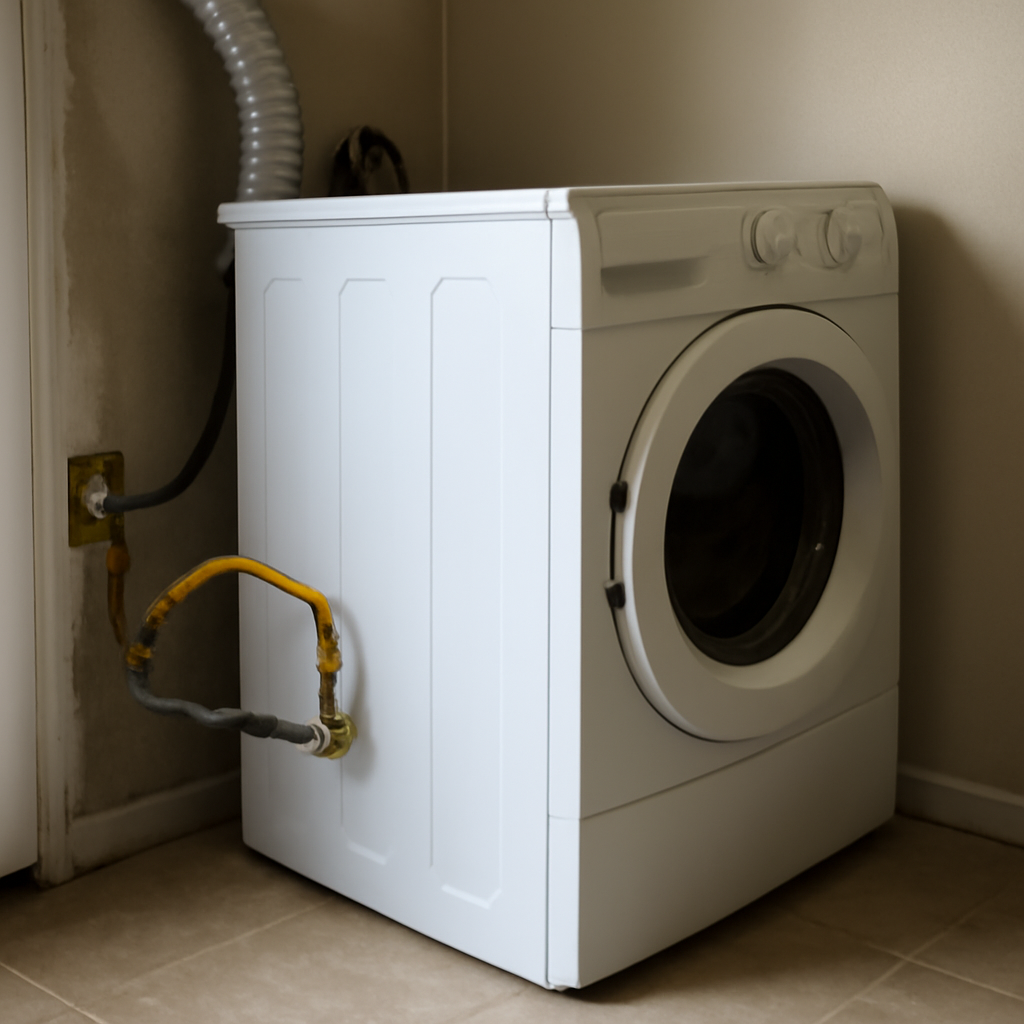
A correct gas hookup for a dryer has five basic parts: an existing gas supply line sized for the appliance, a manual shutoff valve in the same room and within reach, a new certified flexible appliance connector of the right length, properly sealed threaded fittings, and a rigid or semi-rigid metal exhaust duct running to an exterior termination with a damper. The dryer’s installation manual is the controlling document for clearances, connector type, maximum vent length and electrical requirements, and local codes may add requirements on top of that.
Most gas dryers still need electricity. They typically plug into a standard 120-volt receptacle to run the drum motor, controls and igniter. That is different from an electric dryer, which needs a dedicated 240-volt circuit. If the laundry room has only a 240-volt receptacle and no gas stub, a gas dryer is not a plug-and-play swap.
In many homes the whole job takes an experienced installer well under an hour when the gas stub, valve, outlet and vent are already in place. When any of those pieces is missing, it becomes a plumbing, gas or electrical project that may need a permit.
The Flexible Gas Connector: New, Certified and the Right Length
The flexible connector is the piece that most often gets reused when it should not be. Modern dryer connectors are typically stainless steel, often with a protective coating, and are certified to a recognized standard for gas appliance connectors. The certification and size are usually stamped on a tag or ring on the connector.
Rules of thumb for the connector
- Use a new connector each time a dryer is installed or moved to a new home. Connectors are inexpensive compared with the risk of a fatigued or damaged one, and many manufacturers’ instructions call for a new connector.
- Match the length to the installation. Most residential connectors come in lengths from a few feet up to about six feet. Too short and the dryer cannot be pulled out without stressing the fittings; too long and it can kink or get crushed behind the machine.
- Do not run the connector through walls, floors or cabinets, and do not conceal it. It is designed to bridge the short gap between the shutoff valve and the appliance in the same room.
- Avoid sharp bends and kinks. Follow the connector manufacturer’s minimum bend guidance.
- Use the right thread sealant on pipe threads (gas-rated tape or compound), but not on flare fittings, which seal metal-to-metal.
Old uncoated brass connectors
Older homes sometimes still have uncoated brass flexible connectors behind dryers, ranges and water heaters. These connectors have a long-standing reputation as a hazard because their flare nut joints can crack or separate over time, and replacement with a modern certified connector is widely recommended by appliance installers and gas utilities. Identifying an old brass connector by sight is not always straightforward, so if there is any doubt about the age or type, the safest choice is to have a qualified technician replace it.
Shutoff Valve and Leak Checks: Soapy Water, Never a Flame
Every gas dryer needs an accessible manual shutoff valve on the supply line. Most modern installations use a quarter-turn ball valve: when the handle is parallel to the pipe, gas is on; when it is perpendicular, gas is off. The valve should be in the same room as the dryer and reachable without moving the appliance far, so it can be closed quickly in an emergency or during service.
After the connector is attached and the gas is turned on, every joint needs a leak check. The standard homeowner-level method is simple:
- Mix a solution of dish soap and water, or use a commercial gas leak detection solution.
- With the gas on and the dryer off, brush or spray the solution on each fitting, including the valve outlet, both ends of the connector and the dryer inlet.
- Watch for bubbles growing or foaming. Any bubbling indicates a leak.
- If bubbles appear, turn off the gas, tighten or remake the fitting, and test again. If the leak persists, stop and call a professional.
Never use a match, lighter or any flame to check for leaks. Electronic gas sniffers can help locate a leak as well; our guide to gas line leak detection compares methods. If you smell gas at any point during the hookup, shut off the valve if it is safe, leave the house and call the utility from outside. See what to do if you smell gas for the full sequence.
Gas dryers set up for natural gas need a conversion kit to run on propane, and the reverse is true as well. This conversion should be done by a qualified technician following the manufacturer’s instructions, since orifice size and other settings change.
Dryer Venting: Metal Duct, Length Limits and Clear Terminations
Venting is the part of the gas dryer hookup that causes the most long-term problems. A gas dryer exhausts both lint-laden air and combustion gases, so the vent has to work properly for the life of the appliance.
Duct material
The CPSC recommends replacing plastic or foil accordion-type ducting with rigid or corrugated semi-rigid metal duct, noting that most manufacturers specify metal duct for maximum airflow and that flexible plastic or foil duct can more easily trap lint and is more prone to kinks or crushing. In practice, rigid metal duct is used for the concealed run inside walls and ceilings, and a short semi-rigid or listed transition duct connects the dryer to the wall.
Length and turns
Maximum vent length depends on the dryer and is listed in its installation manual, usually with deductions for each elbow. Model codes set a default maximum when the manufacturer does not specify one, but local code and the manufacturer’s tables govern. Long runs, many turns or crushed sections reduce airflow, lengthen drying time and raise the risk of lint buildup. Booster fans exist for unusually long runs, but they must be listed for dryer exhaust and installed per instructions.
Termination and screws
The vent should end outdoors, not in an attic, crawl space, garage or chimney. The exterior hood should have a backdraft damper and should not have a screen that collects lint. Joints in rigid duct are typically taped with foil tape rather than fastened with screws that protrude into the airstream and snag lint.
Fire risk
The U.S. Fire Administration reports that failure to clean was the leading factor contributing to the ignition of home clothes dryer fires in its 2018 to 2020 data. That makes regular cleaning part of any good gas dryer setup. Our guide to dryer vent cleaning covers how often to clean, what professionals charge and the warning signs of a clogged duct, such as clothes that stay damp after a normal cycle.
Carbon Monoxide Risks From Blocked Gas Dryer Vents
A gas dryer burns fuel, so a blocked or disconnected vent can send combustion byproducts, including carbon monoxide, back into the house. CO is colorless and odorless. The NFPA’s carbon monoxide guidance advises keeping dryer, furnace and other vents clear of snow buildup during and after a storm, which is directly relevant along the Front Range, where drifts can cover low exterior vent hoods.
Common causes of dryer-related CO problems include:
- A vent duct that has come loose behind the dryer, often after the dryer was pushed back against the wall.
- A crushed or kinked transition duct.
- A lint-clogged duct or exterior hood.
- Snow, ice, a bird nest or a stuck damper blocking the outside termination.
- A dryer vented into a garage or attic instead of outdoors.
Any home with a gas dryer should have working CO alarms. Our guide to where to put a carbon monoxide detector covers placement near sleeping areas and on each level, and our CO and gas detector category lists combination units.
Switching Between Electric and Gas Dryers
Electric-to-gas and gas-to-electric conversions are common when a household replaces a dryer, but the infrastructure behind the wall decides how easy the switch will be.
Electric to gas
Going from electric to gas typically requires a gas line to the laundry area if one does not already exist, a shutoff valve, a 120-volt receptacle and venting that meets the gas dryer’s requirements. If a capped gas stub already exists, the job may be quick. If not, running a new branch line is a job for a licensed plumber or gas fitter, usually with a permit and inspection. Our guide to gas line installation cost covers pricing factors such as distance, pipe material and wall access.
Gas to electric
Switching from gas to electric requires a dedicated 240-volt circuit and receptacle of the correct type, typically installed by a licensed electrician if the panel has capacity. The old gas line should be properly capped by a qualified person, not left as an open stub or a valve without a plug.
Which costs less to run
Operating cost depends on local gas and electricity rates, household laundry volume and the dryer’s efficiency. Heat pump electric dryers are another option for buyers prioritizing efficiency. Compare the appliance’s energy information and local utility rates before deciding.
Common Gas Dryer Hookup Mistakes
Most problems with a gas dryer installation trace back to a handful of shortcuts. Knowing them makes it easier to spot trouble in your own laundry room or in a house you are considering buying.
- Reusing the old connector. A connector that has been bent, twisted and pushed against a wall for years is not a good candidate for another decade of service, especially after being moved.
- Pushing the dryer tight to the wall. This is the classic way to crush a transition duct or kink a connector. Leave enough space behind the machine for both to make gentle curves.
- Using a connector that is too long. Excess length gets coiled or looped behind the dryer, which invites kinks and abrasion. Pick the length that fits.
- Skipping the leak check. A fitting that feels tight can still leak. The soap test takes a few minutes and is worth doing at every joint, every time.
- Leaving the plastic or foil duct in place. Retailers sometimes reconnect whatever duct was already there. If it is plastic or thin foil accordion material, replace it with metal.
- Venting into the wrong place. Dryers vented into a garage, attic, crawl space or indoor lint box are not appropriate for gas units, which exhaust combustion products along with moist air.
- Ignoring the gas type. A dryer configured for natural gas will not operate correctly or safely on propane without the proper conversion, and vice versa.
- Forgetting the electrical side. Using an extension cord or adapter for the dryer’s 120-volt plug is a common shortcut. The U.S. Fire Administration advises plugging major appliances, including dryers, directly into a wall outlet and never using an extension cord with a major appliance.
After installation, run the dryer through a full cycle and confirm that exhaust air is flowing strongly at the outside hood and that the burner ignites and cycles normally. A burner that clicks repeatedly without lighting, a yellow flame visible through the inspection window, or a burning smell beyond the brief odor of a new appliance are reasons to stop and call a technician.
Gas Dryer Hookup Costs
Costs depend on what already exists in the laundry area.
- Basic hookup with existing gas stub, valve and vent: often included by retailers or roughly $100 to $250 for a separate installer.
- New flexible connector: typically a modest parts cost, often under about $50.
- New shutoff valve: often around $100 to $250 installed.
- New gas line to the laundry area: commonly several hundred dollars to $1,000 or more depending on distance, access and permits.
- New or rerouted vent run: roughly $150 to $600 or more depending on length, wall penetrations and roof versus wall termination.
- New 120-volt receptacle: a typical electrician service call, often a few hundred dollars depending on wiring access.
These are general 2026 estimates rather than quotes. Mountain homes, finished basements and long vent routes can push costs higher. Get written estimates and ask whether permit fees are included.
What Home Inspectors Look for at the Dryer
During a purchase inspection, the laundry area is a quick but useful stop. The ASHI Standard of Practice includes inspecting clothes dryer exhaust systems and fuel distribution systems, and describing the location of main fuel shutoff valves. An inspector may note an accordion foil duct, a disconnected or crushed vent, a missing shutoff valve, an old-style connector, a vent terminating in an attic or crawl space, or missing CO alarms. Inspectors generally do not move appliances or open concealed ducts, so hidden problems behind the machine may only appear later. For a broader look at how inspections work and what to ask, see our home inspector hiring guide.
Laundry rooms also involve water. If the washer drain is overflowing or slow, our guide to washing machine drain problems covers common causes.
When to Call a Licensed Installer
Many homeowners can handle a simple swap where a gas stub, shutoff valve, outlet and proper vent already exist, as long as local rules allow it and the manufacturer’s instructions are followed. Call a licensed gas fitter, plumber or appliance installer when a new gas line or valve is needed, when converting between natural gas and propane, when a leak check shows bubbles that tightening does not fix, when the vent needs rerouting, or when there is any gas odor. Some jurisdictions require licensed professionals for any gas work, so check with the local building department before starting.
More Questions About Gas Dryer Hookups
How much does it cost to hook up a gas dryer?
Hooking up a gas dryer where a gas line, shutoff valve and vent already exist is usually a modest charge, often included or offered as an add-on by the retailer delivering the dryer. Costs rise considerably when a new gas line must be run to the laundry area, when the vent needs rerouting or replacing, or when a permit and pressure test are required. Installation by a licensed plumber or gas fitter typically costs more than a delivery-crew hookup but includes leak testing. Getting quotes that separate connector, venting and gas line work makes comparisons easier.
How long does a gas dryer hookup take?
A straightforward gas dryer hookup typically takes about 30 minutes to an hour when the gas stub, shutoff valve, electrical outlet and vent are already in place. The work includes attaching a new certified flexible connector, applying the proper thread sealant, connecting the vent, plugging in the dryer, checking for leaks and confirming the burner lights. Jobs that involve running a new gas line, cutting a new vent through a wall or converting from electric to gas can take several hours or more, plus time for any required permit inspection.
Can a gas dryer be installed in a closet?
A gas dryer can be installed in a closet if the manufacturer allows it, which many do with specific conditions. Typical requirements include minimum clearances around the dryer, louvered or vented doors or openings that provide combustion and makeup air, and a properly sized metal exhaust duct to the outdoors. Gas dryers generally cannot be installed in bedrooms or bathrooms under many codes, and some locations restrict closet installations. The installation manual lists the exact clearances and air openings required. Local building officials may also require a permit and inspection for closet installs.
Does a gas dryer need a special outlet?
A gas dryer typically needs only a standard 120-volt household outlet to power its drum motor, controls and igniter, not the 240-volt outlet used by electric dryers. The outlet should be grounded and within reach of the dryer cord. Gas burners provide the heat, so electrical demand is low. When converting from electric to gas, the existing 240-volt outlet cannot be used directly, and a 120-volt outlet may need to be added. Adapters to plug a gas dryer into a 240-volt outlet are not safe and should not be used.
References
- Overheated Clothes Dryers Can Cause Fires — U.S. Consumer Product Safety Commission
- Appliance and Electrical Fire Safety — U.S. Fire Administration
- Carbon Monoxide Safety — National Fire Protection Association
- Carbon Monoxide Information Center — U.S. Consumer Product Safety Commission
- ASHI Standard of Practice for Home Inspections — American Society of Home Inspectors
Frequently asked questions
Can I hook up a gas dryer myself?
In many areas homeowners can connect a gas dryer when a gas stub, shutoff valve, outlet and proper vent already exist, following the manufacturer's instructions. Some jurisdictions require licensed professionals for any gas work. A new gas line, valve relocation or propane conversion should go to a licensed installer.
Can I reuse my old dryer gas connector?
It is generally recommended to install a new certified flexible connector whenever a dryer is installed or moved. Connectors can be weakened by bending and age, and older uncoated brass connectors are considered a hazard. A new connector is an inexpensive part.
How do I check a gas dryer connection for leaks?
With the gas on and the dryer off, brush soapy water or a gas leak detection solution on each fitting and watch for growing bubbles. If bubbles appear, shut off the gas and remake the joint. Never use a flame to check for leaks.
Does a gas dryer need a 240-volt outlet?
Most gas dryers use a standard 120-volt receptacle for the motor, controls and igniter, while electric dryers need a dedicated 240-volt circuit. Check the dryer's installation manual to confirm the electrical requirement.
What kind of vent should a gas dryer use?
The CPSC recommends rigid or corrugated semi-rigid metal duct instead of plastic or foil accordion duct, and most manufacturers specify metal. The vent should terminate outdoors with a damper, and its length should stay within the manufacturer's limits.
Can a gas dryer be converted to propane?
Most gas dryers can be converted from natural gas to propane with a manufacturer-approved conversion kit, which changes the burner orifice and sometimes the regulator. Conversion should be done by a qualified technician, and the dryer should be labeled afterward. Running a natural-gas dryer on propane without conversion is unsafe.
Why does my gas dryer smell like gas after hookup?
A faint gas odor right after a gas dryer hookup can come from air purging the line, but a persistent smell may indicate a leaking connection. Turn off the dryer and the gas valve, ventilate, and check fittings with soapy water. If the smell is strong, leave and call the gas utility.
How far can a gas dryer be from the gas line?
A gas dryer must be close enough to the gas shutoff valve that a new certified flexible connector reaches without stretching, kinking or passing through walls or floors. Appliance connectors are commonly limited to about six feet. If the dryer is farther away, the gas piping should be extended by a qualified installer.
Want the laundry room, gas lines and venting looked at before you buy a Front Range home? Contact us and we can connect you with a local inspector who checks these details.