Washer Dryer Combos: Venting, Drains and Laundry Placement

Laundry has been moving out of basements and into hall closets, bathrooms, kitchens and second-floor nooks for years, and space-saving machines have followed. A washer dryer combo can mean two very different things: a single all-in-one machine that washes and dries in the same drum, or a washer with a matching dryer stacked on top. Both fit where a side-by-side pair will not, but they raise practical questions that matter to buyers and homeowners. Does the dryer need a vent to the outdoors? Where does the water go if a hose bursts on an upper floor? Can the floor handle the vibration of a spinning washer with another appliance sitting on it? This guide covers the main types of combo units, vented versus ventless drying, ENERGY STAR ratings, dryer fire safety, water protection, structural considerations and typical costs, with notes on what a home inspector does and does not evaluate.
Part of our Plumbing & Water guide — start there for the full picture →
What a Washer Dryer Combo Is
The phrase covers two broad categories, and the difference matters for installation, venting and maintenance.
All-in-One Washer Dryers
An all-in-one unit washes and dries in a single drum. The load goes in dirty and comes out dry without being moved. Most all-in-ones are front-loading and roughly the size of a standard or compact washer, so they fit under a counter or in a small closet. Many use ventless drying, either by condensing moisture or with a heat pump, so they only need a water supply, a drain and an electrical outlet. Some newer models offer vented drying as an option.
The trade-offs are capacity and time. A combined wash-and-dry cycle typically takes longer than running a separate washer and dryer, and the drying capacity can be smaller than the washing capacity, so a full wash load may need to be split before drying. Households that do a lot of laundry sometimes find that frustrating; households of one or two often find the convenience worth it.
Stacked Washer and Dryer
A stacked set is two separate machines, usually front-loading, with the dryer mounted on top using a manufacturer-approved stacking kit. Unitized laundry centers combine a top-load washer and a dryer in a single frame. Either way, each machine does its own job, so a load can wash while another dries. Stacked dryers may be vented, condensing or heat pump models.
Stacked sets usually match full-size capacity more closely than all-in-ones but require a taller space and access for the dryer’s lint screen and controls at eye level.
Vented vs Ventless Dryers
How a dryer handles moist air shapes where a combo unit can go and what it needs.
Vented Dryers
A conventional vented dryer heats air, tumbles clothes through it and blows the hot, moist, lint-laden air through a duct to the outdoors. Vented models are typically faster and are the most common type in U.S. homes. They need a properly routed exhaust duct with a weather hood outside, and the duct needs regular cleaning. Long or convoluted duct runs, common in interior closets and upper-floor laundry rooms, reduce performance and collect lint. The dryer vent installation guide covers duct materials, routing and termination.
Condensing Dryers
Condensing dryers recirculate air inside the machine. Moist air passes over a heat exchanger, water condenses out and drains to a container or a drain line, and the air is reheated. No outdoor vent is needed, which makes condensing dryers popular for closets and apartments. They tend to release some heat into the room and can take longer than vented dryers.
Heat Pump Dryers
Heat pump dryers also work as a closed loop. ENERGY STAR describes them as heating the air, using it to remove moisture from clothes, passing the humid air through a condenser to remove that moisture, and then reusing the air rather than releasing it through an exterior vent. ENERGY STAR says certified heat pump dryers use around 70% less energy than conventional clothes dryers. It also notes that since a heat pump dryer does not need a vent, homes without an existing vent can save on installation, and that the condensed water either drains or collects in a tank that must be emptied after each load. Some manufacturers sell kits that route that water to the washer’s drain.
For Front Range homes, a ventless option can be the difference between putting laundry where the household actually wants it and running a long duct through finished ceilings. The flip side is that ventless dryers still need a drain path for condensate and still benefit from lint-filter and condenser cleaning.
Best Washer Dryer Combo: our top 3 picks
| Product | Best for | Key features | Price | Buy |
|---|---|---|---|---|
| Samsung Bespoke AI Combo | Full-size ventless heat pump |
| — | Buy now →Check current price |
| Midea MLC27N3AWW | 24-inch ventless all-in-one |
| $1,049.99as of Nov 19, 2026 4:34 am GMT+0000 | Buy now →Check current price |
| BLACK+DECKER BCW27MW | Under-counter kitchen install |
| $1,147.99as of Nov 19, 2026 4:34 am GMT+0000 | Buy now →Check current price |


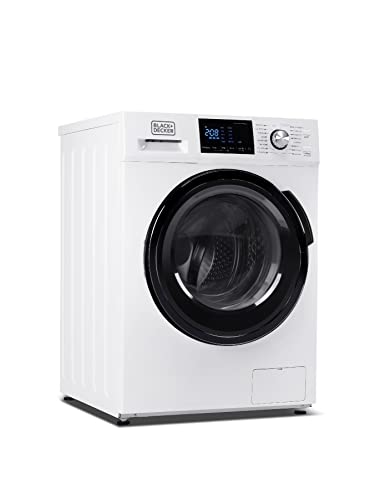
Prices are Amazon’s listed prices as of the time shown and change often; check Amazon for today’s price. As an Amazon Associate we earn from qualifying purchases.
ENERGY STAR Ratings for Washers and Dryers
Both halves of a washer dryer combo can carry an ENERGY STAR label. ENERGY STAR reports that certified clothes washers use about 20% less energy and about 30% less water than regular washers, and that certified front-load washers use about 50% less energy and water than a top-load agitator washer. The program notes that certified models are available in stackable, under-the-counter and combination washer-dryer designs that fit smaller spaces.
For dryers, ENERGY STAR uses a Combined Energy Factor (CEF), where a higher number means more efficient. It says certified dryers include moisture sensors that end the cycle when clothes are dry and generally use lower temperatures than standard dryers. Its product finder lets shoppers compare CEF values across certified models, and its rebate finder lists utility rebates by ZIP code. Several Colorado utilities have offered appliance rebates over the years, so checking before buying is worthwhile.
Efficient washers also spin faster, removing more water before drying. That shortens drying time but increases vibration, which ties into the floor and stacking questions below.
Dryer Fire Safety and Vent Maintenance
Dryers are one of the household appliances most associated with fires, and lint is the main reason. The U.S. Fire Administration reports that failure to clean (31%) was the leading factor contributing to the ignition of clothes dryer fires in homes from 2018 to 2020, citing the National Fire Incident Reporting System. USFA also advises plugging major appliances, including washers and dryers, directly into a wall outlet and never using an extension cord with them.
USFA’s clothes dryer fire safety flyer lists practical steps:
- Have the dryer installed and serviced by a professional.
- Do not use the dryer without a lint filter, and clean the lint filter before and after each cycle.
- Clean the back of the dryer, where lint can build up.
- Check the venting system behind the dryer to make sure it is not damaged, crushed or restricted.
- Make sure the outdoor vent covering opens when the dryer is operating.
Stacked laundry in tight closets makes the crushed-duct problem more likely, because the machine gets pushed back against the wall and flattens the transition hose. Plastic or foil accordion ducts, long runs with many bends, and vents terminating in attics, crawlspaces or garages are among the most common findings inspectors write up. The dryer vent cleaning guide explains how often ducts typically need cleaning and the signs of a clog, such as clothes taking longer to dry or the dryer feeling unusually hot.
Ventless units avoid the exterior duct but not lint entirely. Condenser and heat pump models have lint filters and, in many cases, condenser filters or coils that need periodic cleaning according to the manufacturer’s instructions.
Water Protection: Drain Pans, Hoses and Washer Boxes
When laundry moves upstairs or into the middle of the house, a washer leak stops being a damp basement floor and becomes a ceiling repair, a flooring replacement and possibly a mold problem. Three components do most of the work of preventing that.
Supply Hoses
Rubber supply hoses can crack, bulge and burst with age, sending water out at full house pressure until someone shuts it off. Braided stainless hoses are a common upgrade, and many manufacturers recommend replacing hoses periodically regardless of type. Leak detectors and automatic shutoff valves add another layer. The washer hoses guide covers hose types and replacement timing.
Washer Drain Pans
A drain pan sits under the washer, or under a stacked set, to catch slow leaks and small overflows. Pans work best when connected to a drain line rather than relying on someone noticing standing water. A pan will not stop a burst hose, but it can buy time and protect the floor from drips and condensation. Local codes vary on when pans are required, especially for laundry installed above finished living space. See the washer drain pan guide for sizing and drain options.
Washer Boxes
A recessed washer box in the wall holds the hot and cold supply valves and the drain standpipe in a neat, accessible enclosure. It keeps hoses from being kinked against the wall, which matters in tight closets where a stacked unit sits close to the back wall. Quarter-turn valves in the box make shutting off water fast. The washer box guide explains the components and common installation problems.
Condensing and heat pump dryers that drain to the washer standpipe add another connection to that box, so the drain hose should be secured in the standpipe and not simply hooked over the edge.
Floor Support, Vibration and Placement
A loaded front-load washer spinning at high speed generates substantial vibration. Stack a dryer on top and the combined weight and motion are concentrated on a small footprint. On a concrete basement slab that is rarely an issue. On a wood-framed upper floor, it can be.
Signs that a floor may be struggling include excessive bouncing or walking of the machine during spin, cracks in tile around the laundry area, and nearby doors or fixtures rattling. Contributing factors include long joist spans, undersized joists, joists cut for plumbing and flooring layers that flex. Leveling the machine and using the manufacturer’s stacking kit are basic steps. Anti-vibration pads may help with noise but are not a structural fix. If vibration is severe, or if a new upper-floor laundry is planned, a contractor or structural engineer can evaluate whether the framing needs reinforcement. Floor finishes matter too; the laundry room flooring guide compares water-resistant options.
Other placement considerations:
- Clearance and access. Manufacturers specify clearances for airflow and service. Units jammed into closets with no room to reach valves, cords or ducts are hard to maintain.
- Electrical supply. Many electric dryers and some all-in-ones require a dedicated 240-volt circuit, while others run on 120 volts. Confirm the requirement before buying.
- Gas dryers. Gas models need a gas supply and an exterior vent; they are not ventless.
- Freezing. Laundry in garages or on exterior walls can freeze in a Colorado cold snap, damaging valves and hoses.
What Inspectors Do and Do Not Check
The ASHI Standard of Practice requires inspectors to inspect clothes dryer exhaust systems, but it does not require them to inspect free-standing kitchen and laundry appliances beyond a short list of installed kitchen appliances. In practice, an inspector will typically look at the dryer vent and its termination, the visible supply valves and drain, signs of past leaks, the presence of a pan where visible, and electrical and gas connections to the extent they can be seen. Testing the washer and dryer themselves is often outside the standard scope, so buyers who are keeping existing machines may want to run a full cycle during the final walkthrough.
Choosing Between All-in-One and Stacked
Neither format is better for every home. A few questions usually point toward the right choice.
- How much laundry does the household do? One or two people running a load every few days often adapt easily to an all-in-one. Families running multiple loads a day tend to prefer a stacked pair, because washing and drying can overlap.
- How tall and deep is the space? All-in-ones fit under counters and in short closets. Stacked sets need roughly double the height plus room to open both doors, and the upper controls should be reachable for everyone in the home.
- Is there an existing exterior vent? If not, a ventless all-in-one or a stacked pair with a heat pump or condensing dryer avoids cutting a new wall or roof penetration.
- What does the electrical panel allow? A 120-volt all-in-one can sometimes go where no 240-volt circuit exists. Adding a dedicated circuit may require panel capacity that older homes lack.
- Who will maintain it? Condenser filters, lint screens and drain lines need routine cleaning. A machine tucked behind a tight closet door is easier to neglect.
Reading the installation manual before buying, not after delivery, is the simplest way to avoid surprises with clearances, drain height and power requirements.
Washer Dryer Combo Costs
Prices vary by brand, capacity, drying technology and installation complexity. These are general 2026 ranges, not quotes:
- All-in-one washer dryers commonly range from roughly one thousand to a few thousand dollars, with heat pump models toward the upper end.
- Stacked pairs of matching front-loaders often cost a similar or somewhat higher total, depending on features and whether the dryer is vented, condensing or heat pump.
- Installation in an existing laundry location is often modest; adding a new laundry space with plumbing, a drain, a dedicated circuit and a vent can run into the thousands.
- Accessories such as drain pans, braided hoses, a washer box and a stacking kit are usually inexpensive relative to the cost of water damage they help prevent.
Before buying, measure the space including doors and hallways, confirm the electrical and drain requirements, and check whether a vent is needed.
Planning a New Laundry Location
If a combo unit is part of a remodel or a home purchase, involve the right trades early: a plumber for supply and drain, an electrician for the circuit and, where venting is needed, a contractor familiar with dryer duct requirements. The plumbing and water hiring guide explains how to vet plumbers, and the hiring process hub covers inspectors and contractors for the rest of the home.
More Questions About Washer Dryer Combos
How long does an all-in-one washer dryer cycle take?
A full wash-and-dry cycle in an all-in-one washer dryer typically takes about two to six hours, depending on load size, fabric and the drying method. Ventless condensing and heat pump drying is gentler but slower than a vented dryer.
Smaller loads dry faster, and many owners wash a full drum but dry only part of it or run drying separately. Planning a load overnight or while away helps. Households doing many loads a day often find a stacked pair more practical.
Do washer dryer combos need special electrical outlets?
Many compact all-in-one washer dryers plug into a standard 120-volt outlet, which is a major reason they are popular in apartments. Some larger models and most full-size electric dryers in stacked pairs need a 240-volt circuit.
Check the installation manual before buying, and confirm that the laundry area has the matching outlet and a dedicated circuit if required. Gas dryers need a gas line and a 120-volt outlet. Adding a new 240-volt circuit typically requires an electrician and may need a permit.
How long do washer dryer combos last?
All-in-one washer dryers typically last about 8 to 12 years, similar to front-load washers, though heavy use can shorten that. Stacked washer and dryer pairs often last 10 to 13 years each, and the units can be replaced separately.
Cleaning the lint filter, keeping the drum and door seal dry, using the correct detergent and leveling the machine help extend life. Because one failure in an all-in-one takes out both washing and drying, some owners prefer separate machines.
Is an extended warranty on a washer and dryer worth it?
An extended warranty on a washer and dryer is often not worth the cost for basic models, because repairs during the extended period can be less than the warranty price. It may make more sense for complex all-in-one or high-end units with expensive electronics.
Read what is excluded, who performs repairs and whether there is a deductible. Some credit cards add extra warranty time automatically. Registering the product and keeping receipts also helps with the manufacturer warranty, which typically covers the first year.
References
- Clothes Dryers — ENERGY STAR
- Clothes Washers — ENERGY STAR
- Clothes Dryer Fire Safety — U.S. Fire Administration
- Appliance and Electrical Fire Safety — U.S. Fire Administration
- ASHI Standard of Practice for Home Inspections — American Society of Home Inspectors
Frequently asked questions
Does a washer dryer combo need a vent?
It depends on the dryer type. Vented dryers need a duct to the outdoors. Condensing and heat pump dryers, used in many all-in-one units, recirculate air and do not need an exterior vent, but they do need a drain or a water tank that is emptied after each load.
Are all-in-one washer dryers worth it?
They save space and avoid moving wet laundry, which suits small households and tight closets. Combined cycles take longer and drying capacity can be smaller than washing capacity, so larger households may prefer a stacked pair.
Do heat pump dryers save energy?
ENERGY STAR says certified heat pump dryers use around 70% less energy than conventional clothes dryers. They usually cost more upfront, so savings depend on how much laundry a household does and local electricity rates.
Do I need a drain pan under a stacked washer and dryer?
A drain pan connected to a drain is a good safeguard for laundry above finished space, and some local codes require one in certain locations. It catches slow leaks but cannot contain a burst hose, so pair it with good supply hoses and accessible shutoff valves.
Can a wood floor support a stacked washer and dryer?
Most properly framed floors can, but long spans, notched joists and flexible subfloors can lead to excessive vibration. If the floor bounces noticeably during spin cycles, have a contractor or structural engineer evaluate it.
Can a washer dryer combo go in a closet?
Yes, many washer dryer combos and stacked units are designed for closets, provided the manufacturer's clearances are met. Doors may need louvers for airflow, and vented dryers require a properly routed exterior vent. Ventless models are easier to place but still need space around them.
Do all-in-one washer dryers wrinkle clothes more?
All-in-one washer dryers can wrinkle clothes more if the drum is packed full for drying, because items have less room to tumble. Drying smaller loads, removing clothes promptly and using a wrinkle-care setting helps reduce creasing.
Can a stacked washer and dryer be unstacked later?
Most stacked washer and dryer pairs can be unstacked and used side by side, since they are separate machines joined by a stacking kit. Check that each unit's controls are reachable. All-in-one combos cannot be split because washing and drying share one drum.
Planning to buy a home with an upstairs laundry or a closet combo unit? Schedule an inspection and a Front Range inspector can check the dryer vent, visible water connections and signs of past leaks.