Recessed Dryer Vent Boxes: Tight Laundry Spaces Done Right
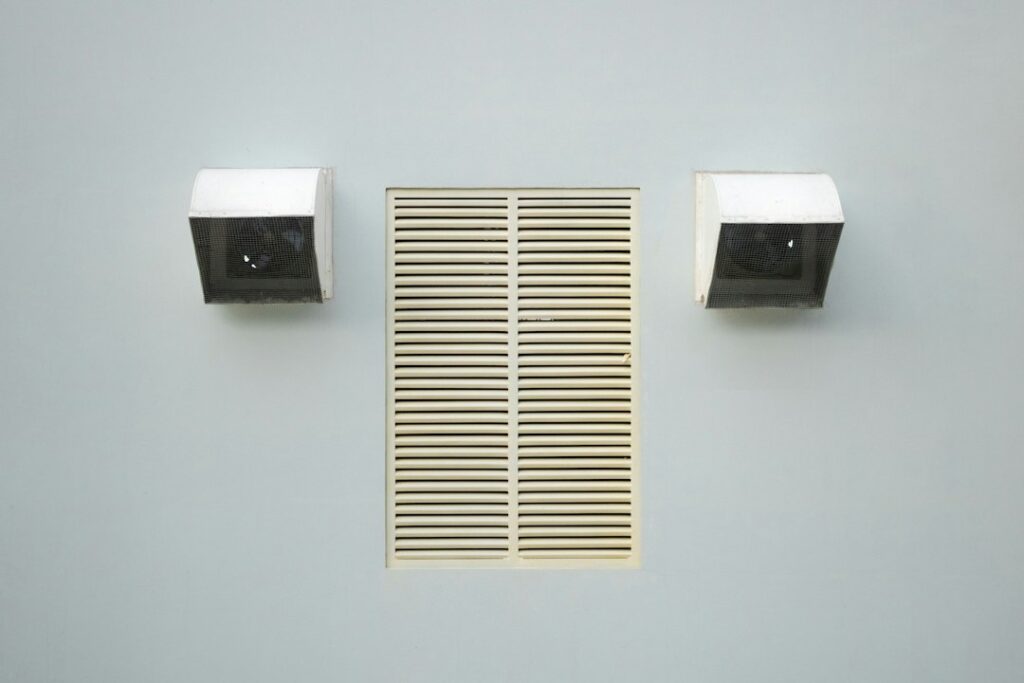
Push a dryer back against the wall and something has to give. Too often it is the transition duct, the short flexible connector between the dryer’s exhaust outlet and the wall. Crushed, kinked or flattened, that duct chokes airflow, traps lint and turns an ordinary appliance into one of the more common household fire risks. A recessed dryer vent box solves the problem by setting the duct connection into the wall cavity, so the connector has room to bend without collapsing. This guide explains how these boxes work, which duct materials pair well with them, why manufacturers limit vent length, how lint fires start, what cleaning looks like and what homeowners across the Colorado Front Range can expect to pay. It also covers what a home inspector typically notes about dryer exhaust during a pre-purchase inspection.
Part of our Heating, Cooling & Ventilation guide — start there for the full picture →
What a Recessed Dryer Vent Box Does
A recessed dryer vent box is a shallow metal enclosure installed between wall studs behind the dryer. Its face sits flush with the drywall, and a collar inside the box (usually at the top or bottom) connects to the rigid duct that runs through the wall to the exterior termination. The dryer’s transition duct attaches to that collar inside the recess rather than to a pipe sticking straight out of the wall.
That small change matters. With a conventional setup, the exhaust pipe projects several inches into the room. The dryer then has to sit far enough out to leave space for the transition duct to make its turn. In a narrow laundry closet, a hallway alcove or a stacked unit tucked behind bifold doors, owners tend to shove the dryer back anyway, and the duct gets squashed.
The recess gives the connector somewhere to go. Depending on the model and the dryer, it can let the appliance sit a few inches closer to the wall while keeping the duct open. Some boxes also include a removable or angled collar so the connection can be made from the front, which makes reconnecting after cleaning far easier.
Where they show up most
- Laundry closets in condos, townhomes and newer Front Range tract homes where floor depth is tight.
- Second-floor laundry rooms where the vent runs up through the ceiling or across a joist bay.
- Remodels where a laundry area was carved out of a hallway or mudroom.
- Stacked washer-dryer units where the dryer outlet sits high and the duct must turn sharply.
Many of these boxes are installed alongside a recessed washer box, which houses the hot and cold supply valves and the drain standpipe. Together they clear the wall behind both machines.
Why Crushed Transition Ducts Are a Problem
A clothes dryer moves a large volume of warm, moist, lint-laden air. Anything that restricts that flow has two effects. First, drying takes longer, so the heating element or burner runs longer and the appliance uses more energy. Second, slower air drops more lint inside the duct, and the restriction gets worse over time.
The U.S. Fire Administration’s clothes dryer fire safety flyer tells homeowners to check the venting system behind the dryer to make sure it is not damaged, crushed or restricted, and to confirm the outdoor vent covering opens when the dryer is operating. Those two checks catch a large share of the problems inspectors see.
Typical signs of a restricted transition duct include:
- Loads that need two cycles to dry.
- A dryer cabinet that feels unusually hot on the outside.
- A laundry room that gets humid or warm during drying.
- A musty or burning smell during a cycle.
- An exterior hood flap that barely moves while the dryer runs.
- Lint collecting around the dryer door or behind the machine.
Some dryers display a vent-blockage warning or show a “check vent” message. Those alerts are useful, but they are not a substitute for looking at the duct itself.
Duct Materials: What Belongs Behind the Dryer
Not every flexible duct is appropriate. The material choice comes up in almost every dryer vent discussion, and installation instructions from most dryer manufacturers address it directly.
Rigid metal duct
Smooth-walled rigid metal duct (commonly 4-inch diameter) is the standard for the concealed run through walls, floors and ceilings. The smooth interior sheds lint better than corrugated material, and it holds its shape. Joints are typically assembled with the male end pointing in the direction of airflow and sealed with foil tape rather than screws, because screws protruding into the duct can snag lint. Local requirements vary, so the installation instructions and the jurisdiction’s adopted code should be checked.
Semi-rigid metal duct
Semi-rigid aluminum duct bends by hand but holds its shape, and it is a common choice for the short transition between the dryer and the wall or vent box. It resists crushing better than foil duct, though it can still be kinked if forced.
Foil and vinyl ducts
Thin foil accordion duct and white vinyl or plastic duct are frequently found on older installations. Many dryer manufacturers prohibit plastic and vinyl ducts in their installation instructions, and many also discourage or restrict flexible foil. Inspectors commonly flag plastic transition ducts as a safety concern. The exact rules depend on the dryer model, so the manual for the specific appliance is the best reference.
How the box changes the picture
A recessed box does not change which materials are acceptable. It simply makes it easier to use a short, properly shaped semi-rigid or rigid connector without crushing it. Using the box with a cheap foil duct that still gets kinked gives up most of the benefit.
Vent Length Limits and Why Manufacturers Set Them
Every dryer has a maximum recommended exhaust length. Manufacturers publish it in the installation instructions, usually as a table that varies by the number of elbows, the duct material and the type of exterior hood. Each 90-degree bend counts against the total, often as several feet of equivalent straight run, and some hood styles reduce the allowance further.
The number is not arbitrary. It reflects how far the dryer’s blower can push air while keeping enough velocity to carry lint out of the house. Exceed it and lint settles in the duct, drying times stretch and the risk of overheating climbs.
Because the published limits differ from one dryer to another, there is no single universal figure that fits every home. Building codes also set maximum lengths with deductions for fittings, and some jurisdictions accept the manufacturer’s figure where it is longer. A homeowner replacing a dryer in a house with a long vent run should check the new model’s table before assuming the old duct is acceptable.
Long runs are common in Front Range homes where the laundry room sits in the center of the house, on an upper floor or in a finished basement. In those cases, options include re-routing the duct for a shorter path, choosing a dryer rated for longer runs or, where allowed by the dryer manufacturer and local code, adding a listed dryer booster fan. Each of these is a job for a qualified installer.
Lint Buildup and Dryer Fires
Lint is fine, dry and highly flammable. It collects in the lint screen, inside the dryer cabinet, in the transition duct, inside the concealed duct and at the exterior hood. When airflow drops, heat builds near the heating element or burner, and lint becomes the fuel.
The U.S. Fire Administration notes that failure to clean was the leading factor contributing to the ignition of clothes dryer fires in homes from 2018 to 2020, at 31 percent, based on National Fire Incident Reporting System data. Its dryer flyer recommends cleaning the lint filter before and after each cycle, never running the dryer without the filter, cleaning the back of the dryer where lint builds up, and having the dryer installed and serviced by a professional.
ENERGY STAR makes a related point from the efficiency side: cleaning the lint filter after every load improves air circulation and efficiency, and it describes that step as an important safety measure as well. It also suggests scrubbing the filter periodically if dryer sheets leave a film that reduces airflow.
The USFA appliance safety guidance adds another practical rule: plug major appliances, including dryers, directly into a wall outlet and never use an extension cord with them. Electric dryers draw heavy current, and an undersized cord can overheat.
Gas dryers add one more concern
Gas dryers burn natural gas or propane, so a blocked or disconnected vent can push combustion byproducts into the house in addition to lint and moisture. A carbon monoxide alarm near sleeping areas and on each level is a reasonable layer of protection in any home with fuel-burning appliances. Our guide to carbon monoxide detector installation covers placement.
Cleaning a Dryer Vent That Runs Through a Recessed Box
The recess generally makes cleaning easier, not harder. With the dryer pulled forward and unplugged (and the gas valve shut for gas units), the transition duct can be disconnected inside the box, and the concealed duct can be brushed or vacuumed from both ends.
A typical routine looks like this:
- Clean the lint screen every load, and wash it periodically if residue builds up.
- Inspect the transition duct whenever the dryer is moved. Replace it if it is crushed, torn or made of plastic.
- Check the exterior hood while the dryer runs. The damper should open freely, and there should be no screen that traps lint.
- Have the full duct cleaned at intervals that match use. Large households, long runs and pet hair all shorten the interval.
- Vacuum the dryer cabinet area and the floor behind the machine.
For more detail on frequency, tools and what a professional cleaning includes, see our guide to dryer vent cleaning. Homeowners planning a new run or relocating a laundry area will find routing and termination details in the guide to dryer vent installation.
Birds and rodents are another seasonal issue along the Front Range. Nests in exterior hoods are common in spring. A hood with a well-fitting gravity damper helps, but a fine mesh screen over the outlet is usually discouraged because it collects lint.
Installing a Recessed Dryer Vent Box
The installation is straightforward in new construction and more involved in a finished wall. The general sequence includes:
- Locating the box between studs at the height that matches the dryer outlet and the duct route, typically low on the wall for a side-by-side pair or higher for a stacked unit.
- Cutting the drywall opening and fastening the box to framing.
- Connecting the concealed rigid duct to the box collar, with joints taped and supported.
- Patching and finishing the wall around the flange.
- Connecting the transition duct from the dryer to the box with clamps, then sliding the dryer back carefully.
Some boxes are rated for use in fire-rated walls, such as the wall between an attached garage and living space, and others are not. Where a laundry closet backs up to a garage or a unit separation wall in a townhome, the box listing and local code requirements matter. A permit may also be required when the duct is relocated or a wall is opened, depending on the municipality.
A handy homeowner can sometimes install a box during a remodel, but rerouting a concealed duct, working in a fire-rated wall or modifying a gas dryer connection is better left to a licensed contractor.
Flooring and moisture around the laundry area
When the dryer is pulled out for a box installation, it is a good moment to check the floor and the washer connections. Water-resistant laundry room flooring and a drain pan under the washer can limit damage from a leaking hose or supply valve.
What a Home Inspector Looks For
The ASHI Standard of Practice lists clothes dryer exhaust systems among the items an inspector inspects under insulation and ventilation. In practice, inspectors usually comment on visible conditions rather than taking the duct apart. Common observations include:
- Plastic or vinyl transition ducts.
- Crushed or heavily kinked connectors behind the dryer.
- Disconnected ducts venting into a wall cavity, attic, crawl space or garage.
- Lint buildup at the exterior hood or a stuck damper.
- Termination too close to the ground, or a hood screened with mesh.
- Excessively long or convoluted runs visible in an unfinished basement or attic.
- Extension cords powering the dryer.
The inside of a concealed duct is generally beyond what an inspector can see without specialized tools. If the visible parts raise concerns, a dryer vent specialist can scope or clean the run. For a broader look at how to choose and work with inspectors and contractors, the hiring process guide and the heating and cooling hiring hub walk through questions to ask.
Recessed Dryer Vent Box Costs
Costs vary with the home, the wall and the scope. General 2026 ranges that Front Range homeowners may encounter:
- The box itself: often in the range of a few dozen dollars, with heavier-gauge or fire-rated models costing more.
- Semi-rigid transition duct and clamps: typically modest, often under the cost of the box.
- Handyman or contractor installation in an accessible wall: commonly in the low hundreds of dollars, including drywall patching.
- Rerouting or replacing the concealed duct: can run several hundred dollars or more, depending on length, access, roof or sidewall penetrations and finish work.
- Professional dryer vent cleaning: frequently a one-visit charge in the low hundreds, more for long or rooftop runs.
These are broad estimates, not quotes. Prices depend on access, the number of floors, whether the wall is fire-rated, permit fees and local labor rates. Getting two or three written estimates is the most reliable way to set expectations.
Is a Recessed Box Worth It?
For a laundry area where the dryer cannot sit at its full required depth, a recessed box is one of the simplest and least expensive improvements available. It protects the transition duct, makes cleaning easier and tends to tidy the space. It is not a cure for a duct that is too long, made of the wrong material or terminated badly. Those issues need their own fixes.
Homeowners comparing laundry layouts sometimes consider a ventless appliance instead. A heat-pump or condensing washer-dryer combo avoids the exterior duct entirely, though it comes with its own trade-offs in cycle time and drainage. For most homes with an existing vented dryer, a well-installed vent box and a short, clean, metal duct remain the practical answer. Readers weighing a so-called indoor dryer vent kit as a shortcut should read about the moisture and safety problems first.
References
- Clothes Dryer Fire Safety — U.S. Fire Administration
- Appliance and Electrical Fire Safety — U.S. Fire Administration
- Clothes Dryers — ENERGY STAR
- ASHI Standard of Practice for Home Inspection — American Society of Home Inspectors
Frequently asked questions
What is a recessed dryer vent box?
It is a shallow metal box set into the wall behind a dryer. The transition duct connects to a collar inside the recess, so the dryer can sit closer to the wall without crushing the duct.
How close to the wall can a dryer sit with a vent box?
It depends on the box, the dryer outlet location and the transition duct. Many setups gain a few inches. The dryer's installation instructions list its minimum clearance and venting requirements.
Can I use foil or plastic duct with a recessed vent box?
Plastic and vinyl ducts are widely prohibited by dryer manufacturers and flagged by inspectors. Semi-rigid or rigid metal duct is the usual choice. Check the specific dryer's manual for allowed materials.
How often should a dryer vent be cleaned?
Clean the lint screen every load. The full duct is commonly cleaned about once a year, more often with heavy use, long runs or pets, or whenever drying times start to stretch.
How much does it cost to install a recessed dryer vent box?
The box often costs a few dozen dollars. Installation in an accessible wall commonly runs in the low hundreds, while rerouting the concealed duct can cost several hundred or more. These are general 2026 estimates.
Buying a home with a cramped laundry closet? Reach out to us to connect with a Front Range inspector who will check the dryer exhaust, connections and termination.