Dryer Vent Covers: Louvered, Flapper, and Screen Risks
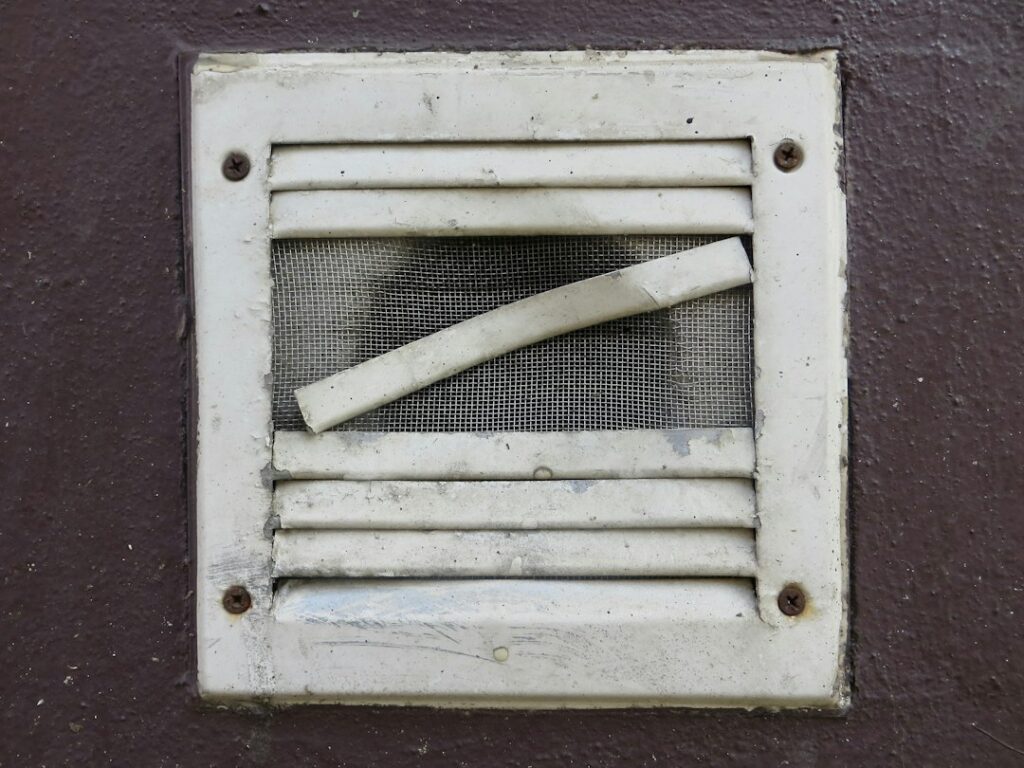
The dryer vent cover is the small hood on the outside wall where warm, moist, lint-laden air leaves the house. It is easy to ignore, yet it does several jobs at once: it lets exhaust out, keeps rain, snow and cold air from coming back in, and discourages birds and rodents from moving into the duct. When it fails, the symptoms show up indoors as long drying times, a hot laundry room or lint piling up behind the machine. When it is the wrong type, it can make the duct harder to keep clean. This guide compares louvered, flapper and pest-guard covers, explains why screens on dryer exhausts are controversial, covers backdraft and Front Range wind, and walks through clearances, roof caps, cleaning and typical costs. The dryer manufacturer’s installation instructions and local code always govern a specific installation.
Part of our Heating, Cooling & Ventilation guide — start there for the full picture →
What a Dryer Vent Cover Does and Which Type to Choose
A dryer vent cover, also called a dryer vent hood or termination cap, is the fitting where the dryer exhaust duct ends at the exterior wall. A good cover opens freely when the dryer runs, closes when it stops, sheds weather, and keeps animals out without restricting airflow or catching lint.
The direct answer for most homes: choose a cover with a damper (louvers or a single flap) that opens fully under dryer airflow and closes by gravity, and avoid adding a fine screen across the outlet. Then check periodically that the damper still moves freely. The U.S. Fire Administration’s clothes dryer safety flyer lists a simple version of that test among its tips: make sure the outdoor vent covering opens when the dryer is operating.
Louvered, Flapper and Pest-Guard Covers Compared
Most residential dryer vent covers fall into a few designs. Each has strengths and trade-offs.
Louvered covers
Louvered hoods use several thin slats that lift open when exhaust flows and fall shut when it stops. They are inexpensive and very common on tract homes. The downsides: the slats are light, so lint can build up on their edges and hold them partly open or partly closed, and plastic versions can become brittle and warp after years of high-altitude sun. A louver stuck open lets in cold air and pests. One stuck closed restricts airflow.
Single-flap (flapper) covers
A flapper hood uses one larger damper, sometimes weighted or spring-assisted, that swings open under airflow. It typically has fewer edges for lint to catch on and a larger, smoother opening. Many installers prefer a single flap for that reason. Metal flappers tend to last longer than plastic ones in harsh sun and hail.
Pest-guard and “bird-proof” covers
Some covers add a cage, wire guard or screen to keep birds and rodents out. Designs vary widely. Guards with open, widely spaced bars over a damper are different from fine mesh screens stretched across the opening. The latter is where lint problems start, as explained below.
Low-profile, magnetic and specialty hoods
Some newer designs use magnetic or balanced dampers, recessed boxes or low-profile hoods for tight spots such as decks or walkways. Others integrate with an interior recessed box for tight laundry closets. The fundamental test is the same for all of them: does the damper open fully with the dryer running, and close when it stops?
Materials
- Plastic: inexpensive and corrosion-proof, but can crack, warp or fade in strong UV.
- Aluminum or galvanized steel: more durable, paintable, and less prone to UV damage.
- Stainless or heavy-gauge metal: the most durable, usually the most expensive.
Best Dryer Vent Covers: our top 3 picks
| Product | Best for | Key features | Price | Buy |
|---|---|---|---|---|
| No-Pest Vent Dual Door | Best overall: no screen, pest-proof |
| $19.99as of Nov 3, 2026 11:15 pm GMT+0000 | Buy now →Check current price |
| Hydencamm Stainless Steel | Metal cover with no screen |
| $19.99as of Nov 3, 2026 11:15 pm GMT+0000 | Buy now →Check current price |
| Deflecto Louvered Gravity Damper | Simple like-for-like swap |
| $7.92as of Nov 3, 2026 11:15 pm GMT+0000 | Buy now →Check current price |


Prices are Amazon’s listed prices as of the time shown and change often; check Amazon for today’s price. As an Amazon Associate we earn from qualifying purchases.
Why Screens on Dryer Exhausts Can Trap Lint
Dryer exhaust carries lint that the lint filter misses. A fine screen across the outlet catches that lint like a second filter, but one that is outside, rarely checked and hard to clean. Over time the screen can clog, restricting airflow and backing lint into the duct.
That matters because lint and restricted airflow are linked to dryer fires. The Consumer Product Safety Commission’s safety alert on overheated clothes dryers explains that fires can occur when lint builds up in the dryer or in the exhaust duct, and that lint can block airflow, cause excessive heat build-up and result in a fire in some dryers. The same alert recommends checking the outside dryer vent while the dryer is running to make sure exhaust air is escaping. The U.S. Fire Administration reports that failure to clean was the leading factor contributing to the ignition of clothes dryer fires in homes from 2018 to 2020, at 31%, based on National Fire Incident Reporting System data.
Neither agency’s material reviewed here addresses outlet screens specifically, so the link between screens and fires is an inference rather than a cited finding. Still, many dryer manufacturers and many local codes discourage or prohibit screens at the dryer exhaust termination, and home inspectors commonly flag them. If a screened cover is already installed, it needs regular cleaning, or replacement with a damper-style guard designed for dryer exhaust.
Birds, Rodents, Backdraft and Colorado Wind
Pests are the main reason homeowners add screens in the first place. A warm, lint-lined duct is an inviting nest site for sparrows and starlings, and mice can enter through a damper stuck open. Signs include nesting material at the hood, chirping or scratching in the wall near the laundry room, or a sudden increase in drying times in spring.
Better approaches than a fine screen include:
- A sturdy single-flap or weighted damper that closes fully.
- A pest guard designed specifically for dryer exhaust, with openings large enough to pass lint.
- Replacing broken or warped louvers promptly.
- Inspecting and clearing the hood seasonally, especially in spring nesting season.
Wind is a Front Range issue in its own right. Chinook winds and strong westerly gusts can push dampers open, rattle louvers and drive cold air, dust or snow back into the duct. A cover that rattles or lets in drafts often has a light or worn damper. Heavier flaps and covers that seat tightly reduce backdraft. Placement matters too: a hood on a wall facing the prevailing wind tends to backdraft more than one on a sheltered side.
Snow is the other seasonal hazard. NFPA’s carbon monoxide safety guidance recommends clearing snow build-up from vents for the dryer, furnace, stove and fireplace during and after a snowstorm. That advice applies to every dryer, and it matters most for gas dryers, whose exhaust carries combustion products.
Clearances, Height and Cover vs Roof Cap
Exact clearance requirements come from the dryer’s installation instructions and local code, and they vary. Some general principles inspectors look for:
- Height above grade: The hood should sit high enough to stay above snow, mulch, landscaping and splash. A hood buried in a shrub or a snowbank cannot open.
- Distance from openings: Exhaust should not discharge near windows, doors, air intakes or other vents where moist air or, for gas dryers, combustion products can re-enter the house.
- No terminations into enclosed spaces: Dryer exhaust should terminate outdoors, not into a crawl space, attic, garage or wall cavity.
- Accessibility: A hood that can be reached safely is a hood that gets cleaned.
In some homes, particularly ones with interior laundry rooms or townhomes, the duct runs up through the roof and ends in a roof cap. Roof terminations are harder to inspect and clean, lint can collect on the cap, and the vertical run means lint can fall back toward the dryer. A roof cap made for dryer exhaust, without a screen, is the usual requirement. General-purpose roof vents designed for bathroom fans or attic ventilation are not substitutes.
Soffit terminations are another common shortcut. Dryer exhaust discharged into or near soffit vents can be drawn right back into the attic, carrying lint and moisture with it. The soffit vents guide explains how attic intake vents are supposed to work and why exhaust ducts should not end there.
Cleaning and Installation
The CPSC alert recommends cleaning the lint screen before or after drying each load, cleaning the dryer vent and exhaust duct periodically, and checking the outside vent while the dryer is operating. It also notes that if clothes are still damp at the end of a normal cycle or drying takes longer than normal, the lint screen or exhaust duct may be blocked.
Cleaning a vent cover is usually simple. Remove lint from the damper and hood opening by hand or with a brush, confirm the flap swings freely, and check the duct immediately behind it. A brush kit or a professional cleaning handles the full run. The dryer vent cleaning guide covers DIY kits, professional service and how often each makes sense.
Replacing a cover is often a straightforward job: remove the old hood’s screws and sealant, slide the new hood’s tailpiece into the duct, fasten it to the wall, and seal the flange to the siding with a compatible exterior sealant, leaving any drainage paths open. Problems arise when the duct is too short, disconnected inside the wall, or the wall opening was cut oversized. When choosing a replacement, match the hood’s collar to the duct diameter (most residential dryers use a 4-inch duct), pick a damper style that suits the wall’s exposure to wind, and consider a metal hood on sun-baked south and west elevations where plastic tends to break down. Hoods on brick or stucco may need a different fastening method than hoods on lap siding, and a gap left unsealed around the duct where it passes through the wall can let in air, water and insects. For a full new run, including duct sizing and routing, see the dryer vent installation guide. Tight laundry closets often benefit from a recessed box behind the dryer, covered in the dryer vent box guide.
Signs a Dryer Vent Cover Needs Attention
A failing hood rarely announces itself. More often it shows up as small changes inside the house, which is why a quick look outside while the dryer runs is worth adding to a seasonal maintenance routine.
- Longer drying times. CPSC notes that clothes still damp after a typical cycle, or drying that takes longer than normal, may signal a blocked lint screen or exhaust duct. A clogged hood is one possible cause.
- Little or no airflow at the hood. With the dryer running, warm air should push the damper open. Weak flow suggests a restriction somewhere in the run.
- A hot laundry room or a dryer that feels very hot to the touch. Heat that cannot escape builds up in the machine and the room.
- Lint on the siding, the ground below the hood or behind the dryer. Lint collecting outside can mean the cover is catching it. Lint behind the machine can mean a loose or crushed connection.
- Cold drafts, odors or insects near the dryer when it is not running, which point to a damper stuck open.
- Cracked, faded or missing parts after hail or years of sun exposure.
- Moisture stains or peeling paint on the wall around the hood, which can indicate exhaust condensing on the siding or a poorly sealed flange.
Any one of these is a reason to clean the hood and check the duct. Several together suggest the full run should be inspected or professionally cleaned.
Gas dryers raise the stakes
Electric and gas dryers both produce lint and moisture, but a gas dryer’s exhaust also carries combustion products, including carbon monoxide. A blocked, crushed or snowed-in termination on a gas dryer is not just an efficiency problem. That is one reason NFPA’s guidance on keeping dryer vents clear of snow appears in its carbon monoxide safety material, and why working CO alarms belong in any home with fuel-burning appliances.
Dryer Vent Covers vs Crawl Space Vent Covers
Search results often blur these two, but they solve opposite problems. A dryer vent cover is an exhaust termination: it must let air out freely, close when the dryer stops and never be screened shut or blocked. A crawl space vent cover is designed to close or seal a foundation opening, often seasonally, and sometimes as part of sealing and conditioning the crawl space.
Installing a crawl space style cover, or any solid block-off plate, over a dryer exhaust would trap hot, moist, lint-laden air in the duct. Using a dryer hood on a foundation vent opening makes little sense either. For foundation vents, see the crawl space vent covers guide.
Costs and What Inspectors Look For
Dryer vent covers are inexpensive parts. Basic plastic louvered hoods often sell for roughly $10 to $25, metal flapper hoods and pest-guard designs commonly run around $20 to $60, and premium or specialty hoods can cost more. Prices vary by retailer and material.
Professional replacement of a wall hood is often quoted somewhere around $75 to $200 for an accessible location, higher when it involves a ladder on a second story, siding repairs or rerouting duct. Full dryer vent cleaning is commonly quoted in a range of about $100 to $250, depending on length and access. These are rough estimates, not quotes, and Front Range pricing can differ.
The ASHI Standard of Practice includes clothes dryer exhaust systems among the items an inspector inspects under insulation and ventilation. In practice, common report notes include a screened or clogged hood, a damper stuck open or shut, a missing or broken cover, lint at the termination, a duct ending in an attic, crawl space or soffit, and hoods too close to grade.
When work goes beyond swapping a hood, such as rerouting a duct, adding a roof termination or addressing a gas dryer exhaust, it helps to hire someone familiar with venting. The heating and cooling hiring guide covers vetting HVAC and venting contractors, and the main hiring hub explains how inspection findings become repair bids. A sibling guide on the dryer vent hose covers the duct behind the dryer, the other half of the system.
References
- Overheated Clothes Dryers Can Cause Fires (Publication 5022) — U.S. Consumer Product Safety Commission
- Clothes Dryer Fire Safety Flyer — U.S. Fire Administration
- Appliance and Electrical Fire Safety — U.S. Fire Administration
- Carbon Monoxide Safety — National Fire Protection Association
- ASHI Standard of Practice for Home Inspections — American Society of Home Inspectors
Frequently asked questions
Should a dryer vent cover have a screen?
Generally no. A fine screen across the outlet can catch lint, clog and restrict airflow. Many manufacturers and local codes discourage screens at dryer exhaust terminations. A damper-style cover or a pest guard designed for dryer exhaust is the usual alternative.
Why does my dryer vent flap stay open?
Lint on the hinge or edges, a warped plastic flap, or a broken spring can hold it open. Clean the hood and check that the damper swings freely. A flap stuck open lets in cold air and pests, so replace it if cleaning does not help.
How can birds be kept out of a dryer vent?
Use a sturdy flapper or weighted damper that closes fully, or a pest guard made for dryer exhaust with openings large enough for lint to pass. Avoid fine mesh, and check the hood each spring for nesting material.
Can a dryer vent end in the attic or soffit?
Dryer exhaust should terminate outdoors. Ending it in an attic, crawl space or garage traps lint and moisture. Discharging near soffit vents can pull exhaust back into the attic. Follow the dryer's instructions and local code.
Who should check a dryer vent that is hard to reach?
Second-story hoods, roof caps and long runs are often best left to a dryer vent or HVAC professional. A home inspection can flag termination problems. For an introduction to a Front Range inspector, use our contact form.
Long drying times, a stuck flap or nesting birds at the hood can point to a bigger venting problem. Front Range homeowners can reach out through our contact page to connect with a vetted local inspector.