Crawl Space Vent Covers: When to Close Vents and When Not
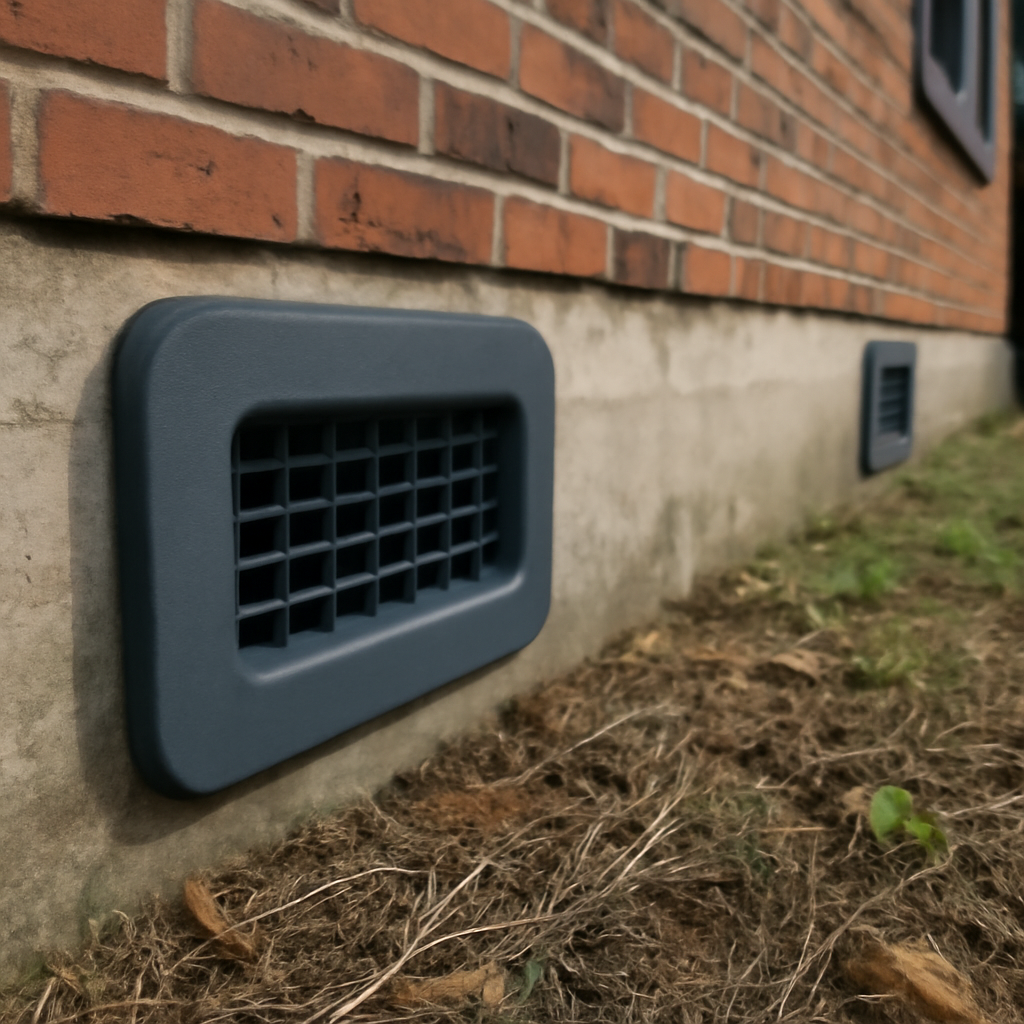
Many older homes along the Colorado Front Range sit over a crawl space with small vents in the foundation walls. Each fall, some owners stuff those vents with foam blocks or snap on covers to keep out cold air. Each spring, they pull the covers off, or forget to. Whether that ritual helps or hurts depends on how the crawl space is built, how wet it is and what the rest of the house is doing. Crawl space vent covers range from simple seasonal inserts to permanent sealed panels used when a crawl space is converted to a closed, conditioned design. This guide explains the difference between vented and sealed crawl spaces, when closing vents protects plumbing, how covers interact with moisture and mold, why radon testing matters for homes with crawl spaces, how vents relate to rodents and other pests, and what typical costs look like. It summarizes EPA and CDC guidance current as of 2026; consult a qualified professional for testing and remediation decisions.
Part of our Crawl Space & Attic Guide guide — start there for the full picture →
What Crawl Space Vent Covers Do
Foundation vents are openings, usually screened, that let outside air pass through the crawl space. The traditional idea was that cross-ventilation would carry moisture out. Vent covers block those openings, partially or completely. The main types are:
- Foam or insulated inserts. Blocks pushed into the vent opening from inside or outside, usually for winter use.
- Snap-on or magnetic covers. Plastic or metal panels placed over the exterior of the vent.
- Operable vents. Louvered vents with a manual lever or a temperature-activated mechanism that opens in warm weather and closes in cold weather.
- Permanent sealed covers. Airtight panels, often caulked or foamed in place, used when a crawl space is being sealed and conditioned.
Seasonal covers are about temperature. Permanent covers are part of a different crawl space strategy entirely. Mixing the two approaches without understanding them is where problems start.
Vented Versus Sealed Crawl Spaces
A vented crawl space treats the area under the floor as outside the home’s living space. The floor above is insulated, pipes and ducts in the crawl space are exposed to outdoor temperatures, and foundation vents allow air exchange. A sealed or closed crawl space treats the area as part of the building enclosure: vents are closed permanently, a vapor barrier covers the ground and often runs up the walls, the foundation walls may be insulated, and the space receives some conditioning or dehumidification.
Building science research and many building codes now recognize closed crawl spaces as an alternative to traditional venting, with specific requirements for ground covers, wall insulation and air supply. Which design suits a particular home depends on the climate, the soil, the condition of the foundation and whether ducts or a furnace are located in the crawl space. Our guide to crawl space vents explains how traditional venting is supposed to work and why it sometimes fails, and the crawl space hub collects related topics in one place.
Why simply covering vents can backfire
Closing the vents on a crawl space with a bare dirt floor, standing water or poor drainage does not create a sealed crawl space. It creates a closed box with a moisture source and no way for that moisture to leave. Ground moisture continues to evaporate into the air, humidity climbs, and wood framing, insulation and stored items can become damp. Sealing only works when the moisture sources are controlled first, typically with a continuous vapor barrier, drainage corrections and some form of conditioning or dehumidification. Our guide to crawl space vapor barrier installation describes what a proper ground cover involves.
Seasonal Covers and Frozen Pipes
In a traditional vented crawl space, winter air flowing through the vents can drop the temperature under the house well below freezing. Water supply lines, drain lines with standing water and any plumbing near the vents are vulnerable. Frozen pipes can burst and flood the crawl space, and a burst may go unnoticed until water appears elsewhere or the water bill spikes.
Seasonal vent covers reduce cold air movement during the coldest months. They are a reasonable short-term measure for vented crawl spaces in cold climates, including the Front Range, where overnight lows can drop into single digits or below during cold snaps. They work best combined with other protection:
- Insulating exposed water lines, especially near foundation vents and access hatches.
- Sealing gaps around pipes that pass through the rim joist.
- Keeping the crawl space access door closed and weatherstripped.
- Using heat cable on vulnerable lines where recommended, installed according to the manufacturer’s instructions.
- Knowing where the main water shutoff is located.
Remembering to open them again
The common problem with seasonal covers is that they stay in place year-round. In a vented crawl space designed to rely on air exchange, permanently closed vents can raise humidity during spring and summer. Some owners write the dates on a calendar or tie the task to another seasonal chore. Automatic temperature-operated vents avoid that issue, although they still depend on the crawl space being reasonably dry to begin with.
Moisture, Humidity and Mold
Whatever the vent strategy, moisture control is the goal. EPA’s guide to mold and moisture in the home states that the key to mold control is moisture control, recommends keeping indoor relative humidity below 60 percent and ideally between 30 and 50 percent, and notes that drying water-damaged areas and materials within 24 to 48 hours generally prevents mold growth. The same guide recommends cleaning and repairing gutters and making sure the ground slopes away from the foundation so water does not enter or collect around it.
Crawl spaces have several moisture sources:
- Ground moisture. Even dry-looking soil releases water vapor. A missing, torn or partial vapor barrier lets it into the air.
- Surface water. Poor grading, missing gutters or short downspouts send roof water toward the foundation.
- Plumbing leaks. Drips from supply lines, drains or a water heater in the crawl space.
- Outdoor air. In humid weather, warm air entering through open vents can condense on cool surfaces under the house.
- Equipment. Ducts leaking conditioned air, dryer vents terminating into the crawl space, or condensate lines discharging inside.
The Front Range’s semi-arid climate means crawl spaces here are often drier than those in humid regions, but drainage problems, plumbing leaks and the occasional wet spring still produce damp crawl spaces. Signs of a moisture problem include musty odors in the house, condensation on pipes or ducts, damp or sagging insulation, efflorescence on foundation walls, rust on metal fasteners, and visible mold on joists or subfloor. Where those signs exist, the moisture source needs attention before any decision about closing vents.
Insulation also plays a role. In a vented crawl space, insulation typically goes between the floor joists. In a sealed crawl space, insulation usually moves to the foundation walls. Our guide to crawl space insulation cost compares those approaches, and the broader crawl space insulation pillar explains how insulation, air sealing and moisture control fit together. ENERGY STAR notes that sealing air leaks and adding insulation can make a home more comfortable and energy efficient, with potential savings of up to 10 percent on annual energy bills, and it lists basement and crawl space projects among its seal-and-insulate resources.
Radon and Crawl Spaces
Colorado is known for elevated radon potential, and homes with crawl spaces are not exempt. EPA describes radon as a naturally occurring radioactive gas that cannot be seen or smelled, states that testing is the only way to know your level of exposure, and estimates that radon is responsible for about 21,000 lung cancer deaths each year in the U.S., making it the second leading cause of lung cancer overall and the number one cause among non-smokers.
Vent covers and crawl space sealing can change how air moves between the soil, the crawl space and the living space, which may affect indoor radon levels in either direction. That is a reason to test, not to guess. Practical points:
- Test the lowest lived-in level of the home before and after significant crawl space changes.
- If a crawl space is being sealed, ask the contractor whether a radon mitigation system can be integrated, often using a sealed vapor barrier with a suction point beneath it.
- Do not assume an open-vented crawl space eliminates radon; air pressure differences can still draw soil gas into the house.
Rodents, Insects and Other Pests
Foundation vents are a classic entry point for mice, rats, snakes and insects. Vent screens tear, rust or get pushed out, and missing screens leave an open doorway into the crawl space. CDC’s rodent-prevention guidance lists attic and crawl space vents among the outdoor spots to check for gaps, notes that mice can fit through a hole the width of a pencil, about 1/4 inch, and recommends using materials such as hardware cloth, lath screen or metal, cement or metal sheeting to fix larger holes.
Seasonal covers can help temporarily, but foam inserts are easy for rodents to chew through. Better long-term options include:
- Replacing damaged vent screens with heavy-gauge metal mesh.
- Sealing gaps around pipes, wires and the access door.
- Keeping firewood, debris and dense vegetation away from foundation vents.
- Inspecting the crawl space periodically for droppings, nesting material and damaged insulation.
Rodent droppings and nesting material should be handled carefully. Public health agencies, including CDC, publish cleanup guidance for rodent-contaminated areas, and heavily contaminated crawl spaces are often best left to professionals.
Choosing an Approach for Your Crawl Space
Most homeowners end up in one of three situations, and each points toward a different use of vent covers.
Dry, vented crawl space with exposed plumbing
If the crawl space is dry, the vapor barrier is intact and the main concern is winter freezing, seasonal covers on the vents nearest the plumbing are a low-cost measure. Insulating the pipes and sealing gaps around the rim joist add protection. Remove the covers in spring and check the crawl space at least once a year for moisture, pests and damaged insulation.
Damp crawl space with signs of moisture
If the crawl space smells musty, the ground cover is missing or torn, or there is standing water after storms, covering vents is not the fix. Start with drainage: gutters, downspouts and grading that keep roof water away from the foundation. Then address the ground cover and any plumbing leaks. Once the crawl space is reliably dry, the vent strategy can be revisited. If mold is visible on framing or subfloor, the moisture source has to be corrected before or during cleanup, and larger affected areas may call for a professional.
Planned conversion to a sealed crawl space
If the goal is a closed, conditioned crawl space, the vents are sealed permanently as part of a larger project. That project typically includes a continuous, sealed vapor barrier, insulation on the foundation walls, air sealing of the rim joist, a sealed and insulated access door, and either a small supply of conditioned air or a dehumidifier sized for the space. Local building departments may have specific requirements, and combustion appliances in the crawl space need a safe source of combustion air, which is a question for a licensed HVAC contractor.
Access Doors, Window Wells and Other Openings
Vents are not the only openings in a crawl space. Exterior access doors are often thin plywood panels with large gaps, and they let in as much cold air and as many pests as the vents do. A tight-fitting, insulated and weatherstripped access door is one of the most useful upgrades for any crawl space, vented or sealed. Some homes also have crawl space window wells or utility penetrations for gas lines, dryer vents and air conditioning line sets. Each needs a durable seal against air, water and rodents. Window wells should have drainage and, where appropriate, covers that shed water away from the foundation.
What Inspectors Check
The ASHI Standard of Practice calls for describing the methods used to inspect under-floor crawl spaces, and it states that inspectors are not required to enter crawl spaces with less than 24 inches of vertical clearance or with an access opening smaller than 16 by 24 inches. Where the crawl space is accessible, inspectors commonly note:
- Vent covers or blocked vents, and whether the crawl space appears designed as vented or sealed.
- Condition of the vapor barrier, insulation and framing.
- Moisture, standing water, efflorescence or visible mold.
- Damaged screens or evidence of rodents and insects.
- Exposed plumbing, leaks and uninsulated pipes near vents.
Where the crawl space cannot be entered, inspectors usually view it from the access opening and note the limitation. Buyers in that situation may want a crawl space specialist or follow-up inspection.
Typical Costs
Costs vary widely with the crawl space size, condition and approach. These are general 2026 ranges, not quotes:
- Seasonal foam or snap-on covers. Usually a few dollars to a few tens of dollars per vent.
- Automatic temperature-operated vents. Typically more per vent, plus installation if the opening needs modification.
- Replacing vent screens. Modest material costs; labor depends on the number of vents and access.
- Pipe insulation and air sealing. Often a few hundred dollars for a typical crawl space, more if the space is tight or damaged.
- Full crawl space encapsulation. Sealing vents, installing a heavy vapor barrier, insulating walls and adding dehumidification commonly runs several thousand dollars or more, and drainage or mold remediation adds to the total.
- Radon testing. Do-it-yourself kits are relatively inexpensive; professional testing costs more; mitigation is a separate expense.
Before paying for encapsulation, get a written scope that explains how moisture sources will be addressed, how the space will be conditioned or dehumidified, whether radon has been tested, and how vents and the access door will be sealed.
References
- A Brief Guide to Mold, Moisture and Your Home — U.S. Environmental Protection Agency
- Health Risk of Radon — U.S. Environmental Protection Agency
- How to Seal Up to Prevent Rodents — Centers for Disease Control and Prevention
- Seal and Insulate with ENERGY STAR — ENERGY STAR
- ASHI Standard of Practice for Home Inspections — American Society of Home Inspectors
Frequently asked questions
Should crawl space vents be closed in winter?
In a traditional vented crawl space, seasonal covers can reduce cold air and the risk of frozen pipes. They should usually come off again in spring unless the crawl space has been properly sealed with a vapor barrier and moisture control.
Is it bad to cover crawl space vents permanently?
Permanently closing vents over a damp or bare dirt crawl space can trap moisture and raise humidity. Permanent sealing works when it is part of a planned conversion that includes a vapor barrier, drainage fixes and conditioning or dehumidification.
Do crawl space vent covers keep rodents out?
Some help temporarily, but foam inserts are easy for rodents to chew through. Heavy metal mesh screens and sealing gaps around pipes and the access door are more durable defenses.
Does sealing a crawl space affect radon?
It can change how air moves between the soil and the house, which may raise or lower indoor radon. Testing before and after the change is the only way to know, and a sealed crawl space can often incorporate radon mitigation.
How much do crawl space vent covers cost?
Seasonal foam or snap-on covers often cost a few dollars to a few tens of dollars per vent. Automatic vents cost more, and full encapsulation that seals the vents typically runs several thousand dollars or more.
Wondering whether the crawl space under a home you are buying should be vented or sealed? Get in touch to connect with a Front Range inspector who will check vents, moisture and access.