Crawl Space Vents: Open, Closed or Sealed in Colorado?
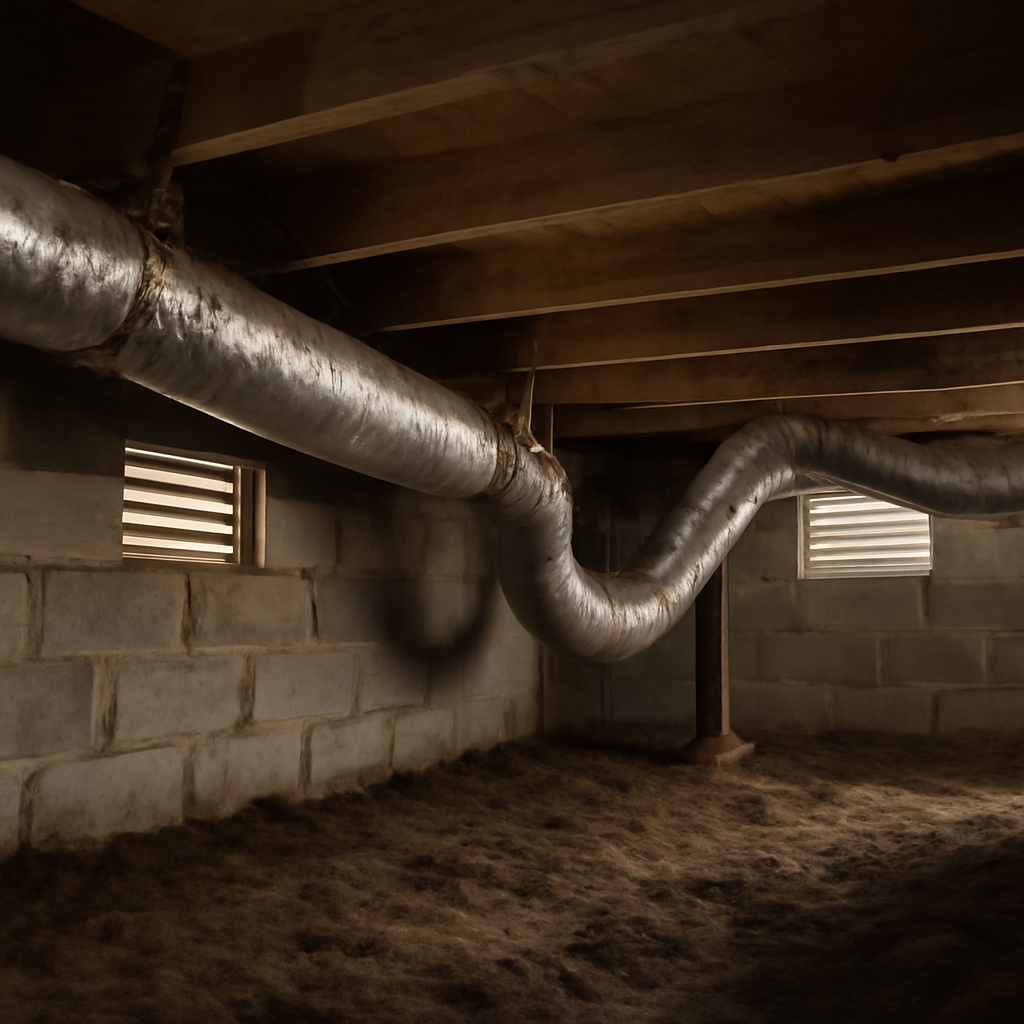
Small rectangular openings near the bottom of a foundation wall are a familiar sight on older homes. Those vents in crawl space walls were long considered essential: the idea was that outdoor air moving through the crawl space would carry away moisture from the soil. Building science has shifted since then, and many builders and energy programs now favor sealed, conditioned crawl spaces in many climates. Homeowners on the Colorado Front Range are left with practical questions. Should the vents be open or closed? Should they be closed in winter? What about radon, frozen pipes and mice? This guide explains how vented and sealed crawl spaces differ, why vents can sometimes add moisture instead of removing it, how Colorado’s dry climate changes the picture, and why closing vents only makes sense as part of a complete plan.
Part of our Crawl Space & Attic Guide guide — start there for the full picture →
Why Crawl Spaces Were Vented in the First Place
For much of the 20th century, building codes required openings in crawl space foundation walls. The reasoning was straightforward. Soil releases moisture, and a closed space over damp ground could become humid enough to rot wood framing and grow mold. Venting the space to the outdoors was meant to dilute that moisture with drier outdoor air.
A vented crawl space treats the area below the floor as outside the house. The insulation goes in the floor between the joists, the vents stay open, and the crawl space temperature roughly follows the weather. Pipes and ducts running through it are effectively outdoors, which is why they need insulation and sealing of their own.
Codes still allow vented crawl spaces, typically with a minimum amount of vent area and a ground cover in many cases. But most current codes also allow an unvented crawl space as an alternative, provided it includes a sealed ground cover, insulated walls and some means of conditioning or drying the air. Local requirements vary, so the building department has the final word on any change.
Vented vs Sealed (Conditioned) Crawl Spaces
The two approaches put the thermal and moisture boundary in different places.
Vented Crawl Space
- Foundation vents open to outdoor air.
- Insulation installed in the floor above, between the joists.
- Ground cover over the soil recommended or required, depending on local code.
- Ducts and pipes in the crawl space need their own insulation and sealing.
- Floor above must be air sealed to keep crawl space air out of the house.
Sealed or Conditioned Crawl Space
- Vents closed and sealed.
- Insulation on the perimeter walls and often the rim joists, not the floor.
- Continuous, sealed vapor barrier over the soil and up the walls.
- Air drying by a small supply of conditioned air, an exhaust fan or a dehumidifier, depending on design and code.
- Ducts, pipes and equipment end up inside the conditioned space.
ENERGY STAR’s basement and crawlspace project page links to building science resources on enclosed crawlspaces, including a Department of Energy Building America guide to closing and conditioning ventilated crawlspaces that explains the issues and concerns with conventional ventilated crawlspaces and offers prescriptive measures for creating healthier and more durable spaces. Another resource it lists describes how crawlspaces should be insulated and have a continuous sealed groundcover of vapor diffusion resistant materials. The crawl space insulation pillar guide covers both approaches in more depth.
How Vents Can Add Moisture Instead of Removing It
Venting only dries a crawl space if the outdoor air is drier than the crawl space air. That is not always the case. In humid summer climates, such as much of the Southeast and Midwest, warm, moist outdoor air flows into a crawl space that is cooled by the ground and by air-conditioned floors above. As that air cools, its relative humidity rises, and it can reach the point where moisture condenses on cold surfaces such as ducts, pipes and the underside of the floor. In those climates, open vents can make a crawl space wetter in summer, which is one of the main reasons sealed crawl spaces gained popularity.
The Colorado Difference
The Front Range is semi-arid, with generally low humidity and cool nights. Outdoor air is drier much of the year than it is in the eastern United States, so summer condensation from vents is less of a concern here. Many Colorado crawl spaces with open vents and a decent ground cover stay reasonably dry.
That does not make every Colorado crawl space dry. Poor grading, roof runoff, a high water table near irrigated lawns or ditches, spring snowmelt and plumbing leaks can all wet a crawl space regardless of the vents. Short humid stretches during summer monsoon storms also happen. The source of moisture usually matters more than the vents. The wet crawl space insulation guide explains what to do when insulation in the crawl space is already damp.
In practice, many Front Range homes do well with either approach when it is done completely. The more important question is usually whether the crawl space has a working ground cover, good drainage and an intact air barrier in the right place.
Winter Freeze Risk and Closing Vents
Colorado winters bring the opposite problem. Open vents let subfreezing air into the crawl space, and pipes running through it can freeze, especially near the vents themselves and along north walls. Cold floors above also make the house less comfortable and raise heating bills.
Some homeowners close or cover vents for the winter and open them again in spring. Many older vents have manual dampers for that purpose, and foam vent plugs or covers are sold at hardware stores. Seasonal closing can reduce freezing risk, but it does not turn a vented crawl space into a sealed one: the insulation is still in the floor, the walls are still cold, and closed vents may trap moisture if the soil is damp.
Protecting pipes directly is often more reliable. Insulating water lines, sealing gaps where cold air enters near plumbing and keeping pipes away from vent openings all help. The pipe insulation guide covers materials and where to use them. The EPA’s brief guide to mold and moisture also recommends covering cold surfaces, such as cold water pipes, with insulation to help prevent condensation, which applies to crawl space plumbing in summer as well.
Radon: Venting vs Sealing
Radon is a naturally occurring radioactive gas that comes from soil and rock. The EPA describes it as a gas that can cause lung cancer, notes that it cannot be seen or smelled, and states that testing is the only way to know the level of exposure and that all homes should be tested. Much of the Front Range has elevated radon potential, so crawl space changes deserve a radon plan. The radon testing in Colorado guide explains how testing works.
Radon and crawl space vents interact in two ways. Open vents can dilute radon entering the crawl space, though the effect depends on wind, temperature and how well the floor above is sealed. Closing vents without other measures may allow radon concentrations in the crawl space, and potentially in the house, to rise. On the other hand, a properly sealed crawl space with a continuous ground cover can be fitted with a sub-membrane depressurization system, a fan and pipe that pull soil gas from under the membrane and vent it above the roofline, which is a common radon mitigation method for crawl spaces.
EPA’s radon-resistant construction guidance for new homes describes related principles: a plastic sheeting or vapor retarder layer to keep soil gases from entering, sealing openings and cracks in the foundation, and a vent pipe to carry soil gas safely outdoors. ENERGY STAR’s basement and crawlspace project page advises that sealing a home can trap indoor pollutants such as radon, and that homeowners in high radon areas consider having a radon test and mitigation system installed before sealing. Testing before and after any crawl space project is a practical step.
Combustion Appliances in Crawl Spaces
Some homes have a furnace or water heater in the crawl space. Gas and oil appliances need air for combustion, and many older units draw that air from the space around them. Closing vents in a crawl space that supplies combustion air can starve an appliance or cause it to backdraft. ENERGY STAR’s basement and crawlspace project page warns that sealing can, in some cases, cause naturally venting combustion appliances to backdraft gases into the home, and it suggests having a professional test appliances for proper drafting before and after sealing.
Before closing vents around fuel-burning equipment, a heating contractor should confirm how the appliance gets combustion air. Options may include ducting outside air directly to the appliance or replacing it with a sealed-combustion unit that draws air from outdoors through its own pipe. Working carbon monoxide alarms in the house are important regardless.
Vent Covers, Screens and Wells
Whether the vents stay open or not, their condition matters.
- Rodent screens. Open vents should have intact, sturdy screening, often galvanized hardware cloth, to keep out mice, rats, snakes and other animals. Torn screens are a common way pests get into crawl spaces.
- Vent wells. Vents near or below grade often have small wells that collect leaves and snow. A clogged well can channel water straight through the vent into the crawl space. Keeping wells clear and grading soil away from vents helps.
- Operable dampers. Manual or automatic dampers can be closed in winter. Temperature-activated automatic vents open and close on their own, though they do not respond to humidity.
- Permanent covers. Rigid foam or sealed metal covers are used when vents are closed as part of a full encapsulation. Covers alone, without the rest of the system, are a partial measure.
Closing Vents Only as Part of a Full Encapsulation
Simply blocking the vents in a crawl space with bare dirt, floor insulation and no drying strategy is a common mistake. Moisture from the soil has nowhere to go, humidity can climb, and floor insulation may grow damp and moldy. Done properly, converting to a sealed crawl space usually includes:
- Correcting exterior drainage and fixing any plumbing leaks first.
- Installing a continuous, sealed ground cover, typically taped at seams and run up the walls; the crawl space vapor barrier installation guide covers the details.
- Sealing vents, the rim joist and other air leaks to the outdoors.
- Moving insulation from the floor to the walls; the crawl space insulation types guide compares rigid foam, spray foam and other options.
- Providing a drying method, such as a dehumidifier or a small conditioned air supply, as local code allows.
- Addressing radon and combustion air before the space is closed up.
Full encapsulation is a larger investment than covering vents. Many projects fall somewhere in the range of several thousand dollars to $15,000 or more, depending on size, access, existing moisture problems and whether a dehumidifier is included. The crawl space encapsulation cost guide breaks down the line items. Seasonal vent covers and rodent screens, by contrast, often cost tens of dollars per vent for materials.
Signs the Current Setup Is Not Working
Whatever the design, a crawl space tells on itself. Homeowners who can safely look through the access hatch with a flashlight may notice clues that the venting, ground cover or drainage needs attention:
- Musty or earthy odors in the house, especially in rooms directly above the crawl space or when the furnace first runs.
- Sagging or fallen batts between the floor joists, which often means the insulation absorbed moisture or was never properly supported.
- Dark staining, white fuzz or rot on joists, sill plates and the underside of the subfloor.
- Condensation or rust on metal ducts, water lines, hangers and nails.
- Damp or muddy soil, standing water after storms, or water lines on the foundation walls.
- Droppings, nesting material or torn screens at the vent openings.
- Pipes that froze in a past winter, often near a vent or an exterior corner.
Any of these signs usually points to a specific moisture source or air leak rather than a simple vent setting. Fixing the source first, then deciding on vents, avoids spending money on the wrong solution. Where framing damage has already set in, the crawl space foundation repair guide covers structural repairs.
A Practical Order of Operations
For a Front Range homeowner weighing what to do about the vents, a sensible sequence looks something like this:
- Test for radon so the baseline is known before anything changes.
- Check exterior drainage, including gutters, downspout extensions and soil slope near the foundation.
- Fix plumbing leaks and replace any wet or fallen insulation.
- Install or repair the ground cover, which helps in both vented and sealed designs.
- Repair vent screens and protect pipes with insulation, especially near openings.
- Decide on the long-term approach: keep a well-maintained vented crawl space, or commit to full encapsulation with sealed vents, wall insulation and a drying method.
- Retest for radon after the work is complete.
Many homes stop after step five and do fine. Others, particularly those with ductwork or a furnace in the crawl space, get more value from a complete conversion.
What a Home Inspector Looks At
The ASHI Standard of Practice directs a home inspector to inspect insulation and vapor retarders in unfinished spaces and the ventilation of attics and foundation areas, and to describe the methods used to inspect under-floor crawlspaces. It does not require the inspector to enter crawlspaces with less than 24 inches of vertical clearance or an access opening smaller than 16 inches by 24 inches, so some crawl spaces are viewed only from the hatch.
In a crawl space, an inspector may note blocked or damaged vents, missing screens, a missing or torn ground cover, fallen floor insulation, damp soil, standing water, condensation on ducts or pipes, mold on framing, pest activity, and fuel-burning appliances whose combustion air may be affected. More guides on these topics are gathered in the crawl space hub.
References
- Basement and Crawlspace Air Sealing and Insulating Project — ENERGY STAR
- Radon — U.S. Environmental Protection Agency
- Radon-Resistant Construction Basics and Techniques — U.S. Environmental Protection Agency
- A Brief Guide to Mold, Moisture and Your Home — U.S. Environmental Protection Agency
- ASHI Standard of Practice for Home Inspections — American Society of Home Inspectors
Frequently asked questions
Should crawl space vents be open or closed in Colorado?
Many Front Range crawl spaces work with vents open in warm months, since Colorado air is relatively dry, while some owners close them in winter to protect pipes. Permanently sealing vents works best as part of a full encapsulation with a sealed ground cover and a drying method.
Can I just close my crawl space vents?
Closing vents without a sealed ground cover, wall insulation and a way to dry the air can trap moisture and raise humidity. Radon and combustion air for any fuel-burning appliance also need to be addressed first.
Do closed crawl space vents increase radon?
They can, because open vents dilute some soil gas. Testing before and after any change is recommended, and a sealed crawl space can be fitted with a radon mitigation system under the ground cover if levels are high.
Should I close crawl space vents in winter?
Closing or covering vents in winter can reduce the risk of frozen pipes and cold floors. Insulating exposed water lines is still recommended, and vents are usually reopened in spring if the crawl space is designed to be vented.
Do crawl space vents need screens?
Yes. Open vents should have intact, sturdy screening to keep rodents and other animals out. Torn or missing screens are a common entry point for pests.
Not sure whether your crawl space should be vented or sealed? Ask us through the contact page and we can help you find a Front Range inspector to look at moisture, insulation and radon before you decide.