Crawl Space Encapsulation Cost: 2026 Price Guide
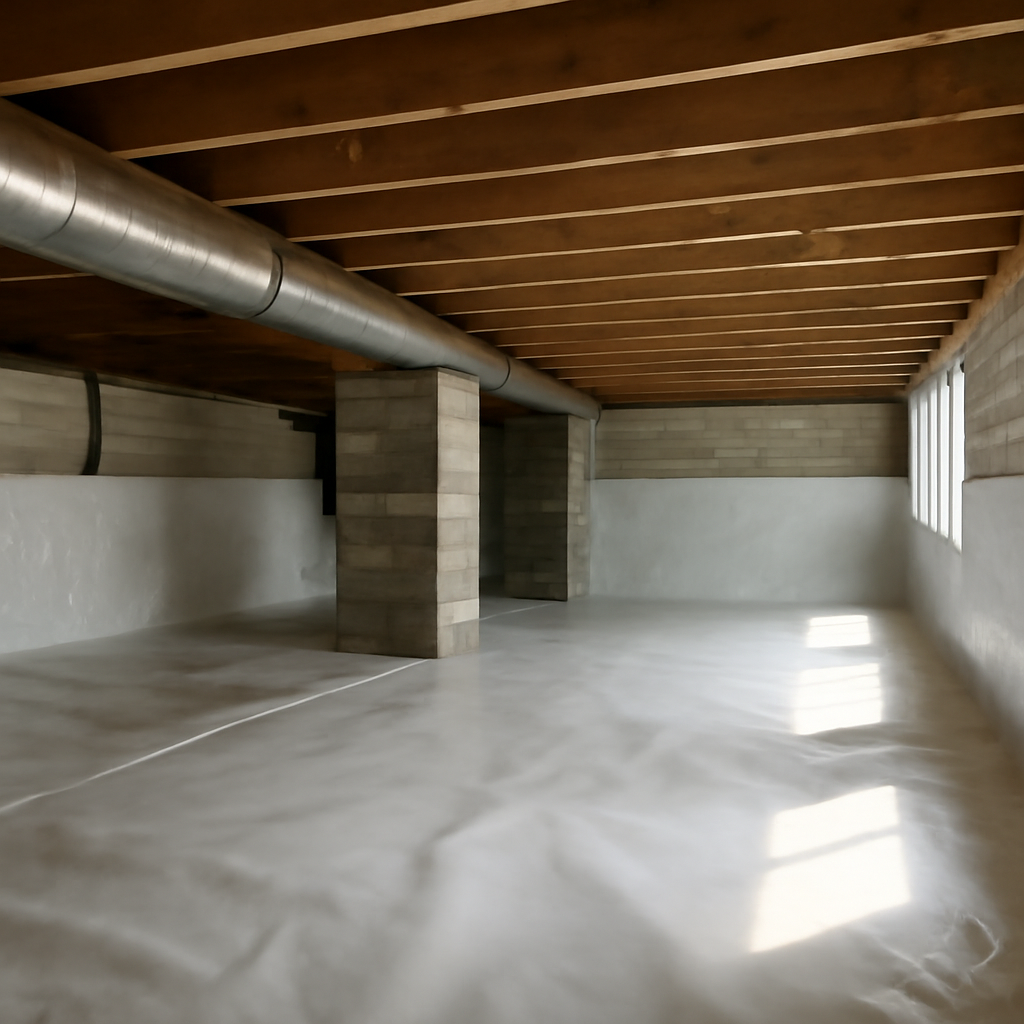
Quotes for sealing a crawl space can range from a few thousand dollars to well over $15,000 for homes that look similar from the street. That spread confuses a lot of homeowners. Crawl space encapsulation cost depends less on the size of the house and more on what the crawl space needs: how wet it is, how thick a liner you choose, whether vents get sealed, whether a dehumidifier and drainage are part of the package and what repairs have to happen first. This guide breaks those pieces apart, explains when doing it yourself makes sense and looks at why encapsulation in Colorado is often as much about radon as about moisture. It summarizes EPA guidance on moisture and radon current as of 2026; for mold or radon health questions, consult a physician, and for testing decisions, a certified professional. All prices are industry estimates that vary by market, access and contractor.
Part of our Crawl Space & Attic Guide guide — start there for the full picture →
How Much Does Crawl Space Encapsulation Cost?
Industry estimates for professional crawl space encapsulation commonly fall between about $3 and $7 per square foot of crawl space floor, with many full projects landing between roughly $5,000 and $15,000. Small, dry, easily accessed crawl spaces can come in under $5,000. Large or wet crawl spaces that need drainage, a sump pump, mold remediation or structural repairs can exceed $20,000.
Encapsulation is not a single product. It is a package that typically includes a heavy polyethylene liner on the floor and up the walls, sealed seams, sealed vents and rim openings, an air-sealed access door, and some way to control humidity, either a dedicated dehumidifier or a small supply of conditioned air from the home’s HVAC system. Insulation on the foundation walls is often included. Every one of those pieces shows up as a line item.
| Crawl space size | Basic liner and sealing | Full encapsulation with dehumidifier | With drainage and sump |
|---|---|---|---|
| 500 sq ft | About $1,500 to $3,500 | About $3,500 to $6,500 | About $5,500 to $9,500 |
| 1,000 sq ft | About $3,000 to $6,000 | About $5,500 to $10,500 | About $8,000 to $14,000 |
| 1,500 sq ft | About $4,500 to $8,500 | About $7,500 to $14,000 | About $10,500 to $18,500 |
| 2,000 sq ft | About $6,000 to $11,000 | About $9,500 to $17,000 | About $13,000 to $22,000+ |
These bands are planning ranges built from published contractor price guides and should not be read as quotes. Local labor rates, travel, material prices and how cramped the space is can move a real bid well outside them.
What Drives Crawl Space Encapsulation Cost
Most of the difference between a $4,000 quote and a $14,000 quote comes from the items below. Asking each contractor to price them separately makes comparisons far easier.
Vapor barrier thickness and quality
Liners are sold by thickness in mils (thousandths of an inch). Building codes generally accept 6-mil polyethylene as a minimum ground cover in vented crawl spaces, but encapsulation contractors usually install 10-mil to 20-mil reinforced liners because they resist punctures from foot traffic, storage and service visits. Material costs climb with thickness. A 6-mil sheet might cost well under $0.25 per square foot, while a reinforced 20-mil liner can cost several times that before labor. Thicker liners also take longer to cut and fit around piers. For the step-by-step on how liners go in, see the companion guide on crawl space vapor barrier installation.
Sealing vents, rim joists and the access door
True encapsulation closes the foundation vents and air-seals the rim joist area so humid or cold outdoor air no longer flows through the space. Vent covers are inexpensive, but foam sealing the rim joist across a long perimeter adds labor. An insulated, gasketed access door typically adds a few hundred dollars.
Humidity control
Once vents are sealed, the space needs a way to manage moisture. A crawl space dehumidifier, installed with a condensate line, often runs roughly $1,200 to $2,500 depending on capacity and brand. Some contractors instead add a small supply duct from the HVAC system, which can cost less upfront but depends on the existing system’s capacity. Dehumidifiers also add an ongoing electric bill and occasional filter changes.
Drainage and sump pumps
If water enters the crawl space after storms or snowmelt, a liner alone will trap it. Interior perimeter drains and a sump pump can add several thousand dollars. This is where the line between encapsulation and waterproofing blurs, and the guide to crawl space waterproofing covers when that work is warranted.
Wall and rim insulation
Encapsulated crawl spaces are usually insulated on the foundation walls rather than between the floor joists. Rigid foam board or spray foam on the walls adds cost but keeps the space within the home’s thermal envelope. The existing crawl space insulation cost guide breaks those material prices down in more detail.
Prep, cleanup and repairs
- Removing old, sagging fiberglass batts and debris
- Mold cleanup on joists or subfloor if growth is present
- Replacing rotted sill plates or adding support posts
- Regrading uneven dirt floors
- Pest exclusion or treatment
Prep work is the least predictable part of any quote. A contractor who prices it without crawling the space is guessing.
Access and working height
Crawl spaces with 18 inches or less of clearance slow every task. Some contractors charge a difficulty premium, and very tight spaces can rule out certain products altogether.
Does Encapsulation Make Sense in a Dry Colorado Climate?
Most encapsulation marketing comes from humid regions such as the Carolinas, Georgia and the Ohio Valley, where summer outdoor air carries so much moisture that vented crawl spaces routinely hit condensation conditions. The Front Range is different. Denver, Colorado Springs and Fort Collins sit in a semi-arid climate with low average humidity, and vented crawl spaces here often stay drier than their counterparts in the Southeast.
That changes the cost-benefit math in a few ways:
- Moisture problems are more often liquid water than humid air. Poor grading, short downspouts, sprinkler overspray and snowmelt along the foundation are common Colorado sources. Fixing those outside the house may solve the problem for far less than a full encapsulation.
- A dehumidifier may be optional. Some Front Range crawl spaces stay comfortably below 60 percent relative humidity after sealing without one. A data logger for a few weeks after the liner goes in can show whether the expense is necessary.
- Energy and comfort still matter. Cold winter air flowing through open vents chills floors and pipes. Sealing and insulating the walls can make floors above noticeably warmer.
For a deeper comparison of the two approaches, the guide to vented vs encapsulated crawl spaces walks through the trade-offs.
Combining Encapsulation With Radon Mitigation
Colorado has some of the highest average indoor radon levels in the country, and EPA identifies much of the state as having high radon potential. Crawl spaces are a common entry point because the soil underneath is often open or covered only by a thin sheet of plastic.
The standard radon fix for a crawl space is sub-membrane depressurization. A sealed plastic membrane covers the soil, a perforated pipe or suction point sits beneath it, and a fan draws soil gas from under the membrane and vents it above the roofline. The EPA consumer guide to radon reduction describes this as one of the main techniques for homes with crawl spaces.
An encapsulation liner and a radon membrane are close cousins. When both jobs are planned together, the homeowner can avoid paying twice for liner material and labor. Practical points to raise with contractors:
- Test for radon before the project so you know whether mitigation is needed. A short-term test is inexpensive.
- Ask whether the encapsulation liner will be sealed well enough to serve as the radon membrane, including seams, piers and wall terminations.
- Confirm who is responsible for the radon fan, piping and post-mitigation test. A radon specialist may need to install that portion.
- Retest after the work. Encapsulation alone, without active depressurization, does not reliably lower radon.
Combined projects commonly cost less than doing encapsulation and radon mitigation separately, though the savings vary. For context on the radon side, see how much it costs to install a radon mitigation system.
DIY vs Professional Encapsulation
Encapsulation is one of the few crawl space projects a motivated homeowner can partly tackle. Whether that is wise depends on the condition of the space and the homeowner’s tolerance for hours on their back in the dirt.
| Factor | DIY | Professional |
|---|---|---|
| Typical cost for 1,000 sq ft | Roughly $1,500 to $4,000 in materials | Roughly $5,500 to $10,500 with dehumidifier |
| Liner quality | Retail rolls, often 6 to 12 mil | Reinforced 10 to 20 mil commercial liners |
| Seam and wall sealing | Depends on care and skill | Generally consistent, may be warrantied |
| Drainage and sump | Difficult for most homeowners | Usually included or quoted separately |
| Radon integration | Fan wiring and venting may require pros | Can coordinate with a radon contractor |
| Warranty | Material only | Often labor and material |
DIY makes the most sense for a dry crawl space with good clearance, no active water entry and no mold, where the main goal is a clean, sealed floor. Hire a professional if water enters the space, if there is visible mold or rot, if the clearance is very tight or if the project will double as a radon system. Safety matters too: crawl spaces can hide old wiring, sharp fasteners, pests and, in older homes, materials that may contain asbestos.
A Worked Example: 1,200 sq ft Crawl Space in Arvada
Consider a 1970s home in Arvada with a 1,200-square-foot vented crawl space, about 30 inches of clearance, old fiberglass batts falling from the joists and a radon test result of 7.2 pCi/L, above EPA’s 4 pCi/L action level. There is no standing water, but a corner near a downspout shows staining after spring storms.
A plausible package, with industry-range pricing, might look like this:
- Remove old insulation and debris: about $1,000 to $2,000
- Extend downspout and regrade the corner outside: a few hundred dollars
- Install a 12-mil reinforced liner on floor and walls with sealed seams: about $3,500 to $6,000
- Seal vents and rim joist, install insulated access door: about $1,000 to $2,000
- Rigid foam on foundation walls: about $1,500 to $3,000
- Sub-membrane radon fan, piping and post-mitigation test: about $1,200 to $2,500
- Dehumidifier: deferred until a month of humidity monitoring shows whether it is needed
The total lands somewhere around $8,000 to $15,000. The exterior drainage fix addresses the staining cheaply, the liner does double duty as the radon membrane and skipping the dehumidifier until data justifies it saves a significant sum.
Ongoing Costs After Encapsulation
The installation invoice is not the last bill. Homeowners comparing quotes should also budget for the costs that follow, because they differ from one system design to another.
Dehumidifier operation and upkeep
A crawl space dehumidifier draws electricity whenever it runs. Annual operating cost depends on the unit’s efficiency, local electric rates and how humid the space is; in a dry Front Range crawl space a unit may cycle rarely, while in a damp one it may run for hours daily. Filters typically need cleaning or replacement every few months, and many units are expected to last somewhere around 5 to 10 years before replacement. A unit installed with a condensate pump adds one more part that can fail.
Sump pump maintenance
If the system includes a sump, test the pump at least once or twice a year by pouring water into the basin, and check that the discharge line outside is not frozen or buried. Battery backups need periodic battery replacement.
Liner repairs and inspections
Plumbers, electricians and HVAC technicians who work in an encapsulated crawl space can tear the liner. Keep a roll of matching tape and a few liner scraps on hand, and ask service techs to report any damage. Some contractors offer annual inspection plans; weigh the fee against simply checking the space yourself with a flashlight each spring and fall.
Radon fan electricity and retesting
Radon fans run continuously. Their electricity use is generally modest, but it is a permanent line item. EPA recommends retesting periodically after mitigation and after major renovations, so budget for an inexpensive test kit every couple of years.
Ways to Lower Encapsulation Cost Without Cutting Corners
- Fix exterior drainage first. Downspout extensions and regrading cost little and may shrink or eliminate the need for interior drainage.
- Do the cleanout yourself. If the crawl space is safe to enter, removing debris and old plastic before the crew arrives can trim labor charges. Leave suspect insulation or anything that might contain asbestos to professionals.
- Choose liner thickness by use. A 12-mil reinforced liner is adequate for many crawl spaces that see little traffic; reserve 20 mil for spaces used for storage.
- Defer the dehumidifier. In drier climates, monitor humidity after sealing and add a unit only if readings stay high.
- Bundle radon work. Planning the membrane and the radon fan together avoids paying for two separate liners.
- Schedule outside peak season. Some contractors are busier after spring storms; late fall or winter scheduling may bring shorter waits and more flexible pricing.
Questions to Ask Before Signing a Quote
- What liner thickness and brand are you installing, and is it reinforced?
- Are seams taped and is the liner mechanically fastened and sealed to the walls and piers?
- Are vents and the rim joist sealed, and with what materials?
- Is a dehumidifier included, and what is its capacity and expected operating cost?
- How will liquid water be handled if it appears?
- Can the liner serve as a radon membrane, and who installs the fan?
- What does the warranty cover, for how long and is it transferable to a buyer?
- Are permits required for any part of the work in my jurisdiction?
- Which prep and repair items are included versus priced as change orders?
Getting at least three written quotes, each itemized the same way, is the most reliable way to spot an outlier. If you are still deciding which professional to bring in, the crawl space insulation hub links to guides on materials, contractors and moisture problems.
References
- A Brief Guide to Mold, Moisture and Your Home — U.S. Environmental Protection Agency
- Consumer’s Guide to Radon Reduction: How to Fix Your Home — U.S. Environmental Protection Agency
- Radon-Resistant Construction Basics and Techniques — U.S. Environmental Protection Agency
- Mold and Dampness — American Lung Association
Frequently asked questions
How much does crawl space encapsulation cost on average?
Industry estimates commonly put professional encapsulation at about $3 to $7 per square foot, with many projects totaling roughly $5,000 to $15,000. Wet crawl spaces that need drainage, a sump pump or repairs can cost more than $20,000. Local labor rates and access strongly affect the final price.
Is crawl space encapsulation worth it in Colorado?
It can be, but the case differs from humid regions. Front Range moisture problems often come from liquid water such as poor grading or downspouts, which can be fixed more cheaply outside. Encapsulation adds the most value when combined with radon mitigation, comfort improvements or persistent moisture issues.
What thickness vapor barrier is used for encapsulation?
Contractors usually install reinforced liners from 10 to 20 mil thick for encapsulation, because they resist tearing from foot traffic and storage. Six-mil polyethylene is a common code minimum for basic ground covers in vented crawl spaces but is less durable.
Can encapsulation lower radon levels?
A sealed liner alone does not reliably reduce radon. When the liner is paired with a fan that draws soil gas from beneath it, a method called sub-membrane depressurization, radon levels typically drop. Retest after any work to confirm results.
Do I need a dehumidifier after encapsulating a crawl space?
Many humid-climate crawl spaces need one, but some drier Front Range spaces stay below about 60 percent relative humidity without it. Monitoring humidity for several weeks after sealing helps decide whether the added cost and electricity are justified.
Front Range homeowners weighing encapsulation, radon mitigation or both can get in touch here for a connection to a qualified local inspector who can assess the crawl space before you collect bids.