Crawl Space Moisture Control: Causes, Fixes and Costs
A damp crawl space rarely announces itself with a flood. More often it shows up as a musty smell in the hallway, cupping in hardwood floors, insulation drooping between joists, or a home inspector’s note about “elevated moisture readings in framing.” Crawl space moisture control is the set of steps that keeps the air, soil and wood under a raised floor dry enough that mold, rot and pests don’t get a foothold. The fixes range from a $20 downspout extension to a fully sealed and dehumidified crawl space, and the cheap ones are often the most effective. This guide covers where crawl space moisture comes from, how to measure it, which fixes to try in what order, how the vented-versus-sealed debate plays out, and why Colorado’s dry climate changes the math compared with humid states. Cost figures are broad industry estimates for planning purposes, not quotes.
Part of our Moisture Meters & Water Damage Detection guide — start there for the full picture →
What Crawl Space Moisture Control Means
Crawl space moisture control means keeping liquid water out, limiting water vapor from the soil and outside air, and holding relative humidity and wood moisture content at levels where mold and decay can’t thrive. In most homes it involves four layers of defense, applied in order: exterior drainage, a ground vapor barrier, air sealing or encapsulation, and mechanical dehumidification where still needed.
The guiding principle comes straight from the EPA’s guide to mold and moisture: the key to mold control is moisture control. EPA guidance suggests keeping indoor relative humidity below 60 percent, and ideally between 30 and 50 percent. Under a floor, the same range is a reasonable target, along with framing that stays below roughly 15 to 19 percent moisture content, depending on which reference is used.
For background on how insulation, ground covers and venting interact in this part of the house, the crawl space insulation pillar guide lays out the fundamentals.
Where Crawl Space Moisture Comes From
Effective moisture control starts with identifying the source. Most crawl spaces have more than one.
Ground Vapor From Bare Soil
Exposed soil constantly releases water vapor, even when it looks dry on the surface. A crawl space with no ground cover, or a torn and partial one, can pick up a surprising amount of water from the dirt floor every day. This is one of the most common and most easily fixed sources.
Outside Air Through Vents
Traditional vented crawl spaces were designed to let outside air carry moisture away. In humid summers, the opposite can happen. Warm, moist outside air enters, meets cool surfaces like ductwork, water pipes and the underside of the floor, and condenses. Building scientists have documented this problem for decades in the Southeast and Mid-Atlantic. In Colorado’s drier air it is much less common, though it can still occur after summer storms or in shaded, low-lying lots.
Plumbing Leaks and Condensation on Pipes
Slow drips from supply lines, drain fittings, water heater lines and HVAC condensate drains can soak insulation and soil for months before anyone notices. Cold water lines and uninsulated ductwork can also sweat in humid conditions.
Poor Grading, Gutters and Irrigation
Liquid water from outside is the biggest single driver of crawl space moisture in many homes. Roof runoff dumped at the foundation, soil that slopes toward the house, window wells that collect water, and lawn sprinklers that spray the foundation all push water through or under the walls. In the Front Range, snowmelt along the north side of a house is another seasonal source.
Other Sources
Dryer vents that terminate in the crawl space, firewood stored underneath, unvented combustion appliances and green lumber in new construction can all add moisture. A disconnected bathroom fan duct dumping into the crawl space is a surprisingly common inspection finding.
How to Measure Crawl Space Moisture
Guesswork leads to overspending. A few inexpensive measurements tell a homeowner or inspector whether there is a problem and how serious it is.
- Relative humidity and temperature. A digital hygrometer or data logger left in the crawl space for a week or two, ideally in different seasons, shows the real pattern. Single spot readings can be misleading.
- Wood moisture content. A pin-type moisture meter pushed into joists, sill plates and subfloor sheathing gives a direct reading of the wood itself. Readings consistently above about 19 percent suggest conditions favorable to decay and mold; many inspectors look for readings in the low teens or below.
- Visual checks. Efflorescence (white mineral deposits) on foundation walls, water stains, rusted fasteners, sagging insulation, mold on wood and standing water all point to moisture.
- Seasonal comparison. A crawl space may be dry in January and wet after spring snowmelt or heavy irrigation in July. Checking at different times of year helps identify the source.
An inspector can combine these readings with thermal imaging to locate leaks and wet insulation. The crawl space inspection guide explains what a typical inspection covers. Inspectors who follow the ASHI Standard of Practice report visible evidence of moisture intrusion in under-floor areas, although moisture logging over time is usually an add-on.
Moisture Control Fixes, Ranked in Order
The order below reflects cost-effectiveness and building-science logic. Skipping straight to a dehumidifier without fixing the water source is a common and expensive mistake.
1. Exterior Drainage First
Start outside. Clean gutters, add downspout extensions that discharge at least several feet from the foundation, regrade soil so it slopes away from the house, adjust sprinklers so they don’t spray the walls, and clear window wells. These fixes often cost little and can eliminate the main water source. Expect a few hundred dollars for downspout extensions and minor regrading, and more for significant landscaping work.
2. Repair Plumbing and Duct Problems
Fix leaking pipes, reconnect or redirect exhaust ducts that terminate in the crawl space, and insulate cold water lines and ductwork where condensation is a concern. Repair costs vary widely with what’s found.
3. Install or Replace the Vapor Barrier
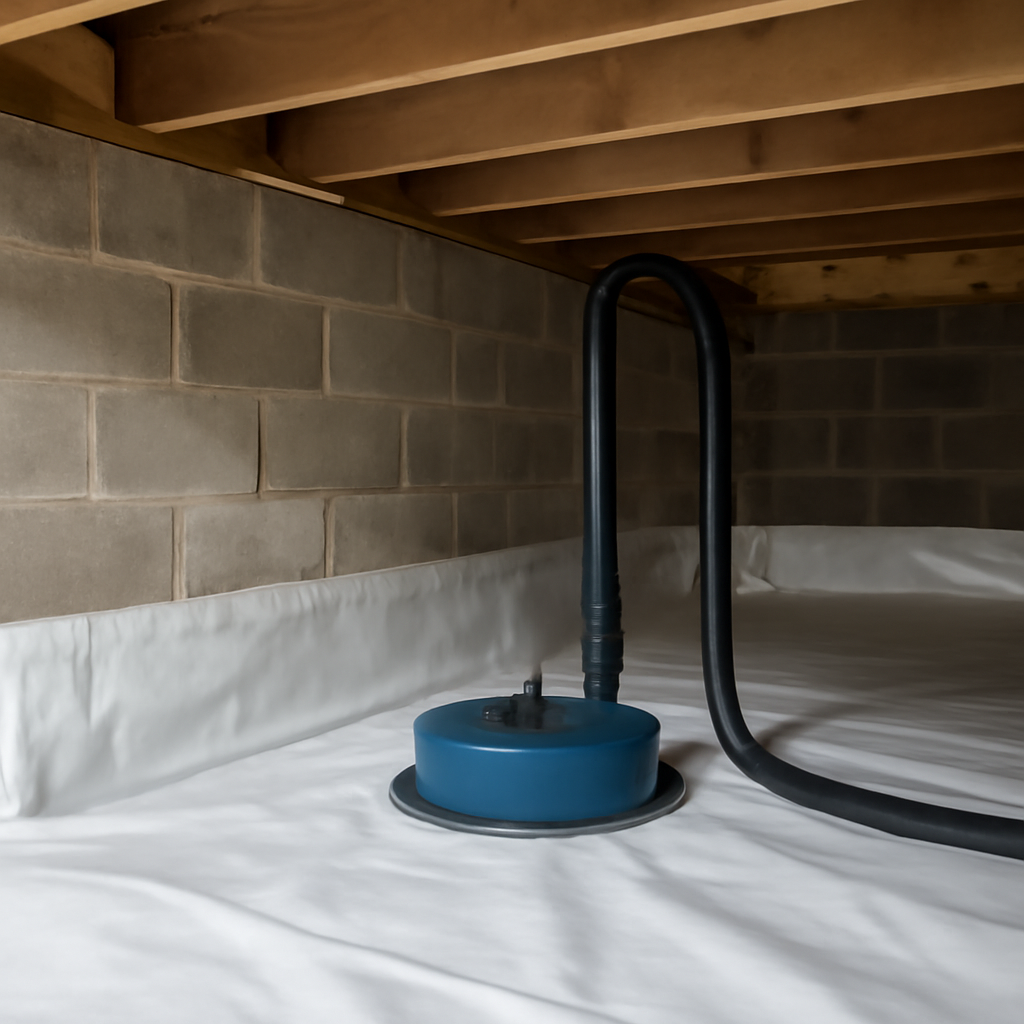
A continuous ground cover of polyethylene sheeting, with seams overlapped and taped and the edges run up and fastened to the foundation walls, sharply reduces vapor from the soil. Thickness ranges from 6-mil for basic coverage to 10 to 20 mil for durable liners in crawl spaces that see foot traffic. The step-by-step process is covered in crawl space vapor barrier installation. Industry estimates put professional installation for many homes in the range of roughly $0.50 to $4 per square foot, depending on thickness, wall coverage and prep work.
4. Air Sealing or Full Encapsulation
Encapsulation goes further. It covers floor and walls with a heavy liner, seals vents and the rim area, and treats the crawl space as a semi-conditioned part of the house. Most building codes require some method of controlling humidity in a sealed crawl space, such as a small supply of conditioned air, an exhaust fan or a dehumidifier. The International Residential Code spells out these options for unvented crawl spaces. For pricing, the crawl space encapsulation cost guide breaks down typical ranges.
5. Dehumidification
A dedicated crawl space dehumidifier, ducted or freestanding, removes moisture that the other steps don’t. It works best in a sealed crawl space; running one in a vented space means trying to dry the outdoors. Industry estimates put purpose-built crawl space units installed at roughly $1,200 to $3,000, plus electricity costs. The refreshed crawl space dehumidifier guide covers sizing, drainage and whether one is needed in a dry climate.
6. Interior Drainage and Sump Pump
If liquid water still enters after exterior fixes, an interior perimeter drain leading to a sump pump may be needed. That work is covered in the guide to crawl space waterproofing, which includes cost ranges for drain systems and pumps.
Vented vs Unvented: The Ongoing Debate
For decades, codes required crawl space vents so outside air could flush moisture away. Research in humid climates found that vents often brought in more moisture than they removed, which helped lead to code provisions for sealed, unvented crawl spaces. The vented vs encapsulated crawl space comparison covers this in detail, but the short version is:
- Vented crawl spaces are simpler and cheaper to build. They work reasonably well in dry climates if the ground is covered, drainage is good and the floor above is insulated. Pipes and ducts are exposed to outdoor temperatures, which matters in cold Colorado winters.
- Unvented or sealed crawl spaces keep conditions closer to indoor air, protect pipes and ducts, and make humidity easier to control. They cost more up front, need an approved humidity control method, and require careful attention to radon and combustion appliance safety.
Neither approach is a cure-all. A sealed crawl space with poor drainage will still get wet. A vented crawl space with no ground cover will still pull moisture out of the soil.
Colorado’s Dry Climate vs Humid Regions
Most crawl space moisture marketing is aimed at the Southeast, where summer dew points stay high for months. The Front Range is semi-arid, and outdoor air is usually dry enough that summer condensation in vented crawl spaces is less common. That shifts the priorities:
- Liquid water matters more than humidity. Irrigation, snowmelt and downspouts are frequent culprits. Front Range homeowners often get the biggest payoff from fixing drainage and grading.
- Dehumidifiers are not always needed. In a well-drained, sealed crawl space with a good liner, humidity may stay in range without a dedicated unit. Logging humidity for a few weeks before buying one helps avoid paying for equipment that isn’t required.
- Expansive clay soils add a structural angle. In parts of Douglas, Arapahoe, Jefferson and El Paso counties, water near the foundation can swell clay soils and move piers and walls. Moisture control here protects the structure as well as the air quality.
- Radon matters. Colorado has widespread elevated radon. Sealing the crawl space floor with a liner can be paired with a sub-membrane ventilation system, as described in the EPA’s radon-resistant construction guidance. A post-project radon test is a good idea after any encapsulation work.
Moisture Control Costs at a Glance
These are broad industry estimates for typical single-family homes as of 2026. Access, crawl space height, region and the condition of existing materials all affect price.
| Fix | Typical range (estimate) |
|---|---|
| Downspout extensions and gutter repair | $100 to $1,000+ |
| Regrading soil around the foundation | Several hundred to a few thousand dollars |
| Hygrometer or data logger | $20 to $150 |
| Basic vapor barrier (6 to 10 mil) | Low four figures for many homes |
| Full encapsulation | Commonly $5,000 to $15,000+ |
| Crawl space dehumidifier, installed | About $1,200 to $3,000 |
| Interior drain and sump pump | Often $3,000 to $10,000+ |
| Removing and replacing wet insulation | Roughly $1.50 to $5+ per square foot |
Wet insulation is a frequent side effect of moisture problems. The guide to wet crawl space insulation explains when it can be dried and when it should come out. If moisture has already damaged framing, the companion article on crawl space repair covers sistering joists, sill plate replacement and other structural fixes.
Common Moisture Control Mistakes
Many crawl space moisture problems persist not because the fix is hard, but because effort goes into the wrong step. These are the mistakes that come up most often in inspection reports and contractor follow-ups.
Buying Equipment Before Finding the Source
A dehumidifier pulling several gallons a day out of a crawl space is a symptom, not a solution. If a downspout is emptying against the foundation, the machine is drying water that shouldn’t be there in the first place. Equipment should come after drainage, leak repair and a ground cover have been addressed and readings still run high.
Sealing Over Wet Conditions
Laying a new liner over saturated soil, or sealing vents in a crawl space that floods every spring, traps moisture rather than removing it. Standing water and active leaks need to be resolved before any sealing work. Mold on framing should be cleaned up as part of the same project, not left behind the new liner.
Leaving Gaps in the Vapor Barrier
A ground cover with untaped seams, missing pieces around piers, or edges that stop short of the walls lets vapor escape around it. Partial coverage helps somewhat, but a continuous, sealed layer performs far better. Pier wraps and wall terminations are where shortcuts tend to show up.
Ignoring Combustion Appliances
Some crawl spaces contain a furnace or water heater that draws combustion air from the space. Sealing vents without providing a proper combustion air supply can create backdrafting and carbon monoxide risks. Any plan to seal a crawl space with fuel-burning equipment should include a qualified HVAC review.
Forgetting to Retest Radon
Changing how air moves through a crawl space can change radon levels in the living space, sometimes up and sometimes down. In Colorado, where elevated radon is common, a short-term radon test after encapsulation or major sealing work is a low-cost way to confirm conditions. The radon testing guide for Colorado homeowners explains how to run one.
Treating Mold Without Fixing Moisture
Spraying framing with a biocide and walking away is a short-term cosmetic fix. Without moisture control, growth usually returns. Cleaning only makes sense once humidity and wood moisture are under control.
When to Call a Professional
A homeowner can handle gutters, downspout extensions, sprinkler adjustments and a basic humidity logger. Call in help when:
- Standing water returns after rain or irrigation despite exterior fixes.
- Wood moisture readings stay high, or framing feels soft.
- Visible mold covers more than a small area. The EPA’s mold cleanup guidance suggests professional help for larger areas, roughly over 10 square feet.
- The plan involves sealing vents, adding a dehumidifier or changing combustion appliance air supply.
- A home purchase is in progress and the seller’s disclosure or inspection report mentions moisture.
An inspector can document conditions with moisture readings and photos, which makes contractor bids easier to compare. Encapsulation and drainage companies can design and install systems, but because they sell the work, an independent assessment first is useful for larger projects.
References
- A Brief Guide to Mold, Moisture and Your Home — U.S. Environmental Protection Agency
- Mold Cleanup in Your Home — U.S. Environmental Protection Agency
- Radon-Resistant Construction Basics and Techniques — U.S. Environmental Protection Agency
- 2021 International Residential Code — International Code Council
- ASHI Standard of Practice for Home Inspections — American Society of Home Inspectors
Frequently asked questions
What humidity level should a crawl space have?
Many building-science references aim for relative humidity below about 60 percent, with EPA guidance suggesting 30 to 50 percent indoors as ideal. Wood moisture content in framing should generally stay below roughly 15 to 19 percent to discourage mold and decay.
Do I need a dehumidifier in a Colorado crawl space?
Not always. Colorado's dry air means many well-drained crawl spaces with a good vapor barrier stay within range without one. Logging humidity for a few weeks in different seasons helps decide whether a dehumidifier is worth the cost.
Is a vapor barrier enough to control crawl space moisture?
A vapor barrier cuts down moisture from the soil, but it doesn't stop liquid water from poor drainage or plumbing leaks. Fix exterior drainage and leaks first, then install the barrier, and add sealing or dehumidification only if readings stay high.
Should I close my crawl space vents?
Closing vents only makes sense as part of a planned sealed crawl space with a code-approved method of humidity control. Simply closing vents over bare soil or without a moisture plan can trap humidity and make problems worse.
How much does crawl space moisture control cost?
Simple fixes like downspout extensions can cost under a few hundred dollars. Industry estimates put vapor barriers in the low thousands, dehumidifiers at about $1,200 to $3,000 installed, and full encapsulation commonly at $5,000 to $15,000 or more.
If a musty smell or a moisture note in an inspection report has you wondering what’s going on under the floor, Front Range homeowners can reach out through our contact page to connect with a qualified local inspector.
Dehumidifiers for damp basements
Holding relative humidity under ~50% is the single most effective way to keep mold from taking hold in a basement or crawlspace.
| Product | Why | Buy |
|---|---|---|
 hOmeLabs 4,500 sq ft hOmeLabs 4,500 sq ft | Popular large-basement unit. | Amazon — $234.99 |
 Frigidaire High-Humidity Frigidaire High-Humidity | Continuous-drain option. | Amazon — $310.86 |