Crawl Space Ventilator Fans: When They Help and When They Hurt
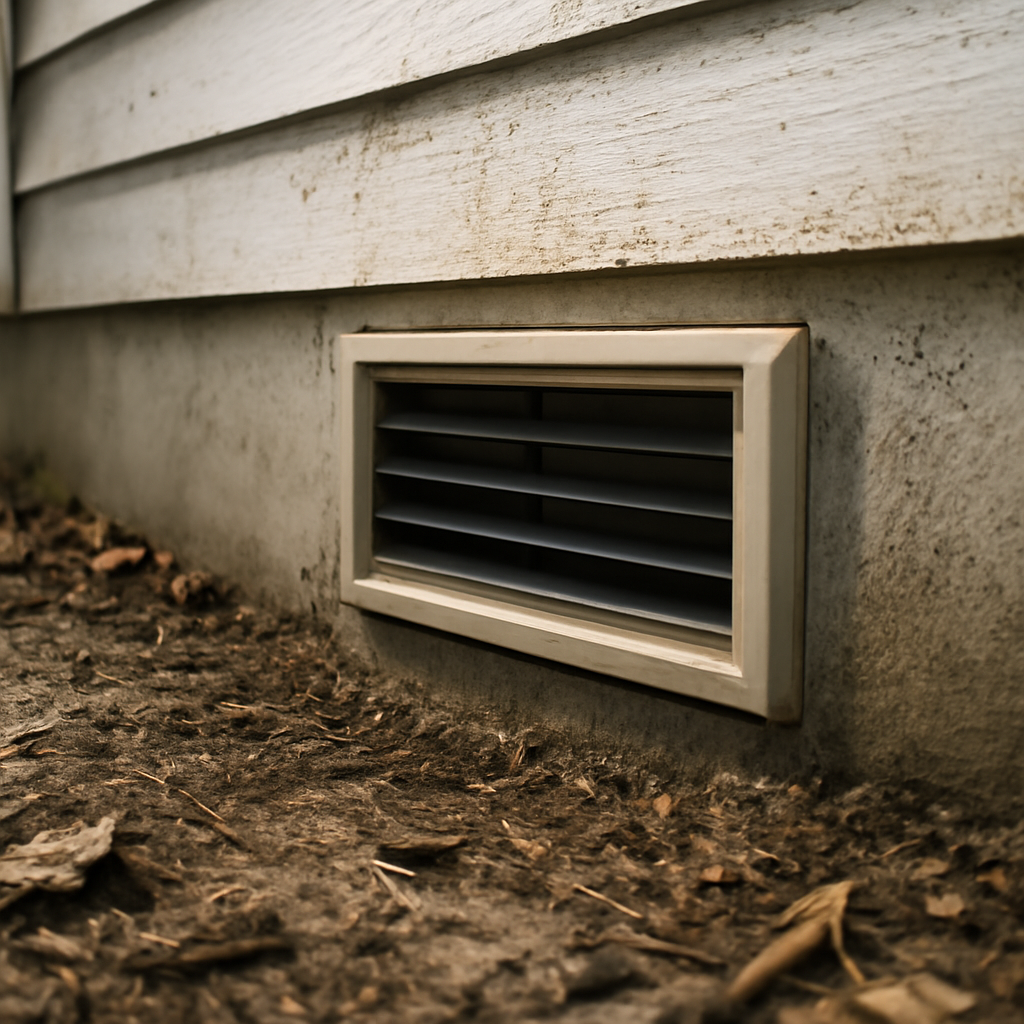
A musty smell from below the floor, damp insulation, a little mold on the joists: the instinct is to move more air through the crawl space. That is the promise behind the crawl space ventilator, a small fan mounted in a foundation vent opening that pulls air out of the crawl and pushes it outdoors. In some homes and seasons the fan helps. In others it pulls in humid outdoor air, draws conditioned air down from the house, or interferes with combustion appliances, and the crawl ends up no drier than before. Building science has largely moved toward a different approach: sealing the crawl and controlling its humidity directly. This guide explains how vent fans work, where they fall short, how Colorado’s dry climate changes the picture, and what alternatives look like, with general cost ranges. It summarizes EPA and ENERGY STAR guidance current as of 2026; radon decisions belong with a certified radon professional.
Part of our Crawl Space & Attic Guide guide — start there for the full picture →
What a Crawl Space Ventilator Does
A crawl space ventilator is an exhaust fan sized to fit a standard foundation vent opening, often around 8 by 16 inches. Some models are simple always-on fans. Others include a humidistat that runs the fan only when crawl-space humidity rises above a set point, a thermostat that shuts the fan off in freezing weather, or both. Larger systems use a sidewall or through-rim fan ducted to one location with a separate intake elsewhere.
The theory is straightforward. Traditional vented crawl spaces rely on passive crawl space vents and natural air movement to carry moisture away. In practice, passive vents often move very little air, especially when they are blocked by landscaping, snow, window wells or debris. A fan forces the exchange: moist crawl-space air goes out, and replacement air comes in through the other vents and any openings in the foundation, rim joist and floor above.
Whether that exchange dries the space depends entirely on what the replacement air brings with it. Air that is drier than the crawl-space air, measured as dew point rather than relative humidity, can carry moisture away. Air that is more humid can deposit moisture on cool surfaces like foundation walls, ductwork, cold water pipes and floor framing.
Where Vent Fans Fall Short
Exhausting a crawl space lowers its air pressure compared with the house above and the outdoors. Air rushes in from wherever it can to make up the difference. That has several consequences, and none of them are visible from the fan itself.
Humid outdoor air and condensation
During warm, humid weather, outdoor air can have a higher dew point than the surfaces inside a cool crawl space. When that air reaches a foundation wall or an uninsulated cold water line, water condenses. Running a fan harder in those conditions can increase condensation rather than reduce it. This is the main reason ventilated crawl spaces in humid regions of the country often have wet framing in summer, and it is why many building scientists have moved away from relying on ventilation to dry crawl spaces.
Pulling house air downward
Because the crawl is depressurized, some replacement air is drawn down from the living space through gaps around plumbing, wiring, duct boots and the subfloor. That air has already been heated or cooled, so the fan quietly adds to energy use. In winter it can also chill the floor above.
Soil gas and radon
Lower pressure in the crawl can also pull more soil gas, including radon, up from the ground if the soil is exposed or the vapor barrier is torn. The fan then exhausts some of it outdoors, so the net effect on indoor radon is difficult to predict without testing. EPA describes radon as a naturally occurring radioactive gas that can cause lung cancer, and says testing is the only way to know the level of exposure. Elevated radon is common enough in Colorado that any change to crawl-space airflow is a good reason to retest. Purpose-built systems, covered in our guide to radon mitigation in a crawl space, use a sealed membrane with suction beneath it rather than a vent fan.
Backdrafting combustion appliances
Many Colorado homes have a furnace or water heater located in or near the crawl space. Natural-draft gas appliances rely on buoyant flue gases rising up the vent. If a fan lowers the pressure around such an appliance, it can pull combustion gases, including carbon monoxide, back out of the draft hood instead of up the flue. ENERGY STAR’s basement and crawlspace project guidance warns that sealing work can in some cases cause naturally venting combustion appliances to backdraft, and recommends having a home performance contractor test oil and gas appliances for proper drafting before and after the work. The same caution reasonably applies to adding an exhaust fan near those appliances. Any home with fuel-burning equipment in the crawl should have combustion safety testing after a ventilator is installed, plus working carbon monoxide alarms.
Colorado’s Dry-Climate Nuance
The arguments against crawl-space ventilation come largely from humid climates. The Colorado Front Range is different. Outdoor dew points are low for much of the year, and dry outdoor air is often capable of drying a crawl space if it actually moves through it. That is one reason vented crawl spaces have historically performed better here than in the Southeast.
Dry air does not solve everything, though. Common Front Range crawl-space moisture sources include:
- Ground moisture wicking up through exposed soil or a damaged vapor barrier.
- Bulk water from poor grading, short downspouts, heavy irrigation next to the foundation, or spring snowmelt.
- Plumbing leaks from supply lines, drains and water heaters.
- Summer storms that bring brief periods of higher outdoor humidity.
- Unvented dryers or bath fans that dump moist air into the crawl.
A fan cannot keep up with liquid water. If the soil is wet or water is pooling, ventilation is treating a symptom. Grading, gutters, drainage and leak repair come first. Our guide to crawl space moisture control walks through the order of operations.
Cold is the other Colorado factor. A ventilator pulling sub-freezing air across water lines during a January cold snap can freeze pipes. Thermostatically controlled fans and well-fitted crawl space vent covers for winter help, but they also mean the system is off for part of the year. Freezing risk, energy loss through an uninsulated floor and cold floors are part of why many Front Range homeowners eventually seal their crawls instead.
Better Options According to Building Science
ENERGY STAR’s basement and crawlspace project page points homeowners to building-science resources on enclosed crawl spaces, including Building Science Corporation guidance describing crawl spaces that are insulated with a continuous, sealed groundcover of vapor-diffusion-resistant material, and a Department of Energy Building America guide on closing and conditioning ventilated crawlspaces that discusses the concerns with conventional ventilated crawl spaces. EPA’s Moisture Control Guidance for Building Design, Construction and Maintenance, written for building professionals, covers foundations, site drainage and HVAC systems among its moisture-control topics, and is a useful reference for contractors designing a sealed crawl. The common thread is to stop treating the crawl as outdoor space and start treating it as a small, semi-conditioned part of the house.
Sealing and encapsulation
A closed crawl space typically involves sealing the vents and rim joist, installing a heavy vapor barrier over the ground that is lapped and sealed at seams and run up the foundation walls, and insulating the foundation walls rather than the floor above. Our guides to crawl space vapor barrier installation and crawl space encapsulation cost cover materials and pricing. Local codes generally require some form of moisture control in an unvented crawl, so encapsulation should be paired with one of the strategies below.
Dehumidifier
A dedicated crawl-space dehumidifier, usually draining to a pump or a sump, controls humidity directly regardless of outdoor conditions. EPA’s mold and moisture guide recommends keeping indoor relative humidity below 60 percent and ideally between 30 and 50 percent, and suggests using dehumidifiers when needed. In a sealed crawl, that range is a practical target. Costs are covered in our crawl space dehumidifier cost guide. In dry parts of Colorado, a sealed crawl may need less dehumidification than in humid regions, but the unit still serves as insurance against wet seasons and leaks.
Supply air or exhaust to the house
Another common approach is to deliver a small amount of conditioned air from the house HVAC system into the sealed crawl, with a return path back to the house, or to exhaust a small amount of crawl-space air to the outdoors so that house air is drawn down into it. These approaches tie the crawl’s conditions to the house rather than the weather. They should be designed by an HVAC contractor or building-performance professional, with attention to radon and combustion safety.
Where a ventilator still fits
A humidistat-controlled ventilator can be a reasonable short-term or low-budget measure in a dry climate if the crawl has no standing water, the vapor barrier is intact, no natural-draft appliances are nearby, and the home has been tested for radon. Monitoring crawl humidity with an inexpensive hygrometer before and after installation shows whether it is actually helping. EPA’s mold guide notes that such meters typically cost about $10 to $50.
Common Ventilator Installation Problems
When inspectors find a crawl space ventilator, the fan itself is rarely the whole story. The way it was installed, powered and paired with the rest of the crawl often matters more than the brand. Problems that show up again and again include:
- Extension cords and open splices. Fans are sometimes plugged into a cord run through a vent or wired into a junction without a cover. Crawl spaces are damp, and damp locations call for proper wiring, covered boxes and GFCI protection where required.
- Short-circuited airflow. A fan installed in one vent with an open vent a few feet away mostly recirculates the same corner of air while the far end of the crawl stays stagnant. Intake and exhaust need to be on opposite sides to sweep the space.
- Fans running in the wrong season. An always-on fan with no humidistat or thermostat keeps running during humid storms and sub-freezing nights, which is when it can do the most harm.
- Fans as a substitute for repairs. A ventilator next to a puddle, a leaking drain line or a torn vapor barrier suggests the real problem was never addressed.
- Blocked exterior openings. Shrubs, mulch, window-well covers and snow drifts can choke the fan outlet or the intake vents, so the fan moves little air while still using electricity.
- Dirty or seized motors. Dust, cobwebs and insects collect on fan blades and screens. A fan that hums but does not spin is common in older installations.
A quick check from outside is worth doing each spring and fall. With the fan running, a strip of tissue held at the outlet should blow outward, and one held at an intake vent on the far side should pull inward. If neither moves, the fan is doing very little.
Questions for a contractor proposing a fan
Before agreeing to a ventilator, homeowners can reasonably ask the contractor a few direct questions. Where will makeup air come from? What humidity and temperature settings will control the fan? Are there natural-draft gas appliances in or near the crawl, and will they be tested after installation? Has the home been tested for radon? What will be done about any standing water or damaged vapor barrier? A contractor who cannot answer these clearly may be selling a product rather than solving the moisture problem.
What It Costs
Prices vary widely with crawl size, access, materials and region. These general 2026 ranges are meant for budgeting, not as quotes:
- Single foundation vent fan: often roughly $50 to $250 for the unit, with humidistat models at the higher end.
- Professional installation of one or two fans: commonly a few hundred dollars, more if a new circuit or outlet is needed.
- Crawl-space dehumidifier, installed: frequently in the range of roughly $1,200 to $3,000.
- Full encapsulation: commonly several thousand dollars and sometimes much more for large or difficult crawl spaces.
- Combustion safety testing: often a modest charge, sometimes bundled into a home energy assessment.
Insulating the crawl walls adds to the total. Our crawl space insulation cost guide covers that piece. A ventilator is far cheaper upfront, but when it fails to fix the moisture problem, the money spent on it does not carry forward into the eventual sealed solution.
How to Evaluate a Crawl Space Before Choosing
The right answer depends on what the crawl actually looks like. A practical sequence:
- Find the water. Look for standing water, efflorescence on walls, water stains, wet insulation and leaking pipes.
- Measure humidity. Log crawl-space and outdoor humidity and temperature for a few weeks across different weather.
- Check the ground cover. Is there a vapor barrier, and is it intact, lapped and sealed?
- Identify combustion appliances. Note any furnace, boiler or water heater in or connected to the crawl, and whether it is natural-draft or sealed-combustion.
- Test for radon. Know the baseline before changing airflow.
- Inspect the framing. Look for mold, rot, sagging and pest damage.
The ASHI Standard of Practice lists inspecting the ventilation of foundation areas and the insulation and vapor retarders in unfinished spaces among a home inspector’s duties, though inspectors are not required to enter under-floor crawl spaces that are not readily accessible. A dedicated crawl space inspection can go further. For background on insulation and moisture strategies, see our crawl space insulation pillar and the crawl space hub.
Moisture control is the foundation of mold control. EPA’s guidance makes the point directly: if mold is a problem, fix the water problem, because cleaning without addressing the source tends to let mold return. A ventilator is one tool for that job, and in many crawls it is not the best one.
References
- Basement and Crawlspace Air Sealing and Insulating Project — ENERGY STAR
- Moisture Control Guidance for Building Design, Construction and Maintenance — U.S. Environmental Protection Agency
- A Brief Guide to Mold, Moisture and Your Home — U.S. Environmental Protection Agency
- Radon — U.S. Environmental Protection Agency
- ASHI Standard of Practice for Home Inspections — American Society of Home Inspectors
Frequently asked questions
Do crawl space ventilator fans work?
Sometimes. They can help dry a crawl when outdoor air is drier than crawl air and there is no standing water. In humid weather they can pull in moist air and increase condensation, and they do nothing against liquid water.
Can a crawl space fan cause backdrafting?
It can. Exhausting air lowers pressure in the crawl, which may pull flue gases out of nearby natural-draft furnaces or water heaters. Have combustion appliances tested after installing a fan.
Is it better to vent or encapsulate a crawl space in Colorado?
Colorado's dry air makes venting work better than in humid regions, but sealed crawls avoid freezing pipes, cold floors and outdoor moisture swings. Many building-science sources favor sealing with humidity control.
Does a crawl space ventilator reduce radon?
Not reliably. Depressurizing the crawl may draw more soil gas from the ground even as some is exhausted. Radon should be addressed with a tested mitigation system and confirmed by retesting.
How much does a crawl space ventilator cost?
A single fan often costs roughly $50 to $250, with installation adding a few hundred dollars. Dehumidifiers and full encapsulation cost more. These are general 2026 ranges.
Not sure whether a crawl space fan is helping or hurting? Get in touch and we can connect you with a Front Range inspector who checks crawl moisture, vapor barriers and combustion safety.