Floor Vent Covers: Registers, Airflow and Duct Debris
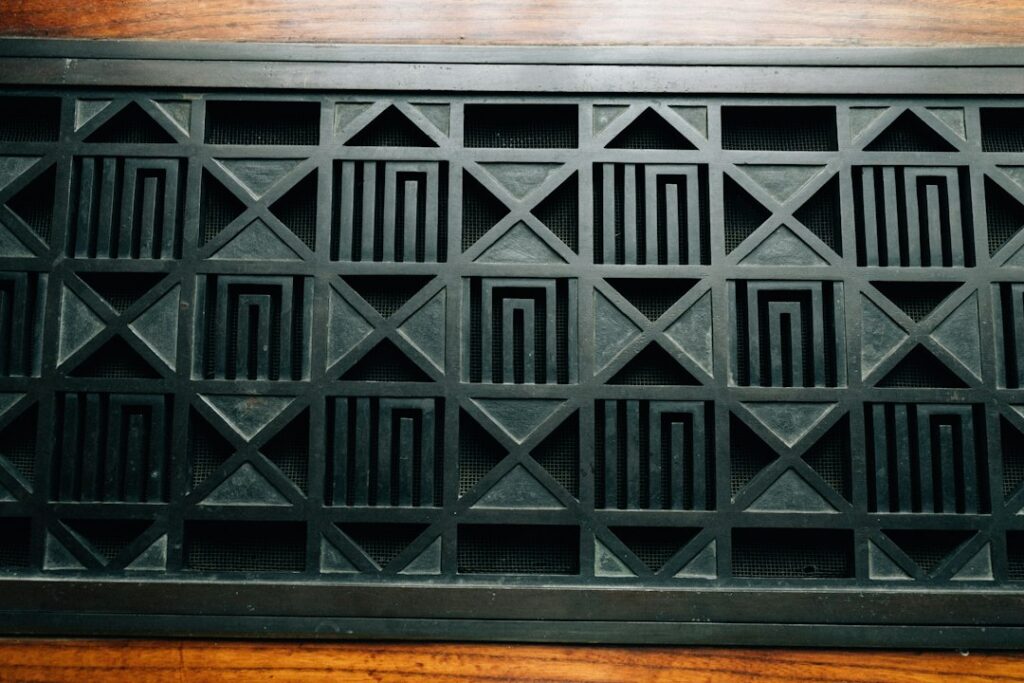
Floor registers are easy to overlook until one rattles, gets stepped on and bent, or swallows a toy. In many Front Range homes with forced-air furnaces, especially ranches, split-levels and houses with basements, the supply ducts end at floor registers set along exterior walls under windows. The register is the visible end of a system that moves heated and cooled air through the house, and the cover on top of it affects airflow, noise, safety and how much dust and debris ends up inside the ductwork. Replacing floor vent covers is usually a simple, low-cost project, but sizing, dampers and what happens when registers are closed or blocked deserve some thought. This guide covers how floor registers are sized, the types of covers and dampers available, keeping objects and debris out of floor ducts, why closing registers can backfire, dust and duct cleaning, and what home inspectors note about supply registers.
Part of our Heating, Cooling & Ventilation guide — start there for the full picture →
What Floor Vent Covers Do
A floor register is the removable grille that sits over the end of a supply duct, called the boot, where it comes through the floor. Its jobs are to protect the opening from feet, furniture and falling objects, to direct the airflow into the room, and, on most models, to let occupants adjust or close airflow with a built-in damper. Supply registers deliver conditioned air from the furnace or air handler. Return grilles, usually larger and often on walls or in hallways, pull air back to the equipment. They do different jobs, and the advice for one does not always apply to the other; see our guide to the return air vent for how returns work and why they matter.
The term “floor vent cover” is also used for accessories placed on top of registers, such as magnetic covers, deflectors and filters. Those accessories can be useful in a few situations, but they can also restrict airflow in ways that affect comfort and equipment, as discussed below.
Sizing: Measure the Hole, Not the Faceplate
Register sizes are named by the duct opening they fit, not by the outside dimensions of the decorative faceplate. A register sold as 4 by 10 inches fits a 4-by-10-inch opening in the floor; its faceplate will be noticeably larger so that it overlaps the edges of the hole. Common residential floor sizes include 2 by 10, 2 by 12, 4 by 10, 4 by 12, 4 by 14 and 6 by 10 inches, though older homes sometimes have unusual sizes that require custom covers.
To size a replacement correctly:
- Lift the existing register out of the floor. Most simply sit in the opening; some are screwed down.
- Measure the opening in the floor or the duct boot, width and length, to the nearest quarter inch.
- Check the depth available below the floor surface, since some registers have dampers or housings that need clearance in the boot.
- Note the flooring. Thick carpet, tile or new hardwood may require a register with a deeper lip or a flush-mount frame.
A register that is too small can drop into the boot; one that is too large may not seat flat, creating a tripping edge. Flush-mount registers, which sit level with hardwood or tile and use a separate frame set into the floor, are usually installed during flooring work.
Materials and styles
- Stamped steel registers are inexpensive and common, but thin ones can bend underfoot and rust if they get wet.
- Cast aluminum, cast iron and brass registers are heavier, more durable and often more decorative.
- Wood registers can be matched or stained to hardwood floors. They are thicker and may restrict airflow slightly more than thin metal grilles, so the open area matters.
- Plastic registers are inexpensive and rust-free but may crack under load and are not suitable close to very hot air sources.
Whatever the material, a register with a larger open area allows more airflow at lower noise. Decorative grilles with small openings look good but can make the system louder and less effective if they are too restrictive.
Dampers and Why Closing Registers Can Backfire
Most floor registers include a lever-operated damper that opens and closes louvers under the grille. Those dampers are useful for small adjustments, such as reducing airflow to a room that runs too warm, but closing many registers to save energy is a common practice that often does not work as intended.
A forced-air system is designed to move a certain volume of air through a duct system of a certain size. When several supply registers are closed, the blower is pushing against more resistance. Depending on the blower type, that can reduce total airflow, increase pressure in the ducts and push more air out through leaks in the ductwork, which is often located in attics, crawlspaces or unconditioned basements. Many HVAC professionals caution that significantly reduced airflow can make a furnace run hotter than intended, can cause an air conditioner’s coil to get too cold and, in some cases, freeze, and can make the system noisier. ENERGY STAR estimates that in a typical house about 20 to 30 percent of the air moving through the duct system is lost to leaks, holes and poorly connected ducts, and higher duct pressure from closed registers can add to those losses.
ENERGY STAR’s home energy guidance recommends making sure all heating registers, air vents and radiators are clean and not blocked by furniture or other items, so that warm or cool air is distributed to the areas where it is needed. That points toward keeping registers open and unobstructed as a default, rather than shutting rooms down.
Better ways to balance a house
- Small adjustments, not wholesale closures. Partly closing one or two registers in rooms that overheat is usually fine; closing half the house is not.
- Balancing dampers in the ducts. Many systems have manual dampers in branch ducts near the furnace that an HVAC technician can set to balance airflow between floors and seasons.
- Return air paths. Rooms with closed doors and no return often get poor supply airflow. Transfer grilles or jumper ducts can help.
- Duct sealing. ENERGY STAR notes that connections at vents and registers where they meet the floors, walls and ceilings are common locations for leaks and disconnected ductwork and recommends sealing them with mastic or metal tape, not duct tape.
- Zoning. Homes that genuinely need different temperatures in different areas may benefit from a properly designed zoning system with motorized dampers and controls, rather than manual register closures.
Where duct runs are undersized, crushed or badly leaking, the long-term solution may be duct modification or replacement; see our ductwork replacement guide for when that makes sense.
Debris, Objects and Spills in Floor Ducts
Floor registers face a problem that wall and ceiling registers do not: gravity. Anything that falls through the grille ends up in the duct boot and possibly farther down the duct. Common finds include coins, small toys, pet food, hair ties, pens, jewelry, construction debris, sand and grit, and pet hair. Liquids are a bigger concern. Mop water, spilled drinks, aquarium water, melting snow tracked in from outside and pet accidents can drain into floor ducts, where they can rust metal ducts, wet duct insulation and create odors or conditions for microbial growth.
Ways to reduce what ends up inside:
- Use registers with smaller openings in rooms with young children or where small items are common, while keeping overall open area reasonable.
- Consider register trap screens or fine mesh inserts under the grille. They catch small objects but need regular cleaning, since a clogged screen restricts airflow.
- Lift and vacuum registers periodically, reaching into the boot with a vacuum hose to remove what has collected.
- Keep mop water and cleaning solutions away from registers and avoid wet-mopping directly over them.
- Move water bowls, plants and aquariums away from floor registers.
Objects that fall beyond reach can sometimes be retrieved with a magnet on a string or a flexible grabber. Anything that cannot be reached and is rattling, producing odors or blocking airflow is a job for an HVAC technician or duct cleaning service, which can access the duct from below or through the boot.
Floor ducts in slabs and crawlspaces
Some Front Range homes, especially ranches built on slabs, have perimeter ducts embedded in the concrete floor. Those ducts can collect water if groundwater or drainage problems reach them, and they are difficult to inspect without a camera. Homes over crawlspaces have floor ducts that run through an unconditioned space, where disconnected boots and torn insulation are common findings. Any musty smell from floor registers, visible rust at the boot or water inside the duct deserves professional evaluation.
Dust, Filters and Duct Cleaning
Dust collecting on floor registers is normal, and floor registers tend to collect more than ceiling registers because of foot traffic, pets and vacuuming. Dust blowing from registers when the system starts, however, can point to a filter problem, duct leaks pulling in dust from attics or crawlspaces, or debris inside the ducts.
The filter is the first thing to check. ENERGY STAR notes that a dirty air filter causes a heating and cooling system to work harder, which can increase energy costs and damage equipment, and recommends checking the filter monthly. Our furnace filter replacement guide explains filter sizes, ratings and replacement intervals.
EPA’s guidance on duct cleaning is measured. It states that duct cleaning has never been shown to actually prevent health problems, that much of the dirt in air ducts adheres to duct surfaces and does not necessarily enter the living space, and that EPA does not recommend routine duct cleaning, only cleaning as needed. EPA suggests considering cleaning when there is substantial visible mold growth inside hard ducts or other system components, when ducts are infested with vermin, or when ducts are clogged with excessive dust and debris or particles are actually released into the home from supply registers. It also stresses that underlying causes should be corrected before cleaning, or the problem will likely recur. Our air duct cleaning guide covers what a thorough cleaning involves and how to evaluate providers.
Magnetic covers, deflectors and register filters
- Magnetic covers seal a metal register completely. They are sometimes used in unused rooms, which carries the same airflow concerns as closing dampers.
- Deflectors redirect air away from walls, drapes or furniture and can help when a register sits under a sofa or behind a curtain. They should not cover the register entirely.
- Register filters catch some dust at the outlet but add resistance; they are not a substitute for a properly sized filter at the furnace.
Furniture, rugs and floor-length curtains placed directly over registers are also common restrictions. Moving them, or using a deflector, usually helps more than any accessory.
Noise, Drafts and Safety at Floor Registers
Floor registers are a common source of small but annoying complaints, and most have simple causes.
- Rattling or buzzing. Loose dampers, a register that does not sit flat, or a bent faceplate can vibrate when the blower runs. Reseating the register, bending tabs back into shape or adding a thin foam gasket under the lip often solves it.
- Whistling. High velocity through a small or partially closed register can whistle. Opening the damper, choosing a register with more open area or having a technician check system airflow usually helps.
- Drafts in summer. Cold air from floor registers in cooling season tends to pool near the floor, which is one reason some upper rooms stay warm. Deflectors that direct air upward or across the room can help modestly.
- Hot surfaces. Registers near a furnace can get warm, and small children or pets lying on them may be uncomfortable. Thin plastic covers should be kept away from these hottest outlets.
- Trip hazards. Registers that sit high above the floor, have curled edges or are missing leave edges and holes that can catch toes or chair legs. Missing registers should be replaced promptly, both for safety and to keep debris out of the ducts.
Replacing a register is usually as simple as lifting the old one out and dropping the new one in. If the old one was screwed down, the new screws should not penetrate the duct boot in a way that leaves sharp points inside. Gaps between the boot and the subfloor seen once the register is out are worth sealing with mastic or metal tape while the opening is accessible.
Typical Costs
As a rough 2026 guide, with wide variation by size, material and finish:
- Basic steel or plastic floor registers commonly cost only a few dollars to a few tens of dollars each.
- Cast metal, brass and wood registers typically cost more, sometimes much more for custom sizes or premium finishes.
- Flush-mount registers cost more and usually require installation during flooring work.
- Trap screens, deflectors and magnetic covers are generally inexpensive accessories.
- HVAC service calls to retrieve objects, balance a system or seal boots are priced by visit or hour, while whole-system duct cleaning and duct sealing are larger, separately quoted services.
What a Home Inspector Notes
The ASHI Standard of Practice requires inspectors to inspect heating and cooling distribution systems, but it does not require them to determine heat supply adequacy or distribution balance. In practice, inspectors operate the system and check that registers deliver air, and they commonly note missing, damaged or rusted registers, registers covered by flooring or furniture, rooms without a supply, disconnected or poorly sealed boots visible from basements or crawlspaces, debris or water in ducts, and signs of duct leakage. Measuring room-by-room airflow is outside a standard inspection and is typically done by an HVAC contractor.
Heating and cooling findings are covered in our heating and cooling inspections section, and the main guide to hiring a home inspector explains how to choose an inspector.
References
- Duct Sealing — ENERGY STAR
- Home Energy Quiz — ENERGY STAR
- How to Keep Your HVAC System Working Efficiently — ENERGY STAR
- Should You Have the Air Ducts in Your Home Cleaned? — U.S. Environmental Protection Agency
- ASHI Standard of Practice for Home Inspections — American Society of Home Inspectors
Frequently asked questions
How do I measure for floor vent covers?
Measure the opening in the floor or duct boot, not the faceplate. A register labeled 4 by 10 fits a 4-by-10-inch hole and has a larger faceplate that overlaps the edges.
Does closing floor registers save energy?
Often not. Closing many registers raises duct pressure, can reduce airflow and push more air out through duct leaks. Small adjustments are generally fine, but balancing dampers or zoning are better tools.
What should I do if something falls into a floor vent?
Turn off the system, lift the register and try a vacuum, magnet or grabber. Items beyond reach that rattle, smell or block airflow are a job for an HVAC technician or duct cleaner.
Should air ducts be cleaned regularly?
EPA does not recommend routine duct cleaning, only cleaning as needed, such as for visible mold in hard ducts, vermin, or excessive debris released from supply registers.
How much do floor vent covers cost?
Basic registers often cost a few dollars to a few tens of dollars, while cast metal, wood and flush-mount registers cost more. These are general 2026 ranges.
Wondering whether rooms that never heat evenly in a home you are buying point to duct problems? Reach out to connect with a Front Range inspector who checks furnaces, ducts and registers.