Carbon Monoxide Detector Installation: Placement Guide
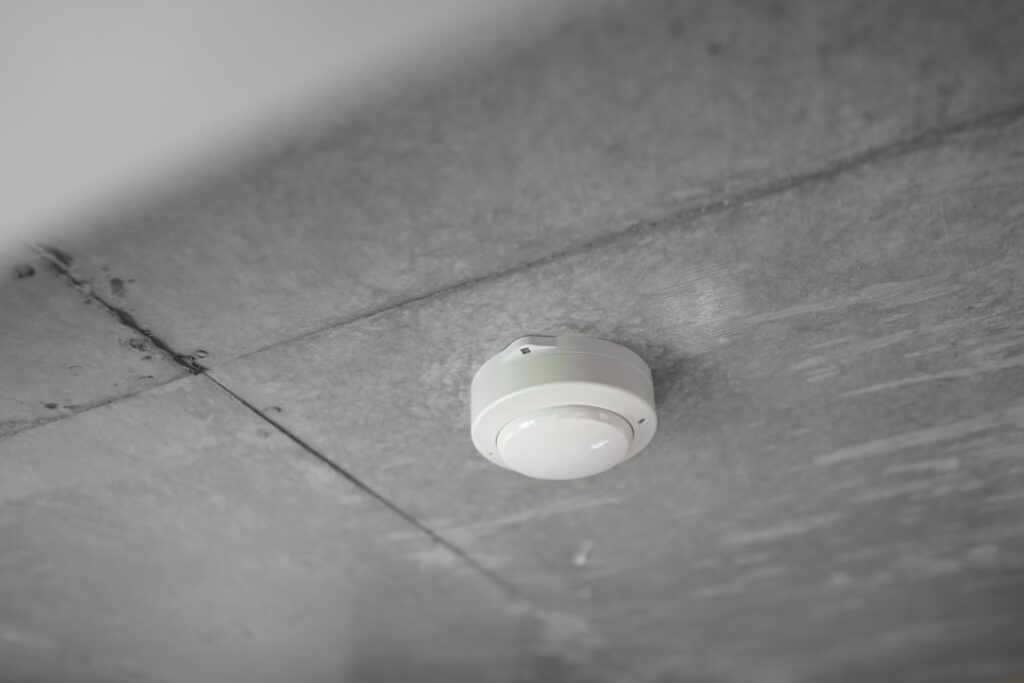
Carbon monoxide gives no warning on its own. It has no color, no smell and no taste, and the first symptoms are easy to mistake for the flu. A working alarm in the right place is the only practical early warning most households have. This carbon monoxide detector installation guide covers where alarms belong according to federal safety agencies, how high to mount them, which spots to avoid, how hardwired, plug-in and battery models differ, why interconnection matters, how combination smoke and CO units fit in, and how to test and replace alarms over time. It also notes how Colorado’s CO alarm law generally applies on the Front Range. Product instructions and local codes vary, so the manufacturer’s installation manual and your local building department have the final word for any specific alarm and home.
Part of our Home Inspection Tools guide — start there for the full picture →
Where to Install Carbon Monoxide Detectors
The federal guidance on placement is consistent and short. The U.S. Consumer Product Safety Commission’s Carbon Monoxide Information Center recommends installing battery-operated CO alarms, or CO alarms with battery backup, on every level of the home and outside sleeping areas. The U.S. Fire Administration’s carbon monoxide poisoning prevention page says to install CO alarms in a central location outside each separate sleeping area and on every level of the home.
In practice, that means:
- Outside each sleeping area. Put an alarm in the hallway outside bedrooms, close enough that it can wake people with doors closed. If bedrooms are spread across different parts of the house, each separate sleeping area needs its own alarm.
- On every level. Include the basement, especially if it holds the furnace or water heater, and any finished attic or bonus-room level. A split-level home may need more than one alarm per floor.
- In a central location. On levels without bedrooms, a central spot such as a main hallway or living area lets the alarm sample air from more of the floor.
Many manufacturers also suggest an alarm inside bedrooms where a fuel-burning appliance or fireplace is present, or inside a bedroom of anyone who sleeps with the door closed. That goes beyond the federal minimum, and it is a reasonable choice. Our guide on how many carbon monoxide detectors you need works through counts for common floor plans.
Placement Table: Where to Install and Where to Avoid
The table below summarizes common locations. The “install” column reflects CPSC and USFA guidance where those agencies address the location, and typical manufacturer instructions elsewhere. Always check the manual for the specific alarm.
| Location | Install? | Notes |
|---|---|---|
| Hallway outside bedrooms | Yes | CPSC and USFA both call for alarms outside sleeping areas |
| Each level, including basement | Yes | Federal guidance says every level of the home |
| Inside bedrooms | Often recommended | Useful where doors stay closed or a fuel-burning appliance or fireplace is in or near the room |
| Near the door to an attached garage (inside the house) | Commonly recommended | Vehicle exhaust in an attached garage is a known CO source |
| Inside the garage itself | Usually no | Many residential alarms are not rated for garage temperatures and exhaust; check the manual |
| Directly next to a furnace, water heater or gas range | Usually no | Manufacturers commonly specify a minimum distance to avoid nuisance alarms from brief start-up emissions |
| Kitchens and bathrooms | Usually not the main alarm location | Steam, cooking fumes and humidity can affect sensors; follow manufacturer spacing |
| Near vents, fans, open windows or doors | No | Moving air can dilute CO and delay detection |
| Behind furniture or curtains | No | Blocked airflow keeps gas from reaching the sensor |
| Unheated spaces, attics or crawl spaces | Usually no | Temperature and humidity can fall outside the alarm’s rated range |
How High to Mount a CO Alarm
There is no single federal height rule for residential CO alarms, which is why advice online conflicts. Carbon monoxide has a density close to that of air and mixes with room air rather than pooling at the floor or ceiling, so manufacturers design alarms for different mounting positions.
The safest approach is to follow the installation manual for the specific model:
- Wall-mount models commonly specify a height range on the wall, often at least several inches below the ceiling, sometimes at about eye level so the display can be read.
- Ceiling-mount models, including many combination smoke and CO alarms, are designed for ceiling placement because the smoke sensor works best there. Manufacturers usually specify a distance from walls and corners.
- Plug-in models go in an outlet at whatever height the outlet is, which is often near the floor. Many have a digital display and are sold with an option to sit on a shelf instead. A plug-in should go in an outlet that is not covered by furniture and not controlled by a wall switch.
Keep alarms out of dead-air spaces such as the peak of a vaulted ceiling and the corner where wall meets ceiling, unless the manual permits it. Also keep them where they can be heard from bedrooms and reached for testing.
Hardwired vs Plug-In vs Battery CO Alarms
CO alarms come in three main power configurations. The CPSC specifically recommends battery-operated alarms or alarms with battery backup, so that the alarm keeps working during a power outage. That matters because outages are when people run generators, a major source of CO poisoning.
Battery-only alarms
Battery alarms are the easiest to install: mount the bracket with two screws, insert the battery or pull the activation tab, and twist the alarm into place. Many current models use sealed batteries designed to last the life of the alarm. They can go anywhere, which makes it simple to meet the “every level and outside sleeping areas” guidance in an existing home. The tradeoff is that standalone battery alarms only sound locally unless they include wireless interconnection.
Plug-in alarms
Plug-in alarms run on household power and are only safe in an outage if they include a backup battery, which most do. They are convenient for renters and for adding alarms quickly, but outlet placement may put the alarm lower than ideal, behind furniture or in a spot where it gets unplugged during cleaning.
Hardwired alarms
Hardwired alarms connect to a household circuit and typically include a backup battery. They are common in new construction and major renovations, and they are usually interconnected by wire so that every alarm sounds when one detects a problem. Replacing a hardwired alarm generally means matching the existing plug connector or swapping the wiring harness. Anyone not comfortable working near household wiring should turn off the circuit and consider hiring an electrician.
Interconnected Alarms and Combination Units
The CPSC states that interconnected CO alarms are best: when one sounds, they all sound. In a two-story home, an alarm in the basement near the furnace may not wake someone in a second-floor bedroom. Interconnection solves that.
There are two ways to interconnect:
- Hardwired interconnect. A dedicated wire links the alarms. This is standard in many newer homes.
- Wireless interconnect. Battery or plug-in alarms communicate by radio. This is the practical route in an existing home without the wiring. Alarms usually need to be from the same product family to talk to each other.
Combination smoke and CO alarms
Combination units contain both a smoke sensor and a CO sensor in one housing, typically with different alarm patterns or voice messages for each hazard. They reduce the number of devices on the ceiling and make it simple to cover both hazards outside bedrooms. A few points to keep in mind:
- Smoke alarm placement rules still apply, since smoke rises. Our guide to smoke detector placement covers those.
- Smoke alarms are usually needed in more locations than CO alarms, including inside bedrooms in many codes, so a combination unit in the hallway does not replace bedroom smoke alarms.
- The CO sensor and smoke sensor may wear out on different schedules; the unit is usually replaced as a whole.
- Heat detectors, not smoke alarms, are often the choice in garages and kitchens; see our heat detector guide.
Our combination smoke and carbon monoxide detector guide compares single-sensor and combination layouts in more detail. Note that CO alarms do not detect natural gas or propane leaks; a separate gas detector alarm serves that purpose.
Choosing a CO Alarm Before Installation
A good installation starts with the right device. A few features make alarms easier to live with and more useful when something goes wrong:
- A recognized safety listing. Residential CO alarms sold in the United States are commonly listed to the UL 2034 standard. Look for the listing mark on the package or the back of the alarm.
- Digital display. A display that shows the current reading, and ideally a peak-level memory, helps a technician or utility worker understand what happened if the alarm sounded while no one was home.
- Sealed long-life battery. Sealed batteries remove the yearly battery swap and make it harder for someone to borrow the battery for another device.
- Voice alerts. Combination units that announce “fire” or “carbon monoxide” reduce confusion about which hazard triggered the alarm.
- Interconnection support. If the home already has interconnected alarms, choose a compatible model so the network keeps working.
- Smart features. Some alarms send a phone notification. That is helpful for second homes and rentals, but the alarm should still sound locally and work without Wi-Fi.
Buying several identical alarms at once also simplifies the future, because they will reach end of life around the same time and can be replaced together.
Special Situations: Rentals, Condos and Second Homes
Not every home fits the standard single-family layout, and installation choices shift a bit for other living situations.
- Apartments and condos. A unit with no fuel-burning appliances can still be exposed to CO from a shared boiler room, a parking garage below, or a neighboring unit. An alarm outside the sleeping area is still a sensible precaution. Building or association rules may also apply.
- Rentals. Responsibility for installing and maintaining alarms is often split between landlord and tenant. Tenants should test alarms when moving in and report missing or chirping units promptly.
- Homes with no gas appliances. An all-electric home with no fireplace or attached garage carries lower CO risk, but portable generators, grills used too close to the house, and vehicles idling near open doors can still introduce CO.
- Mountain cabins and second homes. Homes heated by wood stoves or propane, and left closed up for long stretches, benefit from alarms with long-life batteries and, where possible, remote notification. Check them at every visit.
Step-by-Step Carbon Monoxide Detector Installation
For a typical battery or wall-mount alarm, installation takes a few minutes per unit.
- Map the locations. Mark each sleeping area and each level, then choose a central spot on each that follows the manual’s spacing from fuel-burning appliances, kitchens, bathrooms and vents.
- Read the manual. Confirm whether the model is wall-mount, ceiling-mount or both, and note its required distances and temperature range.
- Mount the bracket. Hold the bracket in place, mark the screw holes, drill pilot holes and use anchors in drywall.
- Power the alarm. Insert batteries or pull the activation tab. For hardwired units, turn off the circuit breaker, connect the harness, and restore power.
- Attach and lock. Twist or slide the alarm onto the bracket. Many models will not seat without a battery in place.
- Link interconnected alarms. Follow the pairing steps for wireless models, or confirm the interconnect wire on hardwired units.
- Test. Press the test button and confirm the alarm sounds, and that linked alarms sound too.
- Record the date. Write the install date on the alarm or in a home maintenance log so replacement time is easy to track.
Testing, Maintenance and Replacement
An alarm only protects a household if it works. The CPSC says to check the batteries regularly. A common routine is to press the test button monthly, replace replaceable batteries at least once a year or when the low-battery chirp starts, and vacuum or wipe dust from the vents as the manual describes.
CO sensors have a limited life. Many alarms are designed to give an end-of-life signal, a distinctive chirp or display message, after a set number of years. When that happens, the alarm needs to be replaced, not just given a new battery. Our carbon monoxide detector replacement guide explains how to read the manufacture date and what to buy when replacing hardwired units.
The CPSC also urges an annual professional inspection of fuel-burning appliances, including furnaces, stoves, fireplaces, clothes dryers, water heaters and space heaters, according to the EPA’s summary of CPSC guidance. Alarms are a backstop, not a substitute for appliances that vent properly. That includes keeping chimneys clean of creosote and checking that a direct-vent water heater or other sealed-combustion appliance has clear intake and exhaust terminals.
What to Do When a CO Alarm Beeps or Sounds
Different sounds mean different things, and mixing them up can lead people to ignore a real alarm.
- A single chirp at intervals usually means low battery or end of life. Check the manual for the pattern. Our carbon monoxide detector beeping guide explains the common chirp codes.
- A loud, repeating alarm pattern means CO has been detected. Treat it as real.
If the CO alarm sounds, the CPSC advises that anyone who suspects CO poisoning should get outside to fresh air immediately and then call 911. It lists symptoms as headache, dizziness, weakness, nausea, vomiting, sleepiness and confusion. Do not re-enter until emergency responders or the utility say it is safe. If the alarm goes off repeatedly with no clear source, the carbon monoxide detector going off guide covers how a gas utility or HVAC technician can trace the cause.
Common CO Sources and Front Range Considerations
The EPA’s page on carbon monoxide’s impact on indoor air quality lists common indoor sources, including unvented kerosene and gas space heaters, leaking chimneys and furnaces, back-drafting from furnaces, gas water heaters, wood stoves and fireplaces, gas stoves, generators and other gasoline-powered equipment, and exhaust from attached garages. It notes that average CO levels in homes without gas stoves vary from about 0.5 to 5 parts per million, while levels near properly adjusted gas stoves are often 5 to 15 ppm and near poorly adjusted stoves may be 30 ppm or higher.
Several of those sources are common along the Colorado Front Range:
- Gas furnaces and water heaters are the norm in many homes, often in basements or utility closets.
- Fireplaces and wood stoves are popular, particularly in foothills and mountain homes.
- Attached garages are standard in many suburban floor plans, and warming up a car in a garage in winter is a known risk.
- Snow and ice can block exhaust vents. The USFA advises making sure vents for the dryer, furnace, stove and fireplace are clear of snow and other debris.
- Power outages from storms lead some households to use portable generators. The CPSC says never to use them inside homes or garages, even with doors and windows open, and to keep them at least 20 feet from the home with exhaust pointed away.
Colorado’s CO alarm law
Colorado has a state law requiring CO alarms in many existing homes that have a fuel-fired heater or appliance, a fireplace or an attached garage. In general terms, it applies when such a home is sold, when certain renovations or additions are made, and when a rental changes tenants, and it calls for an operational alarm near the entrance to each sleeping area, commonly cited as within about 15 feet. Details such as which homes are covered, power source and placement can change and may be supplemented by local codes, so confirm the current requirements with the local building department or a real estate professional before a sale or remodel. A home inspection during a purchase will often note missing or expired CO alarms, and buyers can ask for them to be installed before closing.
Common Installation Mistakes
- Only one alarm for the whole house. Federal guidance calls for every level and outside sleeping areas.
- Mounting next to the furnace or range. This tends to cause nuisance alarms, which lead people to remove the alarm.
- Plugging into a switched outlet. Turning off the switch turns off the alarm, unless it has battery backup.
- Ignoring the end-of-life signal. A new battery does not reset an expired sensor.
- Mixing incompatible wireless brands. Alarms that are supposed to interconnect may not talk to each other.
- Relying on a CO alarm for gas leaks. CO alarms are not designed to detect natural gas or propane.
- Leaving protective film or dust covers on. Some alarms ship with covers that must be removed before the sensor works properly.
For other safety and diagnostic devices used in home inspections, see the inspection tools hub and the broader home inspection tools guide.
References
- Carbon Monoxide Information Center — U.S. Consumer Product Safety Commission
- Carbon Monoxide Poisoning Prevention — U.S. Fire Administration
- Carbon Monoxide’s Impact on Indoor Air Quality — U.S. Environmental Protection Agency
Frequently asked questions
Where should carbon monoxide detectors be installed?
The CPSC recommends CO alarms on every level of the home and outside sleeping areas, and the USFA says to place them in a central location outside each separate sleeping area. Many manufacturers also suggest one near the door to an attached garage.
How high should a carbon monoxide detector be mounted?
There is no single federal height rule. CO mixes with room air, so follow the manufacturer's manual: wall-mount, ceiling-mount and plug-in models each have their own placement and spacing instructions.
Are hardwired or battery CO alarms better?
Both work if installed correctly. The CPSC recommends battery-operated alarms or alarms with battery backup so they work during outages, and says interconnected alarms are best because all of them sound when one detects CO.
Can a CO detector go next to a furnace or gas stove?
Usually not directly beside it. Manufacturers commonly specify a minimum distance from fuel-burning appliances to reduce nuisance alarms. Check the installation manual for the exact spacing.
Does Colorado require carbon monoxide alarms?
Colorado law generally requires CO alarms near sleeping areas in many homes with fuel-burning appliances, fireplaces or attached garages when the home is sold, renovated or re-rented. Confirm current rules with the local building department.
Not sure the alarms in a Front Range home are placed correctly or still within their service life? Get in touch here and we can connect you with a local inspector who checks CO alarms and fuel-burning appliance venting.
CO & gas detectors
A carbon monoxide alarm is the cheapest life-safety device in the house. Combination CO + explosive-gas units add a layer near furnaces and gas lines.
| Product | Why | Buy |
|---|---|---|
 First Alert CO Alarm First Alert CO Alarm | Plug-in with battery backup. | Amazon — $21.99 |
 Kidde Nighthawk CO + Gas Kidde Nighthawk CO + Gas | Detects CO + natural/propane gas. | Amazon — $57.47 |